

Comparing the best Warehouse Management Software of 2026 includes 1. ShipHero 2. Extensiv 3PL Warehouse Manager 3. SAP Extended Warehouse Management 4. RF-SMART 5. Fishbowl 6. Manhattan Active Warehouse Management 7. Blue Yonder Warehouse Management.
TL;DR
- ShipHero: Best for ecommerce and DTC brands running their own fulfillment, purpose-built around high-volume picking, packing, and shipping. 4.4/5 on G2 across 205 reviews; from about $1,995/mo.
- Extensiv 3PL Warehouse Manager: Best for third-party logistics providers, with the multi-client billing engine that separates a real 3PL WMS from a single-tenant system. 4.3/5 on G2 across 113 reviews; from about $599/mo.
- SAP Extended Warehouse Management: Best for enterprise distribution centers already running SAP. 4.3/5 on G2 across 84 reviews; custom quote.
- RF-SMART: Best for NetSuite shops, the leading third-party WMS on the SuiteApp marketplace with 2,800-plus customers across 40-plus countries. 4.3/5 on G2 across 56 reviews; custom quote.
- Fishbowl: Best inventory and warehouse platform for small manufacturers running QuickBooks, warehouse capability rather than a pure WMS. 4.0/5 on G2 across 275 reviews; custom quote.
- Manhattan Active Warehouse Management: Best for high-throughput distribution centers needing continuous adaptability. 4.0/5 on G2 across 10 reviews; custom quote.
- Blue Yonder Warehouse Management: Best for automation-heavy operations with in-house development capacity. 3.9/5 on G2 across 13 reviews; custom quote.
Seven WMS platforms for the people who run the building, from a 3PL billing eleven clients out of one 40,000 square foot warehouse to an enterprise DC pushing 90,000 units a day through automated conveyor.
Receiving and putaway logic, pick-path optimization, multi-client billing, cycle counting, ERP integration depth, and the pricing structures that decide whether a WMS pays for itself in year one or year four.
What is warehouse management software?
Best Warehouse Management Software for 3PLs and DCs comparison: features, pricing and verdicts
| Tool | Best for | Starting price | Free trial | External rating |
|---|---|---|---|---|
Best warehouse management software for ecommerce and DTC brands running their own fulfillment | From $1,995/mo | Free demo | G2 4.4/5 (205 reviews) | |
Best warehouse management software for third-party logistics providers billing multiple clients | From approx. $599/mo | Free demo | G2 4.3/5 (113 reviews) | |
Best warehouse management software for enterprise distribution centers already running SAP | Custom quote | Free demo | G2 4.3/5 (84 reviews) | |
Best warehouse management software for companies running NetSuite as their ERP | Custom quote | Free demo | G2 4.3/5 (56 reviews) | |
Best inventory and warehouse platform for small manufacturers and distributors running QuickBooks | Custom quote | Free demo | G2 4.0/5 (275 reviews) | |
Best warehouse management software for high-throughput distribution centers needing continuous adaptability | Custom quote | Free demo | G2 4.0/5 (10 reviews) | |
Best warehouse management software for automation-heavy operations with in-house development capacity | Custom quote | Free demo | G2 3.9/5 (13 reviews) |
How we chose these tools
This comparison covers warehouse management systems for 3PL, ecommerce fulfillment, manufacturing, and enterprise distribution operations in North America.
It draws on documented product capabilities, recurring themes across G2 and Capterra review samples, published vendor pricing and third-party pricing research verified in July 2026, and public product documentation.
G2 ratings and review counts were read on July 27, 2026.
Where a vendor does not publish pricing, figures are labelled as estimates and attributed to third-party research rather than presented as list price.
Inventory-only tools with no receiving, putaway, or directed-picking workflow are out of scope, as are transportation management systems, which are covered separately.
How we weight warehouse management software for the Topickz score
Every tool above is scored against the fixed rubric below and combined using these weights into the Topickz score on each card. The weights are set for warehouse management software specifically, they are not copied from another category, and we publish them so you can see what moved a ranking and re-weight for your own priorities.
| Criterion | Weight | What we checked |
|---|---|---|
| Receiving and putaway logic | 23% | Directed receiving and putaway that tells staff where stock goes, not just a running count. This is the difference between a WMS and an inventory app. |
| Pick-path optimization | 18% | Batch, zone, and wave picking that cuts travel time on the floor. Picking is the biggest labor line in most buildings, so this earns real weight. |
| Multi-client billing | 15% | The billing engine that meters storage and handling per client, which is what separates a true 3PL WMS from a single-tenant system. A 3PL cannot invoice eleven clients out of one building without it. |
| ERP integration depth | 13% | How cleanly the WMS ties into NetSuite, SAP, or QuickBooks. Shallow integration means someone rekeys orders and inventory between systems. |
| Cycle counting and inventory accuracy | 11% | Counting stock without shutting the building down, and holding accuracy between counts. Accuracy is what your customers actually feel. |
| Labor and throughput reporting | 8% | Labor productivity and units-per-hour visibility by task and worker. You cannot manage throughput you cannot see. |
| Pricing transparency | 7% | Published rate card versus custom quote. Most enterprise WMS pricing is quote-only, so we noted where a real floor price exists. |
| Verified review base | 5% | Independent G2 and Capterra volume and score, read directly rather than asserted. |
| Total | 100% |
Read the full TopickZ.com testing methodology for how we run each test, score every criterion, and combine them into a single rating.
Detailed reviews
ShipHero
Best warehouse management software for ecommerce and DTC brands running their own fulfillment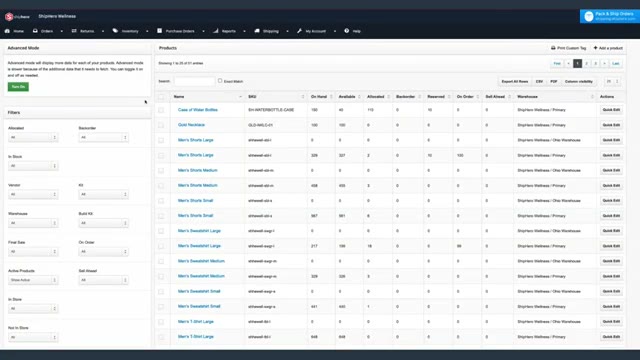
Screenshots of ShipHero 3 images
What's great
- 4.4/5 across 205 G2 reviews is the strongest rating-and-volume combination in this comparison, and G2 names ShipHero a leader in WMS for small business, which is where most first-time WMS buyers actually sit
- Built for the DTC pick-pack-ship loop specifically, so batch picking, cartonization, and rate shopping across carriers are core workflow rather than modules bolted onto a warehouse system designed for pallets
- ShipHero runs its own fulfillment network alongside the software, which means the product is shaped by people operating warehouses daily rather than by a roadmap written from customer interviews
Watch-outs
- Third-party research puts the entry near $1,995/mo, the highest floor in this comparison, which prices out small brands and makes ShipHero a decision you grow into rather than start on
- Ecommerce-first design shows in industrial settings; operations moving pallets, handling raw materials, or running production kitting get less from it than from a WMS built around manufacturing flows
- No published rate card, so the real number depends on order volume and warehouse count and takes a sales conversation to establish
ShipHero is the WMS most DTC brands land on when 3PL fees stop making sense and they bring fulfillment in house.
205 G2 reviews at 4.4/5 is the best rating-and-volume pairing here, and the reviews come from operators running real order volume rather than from evaluators.
The product is shaped around the actual DTC loop: batch picking across dozens of small orders, cartonization, and carrier rate shopping at the pack station.
That last one is where the money is. A brand shipping 3,000 orders a day that shaves $0.40 off average parcel cost through better rate shopping pays for the platform on that line alone.
Pricing is the gate.
Third-party research puts entry near $1,995/mo, which is a real number for a brand doing 500 orders a day and an easy one at 5,000.
Right for ecommerce and DTC brands running their own warehouse above roughly 1,000 orders a day; wrong for 3PLs needing multi-client billing, and wrong for anyone moving pallets rather than parcels.
Pricing breakdown
| Plan | Price | Best for |
|---|---|---|
| Entry (est.) | From approx. $1,995/mo, per third-party pricing research | Single-warehouse DTC brands running their own fulfillment |
| Multi-warehouse (est.) | Custom quote | Brands operating two or more fulfillment centers |
| Enterprise | Custom quote | High-volume brands needing API access and dedicated implementation |
Security & compliance
| Standard | Availability |
|---|---|
| SOC 2 Type II | Yes |
| GDPR | Yes |
| HIPAA | No |
| SSO / SAML | Yes |
| Audit logs | Yes |
ShipHero compliance summary: SOC 2 Type II is yes, GDPR is yes, HIPAA is no, SSO/SAML is yes, and audit logs is yes.
Feature availability
| Feature | Status |
|---|---|
| Free tier | ✗ |
| Built for | Ecommerce and DTC brands |
| Carrier rate shopping | ✓ core feature |
| Directed picking | ✓ batch and wave |
| Erp integration | • ecommerce-first |
| Mobile scanning | ✓ |
| Multi client billing | ✗ |
| Published pricing | ✗ |
ShipHero feature availability summary: Free tier (✗), Built for (Ecommerce and DTC brands), Carrier rate shopping (✓ core feature), Directed picking (✓ batch and wave), Erp integration (• ecommerce-first), Mobile scanning (✓), Multi client billing (✗), and Published pricing (✗).
What reviewers say about ShipHero
Recurring themes across ~205 G2 reviews (4.4/5) plus Capterra reviews, 2024-2026.
What reviewers praise
- The DTC pick-pack-ship loop is what reviewers say it does best, with batch picking across many small orders called out specifically.
- Carrier rate shopping at the pack station comes up as a direct cost saving rather than a convenience.
- G2 names it a leader in warehouse management for small business, which is where most first-time WMS buyers actually sit.
- Reviewers note the product feels built by people who run warehouses, which tracks with ShipHero operating its own fulfillment network.
What reviewers fault
- The entry price is the highest floor among the accessible platforms, so smaller brands grow into it rather than start on it.
- Operations moving pallets, raw materials, or production kitting find it a poor fit against manufacturing-oriented systems.
- No published rate card, so establishing a real number takes a sales conversation.
Loading reviews…
Extensiv 3PL Warehouse Manager
Best warehouse management software for third-party logistics providers billing multiple clients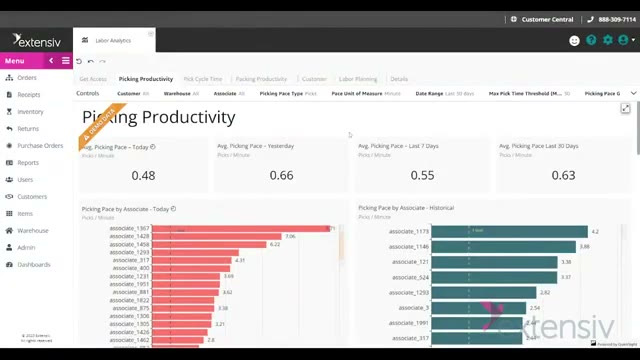
Screenshots of Extensiv 3PL Warehouse Manager 3 images
What's great
- Multi-client billing is native and it is the whole reason a 3PL buys this rather than a cheaper single-tenant WMS; storage, handling, and value-added service charges accrue per client and invoice automatically at period close
- 4.3/5 across 113 G2 reviews from a buyer base concentrated in actual 3PL operations, which is a more relevant signal for a 3PL evaluator than a higher score drawn from single-brand warehouses
- Client portals let each customer see their own inventory and order status without calling your operations team, which removes the single largest source of inbound interruptions in a growing 3PL
Watch-outs
- G2 reviewers repeatedly flag add-on costs; the base platform does not include everything a 3PL ends up needing, and the quote grows as modules attach
- Some functionality limitations come up in reviews, particularly around configuring workflows that differ from Extensiv's assumed 3PL model, which is a real constraint if your operation is unusual
- Ecommerce-native picking and packing depth is thinner than ShipHero for 3PLs whose clients are almost entirely DTC brands with high order counts and low units per order
If you run a 3PL, this shortlist is short, and Extensiv is at the top of it.
Multi-client billing is the reason.
A 3PL invoicing eleven clients for storage by pallet-day, handling by order, and value-added services by the piece is doing arithmetic that a single-tenant WMS simply cannot express, and doing it in spreadsheets is how 3PLs lose money without noticing.
113 G2 reviews at 4.3/5, from a base weighted toward real 3PL operators, is the relevant evidence here.
Client portals are the underrated feature. Every client who checks their own inventory is a phone call your ops lead does not take.
Third-party research puts entry near $599/mo, which is the most accessible real WMS floor in this comparison.
Read the add-on complaints in the G2 reviews before signing and get the full module list priced.
Right for 3PLs from roughly 3 to 50 clients; wrong for a single brand fulfilling its own orders, where the multi-client machinery is overhead you pay for and never use.
Pricing breakdown
| Plan | Price | Best for |
|---|---|---|
| Entry (est.) | From approx. $599/mo, per third-party pricing research | Small 3PLs moving off spreadsheets and manual billing |
| Growth (est.) | Custom quote, module based | 3PLs adding client portals |
| Enterprise | Custom quote | Multi-warehouse 3PLs with custom billing and API requirements |
Security & compliance
| Standard | Availability |
|---|---|
| SOC 2 Type II | Yes |
| GDPR | Yes |
| HIPAA | No |
| SSO / SAML | Yes |
| Audit logs | Yes |
Extensiv 3PL Warehouse Manager compliance summary: SOC 2 Type II is yes, GDPR is yes, HIPAA is no, SSO/SAML is yes, and audit logs is yes.
Feature availability
| Feature | Status |
|---|---|
| Free tier | ✗ |
| Built for | 3PLs and fulfillment providers |
| Client portal | ✓ |
| Directed picking | ✓ |
| Erp integration | ✓ |
| Mobile scanning | ✓ |
| Multi client billing | ✓ core feature |
| Published pricing | ✗ |
Extensiv 3PL Warehouse Manager feature availability summary: Free tier (✗), Built for (3PLs and fulfillment providers), Client portal (✓), Directed picking (✓), Erp integration (✓), Mobile scanning (✓), Multi client billing (✓ core feature), and Published pricing (✗).
What reviewers say about Extensiv 3PL Warehouse Manager
Recurring themes across ~113 G2 reviews (4.3/5) from a buyer base concentrated in 3PL operations, 2024-2026.
What reviewers praise
- Ease of use comes up consistently, which matters in an operation where warehouse staff turn over regularly.
- Integration capability is the second most cited strength, covering the ecommerce and carrier connections a 3PL's clients arrive with.
- Multi-client billing is the reason reviewers chose it over cheaper single-tenant systems.
- Client portals reduce inbound status calls, which reviewers describe as freeing up the operations desk.
What reviewers fault
- Additional costs are the sharpest recurring complaint; the base platform does not cover everything a growing 3PL needs.
- Certain functionality limitations come up, particularly when a 3PL's workflow differs from Extensiv's assumed model.
- Ecommerce picking and packing depth is thinner than the DTC-native platforms for 3PLs whose clients are almost all online brands.
Loading reviews…
SAP Extended Warehouse Management
Best warehouse management software for enterprise distribution centers already running SAP
Screenshots of SAP Extended Warehouse Management 3 images
What's great
- 84 G2 reviews at 4.3/5 is the largest verified review base of any enterprise-tier WMS in this comparison, roughly six times Manhattan Active WMS and Blue Yonder WMS combined
- Runs on the same data model as SAP ERP, so inventory, financials, production orders, and warehouse tasks agree without a middleware layer that someone has to own and keep alive through every upgrade
- Handles genuinely complex warehouse work that mid-market platforms do not attempt: yard management, labor management, slotting optimization, and material flow control for automated conveyor and sorter systems
Watch-outs
- Implementation is a systems-integrator program measured in quarters, and consulting cost routinely exceeds the software licensing in year one, so the platform decision is really a program decision
- Only defensible if you already run SAP; a company on a different ERP taking on SAP EWM inherits the complexity without the integration payoff that justifies it
- No published pricing and an enterprise sales motion, so a buyer cannot size the spend without a formal engagement
SAP EWM is not competing with the rest of this list and pretending otherwise would waste your time.
It is the WMS for an enterprise distribution operation already standardized on SAP, with automation on the floor and an internal team to run it.
84 G2 reviews at 4.3/5 is a strong number for the enterprise tier, where Manhattan Active WMS sits at 10 reviews and Blue Yonder at 13.
The capability that justifies the cost is material flow control: EWM can drive conveyor, sorters, and automated storage and retrieval directly, which is the difference between software that tracks a warehouse and software that runs one.
Same data model as SAP ERP means no middleware project, and anyone who has maintained a WMS-to-ERP integration through two upgrade cycles knows what that is worth.
Right for enterprise DCs on SAP with automation and a dedicated team; wrong for everyone else, and there is no shame in that.
Most warehouses have a putaway problem, not a material flow control problem.
Pricing breakdown
| Plan | Price | Best for |
|---|---|---|
| Base | Custom quote, enterprise licensing | Core warehouse execution for SAP-run distribution centers |
| Advanced | Custom quote | Adding labor management |
| Implementation | Separate systems-integrator engagement, often exceeding year-one licensing | Budget planning; the licence is not the program cost |
Security & compliance
| Standard | Availability |
|---|---|
| SOC 2 Type II | Yes |
| GDPR | Yes |
| HIPAA | No |
| SSO / SAML | Yes |
| Audit logs | Yes |
SAP Extended Warehouse Management compliance summary: SOC 2 Type II is yes, GDPR is yes, HIPAA is no, SSO/SAML is yes, and audit logs is yes.
Feature availability
| Feature | Status |
|---|---|
| Free tier | ✗ |
| Built for | Enterprise distribution centers |
| Directed picking | ✓ wave and slotting |
| Erp integration | ✓ SAP native |
| Labor management | ✓ |
| Material flow control | ✓ category strength |
| Multi client billing | • configurable |
| Published pricing | ✗ |
SAP Extended Warehouse Management feature availability summary: Free tier (✗), Built for (Enterprise distribution centers), Directed picking (✓ wave and slotting), Erp integration (✓ SAP native), Labor management (✓), Material flow control (✓ category strength), Multi client billing (• configurable), and Published pricing (✗).
What reviewers say about SAP Extended Warehouse Management
Recurring themes across ~84 G2 reviews (4.3/5) of SAP Extended Warehouse Management specifically, 2024-2026.
What reviewers praise
- Running on the same data model as SAP ERP is the most cited benefit, removing the middleware layer between the floor and the ledger.
- Depth on complex warehouse work that mid-market systems do not attempt: yard management, labor management, and slotting.
- Material flow control for automated conveyor and sorter systems is named as the capability that justifies the cost.
- Reviewers describe it as the right choice at genuine enterprise scale, where simpler platforms run out of room.
What reviewers fault
- Implementation is a systems-integrator program, and consulting cost routinely exceeds year-one licensing.
- Configuration complexity is high enough that reviewers say it needs dedicated internal expertise to run well.
- Only defensible for companies already on SAP; the integration payoff is the whole argument.
Loading reviews…
RF-SMART
Best warehouse management software for companies running NetSuite as their ERP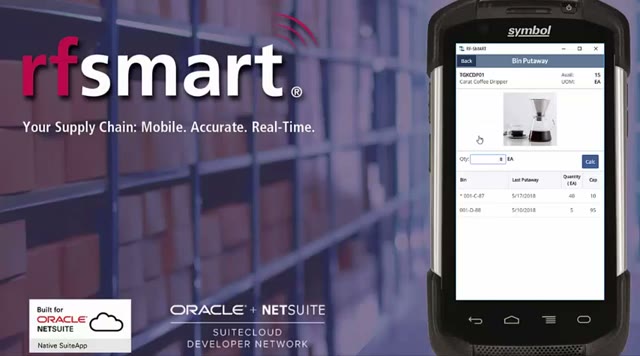
Screenshots of RF-SMART 3 images
What's great
- The leading third-party WMS on the NetSuite SuiteApp marketplace with 2,800-plus customers across 40-plus countries, Built-for-NetSuite certified, which means the integration is a supported product rather than a connector someone maintains
- Reviewers describe unusually long tenure, with multi-year deployments cited as reliable, and customer support called out as responsive and knowledgeable, which is rare praise in warehouse software
- Deep configurability against NetSuite's data model lets a company shape receiving, putaway, and picking to its actual process instead of reshaping the process around the software
Watch-outs
- G2 reviewers flag customization limits in places, occasional sluggishness in the mobile app, and difficulty with certain features, so the configurability has edges that show up after go-live
- Implementation and communication with the RF-SMART team come up as pain points in reviews, which is worth probing hard in reference calls with a customer your size
- Only relevant if you run NetSuite; the entire value proposition is the depth of that one integration, and it evaporates on any other ERP
If your ERP is NetSuite, RF-SMART is the shortlist.
Not the top of it, the whole thing, in most cases.
56 G2 reviews at 4.3/5 plus 2,800-plus customers and Built-for-NetSuite certification make it the default third-party WMS on that platform, and the reviews carry an unusual signal: people describing nine-year deployments that still work.
That is not a normal thing to read about warehouse software.
The value is the integration depth. A native NetSuite WMS means inventory, item records, and financials never disagree with what the scanner says on the floor.
The complaints are real and consistent enough to plan around: customization has limits, the mobile app can drag, and implementation communication comes up more than once.
Ask for two references at your order volume and ask them specifically about go-live.
Right for any NetSuite shop that needs directed warehouse work; wrong for anyone on a different ERP, where the single reason to buy it does not apply.
Pricing breakdown
| Plan | Price | Best for |
|---|---|---|
| Core WMS | Custom quote, per user | NetSuite companies adding directed receiving |
| Extended | Custom quote | Adding production |
| Enterprise | Custom quote | Multi-warehouse NetSuite operations with custom workflow |
Security & compliance
| Standard | Availability |
|---|---|
| SOC 2 Type II | Yes |
| GDPR | Yes |
| HIPAA | No |
| SSO / SAML | ✓ via NetSuite |
| Audit logs | Yes |
RF-SMART compliance summary: SOC 2 Type II is yes, GDPR is yes, HIPAA is no, SSO/SAML is ✓ via netsuite, and audit logs is yes.
Feature availability
| Feature | Status |
|---|---|
| Free tier | ✗ |
| Built for | NetSuite companies |
| Cycle counting | ✓ |
| Directed picking | ✓ |
| Erp integration | ✓ NetSuite native |
| Mobile scanning | ✓ core feature |
| Multi client billing | ✗ |
| Published pricing | ✗ |
RF-SMART feature availability summary: Free tier (✗), Built for (NetSuite companies), Cycle counting (✓), Directed picking (✓), Erp integration (✓ NetSuite native), Mobile scanning (✓ core feature), Multi client billing (✗), and Published pricing (✗).
What reviewers say about RF-SMART
Recurring themes across ~56 G2 reviews (4.3/5), 2024-2026.
What reviewers praise
- Unusually long tenure appears in reviews, with multi-year deployments described as reliable and still working.
- The NetSuite integration is the reason buyers arrive, and Built-for-NetSuite certification means it is a supported product rather than a maintained connector.
- A strong level of customization against the NetSuite data model lets companies shape receiving, putaway, and picking to their own process.
- Customer support is described as responsive and knowledgeable, which is rare praise in warehouse software.
What reviewers fault
- Customization has limits that show up after go-live, and reviewers name specific features that were harder than expected.
- Occasional sluggishness in the mobile experience comes up, which matters when scanning is the whole job.
- Implementation and communication with the RF-SMART team are flagged as pain points worth probing in reference calls.
Loading reviews…
Fishbowl
Best inventory and warehouse platform for small manufacturers and distributors running QuickBooks
Screenshots of Fishbowl 3 images
What's great
- 275 G2 reviews is the largest base in this comparison by a wide margin, which for a category this fragmented is genuinely useful; a buyer gets more independent signal here than anywhere else on this list
- The QuickBooks integration is the reason most buyers arrive, and it is mature; small manufacturers get real inventory and warehouse control without moving their accounting to a full ERP
- Manufacturing capability including bills of materials, work orders, and production tracking sits alongside the warehouse features, which fits the very common small-manufacturer shape that pure WMS platforms ignore
Watch-outs
- 4.0/5 is the second-lowest satisfaction score in this comparison, and that gap against the 4.3 and 4.4 platforms is what the extra review volume is buying you visibility into rather than something to discount
- Fishbowl is an inventory and manufacturing platform with warehouse capability, not a purpose-built WMS; directed picking, slotting, and labor management are thinner than anything else ranked here
- No multi-client billing and no real 3PL model, so it does not compete for that buyer at all
Fishbowl is on this list for honesty rather than ranking.
It is what a large number of small US manufacturers and distributors actually run, and 275 G2 reviews at 4.0/5 is more independent evidence than any other platform here offers.
The QuickBooks bridge is the whole story.
A 30-person manufacturer that needs bills of materials, work orders, lot tracking, and warehouse locations, without migrating accounting into an ERP, has a genuinely hard problem, and Fishbowl solves it.
Be clear-eyed about what it is not.
This is inventory and manufacturing software with warehouse features, not a WMS built around directed labor on a floor.
If your operation needs pick-path optimization, wave planning, or slotting, you will outgrow it, and the 4.0 score partly reflects buyers who bought it expecting a WMS.
Right for small manufacturers and distributors on QuickBooks who need lot and location control; wrong for 3PLs, DTC fulfillment at volume, and anyone whose problem is labor productivity on the floor.
Pricing breakdown
| Plan | Price | Best for |
|---|---|---|
| Essentials | $229/mo, billed annually | Small distributors wanting cloud inventory and warehouse basics |
| Growth | $429/mo, billed annually | Manufacturers needing BOMs |
| Scale | $729/mo, billed annually | Larger manufacturers needing multi-location and advanced reporting |
| Enterprise | Custom quote | Multi-location operations with deeper integration requirements |
Security & compliance
| Standard | Availability |
|---|---|
| SOC 2 Type II | Not listed |
| GDPR | Not listed |
| HIPAA | No |
| SSO / SAML | • limited |
| Audit logs | Yes |
Fishbowl compliance summary: SOC 2 Type II is not listed, GDPR is not listed, HIPAA is no, SSO/SAML is • limited, and audit logs is yes.
Feature availability
| Feature | Status |
|---|---|
| Free tier | ✗ |
| Built for | Small manufacturers and distributors |
| Directed picking | • basic |
| Erp integration | ✓ QuickBooks native |
| Manufacturing | ✓ BOMs and work orders |
| Mobile scanning | ✓ |
| Multi client billing | ✗ |
| Published pricing | ✗ |
Fishbowl feature availability summary: Free tier (✗), Built for (Small manufacturers and distributors), Directed picking (• basic), Erp integration (✓ QuickBooks native), Manufacturing (✓ BOMs and work orders), Mobile scanning (✓), Multi client billing (✗), and Published pricing (✗).
What reviewers say about Fishbowl
Recurring themes across ~275 G2 reviews (4.0/5), the largest review base in the warehouse category, 2024-2026.
What reviewers praise
- The QuickBooks integration is the most cited reason buyers chose it, giving inventory control without an ERP migration.
- Manufacturing capability including bills of materials and work orders sits alongside the warehouse features, fitting small manufacturers.
- Lot and serial tracking come up repeatedly from operations with traceability requirements.
- The very large review base means buyers get more independent signal here than anywhere else in this category.
What reviewers fault
- 4.0/5 is a middling score, and the volume of reviews makes the pattern of complaints clearer rather than softer.
- Directed picking, slotting, and labor management are thin against purpose-built warehouse systems.
- Buyers who arrived expecting a true WMS report a mismatch between what they needed and what the product is.
Loading reviews…
Manhattan Active Warehouse Management
Best warehouse management software for high-throughput distribution centers needing continuous adaptability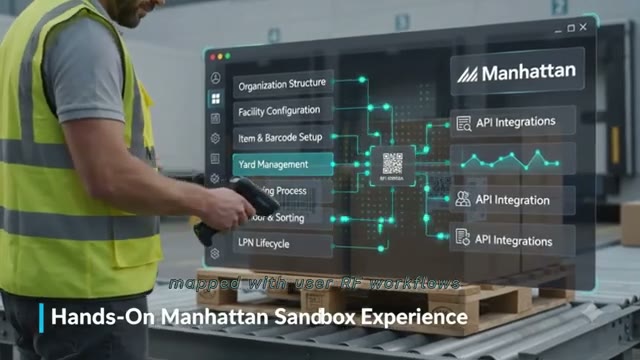
Screenshots of Manhattan Active Warehouse Management 3 images
What's great
- Manhattan has the longest track record of any vendor here in genuinely large distribution operations, and the Active architecture is cloud-native and versionless, which removes the upgrade projects that made legacy WMS deployments so painful
- Reviewers cite ease of moving around the product and strong feature depth together, an unusual pairing in enterprise warehouse software where capability normally arrives at the cost of usability
- Order streaming and continuous optimization replace the traditional wave-planning model, which suits DCs where order profiles shift through the day rather than arriving in predictable batches
Watch-outs
- Only 10 G2 reviews, which is the thinnest evidence base in this comparison; the score is fine but a buyer signing an enterprise contract has almost no independent feedback to work from
- Enterprise pricing, enterprise sales motion, and an implementation measured in quarters put it well outside reach for mid-market operations
- The versionless cloud model means you adopt changes on Manhattan's schedule rather than yours, which some operations with heavily customized processes find constraining
Manhattan is the name that comes up when the warehouse is genuinely large and genuinely complex.
The Active architecture is the interesting part: cloud-native, versionless, continuously updated, which kills the multi-year upgrade projects that defined the previous generation of enterprise WMS.
Order streaming instead of wave planning is the operational difference, and it matters most in DCs where the order mix shifts hour to hour rather than arriving in tidy batches.
The honest caveat is evidence.
10 G2 reviews at 4.0/5 is almost nothing, and a buyer committing to an enterprise contract deserves more independent signal than that.
SAP EWM has 84 reviews at 4.3.
If you are not on SAP, that comparison gets harder to make on public data alone, and reference calls carry more weight here than usual.
Right for large distribution operations that want continuous cloud delivery and are not tied to an SAP stack; wrong for mid-market warehouses, where the implementation alone exceeds the value.
Pricing breakdown
| Plan | Price | Best for |
|---|---|---|
| Active WM | Custom quote, enterprise licensing | Large distribution centers needing cloud-native warehouse execution |
| Extended suite | Custom quote | Adding labor management |
| Implementation | Separate engagement, measured in quarters | Budget planning; the licence is not the program cost |
Security & compliance
| Standard | Availability |
|---|---|
| SOC 2 Type II | Yes |
| GDPR | Yes |
| HIPAA | No |
| SSO / SAML | Yes |
| Audit logs | Yes |
Manhattan Active Warehouse Management compliance summary: SOC 2 Type II is yes, GDPR is yes, HIPAA is no, SSO/SAML is yes, and audit logs is yes.
Feature availability
| Feature | Status |
|---|---|
| Free tier | ✗ |
| Built for | Large distribution centers |
| Directed picking | ✓ order streaming |
| Erp integration | ✓ |
| Labor management | ✓ |
| Material flow control | ✓ |
| Multi client billing | • configurable |
| Published pricing | ✗ |
Manhattan Active Warehouse Management feature availability summary: Free tier (✗), Built for (Large distribution centers), Directed picking (✓ order streaming), Erp integration (✓), Labor management (✓), Material flow control (✓), Multi client billing (• configurable), and Published pricing (✗).
What reviewers say about Manhattan Active Warehouse Management
Recurring themes across ~10 G2 reviews (4.0/5). Very small sample; weight accordingly and lean on reference calls.
What reviewers praise
- Reviewers describe the product as easy to move around while still carrying real feature depth, an unusual pairing at this tier.
- The versionless cloud architecture removes the multi-year upgrade projects that defined the previous generation of enterprise WMS.
- Order streaming instead of wave planning suits distribution centers where the order mix shifts through the day.
What reviewers fault
- The public review base is tiny, so buyers signing enterprise contracts have almost no independent feedback to work from.
- Enterprise pricing and an implementation measured in quarters put it out of reach for mid-market operations.
- Continuous cloud delivery means adopting changes on the vendor's schedule, which constrains heavily customized processes.
Loading reviews…
Blue Yonder Warehouse Management
Best warehouse management software for automation-heavy operations with in-house development capacity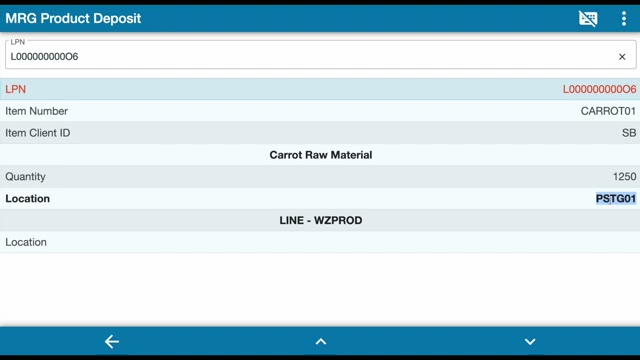
Screenshots of Blue Yonder Warehouse Management 3 images
What's great
- Reviewers specifically praise how far the platform can be extended, describing the ability to develop custom functions and automate processes as the reason they chose it over more rigid enterprise systems
- Strong practitioner community around the product, which matters more than vendor documentation for a platform this configurable; reviewers cite community support as a genuine asset
- Integrates advanced automation technologies well, making it a credible fit for operations with conveyor, robotics, and goods-to-person systems that need the WMS to orchestrate rather than just record
Watch-outs
- 3.9/5 across 13 G2 reviews is the lowest score and one of the thinnest bases in this comparison, and reviewers name the user interface as challenging and the documentation as lacking
- The extensibility that reviewers praise assumes you have people who can use it; an operation without in-house development capacity gets the complexity and none of the benefit
- Blue Yonder's portfolio has moved through several ownership and branding changes, and buyers should establish where this specific product sits in the current roadmap before committing
Blue Yonder WMS is a specialist answer, and the reviews say so plainly. What buyers praise is extensibility: the ability to develop custom functions and automate processes that a more rigid platform would not allow.
What they fault is the interface and the documentation.
13 G2 reviews at 3.9/5 is the lowest score in this comparison, and that spread between capability and experience is the whole story.
This is a platform for an operation that has engineers.
If you run conveyor, robotics, or goods-to-person systems and you have people who can build against a WMS, the extensibility is real value and the interface complaints are survivable.
If you were hoping to buy something that works out of the box, this is the wrong end of the market.
Ask directly where this product sits in Blue Yonder’s current roadmap before you sign, because the portfolio has moved around.
Right for automation-heavy operations with in-house development capacity; wrong for anyone who needs the software to be finished on day one.
Pricing breakdown
| Plan | Price | Best for |
|---|---|---|
| Core WMS | Custom quote, enterprise licensing | Distribution operations needing configurable warehouse execution |
| Automation modules | Custom quote | Orchestrating conveyor |
| Implementation | Separate engagement plus internal development capacity | Budget planning; you will staff this |
Security & compliance
| Standard | Availability |
|---|---|
| SOC 2 Type II | Yes |
| GDPR | Yes |
| HIPAA | No |
| SSO / SAML | Yes |
| Audit logs | Yes |
Blue Yonder Warehouse Management compliance summary: SOC 2 Type II is yes, GDPR is yes, HIPAA is no, SSO/SAML is yes, and audit logs is yes.
Feature availability
| Feature | Status |
|---|---|
| Free tier | ✗ |
| Built for | Automation-heavy enterprise operations |
| Directed picking | ✓ |
| Erp integration | ✓ |
| Extensibility | ✓ category strength |
| Material flow control | ✓ |
| Multi client billing | • configurable |
| Published pricing | ✗ |
Blue Yonder Warehouse Management feature availability summary: Free tier (✗), Built for (Automation-heavy enterprise operations), Directed picking (✓), Erp integration (✓), Extensibility (✓ category strength), Material flow control (✓), Multi client billing (• configurable), and Published pricing (✗).
What reviewers say about Blue Yonder Warehouse Management
Recurring themes across ~13 G2 reviews (3.9/5). Small sample; weight accordingly.
What reviewers praise
- Flexibility in developing custom functions is the most cited strength, and it is why buyers picked it over more rigid systems.
- Process automation depth comes up repeatedly as materially improving warehouse operations.
- Strong practitioner community support, which matters more than vendor documentation for a platform this configurable.
- Integrates advanced automation technologies well, making it credible for conveyor, robotics, and goods-to-person operations.
What reviewers fault
- The user interface is described as challenging, and it is the most consistent criticism in the reviews.
- Documentation is called lacking, which compounds the interface problem for new users.
- The extensibility assumes in-house development capacity; without it you get the complexity and none of the benefit.
Loading reviews…
Tools we considered but excluded
We evaluated more tools than the 7 you see above. These did not make the cut. Saying what we rejected, and why, is the editorial muscle most listicles skip.
- Infoplus WMS: A credible cloud WMS for ecommerce and 3PL operations that appears regularly in G2 comparisons against ShipHero and Extensiv, but we could not verify a current G2 rating and review count from an independent read, so ranking it would have meant publishing a number we had not confirmed
- Körber Supply Chain: Real presence in enterprise and mid-market warehouse execution, particularly in Europe, but the product boundaries across the acquired HighJump and Körber portfolio are unclear enough from public sources that any ranking would misrepresent what a buyer actually purchases in 2026
- Oracle Warehouse Management Cloud: The former LogFire product is a capable enterprise WMS, but its most recent G2 profile activity predates the window we consider current, and we could not verify a 2026 rating and review count
- Cin7, Katana, and inventory-only platforms: These manage stock levels and reorder points but do not direct physical work in a building; no receiving, putaway, or directed picking means they are inventory tools rather than warehouse management systems
- ShipBob and Deliverr: Outsourced fulfillment networks rather than software you run in your own warehouse; a brand choosing between running a warehouse and outsourcing it is making a different decision than the one this comparison covers
Honorable mentions
Solid tools that did not crack the main list but are worth tracking, especially for niche use cases.
- Logiwa: Cloud fulfillment platform combining WMS, inventory, and billing for high-volume ecommerce and 3PL operations; third-party sources place Starter near $200/mo for 3 users and Growth near $500/mo for 10, which would make it the cheapest real entry point here, though we could not verify a current G2 rating to rank it
- Da Vinci Unified: Long-running mid-market WMS with a following among 3PLs and distributors that want more configurability than Extensiv without an enterprise implementation; worth a demo if Extensiv's assumed 3PL model does not match how you operate
- Extensiv Order Manager and Integration Manager: The rest of the Extensiv portfolio, covering order routing and channel integration; relevant if you already run 3PL Warehouse Manager and the gap is upstream of the warehouse rather than inside it
How WMS platforms split by who runs the building
Warehouse management splits harder by buyer type than almost any category we cover. There is no single best WMS, and any list that names one is not looking at who signs the check.
3PL platforms. Extensiv is the clearest example. The defining requirement is multi-client billing: storage by pallet-day, handling by order, value-added services by the piece, accrued per client and invoiced at period close.
A 3PL running this in spreadsheets is losing money it cannot see.
No amount of picking sophistication substitutes for getting the invoice right.
Ecommerce and DTC platforms. ShipHero owns this segment. The workload is thousands of small orders with low units per order, which makes batch picking, cartonization, and carrier rate shopping the features that decide cost per order.
A WMS designed around pallets handles this badly.
ERP-native platforms. RF-SMART on NetSuite and SAP EWM on SAP. The buyer’s real requirement is that the scanner on the floor and the number in the general ledger never disagree.
Native integration removes a middleware layer somebody has to own through every upgrade, and anyone who has maintained one knows what that is worth.
Enterprise execution platforms. SAP EWM, Manhattan Active WMS, and Blue Yonder. The distinguishing capability is material flow control: driving conveyor, sorters, and automated storage directly rather than recording what they did.
This is the line between software that tracks a warehouse and software that runs one.
Small manufacturer platforms. Fishbowl. Bills of materials, work orders, lot tracking, and warehouse locations, sitting next to QuickBooks rather than requiring an ERP migration.
It is not a WMS in the strict sense, and it is what a lot of 30-person manufacturers actually run.
The 2026 warehouse software landscape
Most of the category hides pricing. Six of the seven platforms ranked here have no public rate card. Fishbowl is the exception, with published tiers from $229/mo. Freight software at least has AscendTMS and Aljex putting numbers on a page.
For the rest of WMS, third-party estimates vary by warehouse count, order volume, and how hard a buyer pushes.
Run two quote processes in parallel and start them the same day.
Accuracy gains are the number that gets budget approved. Most operations report stock accuracy moving from roughly 85 to 90 percent up past 99 percent after a WMS deployment.
That number is what a CFO responds to, because inaccurate stock produces stockouts, expedited freight, and write-offs that all sit on the P&L already.
Lead the business case with accuracy, not with labor productivity, which is harder to attribute.
The 3PL and DTC segments are converging on the same buyer. Brands that outgrew a 3PL and brought fulfillment in house, and 3PLs whose clients are all DTC brands, now want overlapping things: batch picking at high order counts plus per-client cost visibility.
ShipHero and Extensiv are approaching that middle from opposite ends, and neither fully covers the other’s core case yet.
Enterprise WMS review evidence is thin and getting thinner. SAP EWM has 84 G2 reviews. Manhattan Active WMS has 10. Blue Yonder has 13.
Enterprise buyers do not write software reviews, which means public evidence at the top of this market is nearly useless and reference calls carry far more weight than they do in mid-market categories.
Budget time for three of them.
What to test in every WMS demo
One, receive a real inbound with a discrepancy. Bring an actual purchase order and receive against it with a short count on one line and an unexpected extra SKU on another. Watch the exception path.
Every warehouse has discrepancies daily, and the clean receiving demo tells you nothing about how the software handles the days that go wrong.
Two, walk a pick path on your own layout. Load your bin structure, not the demo warehouse. Generate a multi-order batch pick and look at the sequence.
A WMS that sends a picker back down an aisle they already walked is costing you labor on every order, and you will not see it in a demo built on a tidy fictional floor.
Three, run a client invoice end to end if you are a 3PL. Take one client, one month, mixed storage and handling and value-added charges, and produce the invoice. Check whether an accessorial you added mid-month picks up correctly.
This is where 3PL margin leaks, and it is the single most important test on this list for that buyer.
Four, break the ERP connection on purpose. Ask what happens when the ERP is down and receiving continues. Does the WMS queue and reconcile, or does the floor stop?
Every integration fails eventually and the answer to this question determines whether that is an inconvenience or a shutdown.
Five, put the mobile app on your actual scanner hardware. Not on the vendor’s demo device. On the ruggedized units your pickers use, in the aisle, with your wifi.
Sluggish scanning is the most common post-go-live complaint in this category and it is completely invisible in a conference-room demo.
Six, get the full year-one number in writing. Licence, implementation, hardware, integration work, training, and the modules the base quote left out. The add-on complaint appears in Extensiv’s reviews specifically, and it applies across the category.
Picking the right warehouse management software
1. Whether you bill other people for warehouse work
If yes, multi-client billing is a hard requirement and your list is Extensiv, with Logiwa and Da Vinci as second looks. Everything else in this comparison either lacks it or bolts it on.
If no, skip the 3PL platforms entirely; you would be paying for machinery you never touch.
2. Your ERP decides more than you expect
NetSuite points at RF-SMART. SAP points at SAP EWM. QuickBooks at a small manufacturer points at Fishbowl.
A general-purpose WMS on top of any of these means owning an integration through every upgrade cycle, and that ongoing cost rarely makes it into the comparison spreadsheet.
3. Parcels or pallets
DTC fulfillment at thousands of small orders a day is a different problem from moving pallets, and the software reflects it. ShipHero and Logiwa are built for parcels. SAP EWM, Manhattan, and Blue Yonder are built for volume and automation.
Buying across that line is the most expensive mistake available in this category.
4. Whether you have engineers
Blue Yonder’s extensibility is genuine value if you have people who can build against it and pure cost if you do not. Same logic applies more mildly to SAP EWM. Be honest about your internal capacity before you buy a platform that assumes it.
The right WMS by operation type
- 3PL, 3 to 50 clients: Extensiv 3PL Warehouse Manager from about $599/mo. Multi-client billing and client portals are the two things you cannot operate without.
- 3PL or ecommerce operation on a tight budget: Logiwa, with third-party sources citing Starter near $200/mo for 3 users. Verify the current G2 standing yourself before committing.
- DTC brand running its own warehouse above 1,000 orders a day: ShipHero. 4.4/5 across 205 G2 reviews and the best rating-and-volume pairing in this comparison.
- NetSuite company of any size: RF-SMART. Built-for-NetSuite certification and 2,800-plus customers make the shortlist a list of one.
- Small manufacturer on QuickBooks: Fishbowl. Not a true WMS, and the right answer anyway when BOMs and lot tracking are the actual requirement.
- Enterprise DC already running SAP: SAP Extended Warehouse Management. 84 G2 reviews at 4.3/5 is the best enterprise evidence base available, and the native ERP data model removes a middleware project.
- Large DC not on SAP, wanting cloud-native delivery: Manhattan Active Warehouse Management, with reference calls doing the work that its 10 public reviews cannot.
- Automation-heavy operation with in-house developers: Blue Yonder. Buy it for the extensibility, staff it accordingly, and go in knowing the interface complaints are real.
Warehouse software is one half of a freight and fulfillment stack. The best freight management software comparison covers the transportation side, where load booking, carrier sourcing, and settlement live.
Forwarders running a CFS or bonded warehouse alongside their ocean and air files should look at the best freight forwarding software comparison, where Magaya and CargoWise include warehouse modules natively.
If you also run a delivery fleet out of the building, the best fleet management software comparison covers telematics and vehicle maintenance.
If you have to defend this purchase to an ops director, VP of supply chain, or CFO, read the companion guide to evaluating warehouse management software .
It has the weighted scorecard, the true first-year cost broken out by license and implementation, the ERP integration and security gate, and the one-page summary built around inventory accuracy and labor impact, plus a free downloadable scorecard.
For corrections, vendor disputes, or feedback on this comparison, email hello@topickz.com . Pricing and G2 data are verified each time this page is updated; next scheduled refresh is October 2026.
Frequently asked questions
What is the best warehouse management software for a 3PL?
How much does warehouse management software cost in 2026?
What is the difference between a WMS and inventory management software?
What is the best WMS for a company running NetSuite?
Which warehouse management system has the most reviews?
Do I need a WMS if I already have an ERP?
What is the best warehouse management software for ecommerce?
How long does a WMS implementation take?
Which warehouse management platforms publish their pricing?
Should a small manufacturer buy a WMS or an inventory platform?
Related helpful reads
Write a review
Posts to the page right away. Keep it real — no links or email addresses.