
Comparing the best Sales Engagement Platforms of 2026 includes 1. Outreach 2. Salesloft 3. Apollo.io 4. ZoomInfo Sales 5. Groove by Clari 6. Mixmax 7. Reply.io 8. HubSpot Sales Hub 9. Lemlist 10. Smartlead 11. Salesforce Sales Engagement.
TL;DR
- Outreach: Best overall for mid-market and enterprise teams. You get the deepest sequence branching in the category plus governance that lets RevOps enforce cadence hygiene, but budget someone to own it day to day.
- Salesloft: Best for enterprise revenue intelligence. Its conversation analytics pull deal-risk signals straight from call transcripts, and the 4.5/5 across 11,129 G2 reviews is the highest satisfaction score in the enterprise tier of this guide.
- Apollo.io: Best data plus engagement bundle under 100 reps. One Apollo bill replaces a separate ZoomInfo plus sequencing subscription, and its 4.7/5 across 9,344 G2 reviews is the highest satisfaction rating in this guide.
- ZoomInfo Sales: Best for intent-driven prospecting on top of verified contact data. Reps sequence straight from a ranked list of accounts actively researching your category, and the 4.5/5 across 9,113 reviews on G2's merged GTM Workspace listing backs up the satisfaction.
- Groove by Clari: Best for Salesforce-native teams. Every email, meeting, and call logs to the right Salesforce record automatically, so you get zero sync errors and no data living in two places.
- Mixmax: Best Gmail-native lightweight pick. If your reps live in Gmail and you do not need a full SDR platform, it starts at $29/user/mo, the cheapest serious sales engagement in this guide.
Eleven sales engagement platforms compared on sequencing depth, deliverability, CRM sync, and pricing reality. What survives a serious enterprise procurement process, what's right for an 8-person SDR team, and the one deliverability mistake every team makes in month two.
What Is a sales engagement platform?
A sales engagement platform helps reps run multi-step outreach across email, phone, and social, automating sequences and tracking what gets prospects to reply.
Tools like Outreach, Salesloft, Apollo.io, and Groove differ on sequencing, dialer quality, data, and how tightly they sync with your CRM.
Best Sales Engagement Platforms for B2B Sales Teams comparison: features, pricing and verdicts
| Tool | Best for | Starting price | Free trial | External rating |
|---|---|---|---|---|
Best overall for mid-market and enterprise teams | $100/user/mo | Demo only | G2 4.3/5 (3,536 reviews) | |
Best for enterprise revenue intelligence | $125/user/mo | Demo only | G2 4.5/5 (11,129 reviews) | |
Best data plus engagement bundle under 100 reps | $49/user/mo | Free tier | G2 4.7/5 (9,344 reviews) | |
Best for intent-driven prospecting on top of verified contact data | Custom | Demo only | G2 4.5/5 (9,113 reviews) | |
Best for Salesforce-native teams | $50/user/mo | Demo only | G2 4.7/5 (4,700 reviews) | |
Best Gmail-native lightweight pick | $29/user/mo | 14-day free trial | G2 4.6/5 (1,400 reviews) | |
Best multichannel pick for 3-30 rep teams | $49/user/mo | 14-day free trial | G2 4.6/5 (1,528 reviews) | |
Best if your CRM and engagement must be the same tool | $100/seat/mo | Free tier + 14-day Pro | G2 4.4/5 (13,797 reviews) | |
Best for personalized low-to-mid-volume outbound | $31/user/mo | 14-day free trial | G2 4.6/5 (1,345 reviews) | |
Best for high-volume cold email infrastructure | $39/mo | Free trial | G2 4.6/5 (306 reviews) | |
Best for Salesforce Unlimited shops with no budget for a second tool | $175/user/mo | Demo only | G2 4.2/5 (980 reviews) |
How we chose these tools
We compared these platforms on sequencing-engine depth, multichannel cadence support, CRM sync reliability, email deliverability and warmup, governance and admin controls, and total cost across team sizes. The assessment draws on documented product capabilities, recurring themes across real G2 and Capterra reviews, and vendor pricing pages. Pricing was verified directly on vendor pricing pages in May 2026. G2 ratings and review counts were pulled on May 25, 2026.
How we weight sales engagement platforms for the Topickz score
Every tool above is scored against the fixed rubric below and combined using these weights into the Topickz score on each card. The weights are set for sales engagement platforms specifically, they are not copied from another category, and we publish them so you can see what moved a ranking and re-weight for your own priorities.
| Criterion | Weight | What we checked |
|---|---|---|
| Sequencing-engine depth | 22% | How far the cadence builder goes: conditional branching, A/B tests, and auto-skip rules for out-of-office replies. We built a branching sequence on each to find where it capped out. |
| Multichannel cadence support | 17% | Email, phone, LinkedIn, and SMS steps inside a single flow rather than stitched together. We checked which channels are native versus which need a separate tool. |
| Email deliverability and warmup | 16% | Inbox warmup, sending limits, and reputation controls that keep outreach out of spam. The classic month-two mistake is scaling volume before the domains are ready. |
| CRM sync reliability | 15% | Whether every email, call, and meeting logs to the right CRM record without duplicates. Salesforce-native teams especially cannot tolerate data living in two places. |
| Governance and admin controls | 12% | Shared sequence libraries, permissions, and cadence-hygiene rules RevOps can enforce. Larger teams need this or the sequence library turns to chaos. |
| Total cost across team sizes | 12% | Per-seat pricing plus the consumption or AI-credit fees that creep onto real contracts. We priced it at both an 8-rep and a larger enterprise footprint. |
| Onboarding and adoption | 6% | Rollout time and how much ops ownership the platform demands day to day. The heavier tools need someone to run them full time. |
| Total | 100% |
Read the full TopickZ.com testing methodology for how we run each test, score every criterion, and combine them into a single rating.
Detailed reviews
Outreach
Best overall for mid-market and enterprise teams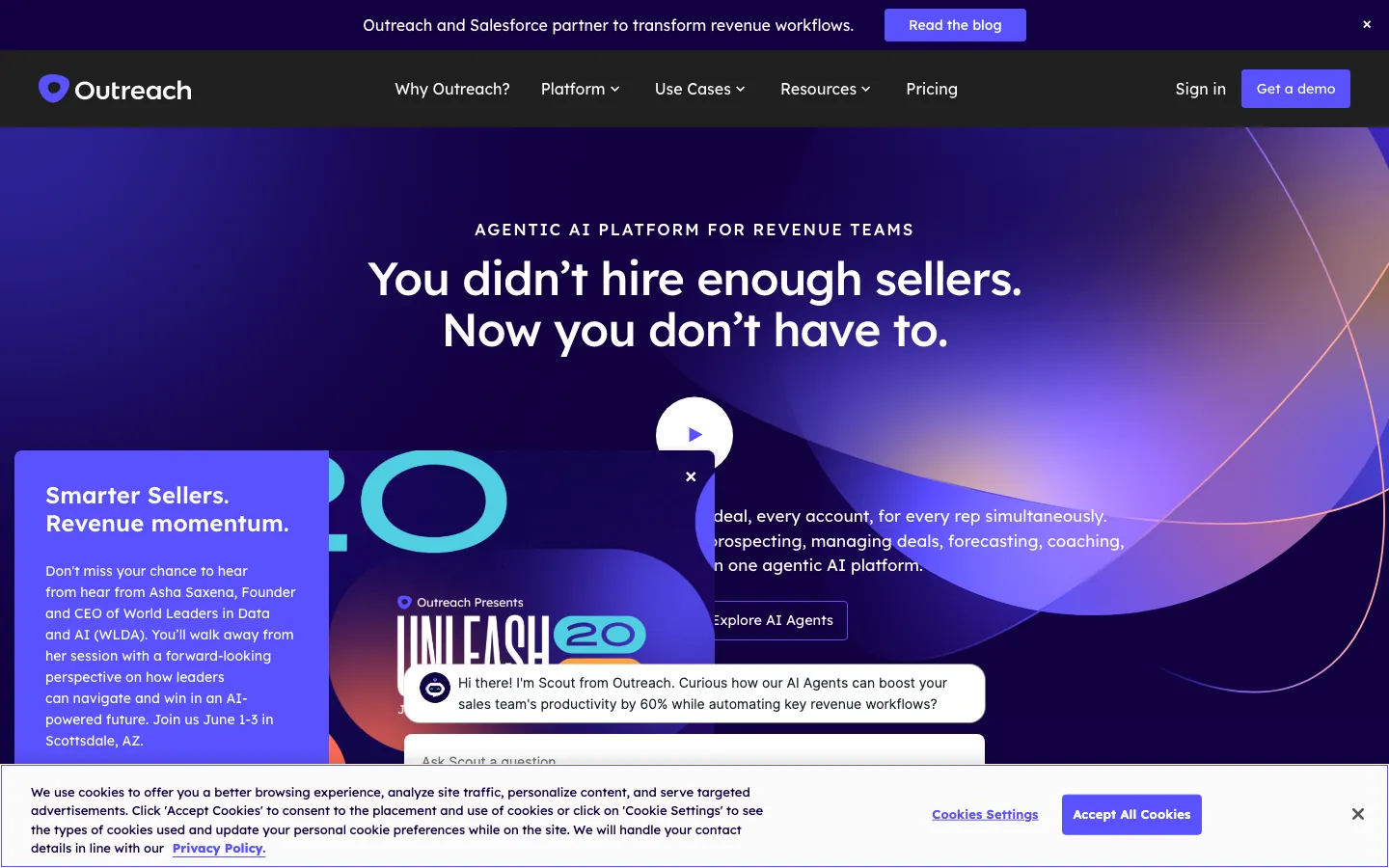
Screenshots of Outreach 3 images
What's great
- Deepest sequence branching in the category -- conditional logic, A/B testing, auto-skip rules for out-of-office replies
- Kaia AI meeting assistant handles real-time coaching cards, talk-time analysis, and post-call summaries without a separate Gong seat
- Prospect scoring and routing baked into the platform; no RevOps plumbing required to get smart queue management
Watch-outs
- Custom pricing with no published tiers; real contracts land $100-$175/user/mo, the one thing the demo never mentions upfront
- Implementation typically runs 6-10 weeks for a clean rollout with Salesforce; lighter CRMs need custom API work
- G2 reviewers consistently flag the admin overhead -- sequence library management, governance rules, and permission models all need a dedicated ops person
Pricing breakdown
| Plan | Price | Best for |
|---|---|---|
| Amplify Core | ~$100/user/mo est. | 15-50 reps |
| Amplify Plus | ~$140/user/mo est. | 50-200 reps |
| Amplify Pro | ~$175/user/mo est. | 200+ reps |
| Enterprise | Custom | Multi-org |
Loading reviews…
Salesloft
Best for enterprise revenue intelligence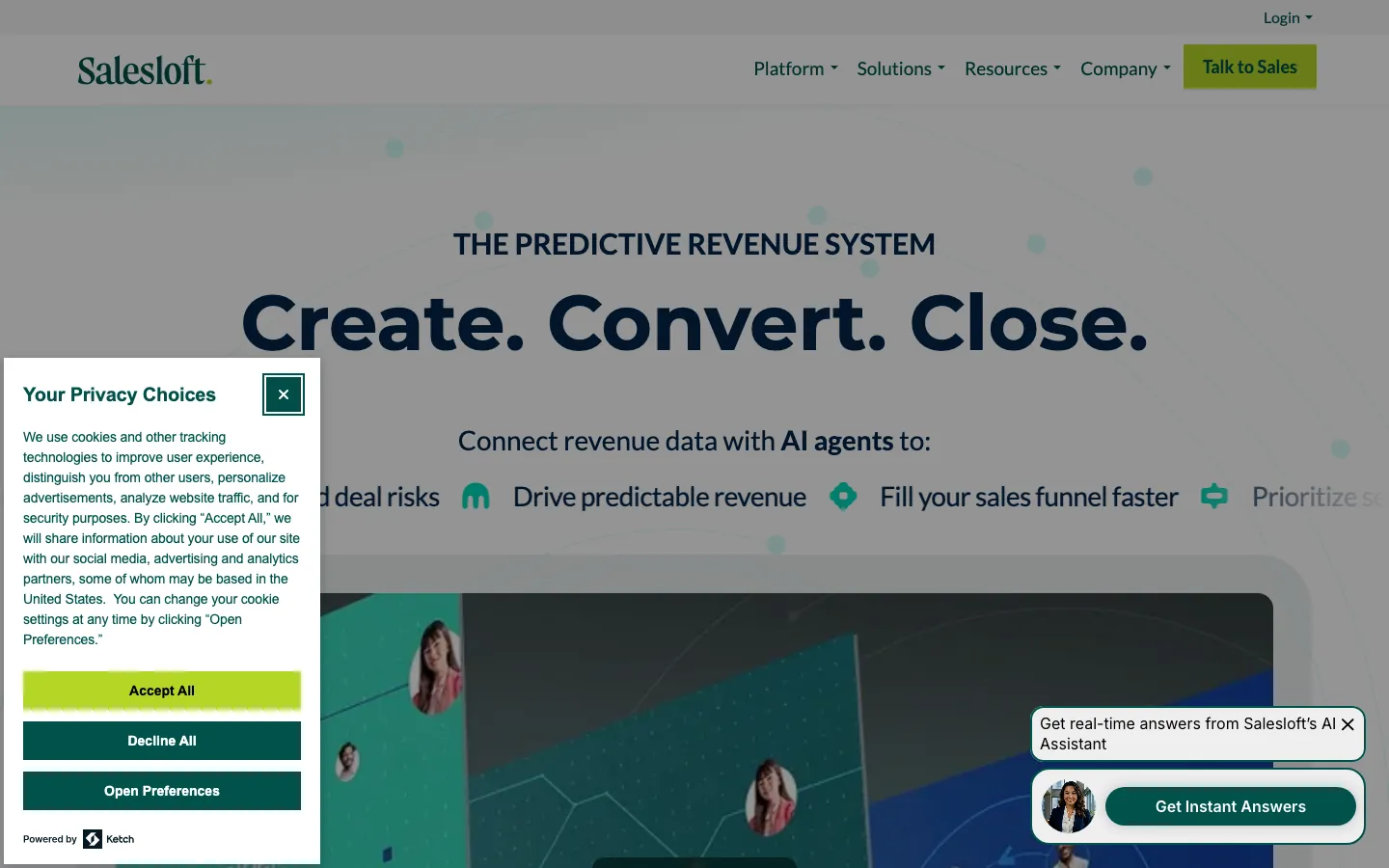
Screenshots of Salesloft 3 images
What's great
- Strongest conversation analytics in the segment -- Salesloft Conversations transcribes, tags, and surfaces deal risk signals across the entire pipeline without a Gong add-on
- Cadence orchestration handles multi-touch, multi-channel sequences (email, phone, LinkedIn, SMS) cleanly in one workflow builder
- The most reviews in the category at [11,129 on G2](https://www.g2.com/products/salesloft/reviews); that volume of signal means the product has seen real enterprise deployments and survived them
Watch-outs
- Advanced and Premier plans land $125-$180/user/mo, negotiating down requires 12-month+ commitments with upfront payment
- Reps new to sales engagement find the interface heavier than lighter tools like Reply.io or Mixmax; budget 2-3 weeks for adoption
- Since the Clari merger (completed December 2025) and the pivot to 'predictive revenue system' branding, some smaller teams find the roadmap less relevant to pure outbound motion
Pricing breakdown
| Plan | Price | Best for |
|---|---|---|
| Essentials | ~$75/user/mo est. | Smaller teams |
| Advanced | ~$125/user/mo est. | Full-cycle AE and SDR teams |
| Premier | ~$180/user/mo est. | Enterprise |
| Enterprise | Custom | Multi-region |
Loading reviews…
Apollo.io
Best data plus engagement bundle under 100 reps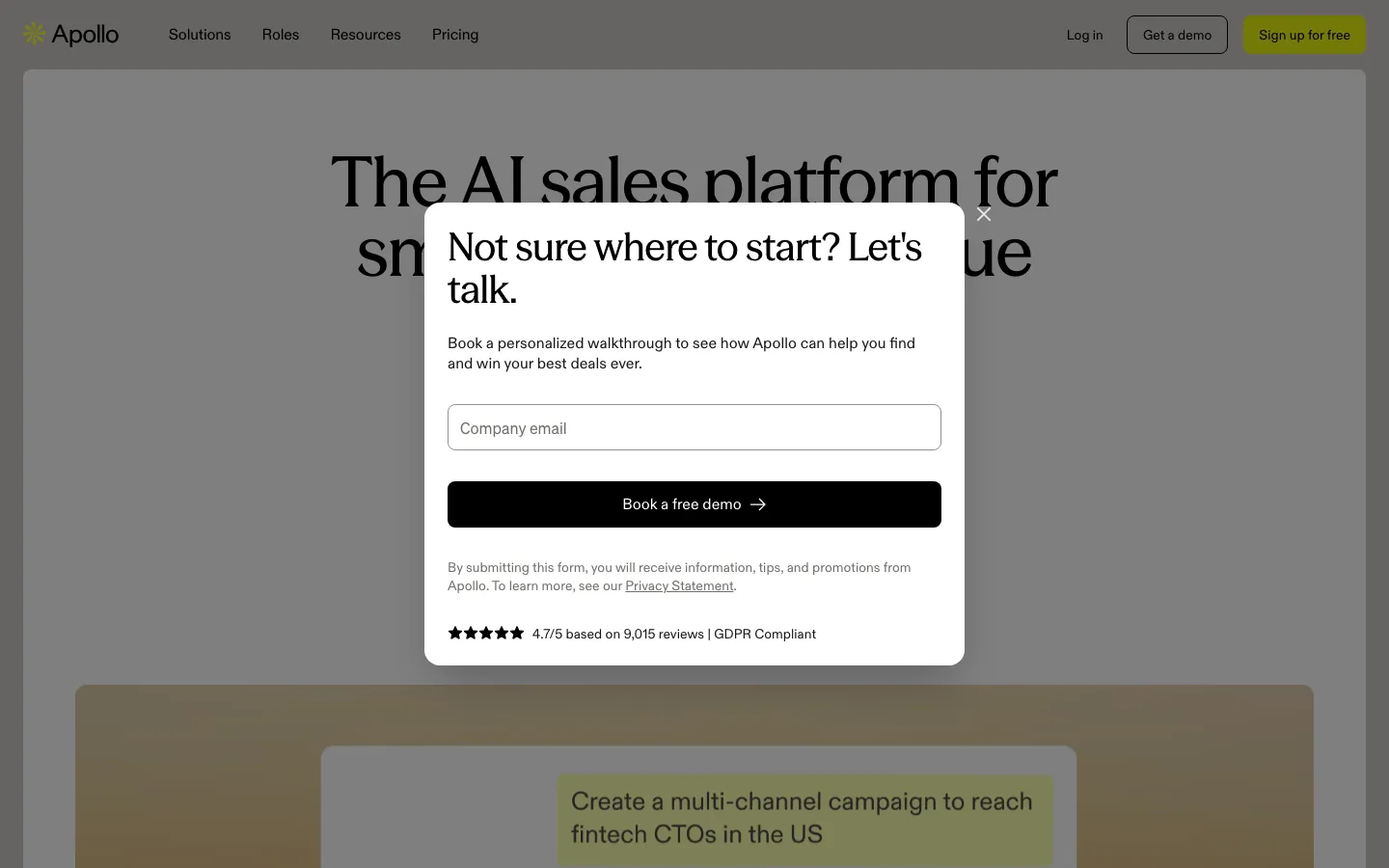
Screenshots of Apollo.io 3 images
What's great
- Contact database of 275M+ profiles plus sequencing in one tool -- eliminates the separate ZoomInfo or Lusha subscription for teams under 100 reps
- 4.7/5 on G2 across 9,344 reviews, the highest satisfaction rating in this guide and the most reviews outside of Salesloft
- Free tier covers real outbound workflows; under-5-rep teams can ship prospecting without paying anything
Watch-outs
- Data quality on niche verticals and international contacts falls below ZoomInfo or Lusha; verify before loading a board-level target list
- Sequencing depth is lighter than Outreach -- no conditional branching, limited A/B split logic, fewer governance controls for large SDR teams
- Credit system for email verification and phone reveals can surprise growing teams; plan credit burn before month three
Pricing breakdown
| Plan | Price | Best for |
|---|---|---|
| Free | $0 | Under 5 reps testing outbound |
| Basic | $49/user/mo | 5-25 reps |
| Professional | $79/user/mo | 25-75 reps |
| Organization | $119/user/mo | 75-200 reps |
Loading reviews…
ZoomInfo Sales
Best for intent-driven prospecting on top of verified contact data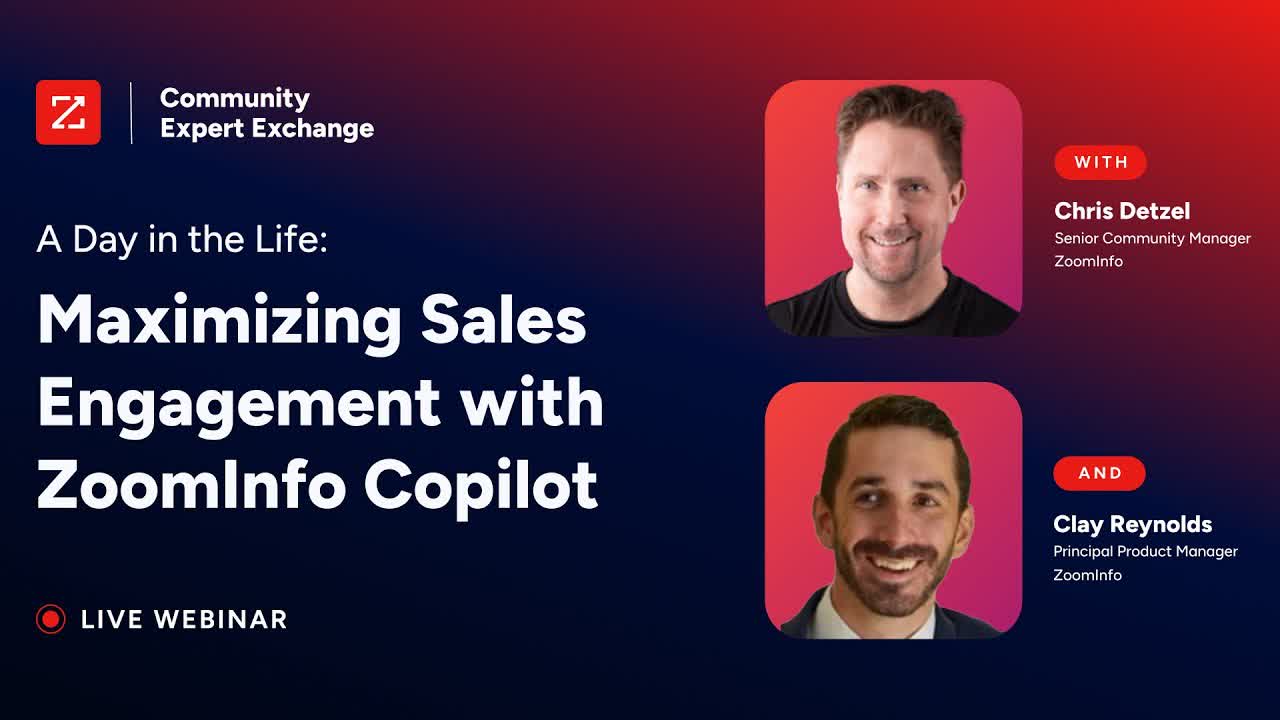
Screenshots of ZoomInfo Sales 3 images
What's great
- Buyer-intent signals (companies actively researching your category) surface directly inside the same workspace reps sequence from, so prioritization does not require a separate tool
- ZoomInfo's contact and firmographic data (the same database underneath SalesOS) is the deepest in this guide, which matters most for teams doing account-based outbound into narrow ICPs
- G2 rolled ZoomInfo Sales into the unified GTM Workspace product in 2026, and the combined listing holds 4.5/5 across 9,113 reviews, one of the largest review bases in the category
Watch-outs
- Not sold standalone -- Engage-style sequencing is an add-on layered on top of a SalesOS contract, so the real entry cost includes the base data subscription, typically five figures a year before sequencing is even switched on
- Sequencing depth is behind Outreach and Salesloft on conditional branching; this is a data-and-intent-first platform with engagement bolted on, not the reverse
- Pricing requires a sales conversation at every tier; there is no published rate card, which makes this the hardest tool in this guide to budget for without a call
Pricing breakdown
| Plan | Price | Best for |
|---|---|---|
| SalesOS + Engage bundle | Custom | Teams that need data plus sequencing in one contract |
| Engage add-on | Est. $5K-$15K/yr on top of SalesOS | Existing ZoomInfo data customers |
| Elite | Custom | Enterprise |
Loading reviews…
Groove by Clari
Best for Salesforce-native teams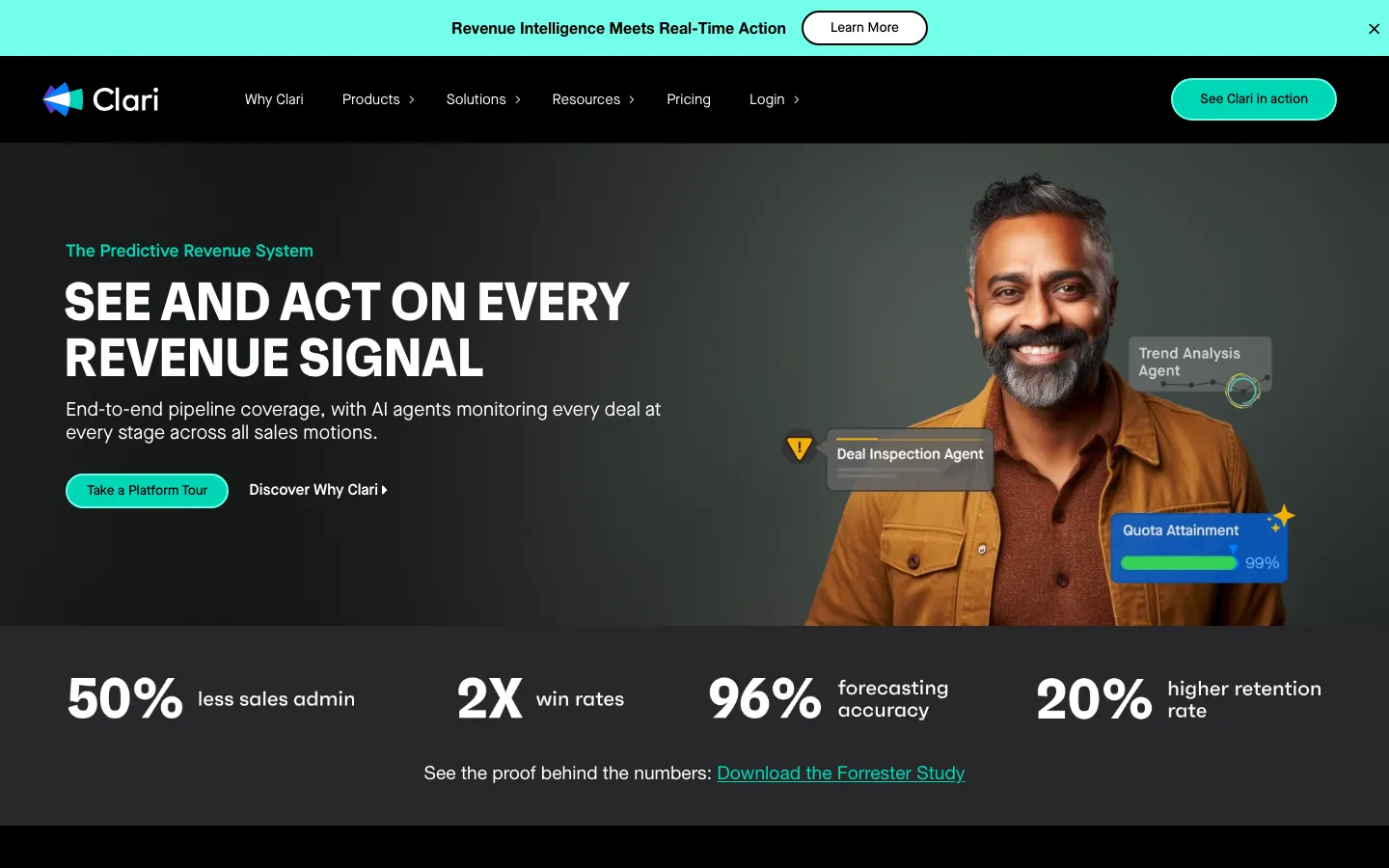
Screenshots of Groove by Clari 3 images
What's great
- Tightest Salesforce sync in the category -- emails, calendar events, and calls log automatically with no manual entry and no sync errors
- Top-rated enterprise sales engagement on G2 since 2018 (18 consecutive quarters as of the Spring 2023 report, still
- Clari acquisition unlocked revenue intelligence features (deal risk, forecast accuracy, pipeline health) that pure engagement tools do not ship
Watch-outs
- Groove only works with Salesforce; if your team runs HubSpot, Pipedrive, or Close, this tool does not exist for you
- Pricing has become opaque post-Clari acquisition; real contracts run $50-$150/user/mo before Clari platform fees
- Sequence branching is shallower than Outreach -- fewer conditional logic paths, less A/B infrastructure for power users
Pricing breakdown
| Plan | Price | Best for |
|---|---|---|
| Engagement | ~$50/user/mo est. | Core Salesforce cadences |
| Revenue Intelligence | ~$100/user/mo est. | 50-200 reps |
| Enterprise | ~$150/user/mo est. | Multi-org Salesforce |
| Clari Platform Bundle | Custom | Full revenue platform |
Loading reviews…
Mixmax
Best Gmail-native lightweight pick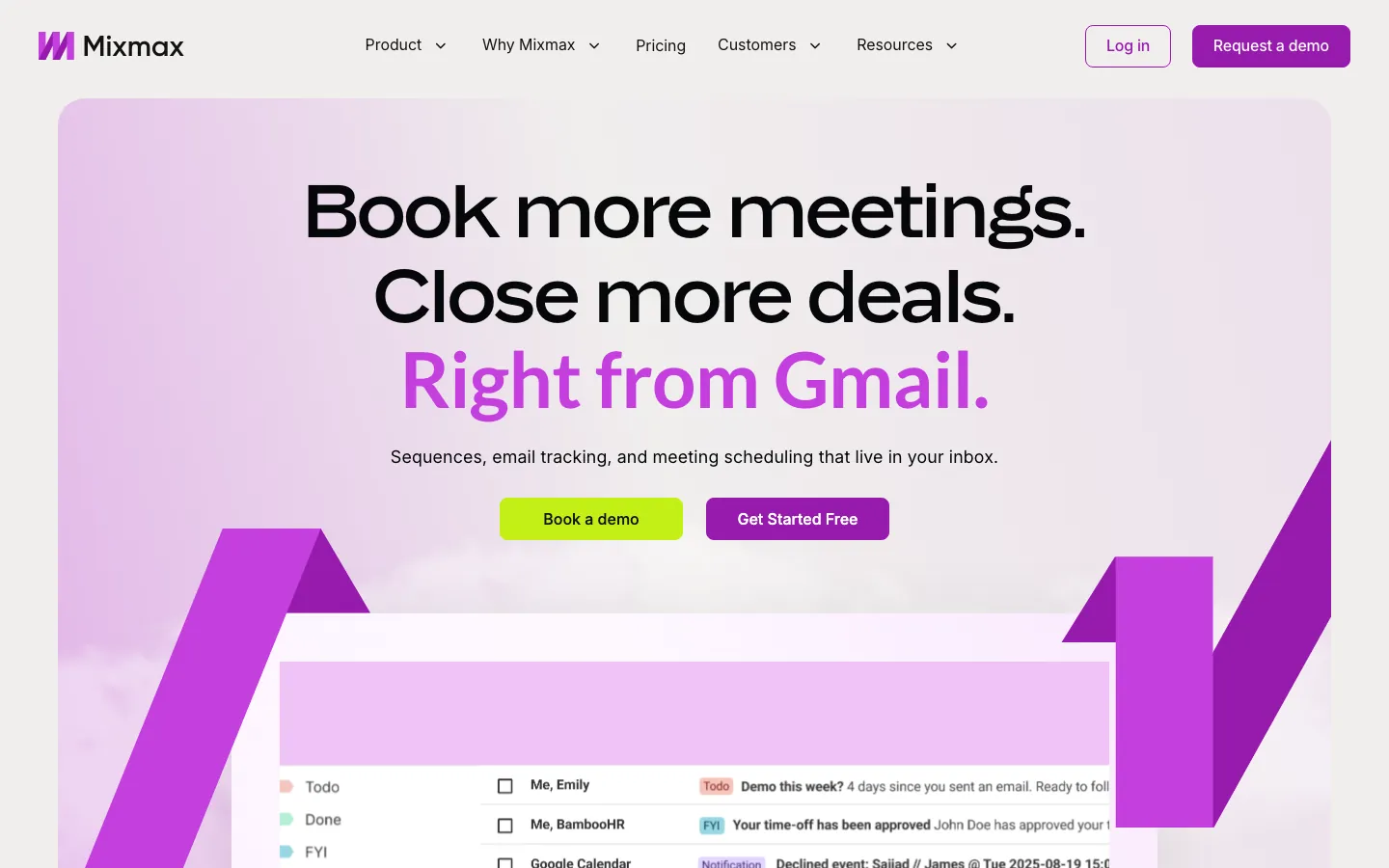
Screenshots of Mixmax 3 images
What's great
- Gmail-native design means reps never leave their inbox; the extension feels designed for Gmail rather than bolted onto it
- Modular pricing from $29/user/mo for core features -- the cheapest serious sales engagement in this guide that includes real sequences
- Restrutured 2025 pricing into AI copilot modules (Inbox, Meeting, Engagement) so teams pay only for what they use
Watch-outs
- No Salesforce-native sync; Salesforce integration works but requires more configuration than Groove or Outreach
- Sequence depth is limited vs Outreach -- good for single-channel email flows, not built for complex multichannel branching
- Mixmax for Teams needs custom pricing; the per-user costs published do not reflect what a 15+ rep team will actually pay
Pricing breakdown
| Plan | Price | Best for |
|---|---|---|
| Free | $0 | Solo users |
| Inbox or Meeting Copilot | $29/user/mo | 1-10 reps |
| Engagement Copilot | $49/user/mo | 10-30 reps with sequences |
| Mixmax Suite | $89/user/mo | Full-featured Gmail engagement |
Loading reviews…
Reply.io
Best multichannel pick for 3-30 rep teams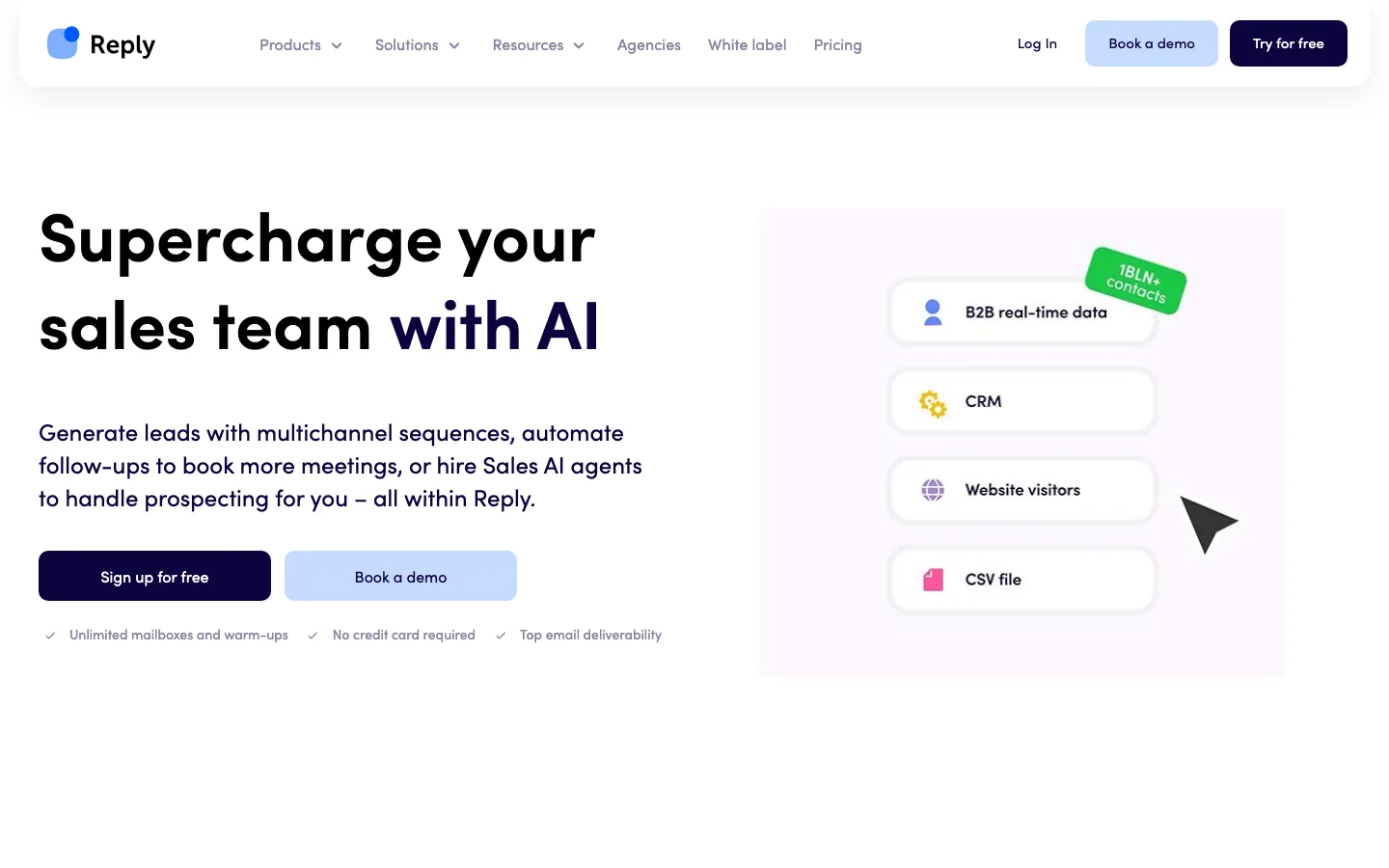
Screenshots of Reply.io 3 images
What's great
- True multichannel out of the box at the Professional tier -- email, LinkedIn, calls, SMS, and WhatsApp in one sequence builder without add-ons
- AI SDR agent at the Ultimate tier ($139/user/mo) handles prospecting and initial outreach autonomously; one of the few tools in the segment shipping agentic outbound
- Honest published pricing with a real free trial; one of two tools in this guide that gives you a 14-day trial without a sales conversation first
Watch-outs
- Starter plan ($49) is email-only; multichannel sequences require the Professional plan at $89/user/mo, which surprises teams that see the $49 headline
- CRM sync depth is adequate but not best-in-class; Salesforce and HubSpot integrations work, but expect manual field-mapping work on setup
- Support response times stretch on the standard plan; one G2 reviewer described waiting 36 hours for a critical deliverability question
Pricing breakdown
| Plan | Price | Best for |
|---|---|---|
| Starter | $49/user/mo | 1-5 reps |
| Professional | $89/user/mo | 5-25 reps |
| Ultimate | $139/user/mo | AI SDR |
| Agency | Custom | Multi-client outreach teams |
Loading reviews…
HubSpot Sales Hub
Best if your CRM and engagement must be the same tool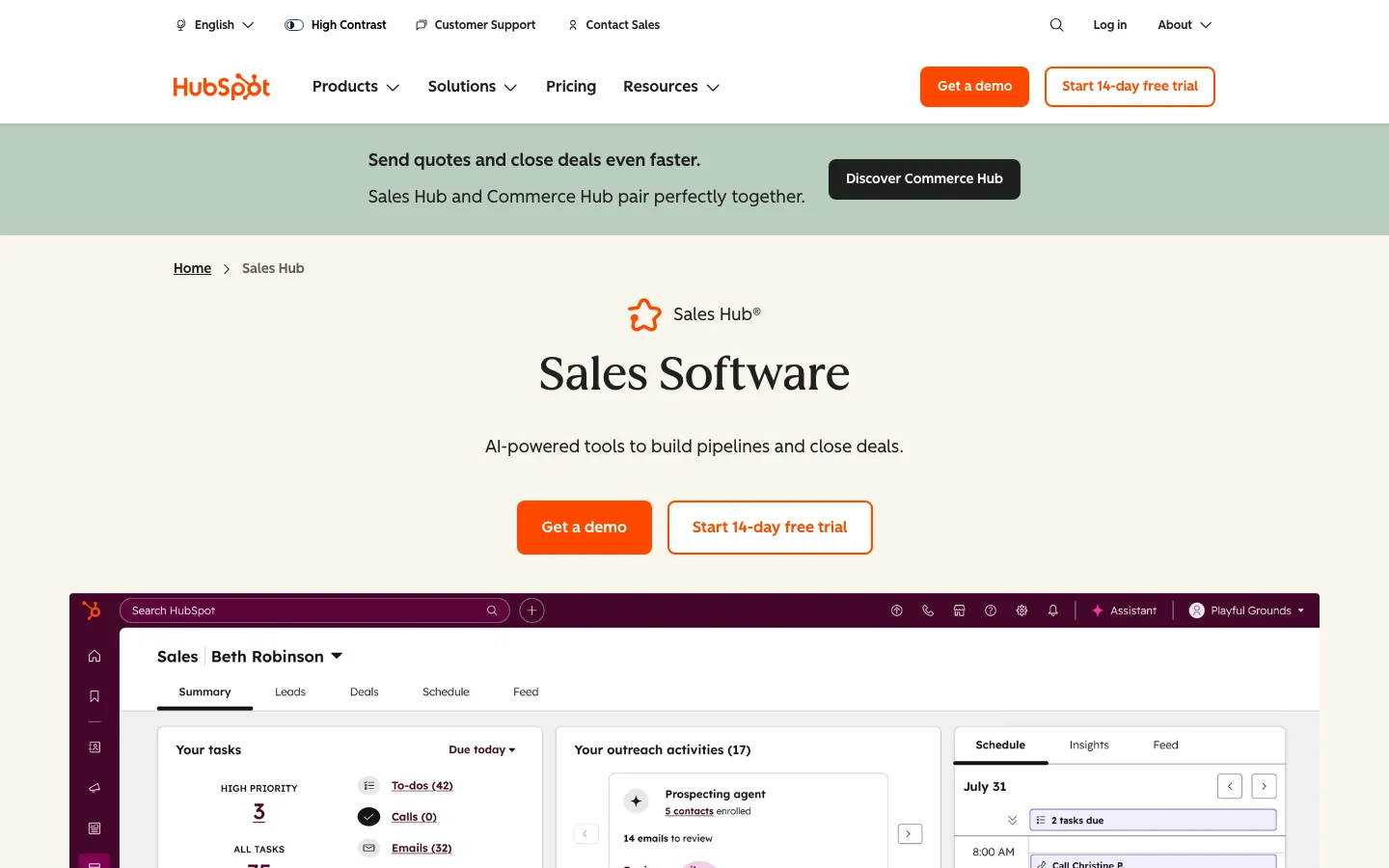
Screenshots of HubSpot Sales Hub 3 images
What's great
- 13,797 G2 reviews at 4.4/5 -- the most reviewed tool in this guide and a signal that sales teams actually use it daily rather than just evaluate it
- CRM and sequences in one data model; no sync tax, no field mapping headaches, no separate engagement platform contract
- Sequences gated at Professional give you templates, task automation, and enrollment triggers -- adequate for most sub-50-rep inbound-assist motions
Watch-outs
- Email sequences are linear with no conditional branching; if prospect opens email 2, the next email is email 3, full stop -- no routing logic
- Professional tier at $100/seat plus $1,500 mandatory onboarding is a real cost; the free tier does not include sequences at all
- HubSpot Sales Hub is not a sales engagement platform -- it is a CRM with sequences, and against Outreach or Salesloft the gap is real at 15+ reps
Pricing breakdown
| Plan | Price | Best for |
|---|---|---|
| Free | $0 | Under 5 reps |
| Starter | $15/seat/mo (annual; $20 monthly) | 5-15 reps |
| Professional | $100/seat/mo + $1.5K onboarding | 15-50 reps |
| Enterprise | $150/seat/mo + $3.5K onboarding | 50+ reps |
What reviewers say about HubSpot Sales Hub
Recurring themes across ~13,800 G2 reviews (4.4/5) and ~12,000 Capterra reviews (4.5/5), 2024-2026.
What reviewers praise
- Reviewers consistently call the interface the easiest to learn in the category; new reps are productive in days, not weeks.
- The free tier comes up again and again as genuinely usable, unlimited contacts and basic CRM at no cost, which is rare in this segment.
- Sales and marketing living in one platform is the most-cited reason teams pick it, with clean handoff between Marketing Hub and Sales Hub.
- The App Marketplace breadth (1,500+ integrations) is praised for connecting to almost any stack without custom work.
- Reporting and dashboards get strong marks for being readable and configurable without an admin or a consultant.
What reviewers fault
- The upgrade cliff is the single most common gripe: jumping from Starter to Professional roughly 5x's the per-seat cost and many features sit behind it.
- Marketing Hub's $890/mo flat Professional pricing surprises buyers who only saw per-seat numbers in the demo.
- Mandatory onboarding fees ($1,500 Pro, $3,500 Enterprise) are repeatedly flagged as an unexpected year-one cost.
- Contact-tier pricing means marketing costs scale with your database, and reviewers say cleanup is painful once you're locked in.
- Support quality on lower tiers draws complaints; several reviewers say real help requires a paid tier or a partner agency.
Loading reviews…
Lemlist
Best for personalized low-to-mid-volume outbound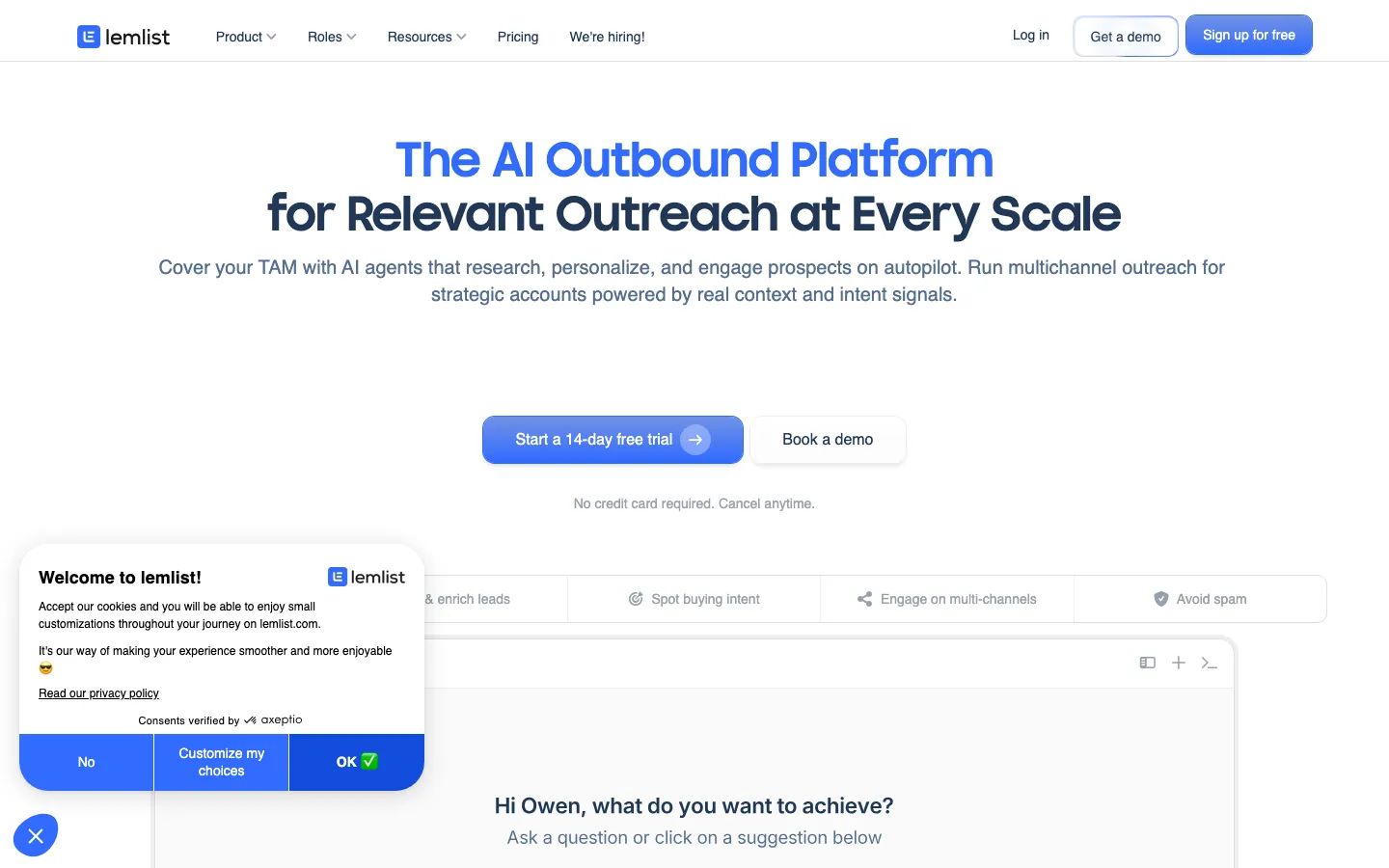
Screenshots of Lemlist 3 images
What's great
- Image and video personalization at scale -- dynamic liquid tags that pull company logos, website screenshots, or custom text into email images
- Built-in lead database with access to 450M+ contacts at the Email plan, which makes the $31 entry price genuinely generous
- Deliverability infrastructure is strong -- native warmup (Lemwarm) plus sending limits and domain rotation are included, not sold as add-ons
Watch-outs
- Email plan ($31/user/mo) caps at 5,000 emails per month per user; serious volume teams hit the ceiling and must upgrade to $87/mo
- No native CRM; relies on Zapier or native integrations (HubSpot, Pipedrive, Salesforce), adding sync friction for teams with strict data hygiene requirements
- Multichannel plan at $87/user/mo includes LinkedIn automation that risks account flags if volume is pushed hard; use with caution and daily limits
Pricing breakdown
| Plan | Price | Best for |
|---|---|---|
| $31/user/mo | 1-10 reps | |
| Multichannel | $87/user/mo | 5-25 reps |
| Enterprise | Custom | Teams 5+ needing SSO and dedicated support |
| Annual discount | 20-30% off | Teams committing to 12 months |
Loading reviews…
Smartlead
Best for high-volume cold email infrastructure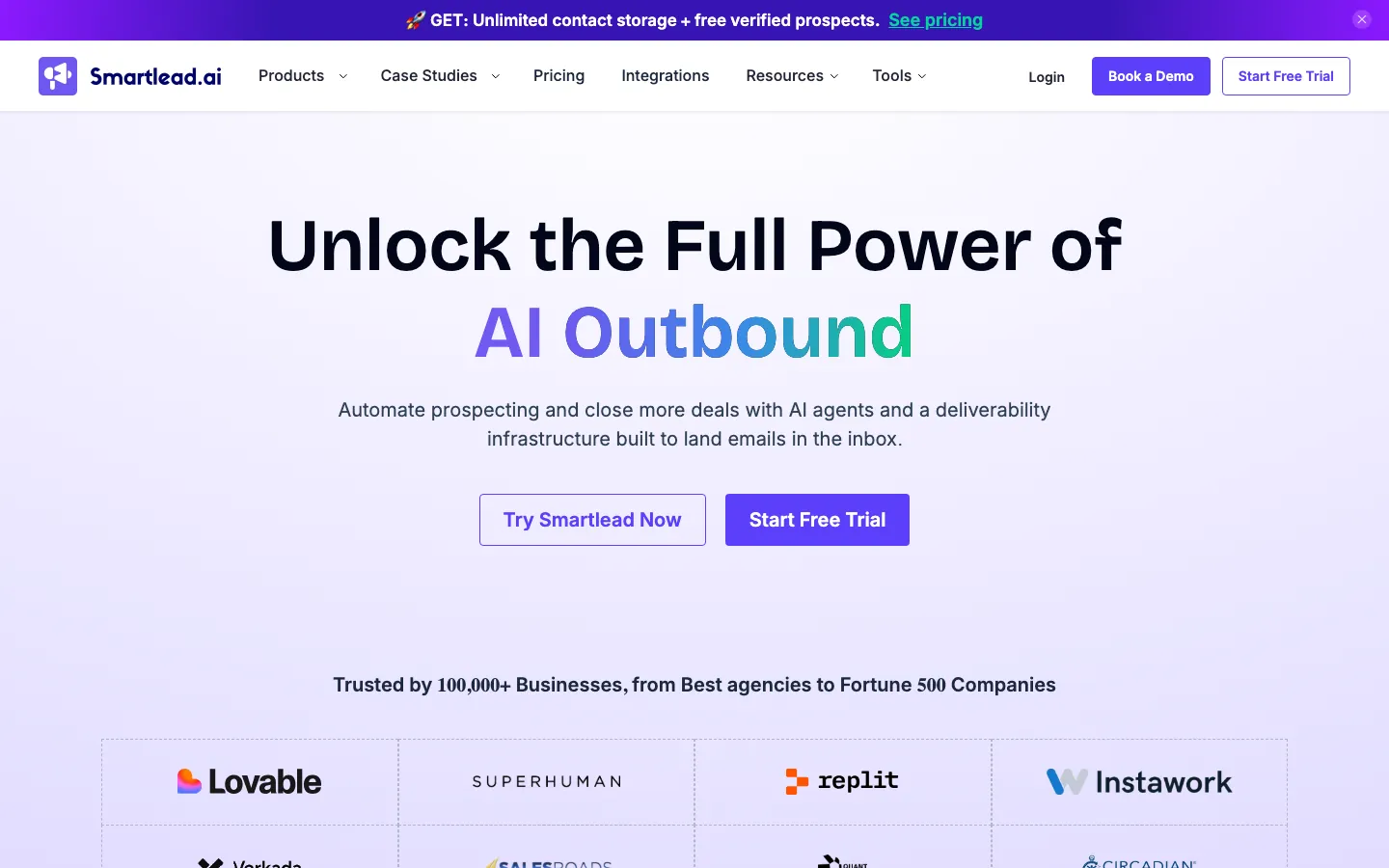
Screenshots of Smartlead 3 images
What's great
- Flat-rate pricing at $39-$174/mo with no per-seat fee -- a team of 10 SDRs pays the same as one SDR, which is genuinely unusual in this category
- Unlimited email accounts at every tier, so sending infrastructure scales without per-mailbox costs that compound at volume
- Built-in AI warmup pool with automated scheduling that adjusts daily send volume based on domain health signals
Watch-outs
- Only 306 G2 reviews; the thin review base means there is less validated signal on enterprise edge cases and support quality under load
- No true multichannel sequences -- LinkedIn, calls, and SMS are not part of Smartlead; it is an email-only platform
- CRM integrations are basic; Salesforce sync works via API but requires developer setup, and the native HubSpot integration has known field-mapping gaps
Pricing breakdown
| Plan | Price | Best for |
|---|---|---|
| Basic | $39/mo flat | Up to 2K contacts and 6K sends/mo |
| Pro | $94/mo flat | 30K contacts |
| Unlimited Smart | $174/mo flat | Unlimited contacts |
| Unlimited Prime | $379/mo flat | 500K sends |
Loading reviews…
Salesforce Sales Engagement
Best for Salesforce Unlimited shops with no budget for a second tool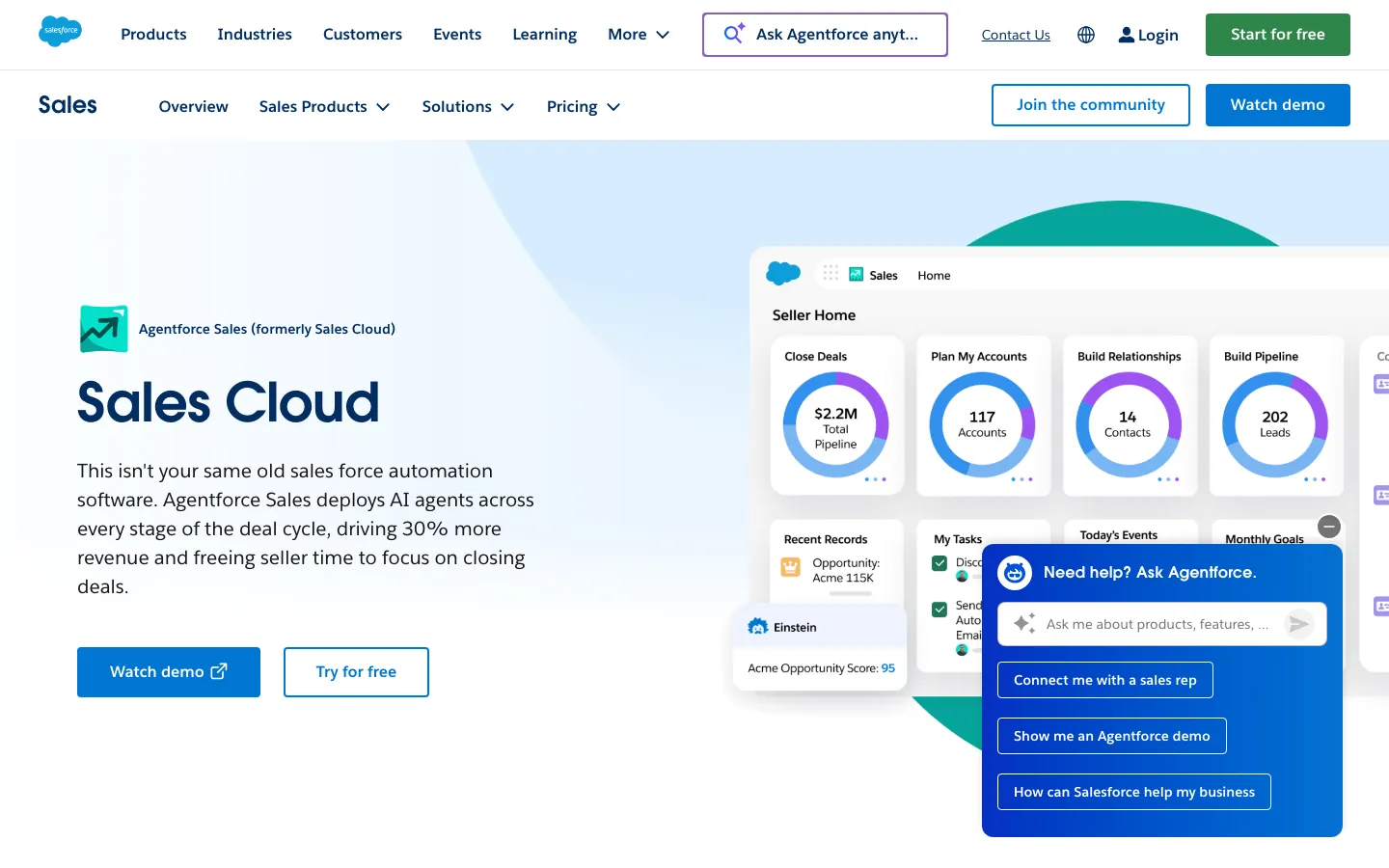
Screenshots of Salesforce Sales Engagement 3 images
What's great
- Native Salesforce integration with no sync tax -- cadences, call logs, and email activity live in Salesforce natively
- Work queues inside Lightning console; reps execute cadence steps without leaving Salesforce
- Bundled into Salesforce Unlimited ($350/user/mo), which means teams already on Unlimited pay no additional engagement cost
Watch-outs
- Available only as an add-on to Enterprise ($175/user/mo add-on) or included in Unlimited ($350 all-in); no standalone purchase path
- Cadence builder is less powerful than Outreach or Salesloft -- no conditional branching, lighter A/B capability, limited multi-channel beyond email and phone
- Salesforce's own documentation still refers to this as 'formerly High Velocity Sales,' which is a signal about how central it is to the product roadmap vs Agentforce
Pricing breakdown
| Plan | Price | Best for |
|---|---|---|
| Enterprise add-on | ~$175/user/mo add-on | Salesforce Enterprise shops |
| Unlimited included | $350/user/mo all-in | Full Salesforce Unlimited stack |
| Sales Cloud + Agentforce | Custom EA | Enterprise AI-native motion |
| Unlimited+ | $500/user/mo | Agentforce 1 bundled |
What reviewers say about Salesforce Sales Engagement
Recurring themes across ~25,800 G2 reviews (4.4/5) and ~18,000 Capterra reviews (4.4/5), 2024-2026.
What reviewers praise
- Customization is the most-cited strength; reviewers say you can model almost any sales process and Salesforce will bend to it.
- The AppExchange ecosystem and integration depth are seen as unmatched, nearly every tool a team uses connects.
- It scales with the enterprise, reviewers running large, multi-team orgs say nothing else handles their complexity.
- Reporting and forecasting are praised as powerful and granular once configured by someone who knows the platform.
- Einstein AI and automation features draw positive mentions for surfacing next steps and cutting manual data entry.
What reviewers fault
- Complexity is the dominant complaint, reviewers say it needs a dedicated admin or paid consultant to set up and maintain.
- Total cost is repeatedly flagged: per-seat pricing plus add-ons, sandboxes, and implementation make it the most expensive option.
- The learning curve is steep and reps resist adoption without serious training, a recurring theme in negative reviews.
- The interface feels dated and cluttered to many reviewers compared with newer, lighter CRMs.
- Support is criticized as slow or tiered behind premium plans, with basic support seen as inadequate for the price.
Loading reviews…
Tools we considered but excluded
We evaluated more tools than the 11 you see above. These did not make the cut. Saying what we rejected, and why, is the editorial muscle most listicles skip.
- Outplay: Solid SMB tool but smaller review base and thinner enterprise governance than Reply.io at the same price point
- Klenty: Good for India-headquartered teams and APAC motions; US SERP placement and G2 review volume are too thin for a US-focused top-10
- Yesware: Gmail and Outlook tracking is solid but the product has not meaningfully advanced its sequence capability since 2022
- SalesHandy: Strong cold email infrastructure but email-only; too similar to Smartlead without Smartlead's pricing advantage
- Amplemarket: Good AI prospecting but nascent engagement layer; not mature enough to sit alongside Outreach and Salesloft yet
- Mailshake: Lightweight cold email sender with 274 G2 reviews; not a full sales engagement platform for the teams this guide serves
Honorable mentions
Solid tools that did not crack the main list but are worth tracking, especially for niche use cases.
- Woodpecker: Best cold email tool for solo founders and freelancers who need simple drip sequences without platform overhead
- Gong Engage: Gong added engagement features to its conversation intelligence platform in 2025; worth watching for teams already on Gong for revenue intelligence
- LaGrowthMachine: Strong multichannel for European GTM teams, LinkedIn + email + Twitter automation with better GDPR defaults than US-built tools
The three sales engagement categories buyers confuse
Sales engagement sits at the intersection of three different tools that often get conflated with each other. Getting the category wrong means buying the wrong product and realizing it six months in.
Enterprise engagement platforms. Outreach, Salesloft, Groove by Clari. These are workflow orchestration layers for sales teams running structured outbound at scale. They ship sequence governance, manager-level reporting, rep coaching, and conversation intelligence. Minimum viable team size is roughly 15 reps; below that the admin overhead exceeds the benefit.
All-in-one prospecting plus engagement. Apollo.io and, to a lesser extent, Reply.io with its AI SDR tier. These bundle contact data and sequencing so you do not need a separate database subscription. The right call for most teams under 100 reps who want to cut a tool line item.
Data-and-intent-first, engagement bolted on. ZoomInfo Sales. The reverse of Apollo’s model: this is a data and buyer-intent platform first, with sequencing layered on top as an add-on rather than the core product. Makes sense for teams already paying for ZoomInfo data who want intent scoring inside the same workspace.
Gmail-native and lightweight tools. Mixmax, Lemlist. These live inside your inbox rather than replacing it. Better for teams where reps handle both inbound and outbound, or where the sequencing need is real but not the primary job. Easy to deploy, easy to outgrow.
Cold email infrastructure. Smartlead, Instantly, Mailshake. These are sending engines focused on deliverability and volume, not CRM sync or pipeline intelligence. The right call for agency teams and early-stage founders doing aggressive prospecting before they have a formal SDR motion.
CRM-bundled engagement. HubSpot Sales Sequences and Salesforce Sales Engagement. Both are “good enough” for teams not running serious SDR-led outbound. Both become real constraints once your reps are sending 150+ multichannel touches per day and need branching logic.
The 11 tools above cover all five categories. The right question is which category your team actually belongs in.
How to choose the right sales engagement platform for your team
Five questions that collapse the list fast.
1. Your CRM of record
Which platform fits depends on the CRM your sequences sync back into. If that seat is still open, start with our main CRM software guide before locking an engagement layer on top.
- Salesforce. Outreach, Salesloft, and Groove all integrate cleanly. Groove is the lowest-friction choice if your biggest problem is rep logging. Outreach and Salesloft win if sequencing governance is the priority. Salesforce Sales Engagement only if you are on Unlimited and outbound is a minor motion.
- HubSpot. Apollo, Reply.io, and Mixmax all integrate. HubSpot’s own sequences are the zero-friction option if your outbound volume is moderate. Do not buy Groove; it is Salesforce-only.
- Other CRM (Pipedrive, Close, Freshsales). Apollo, Lemlist, and Reply.io all handle these. Outreach and Salesloft integrations exist but require more configuration work.
2. SDR or AE reps running active sequences
- Under 5 reps. Apollo free tier or Lemlist Email plan. Do not spend $100/seat on Outreach at this stage.
- 5-25 reps. Apollo Professional ($79), Reply.io Professional ($89), or Mixmax Suite ($89). All three are solid here. Pick on CRM fit and whether you need contact data included.
- 25-80 reps. Outreach, Salesloft, or Groove. This is the band where governance and reporting pay back. Budget $100-$175/seat.
- 80+ reps. Outreach or Salesloft. Both work at this scale. Groove if you are Salesforce-native and want the Clari revenue intelligence layer.
3. Bundled contact data or a separate data vendor
If you already pay ZoomInfo, Lusha, or LinkedIn Sales Navigator for contact data, the bundled data in Apollo is less valuable. Pick the best sequencing tool for your stack and size. If you do not have a data vendor, Apollo’s bundled database pays for itself immediately – the alternative is Apollo ($79/user/mo) plus a data tool ($5K-$25K/year).
4. Multichannel versus email-only outbound
Email-only outbound is the right call for niche verticals where cold calls hurt more than help, for international motions with GDPR constraints, and for very early-stage teams building their first cadences. Tools like Smartlead and the Lemlist Email plan are purpose-built for this.
For US-based SDR teams running serious outbound, multichannel (email, phone, LinkedIn) is the standard and any tool without it leaves 30-40% of your sequence effectiveness on the table.
5. Your tolerance for implementation overhead
Outreach and Salesloft take 6-10 weeks to configure properly with Salesforce. Mixmax takes two days. Apollo takes an afternoon. The total cost of implementation overhead is real money – a $50/hour ops person spending 100 hours on an Outreach rollout is $5K before any seat cost.
If you are a 10-rep team and that math stings, Mixmax or Apollo are the right starting points regardless of feature depth.
Selection criteria, what to test in your trial
Across sales engagement evaluations, the pattern is consistent: teams that pick the wrong tool almost always skipped one of these eight things.
One, build a real 7-touch sequence on day one. Not a demo sequence. Take one of your real cadences – the one your best SDR runs manually – and build it inside the trial. If it takes more than 90 minutes to build, the platform will cost you rep time in production. Outreach and Salesloft take longer here; Mixmax and Apollo are faster. That difference is not a bug; it reflects the depth of the feature set.
Two, measure CRM sync reliability over 72 hours. Send 20 test emails. Make 5 test calls. Log 3 test meetings. Then check Salesforce or HubSpot – are all activities on the right records, with the right fields populated, without duplicates? CRM sync failure is the most common cause of engagement platform regret. Groove’s sync is best-in-class. Outreach and Salesloft are reliable. Lighter tools vary.
Three, test reply detection and automated step advancement. Reply to one of the test emails from a separate account and see how the sequence responds. Does it pause the sequence? Does it route the reply to the right rep’s inbox? Does it log the reply to the CRM? This is where the difference between a real engagement platform and a fancy email sender becomes obvious.
Four, verify deliverability with a fresh sending domain. If the vendor offers a trial, set up a fresh subdomain and run 50 emails through it in the first week. Check Google Postmaster Tools after day 3. If your domain reputation score is not in the green band, the platform’s deliverability defaults are not protecting you. Lemlist’s Lemwarm and Smartlead’s built-in warmup are the strongest defaults in this guide.
Five, time the rep’s sequence execution per day. Give a rep a queue of 50 prospects. Have them execute one full day of sequence steps. Time it. The difference between a well-designed work queue and a poorly designed one is 45 minutes of rep time per day. At $150K OTE, 45 minutes per rep per day is $18K in rep time per year.
Six, test the sequence reporting layer. Pull a sequence-performance report: open rate, reply rate, positive-reply rate, step-by-step drop-off. If pulling this report takes more than 3 clicks or requires a CSV export and manual manipulation, the reporting is not good enough for a weekly pipeline review. Outreach, Salesloft, and Groove pass this test. Lighter tools typically do not.
Seven, test data export. Pull every contact in an active sequence, with all custom fields and all activity history, to a CSV. If this requires a support ticket or a call with the CSM, do not sign the contract. Your data belongs to you.
Eight, ask for three reference customers at your team size. Not the references the vendor selects. Find them on LinkedIn by searching the platform’s name in the ‘Tools Used’ section of profiles or in community Slack channels. Ask one question: would you buy this again at full price knowing what you know now? The answers from people who were not coached by the vendor’s success team are where the real due diligence happens.
Where the 11 engagement platforms differ on cadences
| Tool | Multichannel cadence | Conditional branching | CRM-native sync | AI coaching | Dialer included |
|---|---|---|---|---|---|
| Outreach | ✓ | ✓ | N (Salesforce best) | ✓ Kaia | $ add-on |
| Salesloft | ✓ | ✓ | N (Salesforce best) | ✓ Conversations | N (partner) |
| Apollo.io | ✓ | • limited | N | • basic | ✓ Professional+ |
| ZoomInfo Sales | • limited | ✗ | N | ✓ Intent scoring | ✓ Add-on |
| Groove by Clari | ✓ | • limited | N (Salesforce only) | ✓ Clari Intel | $ add-on |
| Mixmax | • email-first | ✗ | N (Gmail-focused) | • Copilot | ✗ Teams only |
| Reply.io | ✓ | • limited | N | ✓ AI SDR agent | ✓ Pro+ |
| HubSpot Sales Hub | • email-task | ✗ | ✓ (HubSpot CRM) | • Breeze | $ add-on |
| Lemlist | ✓ | • limited | N | • basic | ✓ Multichannel |
| Smartlead | ✗ email only | ✗ | N | • warmup AI | ✗ |
| Salesforce SE | • email-phone | ✗ | ✓ (Salesforce only) | • Agentforce | N |
✓ built-in, N native integration, • limited, $ paid add-on, ✗ not available
The standouts: Outreach and Salesloft are the only tools with both true multichannel and conditional branching out of the box. Apollo wins on the dialer-included story at the Professional tier. Groove’s CRM-native sync is uniquely deep for Salesforce shops.
Smartlead and Lemlist are the two tools with the strongest deliverability defaults baked into the entry price.
Sales engagement security and compliance, tier by tier
| Tool | SOC 2 Type II | GDPR | HIPAA | SSO/SAML | Audit logs |
|---|---|---|---|---|---|
| Outreach | ✓ | ✓ | $ add-on | ✓ | ✓ |
| Salesloft | ✓ | ✓ | $ add-on | ✓ | ✓ |
| Apollo.io | ✓ | ✓ | ✗ | Organization+ | Organization+ |
| ZoomInfo Sales | ✓ | ✓ | ✗ | Enterprise | Enterprise |
| Groove by Clari | ✓ | ✓ | ✗ | ✓ | ✓ |
| Mixmax | ✓ | ✓ | ✓ | Teams plan | Teams plan |
| Reply.io | ✓ | ✓ | ✗ | Pro+ | Pro+ |
| HubSpot Sales Hub | ✓ | ✓ | $ add-on | Enterprise | Enterprise |
| Lemlist | ✓ | ✓ | ✗ | Enterprise | • limited |
| Smartlead | ✓ | ✓ | ✗ | • limited | • limited |
| Salesforce SE | ✓ | ✓ | ✓ | ✓ | ✓ |
Outreach, Salesloft, Groove, and Salesforce Sales Engagement all pass a typical enterprise IT security review without significant gaps. Apollo lacks HIPAA, which matters for healthcare and life-sciences sales teams.
Mixmax holds SOC 2 Type II, GDPR, and HIPAA, but gates SSO and audit logs to its Teams plan, so smaller-plan buyers will field questions from larger security teams. Smartlead is the one most likely to draw scrutiny here, particularly on audit logging depth and SSO availability.
Integration depth across the sales engagement stack
| Tool | Salesforce | HubSpot | LinkedIn Sales Nav | Slack | Gong/Chorus |
|---|---|---|---|---|---|
| Outreach | N | N | N | N | N |
| Salesloft | N | N | N | N | N |
| Apollo.io | N | N | N | M | M |
| ZoomInfo Sales | N | N | N | M | M |
| Groove by Clari | N (native) | ✗ | N | N | N (Clari) |
| Mixmax | M | N | M | N | M |
| Reply.io | N | N | M | M | M |
| HubSpot Sales Hub | M | N (native) | M | N | M |
| Lemlist | N | N | • via Zapier | M | ✗ |
| Smartlead | M | M | ✗ | M | ✗ |
| Salesforce SE | N (native) | ✗ | N | N | M |
N native/first-party, M marketplace or API, • Zapier only, ✗ no path
Outreach and Salesloft have the broadest native integration stories in the stack – every major CRM, conversation intelligence platform, and communication tool has a first-party connector. Groove by Clari has the deepest Salesforce integration of any tool in the guide, but the HubSpot path does not exist.
Smartlead’s integration story is the thinnest here, which is consistent with its role as infrastructure rather than orchestration.
Deliverability and domain warmup playbook
This is the section nobody puts in a sales engagement comparison, but it is the one thing that trips up more teams in months two and three than any feature gap.
The shift in 2026 is that domain reputation is now the primary signal for spam filtering, not content. Google and Microsoft’s filtering engines analyze sending patterns, engagement rates, and domain health at the IP and sending-domain level before they look at your subject line.
Getting this wrong means 60-80% of your emails landing in spam regardless of which platform you are on.
Before your first sequence goes live. Set up SPF, DKIM, and DMARC on every sending domain. This is not optional. Any tool in this guide can walk you through the DNS configuration in under 20 minutes. Do not start sending cold outbound until all three authentication protocols show green in your MX toolbox.
Warmup protocol for a fresh domain. Start at 10-15 emails per day in week one. Do not exceed 30-50 emails per sending mailbox per day for the first three to four weeks. Every tool in this guide either includes warmup (Lemlist Lemwarm, Smartlead’s AI warmup pool, Reply.io’s warmup feature) or has a clear path to a warmup tool. Use it. The teams that bypass warmup are the ones filing support tickets about deliverability in week six.
Monitor weekly, not monthly. Add your sending domain to Google Postmaster Tools before the first email goes out. Check domain reputation weekly for the first two months. A drop from green to yellow is recoverable in 10-14 days with volume reduction. A drop to red requires 3-6 weeks to repair and your pipeline suffers the entire time.
Per-mailbox caps matter more than you think. The general rule in 2026 is 30-50 cold emails per mailbox per day on a domain under 90 days old, and up to 100 on a well-aged sending domain. Platforms like Smartlead and Lemlist enforce per-mailbox daily caps by default. Outreach and Salesloft let you override these limits, which is powerful and dangerous. Set the cap and leave it.
Separate domains for cold outreach. Your company’s primary domain (company.com) should not send cold outbound. Use a closely-related sending domain (trycompany.com, companyinc.com) for cold sequences. If that domain gets flagged, your transactional email on the primary domain is unaffected. Teams that conflate cold outbound and transactional email on one domain are the ones that end up with a multi-month deliverability recovery project.
Bounce rate is the number to watch. Keep your bounce rate under 3%. Anything above that is a signal that your list quality or verification process is broken. Apollo, Lemlist, and Smartlead all include email verification credits. Use them before loading a list, not after.
When you outgrow sales engagement and need RevOps tooling
Sales engagement platforms solve the execution problem – getting the right message to the right person at the right time. They do not solve the pipeline intelligence problem. There is a moment in most growing sales orgs where the two problems get confused, and you end up adding tools reactively rather than building an intentional stack.
Here is what that moment looks like in practice. Your VP of Sales comes to the weekly pipeline review and spends 40 minutes manually updating their forecast in Salesforce because the engagement platform data and the CRM data do not agree on where deals actually stand.
Your RevOps person is running three separate reports – one from Outreach, one from Salesforce, one from Gong – and stitching them together in Google Sheets for the board deck. Your top AE says their sequence completion rate looks fine but close rates are declining and nobody can explain why.
That is the outgrowth moment. The answer is not a better sales engagement platform; it is a revenue intelligence layer.
The options depend on your CRM. Salesforce shops have three paths: add Clari (which includes Groove if you want), add Gong with Engage enabled, or invest in native Salesforce AI with Agentforce. HubSpot shops typically layer in Gong or Clari via API since HubSpot’s own forecasting is solid but limited on multi-signal deal intelligence.
Apollo-native shops should look at Apollo’s own analytics layer before adding a separate tool.
The common mistake is buying revenue intelligence before the engagement data is clean. If your sequences are inconsistently executed, if reps are running off-platform cadences in their personal Gmail, or if CRM logging compliance is below 70%, no forecasting tool will produce useful output. Fix the execution layer first.
What’s changing in sales engagement software in 2026
Outreach launched Omni (April 2026) and rebranded its domain to Outreach.ai, reflecting its AI-native positioning. The Amplify package (introduced 2025) adds AI feature credits on a consumption model on top of seat fees, so teams running heavy AI-generated personalization or AI-scored sequences will see variable monthly costs that did not exist under the old flat-seat model. Budget for AI credit burn in your first quarter contract.
Salesloft doubled down on the ‘predictive revenue system’ positioning. The acquisition of relevant conversation intelligence capability and the tighter integration between cadences, pipeline data, and forecasting means Salesloft is competing more directly with Gong and Clari than with pure engagement tools. For RevOps-led teams, this is a welcome convergence. For sales managers who just want to run sequences, the expanded surface area can feel like bloat.
Apollo.io crossed 9,000 G2 reviews at 4.7/5, the highest satisfaction score in the category. The company has continued to add data enrichment depth (275M+ contacts, 65M+ companies), intent signals, and AI-generated email copy. The data quality gap vs ZoomInfo on niche verticals is real but narrowing. For the price, no tool in the market produces more outputs per dollar for teams under 100 reps.
Deliverability became the defining buying criterion for cold-email-heavy tools. Google and Microsoft’s 2024 bulk-sender policy changes (one-click unsubscribe, 0.1% spam rate threshold, DMARC enforcement) are now fully in effect and producing real consequences. Vendors that built strong deliverability infrastructure (Smartlead, Lemlist) gained market share from teams burned by cheap alternatives that did not invest in reputation management.
The AI SDR category is moving from demo to production. Reply.io’s AI SDR agent, Apollo’s AI sequences, and Outreach’s Amplify orchestration all shipped production-grade features in late 2025 and early 2026. Teams deploying AI SDR for initial prospecting are extending reach beyond what manual cadences allowed, though the durable gains show up where reply quality is monitored rather than left fully autonomous.
The quality ceiling is still below what a good human SDR produces on targeted outbound, but for broad-market top-of-funnel it is a real productivity lever.
What sales engagement really costs in year one
| Segment | Published price | Real year-1 all-in |
|---|---|---|
| Outreach (15 reps) | ~$100/user/mo = $18K/yr | $22K-$35K (impl., AI credits, admin time) |
| Salesloft (15 reps) | ~$125/user/mo = $22.5K/yr | $25K-$40K (impl., support add-ons) |
| Apollo Pro (15 reps) | $79/user/mo = $14.2K/yr | $15K-$18K (clean migration, data credits) |
| ZoomInfo Sales (15 reps) | Custom, SalesOS required | $25K-$50K (base data plan plus Engage add-on) |
| Groove by Clari (15 reps) | ~$50-$100/user/mo = $9K-$18K/yr | $12K-$25K (Clari platform fees) |
| Reply.io Pro (10 reps) | $89/user/mo = $10.7K/yr | $11K-$13K (mostly clean) |
| Mixmax Suite (10 reps) | $89/user/mo = $10.7K/yr | $11K-$12K (mostly clean) |
| Lemlist Multichannel (10 reps) | $87/user/mo = $10.4K/yr | $10.5K-$12K (mostly clean) |
| Smartlead Unlimited (team) | $174/mo flat | $2.1K/yr (genuinely flat) |
The single biggest forecast error buyers make is treating sales engagement as a seat cost when the real cost is seat plus implementation plus ongoing admin plus data credits. Outreach at $100/seat turns into $175/seat once you add Amplify AI credit consumption, implementation partner fees, and the ops person who runs it.
The tools that are transparent on true TCO are Apollo, Reply.io, Mixmax, and Smartlead; the tools that require a conversation to understand real cost are Outreach, Salesloft, Groove, and ZoomInfo Sales, which is the hardest of the eleven to budget since it is not sold as a standalone line item.
The sales engagement platform to pick by team stage
- Pre-seed and seed, under 5 reps, founder-led sales: Apollo free tier. Send your first sequences without a tool line item. Upgrade when sequences are a daily habit, not before.
- Seed to Series A, 5-25 reps, building first SDR team: Apollo Professional ($79) or Reply.io Professional ($89). Apollo wins if you also need contact data. Reply.io wins if you have a data source and want deeper multichannel sequence control.
- Series A, 15-40 reps, Google Workspace shop: Mixmax Suite ($89) if outbound is secondary to inbound assist. Apollo if outbound is a primary motion.
- Series A to B, 25-80 reps, Salesforce shop, building RevOps function: Outreach or Salesloft. Budget for a dedicated ops resource before signing. Do not buy either without it.
- Already paying for ZoomInfo data, want intent scoring inside the same workspace: ZoomInfo Sales. Adds Engage-style sequencing on top of the SalesOS contract you already have; do not buy it as a first sequencing tool from zero.
- Series A to B, Salesforce-native, biggest problem is rep logging: Groove by Clari. The sync advantage alone pays back the seat cost.
- Series B and above, 80+ reps, full enterprise GTM: Outreach or Salesloft. The choice between them is largely procurement history and which vendor your CRO already has a relationship with.
- Agency or early-stage, high-volume cold email, no existing SDR team: Smartlead. Flat pricing, strong deliverability, scales by volume not by seat.
- High-research, low-volume outbound, ABM or named account motion: Lemlist Multichannel. The personalization depth earns the price at this use case, and it pairs cleanly with the ABM platforms that pick the accounts and surface the intent signals in the first place.
- Already on Salesforce Unlimited, outbound is under 20% of motion: Salesforce Sales Engagement built in. Do not add another tool for a secondary motion.
For corrections or pricing disputes, email hello@topickz.com . We re-test the full shortlist every six months; next refresh is November 2026.
Frequently asked questions
What is the difference between a CRM and a sales engagement platform?
CRM stores the record. Engagement platforms execute the outreach -- sequences, cadences, dials. Most serious outbound teams buy both.
Do we need both a sales engagement platform and a CRM?
Usually yes above 15 reps. Apollo bundles both under 100 reps. HubSpot sequences cover light use. Serious outbound needs a dedicated tool.
How much should sales engagement cost per rep in 2026?
SMB tools run $30-$90/seat/mo. Outreach and Salesloft land $100-$175. Apollo at $49-$79 is the best value in the market right now.
Will these tools hurt our email deliverability?
Only if misconfigured. Every serious tool now includes warmup and rate limits. Use them. The damage comes from skipping warmup, not the tool itself.
Outreach vs Salesloft in 2026, which one wins?
Tie on cadence depth. Salesloft wins on conversation analytics. Outreach wins on workflow control. Pick on your CRO's existing vendor relationship.
Is Apollo.io a CRM or a sales engagement platform?
Both, and neither fully. It is a prospecting database with sequencing. Good CRM substitute under 100 reps. Not a full CRM at enterprise scale.
When should we upgrade from HubSpot sequences to a dedicated platform?
When SDRs send 150+ touches per day, need conditional branching, or run 3+ channel cadences. Before that, HubSpot sequences are fine.
What is domain warmup and does it really matter?
Warmup builds sending reputation before full volume. Skip it and you land in spam by week three. Every tool in this guide includes it.
How long does it take to implement Outreach or Salesloft?
Plan 6-10 weeks for a clean Salesforce-connected rollout. Lighter CRM connections run 2-4 weeks. Budget an ops person for ongoing admin.
Can we use these tools for customer success or post-sale sequences?
Some teams do, but customer marketing tools handle longer, lower-frequency sequences better. Engagement tools optimize for short reply-rate windows.
What is the best sales engagement platform for a 5 to 10 person SDR team?
Apollo.io. It bundles the contact database and the sequencing in one tool, so a small team avoids paying for a separate ZoomInfo subscription. At $49/user/mo it is the most cost-efficient option below 15 reps and scales without a dedicated RevOps admin.
What sales engagement tools work best for a 50 to 100 person sales team?
Outreach or Salesloft at this size. Both handle sequence governance, manager-level coaching dashboards, and the multi-rep reporting a 50-person team needs. Apollo is still valid but starts losing to Outreach on workflow control and rep oversight at this scale.
What is the best sales engagement platform for a 500 person enterprise?
Outreach or Salesloft, both are built for enterprise governance. Groove by Clari is the pick for enterprises already on Salesforce that want the tightest native CRM sync. ZoomInfo Sales is the option when intent data and account prioritization matter as much as sequencing.
What is the best sales engagement tool for SaaS companies?
Apollo for SaaS companies under $5M ARR doing founder-led or early-SDR outbound. Outreach or Salesloft for growth-stage SaaS with a formal SDR motion and RevOps managing sequences. HubSpot Sequences for SaaS companies where marketing and sales share the same HubSpot data and outbound volume is moderate.
What sales engagement tools work best for Indian SaaS companies selling to US markets?
Apollo has the best US contact data coverage at a price point that works for Indian SaaS budgets. Instantly is the cold email infrastructure choice for teams running high-volume US outbound from India. Both avoid the $100/seat/mo Outreach price point before a company has validated US demand.
What is the best sales engagement platform for agencies managing multiple clients?
Smartlead for email-first agencies, multi-client inbox management is native. Reply.io handles multi-client workspaces and a mix of email plus LinkedIn outreach. Apollo works for agencies that also want data enrichment and prospecting in one tool.
What sales engagement tools work best for fintech companies?
Outreach integrates cleanly with Salesforce, which most enterprise fintech runs. Apollo for fintech startups building their first outbound motion before signing an Outreach contract. Domain warmup and sending limits matter more in fintech because prospects are compliance-aware and spam complaints cost more.
What is the best outbound tool for a B2B company with a 6 to 18 month sales cycle?
Outreach or Salesloft handle long-cycle multi-touch cadences better than Apollo at enterprise deal sizes. Both support conditional branching (pause sequence if meeting booked in CRM, restart at month 6) that long enterprise cycles need. Apollo's sequencing works but is thinner on conditional logic.
What sales engagement platform works best for a startup with no SDRs yet?
Apollo's free tier (2 active sequences, limited credits) is the right starting point for a founder doing their own outbound before hiring SDRs. It validates which sequences work before you scale a team around them. Graduate to Outreach or Salesloft once you hire a 5-person SDR team and need rep-level governance.
What is the best sales engagement tool for healthcare or life sciences companies?
Veeva CRM Engage for enterprise pharma and life sciences with regulatory constraints on how reps can contact physicians. Outreach for healthcare SaaS vendors selling into health systems, where the compliance posture is more about email security than pharma regulation.
Related helpful reads
Write a review
Posts to the page right away. Keep it real — no links or email addresses.