

Comparing the best Recruiting Software of 2026 includes 1. Greenhouse 2. Ashby 3. Zoho Recruit 4. Workable 5. Lever 6. Pinpoint 7. Recruit CRM 8. Manatal 9. Recruiterflow 10. VidCruiter 11. Checkr 12. Bullhorn 13. SmartRecruiters 14. Gem 15. Breezy HR 16. Jobvite 17. Ceipal ATS 18. Crelate 19. Loxo 20. JobAdder 21. Trakstar Hire.
TL;DR
- Greenhouse: Best overall ATS for structured hiring. You get the most mature scorecards, interview kits, and calibration in the category, plus 400+ integrations that wire into your HRIS out of the box.
- Workable: Best for SMB high-volume hiring. Pricing is honest from $149/mo, and a small team can deploy in days, not weeks.
- Ashby: Best modern UX and analytics. You get sourcing, ATS, scheduling, and analytics on one platform, so there is no separate Gem subscription to buy.
- Checkr: Best background check provider. Median turnaround is 24 hours, and the API kicks off a check straight from Greenhouse, Workable, Lever, or Ashby in two clicks.
Twenty recruiting platforms compared on pricing, real G2 review themes, and feature and compliance checks. What each one wins on, and the pick for your team size and hiring volume.
What Is recruiting software?
Recruiting software helps talent teams source, track, and hire candidates, managing job postings, applications, and interviews in one pipeline from first contact to offer.
Tools like Greenhouse, Ashby, Workable, and Lever differ on automation, reporting, sourcing, and price as you scale hiring.
Best Recruiting Software for In-House and Agencies comparison: features, pricing and verdicts
| Tool | Best for | Starting price | Free trial | External rating |
|---|---|---|---|---|
Best overall ATS for structured hiring | $25K–$45K/yr | Demo only | G2 4.4/5 (3,897 reviews) | |
Best modern UX, best analytics | $300/user/mo | Demo only | G2 4.6/5 (1,750 reviews) | |
Best for budget-conscious teams in the Zoho ecosystem | $25/user/mo | 15-day free trial | G2 4.4/5 (1,857 reviews) | |
Best for SMB high-volume hiring | $149/mo | 15-day free trial | G2 4.4/5 (1,432 reviews) | |
Best for high-touch + executive sourcing | $30K–$60K/yr | Demo only | G2 4.3/5 (1,567 reviews) | |
Best modern UX for SMB recruiting | ~$600/mo | Demo only | G2 4.7/5 (203 reviews) | |
Best for agencies + headhunting firms | $85/user/mo | 14-day free trial | G2 4.8/5 (1,049 reviews) | |
Best budget-friendly AI-powered ATS | $19/user/mo | 14-day free trial | G2 4.7/5 (418 reviews) | |
Best CRM-plus-ATS built for staffing and executive search agencies | $119/user/mo billed annually ($149/mo billed monthly) | Demo on request | G2 4.6/5 (201 reviews) | |
Best video-interviewing platform | $8K–$25K/yr | Demo only | G2 4.5/5 (356 reviews) | |
Best background check provider | $25–$60 per check | Contract-based | G2 4.4/5 (267 reviews) | |
For large staffing agencies and RPO firms | $99/user/mo | Demo only | G2 4.2/5 (1,241 reviews) | |
For enterprise hiring teams replacing legacy ATS | $14,995/yr | Demo only | G2 4.3/5 (500 reviews) | |
For sourcing-heavy teams that want one platform | $270/mo | 7-day free trial | Capterra 4.7/5 (123 reviews) | |
For small teams that need a free-forever starting point | $157/mo | Free plan available | G2 4.4/5 (683 reviews) | |
For large in-house teams with ATS + recruitment marketing needs | ~$10K/yr | Demo only | G2 4.0/5 (480 reviews) | |
For staffing and IT workforce management under one roof | $24/user/mo | Demo + free trial | G2 4.7/5 (1,488 reviews) | |
For mid-market recruiting and staffing agencies | $119/user/mo | Free trial available | G2 4.4/5 (210 reviews) | |
For recruiting agencies combining sourcing with ATS | $109/user/mo | Free plan available | G2 4.6/5 (161 reviews) | |
For recruitment agencies prioritizing ease of use | $160/user/mo | Demo only | G2 4.4/5 (320 reviews) | |
For SMBs wanting transparent flat-rate pricing | $199/mo | Demo only | Capterra 4.6/5 (186 reviews) |
How we chose these tools
We compared each tool on what a hiring team actually decides on: published pricing and the real all-in cost, the themes that recur across G2 and Capterra reviews, the depth of ATS, sourcing, interview, and reporting features, and compliance posture (SOC 2, GDPR, EEOC reporting, SSO, audit logs). Pricing was verified directly with vendors in May 2026. All G2 and Capterra ratings cited were pulled fresh on May 24-28, 2026.
How we weight recruiting software for the Topickz score
Every tool above is scored against the fixed rubric below and combined using these weights into the Topickz score on each card. The weights are set for recruiting software specifically, they are not copied from another category, and we publish them so you can see what moved a ranking and re-weight for your own priorities.
| Criterion | Weight | What we checked |
|---|---|---|
| Sourcing and candidate pipeline | 18% | How well the tool finds candidates and keeps a pipeline moving from first contact to offer. This covers both in-house teams and agencies running high volume. |
| ATS and applicant tracking depth | 16% | Scorecards, interview kits, and stage management that keep hiring consistent. Greenhouse still leads on structured-hiring depth. |
| Interview and assessment tools | 12% | Built-in or integrated interview scheduling, video, and assessments. We checked how much you get without a second subscription. |
| Reporting and analytics | 11% | Time-to-fill, source-of-hire, and DEI cohorts leadership will trust. Ashby sets the analytics bar in this group. |
| Integration ecosystem | 10% | Native connections to background checks, HRIS, and scheduling. Checkr kicking off a check in two clicks from the ATS is the kind of link that matters. |
| Compliance posture | 9% | EEOC reporting, SOC 2, GDPR, SSO, and audit logs across a hiring workflow that touches sensitive data. |
| Pricing and total cost | 12% | Published pricing was verified with vendors in May 2026, from Workable at $149/mo up to Greenhouse deals in the $25K to $45K range. |
| Review signal | 7% | G2 and Capterra ratings were pulled on May 24 to 28, 2026, and read for recurring themes. |
| Support and setup | 5% | How long configuration takes and how good the onboarding help is, since Greenhouse setup alone runs 12 to 16 hours. |
| Total | 100% |
Read the full TopickZ.com testing methodology for how we run each test, score every criterion, and combine them into a single rating.
Detailed reviews
Greenhouse
Best overall ATS for structured hiring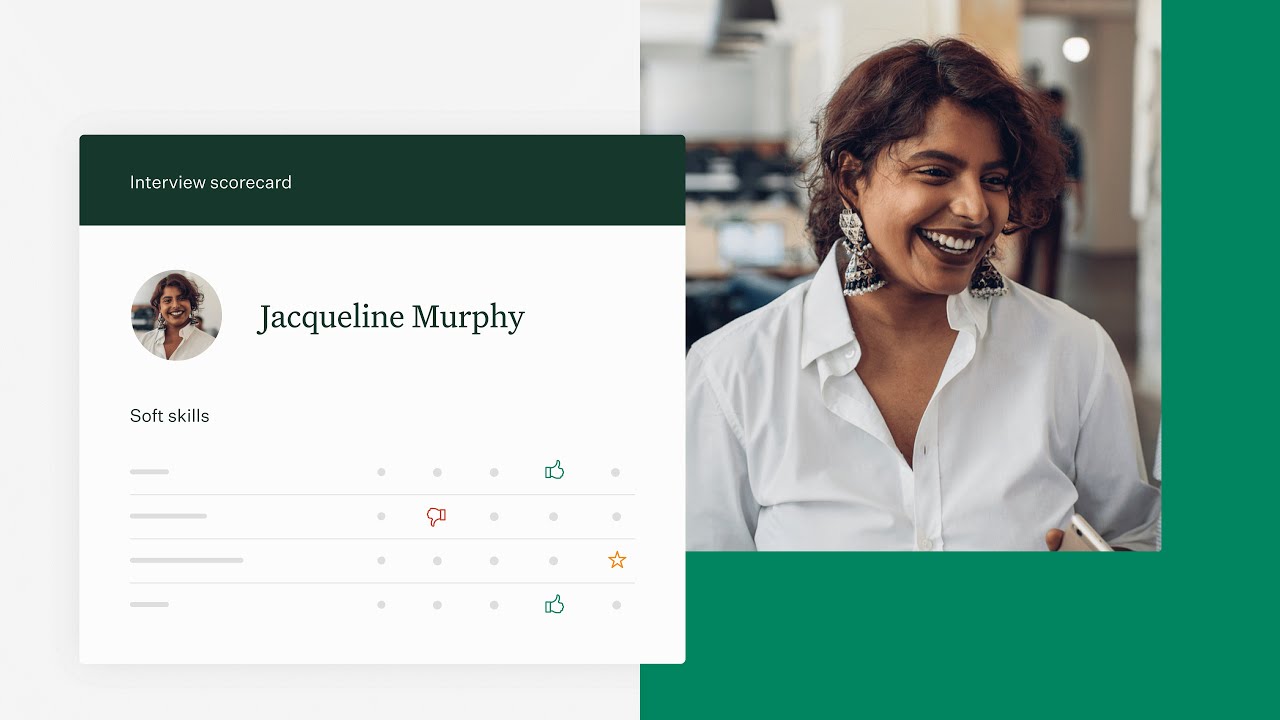
Screenshots of Greenhouse 3 images
What's great
- Most mature structured-hiring workflows in the segment (scorecards, interview kits, calibration)
- Reporting depth executive leadership trusts (DEI metrics, time-to-fill cohorts, source-of-hire)
- 400+ integrations work cleanly out of the box (DocuSign, Slack, Zoom, HRIS sync)
Watch-outs
- Custom-pricing only, $20K floor for serious deployments
- Setup takes 12–16 hours to configure properly, not a quick deploy
- UI showing its age vs Ashby (more clicks per task, no inline edits in places)
Pricing breakdown
| Plan | Price | Best for |
|---|---|---|
| Essential | ~$6K/yr | Under 50 employees |
| Advanced | ~$20K/yr | 50–250 employees |
| Expert | ~$35K+/yr | 250–1000 employees |
| Enterprise | Custom | 1000+ employees |
What reviewers say about Greenhouse
Recurring themes across ~3,897 G2 reviews (4.4/5), plus Capterra and SelectSoftware feedback, 2024-2026.
What reviewers praise
- Structured hiring is the recurring standout: reviewers say defining scorecards, interview kits, and role requirements before a job goes live keeps hiring panels consistent and reduces gut-feel decisions.
- The integration library, 500-plus pre-built connectors to HRIS, background-check, and assessment tools, is cited repeatedly as letting teams slot Greenhouse into an existing stack without custom work.
- Reporting and DEI analytics draw consistent praise, with reviewers calling the pipeline and diversity dashboards best-in-class among ATS platforms they have used.
- Collaboration features get named often, with hiring managers and interviewers able to leave structured feedback and coordinate in one place rather than over email threads.
- Onboarding and implementation support are frequently described as thorough, which reviewers credit for getting large recruiting teams live on a standardized process.
What reviewers fault
- Pricing is the most common complaint, and it is quote-only. Startups and small teams repeatedly say Greenhouse is too expensive for their hiring volume and get steered toward cheaper tools.
- Reviewers describe the interface as click-heavy, with simple actions taking too many steps and the layout feeling clunky once workflows get complex.
- The learning curve is steep for new users, and several note that meaningful configuration changes require admin access or vendor support rather than self-serve setup.
- Reporting flexibility is a recurring gripe despite the strong dashboards, with custom reports and date-range handling called harder than they should be without extra setup.
- The upfront configuration burden is real, and reviewers warn that getting full value out of Greenhouse takes deliberate planning, not a quick turn-on.
Loading reviews…
Ashby
Best modern UX, best analyticsScreenshots of Ashby 2 images
What's great
- Cleanest UX in the segment, recruiters actually finish their work in fewer clicks
- Built-in sourcing + ATS + analytics on one platform (no separate Gem subscription needed)
- Modern API and webhooks, easy to wire into your data warehouse
Watch-outs
- Pricing requires a sales conversation, no transparent tier
- Ecosystem younger than Greenhouse, fewer turnkey integrations for legacy HRIS
- Customization can hit walls that Greenhouse doesn't, by design
Pricing breakdown
| Plan | Price | Best for |
|---|---|---|
| Growth | ~$15K/yr | Series A/B |
| Scale | ~$30K/yr | Series B+ |
| Enterprise | $50K+/yr | 40+ hires/qtr |
What reviewers say about Ashby
Recurring themes across ~107 G2 reviews (4.7/5), a smaller but consistent review base, plus Dover and iSmartRecruit feedback, 2024-2026.
What reviewers praise
- The all-in-one consolidation is the recurring headline: reviewers say Ashby replaces separate ATS, CRM, and scheduling tools in one workflow, and several credit it with cutting real cost out of their recruiting stack.
- BI-grade analytics get named more than any other feature, with reviewers building highly customized funnel, source, and quality-of-hire reports without exporting to an outside tool.
- Reviewers consistently call day-to-day recruiting tasks fast and efficient once configured, with referrals and pipeline movement singled out as smooth.
- AI features including interview recording are highlighted, with candidate opt-out and recordings used as a feedback resource for interviewers.
What reviewers fault
- The learning curve is the dominant complaint. The advanced reporting and automation that reviewers love also take real time to master, especially for teams new to data-driven recruiting.
- The deep configurability can feel over-engineered for simple hiring needs, and reviewers describe the UI as click-heavy in places.
- A subset of reviewers on the entry Foundations plan note that key automations and offer-letter flexibility are gated behind higher tiers.
- Ashby fits growth-stage teams running structured hiring with a dedicated recruiter, and reviewers with lighter or occasional hiring say the power is more than they need.
Loading reviews…
Zoho Recruit
Best for budget-conscious teams in the Zoho ecosystem
Screenshots of Zoho Recruit 3 images
What's great
- Cheapest "named brand" ATS, $25/user/mo with full feature access
- Native integration with the broader Zoho One suite (CRM, HR, Books)
- Both in-house and agency editions, flexible for hybrid teams
Watch-outs
- UX is dated, more form-heavy than the modern tools
- AI features lag behind Ashby and Manatal
- Best when you're already on Zoho; standalone, there are better options
Pricing breakdown
| Plan | Price | Best for |
|---|---|---|
| Standard | $25/user/mo | SMBs new to a full ATS |
| Professional | $50/user/mo | Multi-recruiter teams + automation |
| Enterprise | $75/user/mo | Custom workflows + agency mode |
What reviewers say about Zoho Recruit
Recurring themes across ~2,900 G2 reviews (4.1/5) and Capterra reviews (4.3/5), 2024-2026.
What reviewers praise
- Price-to-feature ratio is the most repeated compliment: reviewers say Zoho delivers lead scoring, workflow automation, and multi-currency support at a fraction of the cost of HubSpot or Salesforce.
- Depth of the Zoho ecosystem is consistently praised by teams already using Zoho Books, Zoho Desk, or Zoho Campaigns, who describe the cross-app data flow as a genuine alternative to buying multiple point solutions.
- The Canvas drag-and-drop UI builder, added in recent years, appears in newer positive reviews as a meaningful upgrade, letting non-technical admins redesign the record layout without code.
- Workflow automation breadth gets strong marks, with reviewers pointing to multi-condition rules, scheduled actions, and blueprint approval processes as features competitors lock behind enterprise tiers.
- Lead management tools including assignment rules, scoring, and conversion tracking are frequently cited as thorough and configurable for teams with defined sales processes.
What reviewers fault
- Customer support is the single most common complaint across G2 and Capterra, with reviewers on standard plans describing slow ticket responses, inconsistent answers, and difficulty escalating urgent issues.
- The learning curve is steep enough that multiple reviewers recommend hiring a Zoho consultant for initial setup, especially for automation, Deluge scripting, and module customization.
- The mobile app has reliability problems that appear consistently in recent reviews, including bugs that prevent notes from displaying, missed call logs, and crashes under poor connectivity.
- Integration with non-Zoho tools is frequently described as more friction than the docs suggest, with third-party connectors requiring Zapier workarounds or custom API work for stable two-way sync.
- The interface, despite recent improvements, is still called cluttered and overwhelming by first-time CRM buyers, and the density of settings can make routine tasks harder to find than in leaner tools.
Loading reviews…
Workable
Best for SMB high-volume hiring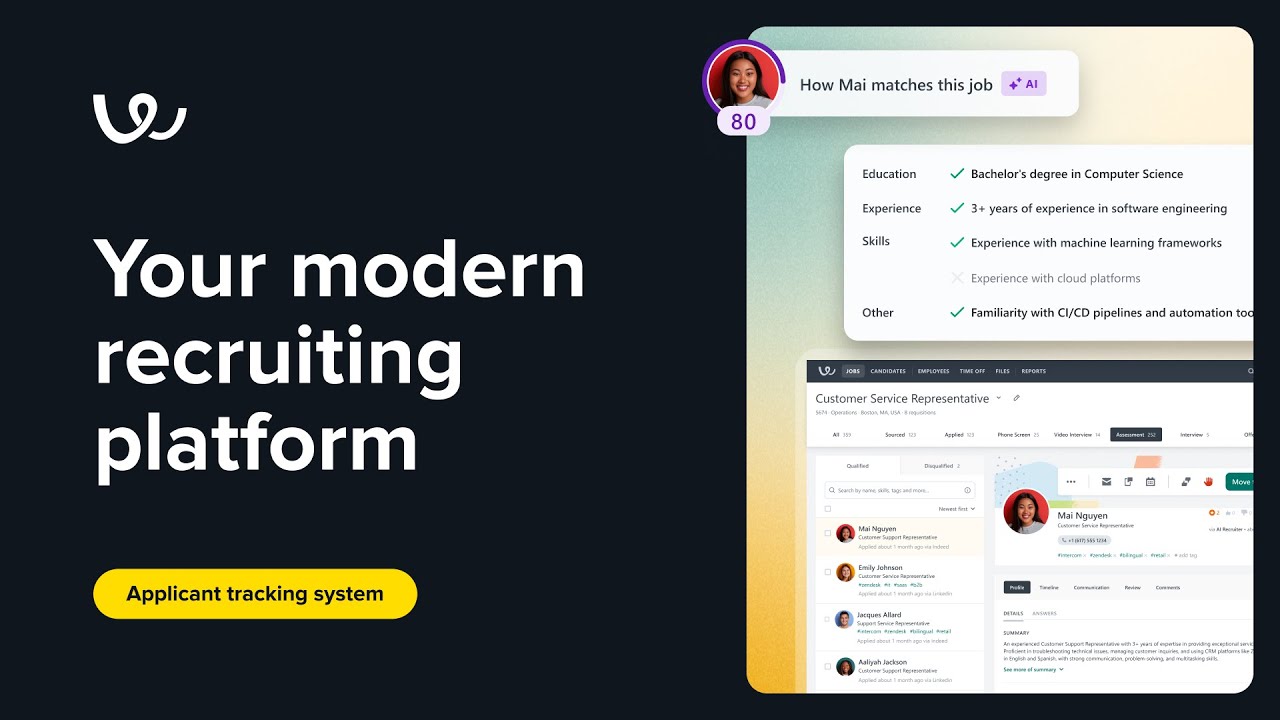
Screenshots of Workable 3 images
What's great
- Honest mid-market pricing starting at $149/mo for up to 3 active users
- Strong sourcing layer with AI matching (one-click sourcing across LinkedIn-style profiles)
- Deploys in days, not weeks: one of the few ATS tools where a small team can go live in a single sprint
Watch-outs
- Less depth on structured hiring (scorecards exist but are not the focus)
- Best for under-50-hires/year; past that the reporting gaps show
- AI candidate matching is more keyword-based than the marketing implies
Pricing breakdown
| Plan | Price | Best for |
|---|---|---|
| Starter | $149/mo | Up to 3 active users |
| Standard | $299/mo | Up to 10 users (annual billing) |
| Premier | $599/mo | Unlimited jobs + premium features |
| Enterprise | Custom | 1000+ employee orgs |
What reviewers say about Workable
Recurring themes across ~702 G2 reviews (4.4/5), plus Capterra and SoftwareFinder feedback, 2024-2026.
What reviewers praise
- Ease of use is the recurring praise, with reviewers saying the clean interface is intuitive even for hiring managers who have never touched an ATS before.
- Speed of deployment gets named often: reviewers describe going from purchase to first job posted faster than with other ATS platforms they evaluated.
- Job-posting distribution and candidate sourcing draw consistent praise, including the AI recruiter that scans a large candidate database and surfaces matches beyond keyword search.
- Slack and collaboration integrations are called out repeatedly for pushing real-time application and candidate updates to the team instead of siloing them in the ATS.
- Candidate tracking and pipeline transparency are cited as strengths, with reviewers saying it is easy to see where every applicant sits and keep hiring teams aligned.
What reviewers fault
- Pricing is a leading complaint, and reviewers note the removal of the cheaper starter plan roughly doubled the entry cost for small and small-mid teams.
- Paid add-ons compound the cost, with reviewers flagging that video interviews and SMS texting are billed on top of the base plan and inflate the real monthly bill well above the advertised price.
- Automations are described as half-finished by several reviewers, who note they trigger on stages but not on disposition reasons, so some intended workflows cannot be built.
- Reporting and some integrations are called constrained, and reviewers say bulk operations can feel sluggish.
- AI sourcing quality is mixed: reviewers say results are solid for common roles but broad and noisy for niche, specialized, or non-English-market positions, requiring heavy manual filtering.
Loading reviews…
Lever
Best for high-touch + executive sourcingScreenshots of Lever 3 images
What's great
- Strong CRM layer for nurturing passive candidates over months
- Best-in-class for executive and competitive talent markets where the recruiter relationship is the hire
- Useful campaign and nurture workflows other ATSes don't ship out of the box
Watch-outs
- Less powerful at high volume than Workable or Greenhouse
- Pricing is opaque, mid-market contracts land $30K–$60K/yr
- Product roadmap has slowed since the Employ acquisition in 2022
Pricing breakdown
| Plan | Price | Best for |
|---|---|---|
| LeverTRM Hire | ~$22K/yr | SMB hiring teams |
| LeverTRM Nurture | ~$40K/yr | Mid-market with sourcing focus |
| Enterprise | $60K+/yr | 500+ employees |
What reviewers say about Lever
Recurring themes across ~2,102 G2 reviews (4.3/5), plus Capterra, SelectSoftware, and Outsail feedback, 2024-2026.
What reviewers praise
- The native CRM is the recurring differentiator, with reviewers noting Lever was built with candidate relationship management as a core concept rather than a bolt-on, so nurture campaigns and persistent profiles feel integrated.
- Reviewers repeatedly call the platform intuitive and easy to learn, including for occasional users like hiring managers who do not live in the tool daily.
- Search, talent-fit matching, and pipeline staging get named as strengths that keep candidates and open roles moving.
- DEI tracking and collaborative candidate management are cited by reviewers as reasons mid-sized teams standardize on Lever.
- The clean, straightforward layout draws consistent praise for making day-to-day sourcing and pipeline work fast to navigate.
What reviewers fault
- Opaque, quote-only pricing is one of the most common complaints, and reviewers say it makes getting comparable quotes slow.
- Advanced reporting is gated behind higher tiers and extra cost, and reviewers describe the newer analytics layout as harder to use in practice than expected.
- Customization is called more rigid than competitors like Greenhouse, with reviewers wanting more flexibility to tailor workflows.
- Reviewers flag weak onboarding functionality and high fees for API access as gaps in the platform.
- Support quality comes up as a concern, with several reviewers attributing slower or less consistent support to turnover following the company's acquisition.
Loading reviews…
Pinpoint
Best modern UX for SMB recruiting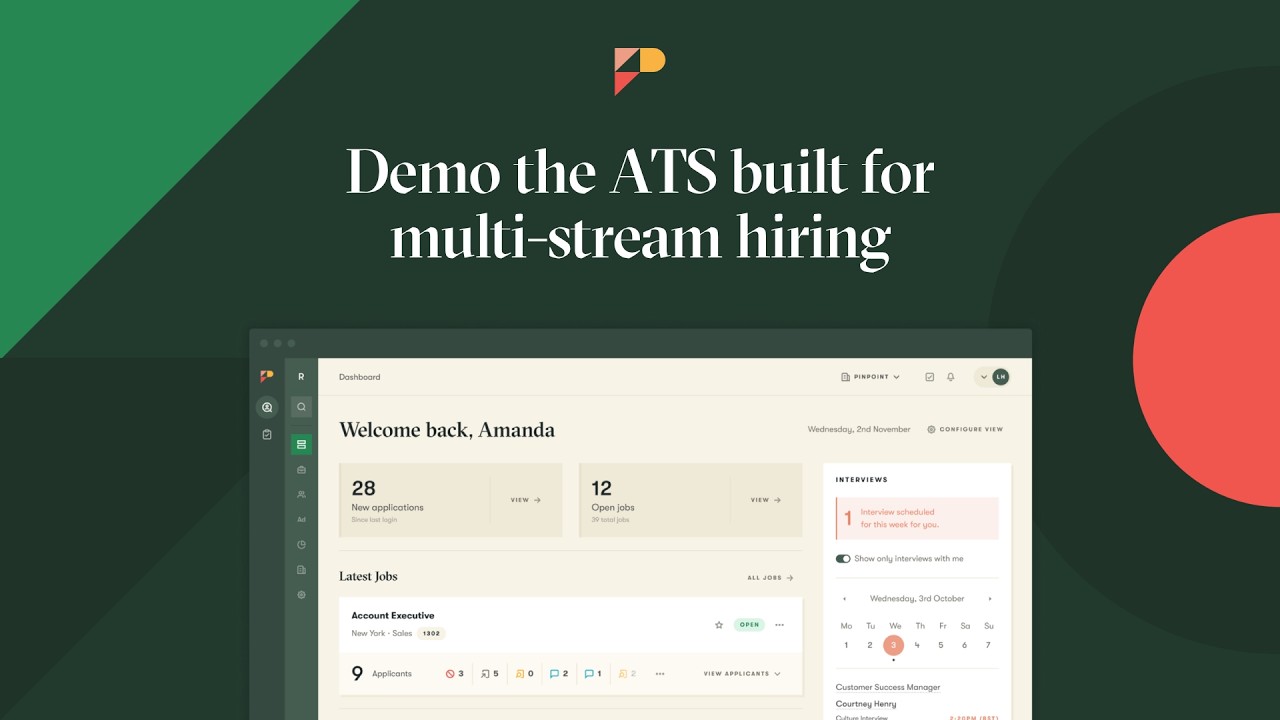
Screenshots of Pinpoint 3 images
What's great
- One of the highest user satisfaction scores on G2 in the ATS category (4.7/5)
- Genuinely modern UX with attention to candidate experience details
- Strong reporting at SMB scale, doesn't require Greenhouse-tier setup
Watch-outs
- Smaller ecosystem of integrations than the US-headquartered tools
- UK-based support hours may not match US team schedules
- Less powerful at 500+ employee scale where workflow complexity grows
Pricing breakdown
| Plan | Price | Best for |
|---|---|---|
| Standard | ~$600/mo | Under 200 employees |
| Plus | ~$1 | 200-500 employees |
| Enterprise | Custom | 500+ with custom workflows |
What reviewers say about Pinpoint
Recurring themes across ~116 G2 reviews (4.8/5), a smaller but consistent review base, plus Capterra and SoftwareAdvice feedback, 2024-2026.
What reviewers praise
- Ease of use is the recurring headline, with reviewers on both G2 and Capterra calling the interface intuitive and simple to manage for hiring managers and candidates alike.
- Customer support is named as a standout, with reviewers repeatedly describing the team as responsive and hands-on during setup and daily use.
- Automated emails and templates get credited with cutting admin time across the hiring process, from job posting through scheduling.
- The included onboarding portal is called out as a differentiator, with reviewers noting it came bundled rather than as a paid add-on and improved their new-hire experience.
What reviewers fault
- Reporting depth is the most common complaint, with reviewers saying analytics and data-export capabilities could be stronger for deeper hiring analysis.
- Admin setup has a learning curve, and reviewers note the flexibility is great once configured but getting there takes time and patience.
- Some reviewers say basic functions are missing and that requested improvements take a long time to ship.
- Customization and the mobile experience draw milder recurring criticism, with reviewers wanting more room to tailor the platform and a more polished mobile interface.
Loading reviews…
Recruit CRM
Best for agencies + headhunting firms
Screenshots of Recruit CRM 3 images
What's great
- Purpose-built for staffing agencies, not adapted from in-house ATS
- Strong Chrome extension for sourcing from LinkedIn and other channels
- Affordable per-user pricing, scales without surprise upgrades
Watch-outs
- In-house corporate recruiting teams will find it light on structured-hiring features
- Reporting is functional but not deep
- Smaller name than Bullhorn, but consistently higher G2 satisfaction
Pricing breakdown
| Plan | Price | Best for |
|---|---|---|
| Pro | $85/user/mo | Agencies up to 10 users |
| Business | $125/user/mo | 10-25 user agencies |
| Enterprise | $165/user/mo | Multi-office staffing firms |
Loading reviews…
Manatal
Best budget-friendly AI-powered ATS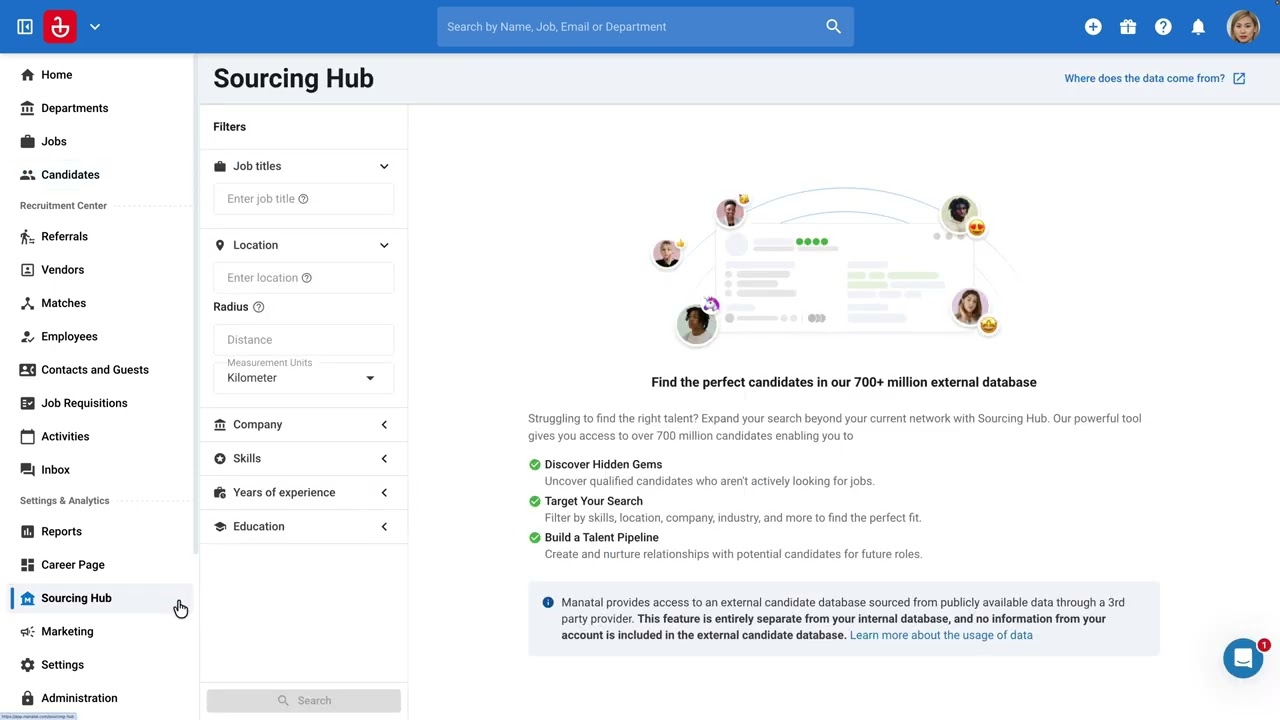
Screenshots of Manatal 3 images
What's great
- Cheapest fully-featured ATS in this guide ($19/user/mo with AI matching)
- AI candidate scoring genuinely useful for first-pass screening
- Multi-language interface (12+ languages), strong for global teams in Asia and EMEA
Watch-outs
- UX is functional, not delightful
- Reporting is shallow compared to Greenhouse or Ashby
- Support response times can stretch beyond 24 hours on standard plans
Pricing breakdown
| Plan | Price | Best for |
|---|---|---|
| Professional | $19/user/mo | Small in-house teams |
| Enterprise | $39/user/mo | SMBs needing advanced features |
| Custom | Quote | Recruiting agencies + enterprise |
What reviewers say about Manatal
Recurring themes across ~141 Capterra reviews (4.6/5) and TrustRadius reviewer feedback, 2024-2026.
What reviewers praise
- Value for money is the most repeated praise, with reviewers consistently saying the per-seat pricing is meaningfully cheaper than enterprise ATS alternatives.
- The Kanban pipeline view for candidate management is called out repeatedly for making it easy to visualize hiring stages at a glance.
- LinkedIn and Gmail integrations receive consistent commendation for connecting sourcing and outreach without needing to leave the platform.
- Fast onboarding and minimal training requirements come up across reviews, with teams reporting quick adoption without a formal rollout process.
- Customer support responsiveness gets strong marks at the initial setup stage, with reviewers noting multiple available contact channels.
What reviewers fault
- Job board posting integration has persistent technical issues, with reviewers reporting location field recognition failures even after support intervention.
- Resume parsing quality draws complaints for not reliably separating first and last name fields, requiring manual cleanup on imported profiles.
- Boolean search functionality is called limited compared to enterprise-grade alternatives, making deep database filtering difficult for senior sourcers.
- Reporting and analytics are described as basic, lacking the depth needed for mid-market teams that want recruiter productivity or pipeline conversion data.
- Some reviewers experienced sudden account deactivations without written notice, with support unable to explain the reason, creating trust concerns.
Loading reviews…
Recruiterflow
Best CRM-plus-ATS built for staffing and executive search agencies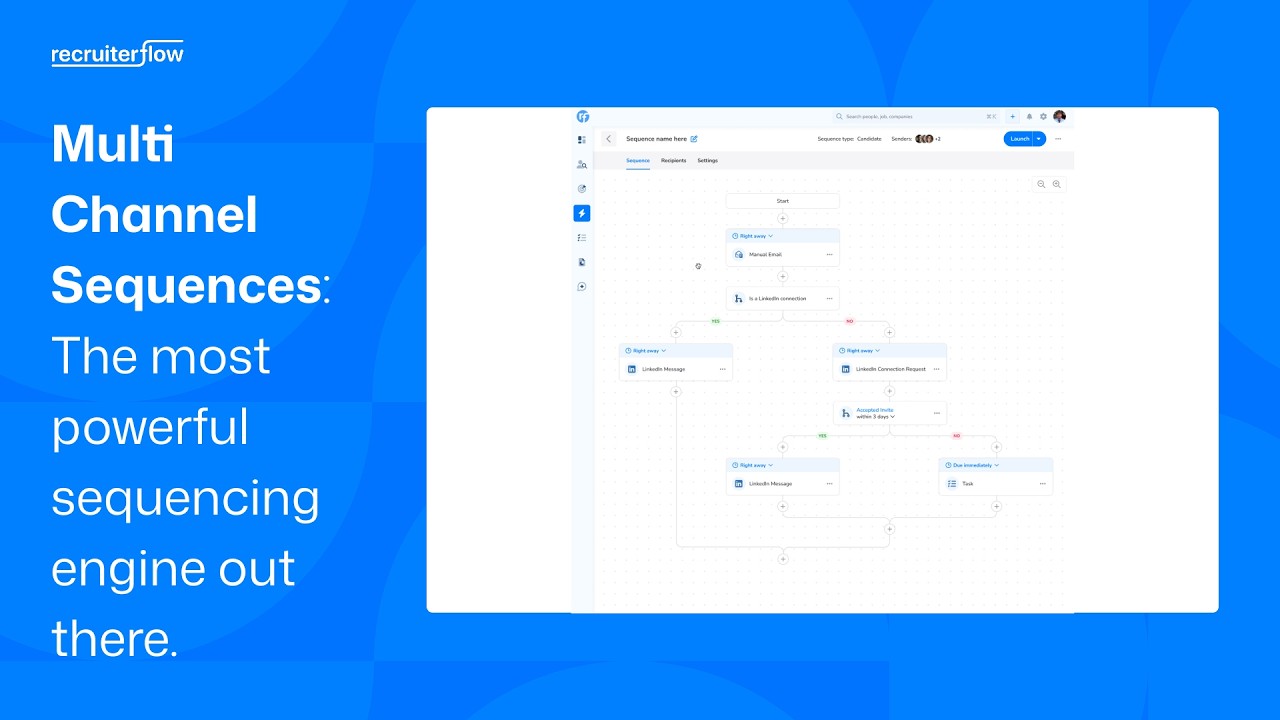
Screenshots of Recruiterflow 2 images
What's great
- Built specifically for recruiting agencies and executive search firms, not adapted from an in-house ATS
- Combines candidate pipeline, client CRM, and multichannel outreach sequencing in one system, so agencies aren't stitching an ATS to a separate sales CRM
- Chrome sourcing extension and AI candidate-matching cut sourcing time on repetitive searches
Watch-outs
- Priced well above the in-house ATS tier ($119/user/mo billed annually, $149 if billed monthly, vs $19-25 for Manatal or Zoho Recruit), a step up most in-house teams don't need
- No published free tier; evaluating requires a sales demo
- Deepest value shows up at agency scale (multiple recruiters, multiple clients); overkill for a single in-house recruiter
Pricing breakdown
| Plan | Price | Best for |
|---|---|---|
| Platform Plan | $119/mo annual, $149/mo monthly | Agencies wanting the full ATS-plus-CRM platform without the AI agent add-ons |
| AIRA Plan | Custom quote | Larger search firms wanting AIRA's AI agents (notetaker |
Loading reviews…
VidCruiter
Best video-interviewing platform
Screenshots of VidCruiter 3 images
What's great
- Most flexible structured-interview engine in the video-interviewing segment
- Strong integrations with Greenhouse, Workday, Lever as a complementary tool
- Pre-recorded + live + automated reference checks under one roof
Watch-outs
- Standalone ATS features are limited; works best alongside a primary ATS
- Pricing requires a sales conversation, mid-market floor around $8K/yr
- Candidate experience can feel formal if not configured well
Pricing breakdown
| Plan | Price | Best for |
|---|---|---|
| Starter | ~$8K/yr | SMBs |
| Professional | ~$15K/yr | Mid-market |
| Enterprise | $25K+/yr | 500+ screens/mo + workflows |
What reviewers say about VidCruiter
Recurring themes across 125 Capterra reviews (4.6/5), 2024-2026.
What reviewers praise
- Customer support is the top praised factor across reviews, with 24/7 live representative access and fast ticket resolution cited repeatedly
- Automated reference checking returns completed references in 24 to 48 hours, a specific time-saving win over phone-based processes
- Interview scheduling automation reduces back-and-forth with candidates and is called beginner-friendly by HR teams with no technical background
- Platform is highly configurable to specific hiring workflows, with the support team actively helping build custom setups during onboarding
- 97% positive sentiment overall, with talent acquisition leaders at mid-size firms most frequently citing strong ROI on time savings
What reviewers fault
- ATS integration depth is the most common complaint, with Workday and some CRMs not syncing fully as expected out of the box
- Interface is described as occasionally clunky and slower than expected when loading certain screens or switching between candidate records
- Translation and multilingual support gaps frustrate teams hiring across languages, with no automatic translation of interview questions
- Feature set can feel over-built for small teams that only need basic video screening, adding cost and complexity they do not use
- Mobile experience lags behind the desktop version, limiting recruiters who need to review candidate submissions on the go
Loading reviews…
Checkr
Best background check provider
Screenshots of Checkr 3 images
What's great
- Fastest turnaround in the category (median 24 hours for most checks)
- Clean API, integrates with Greenhouse, Workable, Lever, Workday, Ashby
- Compliance-grade reporting for FCRA, ban-the-box, and state-specific rules
Watch-outs
- Per-check pricing adds up for high-volume hiring; negotiate volume contracts
- Disputed/incorrect records do happen; their dispute process is improving but still friction
- Smaller markets (international hiring) less reliable than US/UK coverage
Pricing breakdown
| Plan | Price | Best for |
|---|---|---|
| Basic+ | $25/check | Identity + SSN + criminal record |
| Essential | $35/check | Adds employment + education verification |
| Professional | $55+/check | Full background + drug screening |
Loading reviews…
More top-rated Recruiting Software worth checking out
Highly rated Recruiting Software that didn't crack our top 10 but are still strong contenders, especially for specific use cases and team sizes.
Bullhorn
For large staffing agencies and RPO firms
Standout: Built for staffing at scale; handles thousands of concurrent placements without breaking workflows
SmartRecruiters
For enterprise hiring teams replacing legacy ATS
Standout: Strong global hiring features with multi-currency offer letters and localized job posting
Gem
For sourcing-heavy teams that want one platform
Standout: 4.8/5 on G2 is the highest rating in the sourcing-plus-ATS category with 257 verified reviews
What reviewers say ★ 4.7 · 123
Praised
- Email sequencing and outreach automation are the top praised features: recruiters cite quick sequence setup, personalization via placeholder tokens, and analytics showing that third-touch emails still convert.
- Candidate pipeline organization earns consistent praise, with reviewers valuing shared project visibility, tagging, and kanban-style tracking that keeps distributed recruiting teams aligned.
- Analytics dashboards are called out by team leads as genuinely useful for pipeline reporting, with customizable views for source attribution and stage conversion that replace manual spreadsheets.
- ATS and LinkedIn Recruiter integration is praised for pulling candidate history and activity into one place, reducing the duplicate-entry work that plagues multi-tool recruiting stacks.
- The talent pool reuse capability is valued for long-cycle roles: reviewers say they regularly resurface past candidates from their own database rather than sourcing from scratch.
Faulted
- Pricing is the most common complaint: reviewers call Gem expensive relative to point solutions, especially when a separate sourcing tool is still needed on top of it.
- The ATS module is flagged as immature by reviewers who adopted it expecting feature parity with established ATS products: critical workflow features were still missing as of early 2026.
- LinkedIn message sending is not supported natively, so in-mail outreach must be done manually outside Gem, breaking the single-workflow experience recruiters expect.
- Dashboard customization is described as cumbersome for non-standard reporting needs: building tailored views requires more configuration than the interface suggests.
- Email address data accuracy is inconsistent: reviewers note that some contact records contain outdated or unreachable addresses, and there is no built-in way to bulk-download candidate lists for external verification.
Breezy HR
For small teams that need a free-forever starting point
Standout: Free-forever Bootstrap plan for one active position, genuinely useful for early-stage teams testing the workflow
Jobvite
For large in-house teams with ATS + recruitment marketing needs
Standout: All-in-one ATS, CRM, recruitment marketing, and onboarding under one contract
Ceipal ATS
For staffing and IT workforce management under one roof
Standout: 4.7/5 across 1,488 G2 reviews is one of the highest ratings in the staffing-ATS segment
What reviewers say ★ 4.6 · 1,261
Praised
- The job board integration breadth, covering LinkedIn, Indeed, ZipRecruiter, Dice, and more, is cited by recruiters as a core reason they stay on the platform.
- Starting pricing around $25 per user per month gets consistent praise as genuinely affordable for staffing firms and small to midsize recruiting teams.
- The 24/7 live customer support availability comes up repeatedly as a differentiator, with reviewers calling the team fast and accessible during urgent issues.
- Resume parsing and Boolean search capabilities are praised for speeding up candidate sourcing, with reviewers highlighting the AI-driven matching as a time saver.
- The workflow automation and mass email tooling gets strong marks from high-volume recruiters managing large candidate pipelines across multiple clients.
Faulted
- Platform speed is the single most common gripe, with reviewers describing slow page loads and lag during peak usage when handling large datasets.
- Duplicate candidate profiles and missing contact details after resume imports appear in a significant share of negative reviews.
- The user interface draws criticism for feeling clunky and outdated, with some reviewers saying basic tasks require too many clicks.
- Session timeouts and login issues are flagged repeatedly as disruptive, particularly for teams working across time zones or shared accounts.
- Dashboard reporting only pulls data from the last three months by default, forcing users into a separate BI module to access older historical records.
Crelate
For mid-market recruiting and staffing agencies
Standout: ATS, CRM, and client collaboration on one platform without the Bullhorn price tag
Loxo
For recruiting agencies combining sourcing with ATS
Standout: Free-forever plan includes core ATS + CRM, rare in the agency-tool segment
JobAdder
For recruitment agencies prioritizing ease of use
Standout: Strong reputation for clean UX; the 99% CSAT score from 26,000+ users is unusual for the category
Trakstar Hire
For SMBs wanting transparent flat-rate pricing
Standout: Flat-rate pricing ($199/mo Advanced, $399/mo Pro) with unlimited users and jobs, no per-seat gotchas
Tools we considered but excluded
We evaluated more tools than the 21 you see above. These did not make the cut. Saying what we rejected, and why, is the editorial muscle most listicles skip.
- iCIMS: Legacy enterprise focus with a UX that hasn't kept pace; implementation cycles run 6+ months and are painful for mid-market buyers
- JazzHR: Acquired by Employ Inc. in 2022 and the roadmap has slowed materially; Pinpoint or Workable are better options at the same price band
- HireBridge: Regional player with limited US market presence; G2 review count too low to draw reliable conclusions
- JobScore: Chronic integration gaps and a shallow reporting layer; doesn't compete on any axis where our shortlist tools aren't clearly better
- Fountain: Purpose-built for hourly high-volume hiring (retail, logistics); strong in its niche but too narrow for this general-purpose list
- Workstream: Focused exclusively on frontline hourly hiring; outside the scope for knowledge-worker recruiting teams
Honorable mentions
Solid tools that did not crack the main list but are worth tracking, especially for niche use cases.
- Invenias: The go-to ATS for executive search boutiques; purpose-built for retained search workflows that general-purpose ATSes don't handle well
- HireVue: The enterprise video-interviewing layer used by Fortune 500 companies; pairs with Greenhouse or Workday for structured interview programs at scale
- Rippling: Not an ATS at its core, but Rippling Recruiting is worth evaluating if you're already on Rippling HRIS and want a single-system hire-to-pay workflow
The five recruiting-software sub-categories
The recruiting-software market splits into five sub-categories that get confused with each other. This guide compares tools across all five, so the right pick depends on what you actually need.
Applicant Tracking Systems (ATSes). The pipeline manager. Greenhouse, Workable, Ashby, Lever, Pinpoint, Manatal, Zoho Recruit. Every hiring team needs one, and if the ATS is the only piece you’re shopping for, our standalone ATS comparison scores them head to head.
Sourcing tools. Active outreach to passive candidates. LinkedIn Recruiter dominates. Gem is the modern alternative. Ashby and Workable ship sourcing layers built in; standalone tools are usually unnecessary below 100 hires a year.
Video interviewing. Pre-recorded screens, structured live interviews. VidCruiter, HireVue, Spark Hire. Useful at high volume where first-round screens are 60%+ of recruiter time. Our AI interview platform picks go deeper on the async-scoring end of this category.
Background checks. Checkr, Sterling, GoodHire. Most ATSes pass off to one of these via integration. Not a place to skimp.
Recruiting CRMs. For staffing agencies and executive search firms. Recruit CRM, Bullhorn, Invenias. Different workflow from in-house corporate hiring.
The 20 tools in this guide hit all five categories. Below: how to actually choose.
Selection criteria: what to test in your trial
The pattern of which ATS trials succeed and which stall is consistent. Eight things to test before committing.
One, configure your real workflow on a real role. Don’t use demo data. Take an actual open role, set up the requisition, build the scorecards, route to actual hiring managers. Half of “the demo was great” feedback turns into “the implementation was painful” because demos hide the configuration depth.
Two, time the recruiter’s clicks per candidate. Take a candidate from sourced to screened to interviewed to offered. Count clicks. The difference between a good and great ATS is often 8 clicks vs 22 clicks across the full lifecycle. Multiply by 500 candidates a year and that’s hours of recruiter time.
Three, run a calibration meeting. Get three interviewers to score the same candidate independently, then meet to reconcile. The platforms with strong scorecards and calibration views (Greenhouse, Ashby) make this 15 minutes. The weaker ones turn it into a meeting that runs over.
Four, export the data. Try to pull every candidate from the last 30 days into a CSV with all custom fields. If this requires support tickets or “talk to your CSM”, the platform’s data isn’t actually yours. Workable, Greenhouse, Ashby all pass this test. A few enterprise tools quietly fail it.
Five, test the candidate experience. Apply as a candidate. Time how long the application takes. Count the screens. The platforms with poor candidate UX leak applications at the form stage, where long or clunky flows drive real drop-off; Pinpoint and Ashby have the cleanest candidate experiences in this guide.
Six, run an integration end-to-end. Send a Greenhouse candidate to Checkr to Workday. If anything breaks, fix it during the trial: not after the contract is signed. Most “integration available” claims are technically true but operationally fragile.
Seven, ask the CSM about renewal pricing. Year-one pricing is the marketing pitch. Ask: what did your average customer pay in year two and year three? If they can’t give you a real range, assume 20–30% increases.
Eight, find three current customers in your size band and call them. Not the references the vendor offers. Find them on LinkedIn or via your network. Ask the unfiltered question: would you buy this again at full price? The answer tells you more than any G2 review.
Where the 20 ATS tools differ by tier
Most ATS evaluations stall because teams compare marketing pages, not actual feature availability by tier. This table cuts through that. Cells marked • mean the feature exists but requires manual configuration or is limited in scope; $ means it’s a paid add-on; tier names indicate which plan unlocks the feature.
| Tool | Free tier | AI sourcing | Structured interview kits | Custom workflows | Sandbox env |
|---|---|---|---|---|---|
| Greenhouse | ✗ Demo only | $ Smart Sourcer | ✓ all tiers | ✓ all tiers | ✓ Expert+ |
| Ashby | ✗ Demo only | ✓ Growth+ | ✓ all tiers | ✓ all tiers | ✓ Scale+ |
| Workable | • 15-day trial | ✓ Standard+ | • templates only | ✓ Standard+ | ✗ |
| Lever | ✗ Demo only | ✓ Nurture tier | • basic forms | ✓ Enterprise | ✗ |
| Pinpoint | ✗ Demo only | ✗ | ✓ all tiers | ✓ Standard+ | ✗ |
| Recruit CRM | ✓ 14-day trial | • limited | ✗ | ✓ Business+ | ✗ |
| Manatal | ✓ 14-day trial | ✓ Professional+ | • manual setup | ✓ Enterprise | ✗ |
| VidCruiter | ✗ Demo only | ✗ | ✓ all tiers | ✓ Professional+ | ✗ |
| Checkr | ✗ Contract | ✗ | ✗ | • packages only | ✗ |
| Zoho Recruit | ✓ 15-day trial | • Zia limited | • manual setup | ✓ Professional+ | ✗ |
| Bullhorn | ✗ Demo only | • limited | ✗ | ✓ Corporate+ | ✗ |
| SmartRecruiters | ✗ Demo only | ✓ Professional+ | • basic kits | ✓ all tiers | ✗ |
| Gem | ✓ 7-day trial | ✓ all paid tiers | • via ATS connector | ✓ Growth+ | ✗ |
| Breezy HR | ✓ free forever | ✓ Growth+ | ✗ | ✓ Growth+ | ✗ |
| Jobvite | ✗ Demo only | ✓ add-on | • basic forms | ✓ all tiers | ✗ |
| Ceipal ATS | ✓ trial | ✓ all paid tiers | • manual setup | ✓ Professional+ | ✗ |
| Crelate | ✓ trial | ✓ Business Plus | ✗ | ✓ Business+ | ✗ |
| Loxo | ✓ free plan | ✓ Professional+ | ✗ | ✓ Basic+ | ✗ |
| JobAdder | ✗ Demo only | • limited | ✗ | ✓ Advanced | ✗ |
| Trakstar Hire | ✗ Demo only | ✗ | • basic | ✓ Pro | ✗ |
Greenhouse and Ashby are the only tools that ship structured interview kits as a first-class feature on every paid tier. Manatal and Zoho Recruit both have the fields for it but require manual configuration that adds a day or more of setup work.
The sandbox environment row is the one enterprise IT teams ask about most; only Greenhouse and Ashby pass that check cleanly.
ATS security and EEOC reporting, tier by tier
Enterprise IT will ask about all five of these before signing off. Most ATS tools pass the SOC 2 and GDPR baseline by virtue of being established SaaS; the real differentiators are EEOC reporting depth and how long audit logs are retained.
| Tool | SOC 2 Type II | GDPR | EEOC reporting | SSO-SAML | Audit logs |
|---|---|---|---|---|---|
| Greenhouse | ✓ | ✓ | ✓ full suite | ✓ all tiers | ✓ 7-yr retention |
| Ashby | ✓ | ✓ | ✓ cohort views | ✓ Scale+ | ✓ Scale+ |
| Workable | ✓ | ✓ | • basic exports | ✓ Premier+ | • 12-mo retention |
| Lever | ✓ | ✓ | • manual export | ✓ Enterprise | ✓ Enterprise |
| Pinpoint | ✓ | ✓ | • basic exports | ✓ Plus+ | • 12-mo retention |
| Recruit CRM | ✓ | ✓ | ✗ | ✓ Business+ | • 90-day retention |
| Manatal | ✓ | ✓ | ✗ | ✓ Enterprise | • 90-day retention |
| VidCruiter | ✓ | ✓ | • structured data | ✓ all tiers | ✓ Professional+ |
| Checkr | ✓ | ✓ | ✓ FCRA + state | ✓ | ✓ full history |
| Zoho Recruit | ✓ | ✓ | • basic exports | ✓ Enterprise | • 12-mo retention |
| Bullhorn | ✓ | ✓ | • basic | ✓ Corporate+ | • 12-mo retention |
| SmartRecruiters | ✓ | ✓ | • exports | ✓ all tiers | • 12-mo retention |
| Gem | ✓ | ✓ | ✗ | ✓ Growth+ | ✓ Growth+ |
| Breezy HR | ✓ | ✓ | ✗ | ✓ Business+ | • 90-day retention |
| Jobvite | ✓ | ✓ | • manual export | ✓ Enterprise | • 12-mo retention |
| Ceipal ATS | ✓ | ✓ | ✗ | ✓ Professional+ | • 90-day retention |
| Crelate | ✓ | ✓ | ✗ | ✓ Business Plus | • 12-mo retention |
| Loxo | ✓ | ✓ | ✗ | ✓ Enterprise | • 90-day retention |
| JobAdder | ✓ | ✓ | ✗ | ✓ Advanced | • 12-mo retention |
| Trakstar Hire | ✓ | ✓ | ✗ | ✓ Pro | • 90-day retention |
Greenhouse is the only ATS with a genuine full EEOC reporting suite and seven-year audit log retention out of the box, which is why legal-sensitive industries (financial services, healthcare, federal contractors) default to it almost without exception. Ashby has cohort-level EEOC views but requires the Scale tier.
Manatal and Recruit CRM have no EEOC reporting path, which rules them out for any US employer required to file EEO-1 reports. For background checks, Checkr’s FCRA and state-specific compliance layer is the strongest in the category.
Integration depth across the recruiting stack
The integrations row is where “available” and “works reliably” diverge fastest. Native (N) means the vendor maintains the integration and it syncs without a third-party connector. Marketplace (M) means it’s available in the vendor’s marketplace with variable quality. Dollar sign ($) means a paid third-party tool (usually Merge.dev or Workato) is required.
Dot (•) means Zapier is the only path. X means no current integration path exists.
| Tool | Workday | BambooHR | DocuSign | LinkedIn Recruiter | Slack |
|---|---|---|---|---|---|
| Greenhouse | N | N | N | N | N |
| Ashby | N | N | N | N | N |
| Workable | N | N | M | N | N |
| Lever | N | N | N | N | N |
| Pinpoint | M | N | M | M | N |
| Recruit CRM | $ | M | M | N | N |
| Manatal | M | M | • | N | N |
| VidCruiter | N | N | N | N | N |
| Checkr | N | N | N | ✗ | N |
| Zoho Recruit | M | N | M | N | N |
| Bullhorn | N | M | N | N | N |
| SmartRecruiters | N | N | M | N | N |
| Gem | N | N | M | N | N |
| Breezy HR | M | M | • | N | N |
| Jobvite | N | N | M | N | N |
| Ceipal ATS | M | M | M | N | • |
| Crelate | M | M | M | N | N |
| Loxo | M | M | • | N | N |
| JobAdder | M | M | M | N | N |
| Trakstar Hire | • | M | • | M | • |
Greenhouse and Ashby have the strongest native integration story across the full recruiting stack. Both maintain first-party connectors to Workday, BambooHR, DocuSign, LinkedIn Recruiter, and Slack, meaning the integrations are updated by the vendor teams when API versions change.
Manatal’s DocuSign path runs through Zapier, which is worth knowing before you build an offer-letter workflow on top of it. VidCruiter is worth calling out here: as a complementary tool rather than a primary ATS, its native connectors to Workday and all major ATSes are where it earns its keep.
How to choose the right recruiting software for your team
Five questions, in order. Answer them, and the tool list shrinks to two or three real options.
1. Roles you will hire next year
- Under 10 roles/year. A structured spreadsheet with consistent scorecards usually beats a poorly-configured ATS. If you must, Manatal at $19/user/mo or Workable Starter at $149/mo.
- 10–50 roles/year. Workable, Pinpoint, or Zoho Recruit. Stay simple; you don’t need Greenhouse depth yet.
- 50–200 roles/year. Greenhouse, Ashby, or Lever. This is the band where structured hiring pays back. Pick based on culture fit.
- 200+ roles/year. Greenhouse, Ashby, or enterprise Workday Recruiting. Plan for a dedicated TA Ops hire.
2. Candidate sourcing as a core problem
If yes, lean Ashby (built-in sourcing) or Lever (CRM-style). If sourcing is a separate workflow you already manage in LinkedIn Recruiter or Gem, pick the ATS that integrates cleanest: Greenhouse and Workable both excel here.
3. Level of hiring-manager involvement
High involvement (hiring managers actually do screens, scorecards, interview kits): Greenhouse and Ashby. Their HM UX is where they win. Lower involvement (recruiters do most of the work): Workable, Recruit CRM, Manatal all work.
4. Your reporting requirement
Need DEI cohort reporting, source-of-hire ROI, time-to-fill by interviewer? You’re in Greenhouse / Ashby territory. Need basic pipeline metrics? Workable or Pinpoint. No real reporting needs? Manatal or Zoho Recruit.
5. The ecosystem you already run
Already on Zoho One? Zoho Recruit is the obvious pick for the integration savings. Already on Workday HRIS? Workday Recruiting integrates cleanly but is a heavier product. Modern tech stack (Slack, Notion, Linear)? Ashby or Greenhouse. Whichever way you lean, confirm the ATS syncs cleanly with your HRIS platform so a new hire’s record flows from offer to onboarding without re-entry.
How to implement recruiting software without breaking your hiring
Most ATS implementations fail not because the tool is wrong, but because the rollout is.
Phase 1 (weeks 1–2): Configuration with two stakeholders. Your head of TA and one hiring manager. Build the workflows, scorecards, and offer templates against ONE real open role. Don’t try to model every job family yet.
Phase 2 (weeks 3–4): Pilot with one job family. Engineering, sales, whatever your biggest hiring area is. Run 3–5 real roles end-to-end. Fix what breaks. Document the playbook.
Phase 3 (weeks 5–8): Expand to all hiring managers. This is where adoption breaks. Plan 30-minute training per hiring manager. Build a Loom library of the 6 most-common tasks. Don’t just send a wiki page.
Phase 4 (weeks 9–12): Decommission the old tool. Export historical data. Save read-only access for 12 months. Cut over completely: partial cutovers create two-tool chaos.
The teams who skip phase 2 are the teams whose ATS contracts go unused by month six. Hiring managers will quietly revert to spreadsheets and emails if the new tool isn’t piloted properly.
What’s changing in recruiting software in 2026
AI candidate matching is finally good enough for first-pass. Manatal, Ashby, and Greenhouse Smart Sourcer all ship matching that’s measurably better than keyword search, and the standalone AI recruiting platforms push it further with automated sourcing and outreach. Not for evaluation: for ranking. Use it.
Video interviewing is shifting to async-first. VidCruiter and HireVue moved most volume to pre-recorded screens. Candidates push back less than they did in 2022 because the format is now expected. Time savings for recruiters are significant.
ATS pricing is creeping up. Greenhouse and Lever both raised list prices in late 2025. Expect 8–15% annual increases on renewal across the segment.
Candidate experience is a real wedge. Pinpoint and Ashby are winning logos partly because their candidate-facing flows are better. Workable and Greenhouse are responding with redesigns shipping through 2026.
Background checks are getting compliance-heavy. State-level legislation (NYC, California, Colorado in particular) is making the background-check step more complex. Checkr’s compliance-grade reporting is increasingly the differentiator vs cheaper providers.
What recruiting software really costs in year one
Sticker prices vs what you’ll actually pay, based on published pricing plus third-party cost analyses and buyer reports (May 2026):
| Segment | Listed price | Real all-in (year 1) |
|---|---|---|
| Workable (SMB starter) | $149/mo | $2,000–$3,500 |
| Manatal | $19/user/mo | $800–$2,400 |
| Pinpoint (SMB) | ~$600/mo | $9,000–$14,000 |
| Breezy HR (Growth) | $273/mo | $3,300–$5,000 |
| Lever (mid-market) | Custom | $28,000–$55,000 |
| Greenhouse (mid-market) | Custom | $32,000–$48,000 |
| Ashby (Series B+) | Custom | $30,000–$60,000 |
| SmartRecruiters (enterprise) | $15K/yr+ | $40,000–$100,000+ |
| Workday Recruiting (enterprise) | Custom | $80,000+ |
The “real all-in” includes implementation fees ($3K–$15K depending on tier), training credits, integration setup, and the first year of customer success services. Year two typically lands 10–20% higher as the team uses more seats or modules.
The recruiting software to pick by hiring stage
- Pre-Series A, under 30 hires/year: Manatal or Workable Starter
- Bootstrapped team, first 10 hires: Breezy HR free plan or Loxo free plan
- Series A/B, 30–80 hires/year: Workable Premium or Ashby
- Series B+/mid-market, 80–250 hires/year: Ashby or Greenhouse, tie goes to UX preference
- Enterprise, 250+ hires/year: Greenhouse or Workday Recruiting
- Staffing agency, under 50 recruiters: Recruit CRM or Crelate
- Staffing agency, 50–200 recruiters: Bullhorn or Ceipal ATS
- Already on Zoho One: Zoho Recruit
- Sourcing-first team, Series A/B: Gem
- Add-ons regardless of ATS: Checkr for background checks; VidCruiter if you do 50+ video screens/month
Whichever you pick, run the eight-step selection criteria above before signing. The wrong ATS choice is a 12-month problem to fix.
Frequently asked questions
What's the difference between ATS and recruiting software?
ATS (Applicant Tracking System) is the candidate-pipeline-management piece: Greenhouse, Workable, Lever, Ashby. "Recruiting software" is the broader bucket that also includes sourcing tools (LinkedIn Recruiter, Gem), video interviewing (VidCruiter, HireVue), background checks (Checkr), and reference checking (Searchlight). Most hiring teams need an ATS plus one or two adjacent tools. This guide covers both.
How much should recruiting software actually cost?
For SMBs (under 200 employees) plan $200–$800/mo for an ATS plus $25–$60 per background check. Mid-market (200–1,000 employees) lands $25K–$60K/yr for the ATS plus $10K–$30K/yr for sourcing and video tools. Enterprise contracts (1,000+) start around $80K/yr for the ATS alone. Watch for hidden costs around implementation, custom integrations, and admin training: these can add 30–50% to year-one budgets.
When should we move off our scrappy ATS or spreadsheet?
Three triggers. One, you're hiring more than 20 roles a year and pipeline tracking is breaking down. Two, hiring managers stop adopting your current tool because the UX hurts. Three, you can no longer answer questions like "what's our time-to-fill by source?" or "which interviewer is the bottleneck?" without manual spreadsheet work. Hit two of these and the ROI of a real ATS is clear. Below that, even a structured spreadsheet often outperforms a poorly-configured Greenhouse.
Does AI in recruiting software actually work yet?
For sourcing and first-pass screening, yes, within bounded use cases. Manatal's AI ranking is genuinely useful as a first-pass filter. Greenhouse's Smart Sourcer and Ashby's matching are solid. For interview evaluation, mostly no: the platforms that overpromise AI-driven evaluation tend to deliver biased outcomes that fail EEOC scrutiny. Use AI for ranking and matching, not for deciding.
How long does ATS migration take?
For under-500-employee teams, plan six to twelve weeks. For 500–2,000, a full quarter. Past 2,000 employees, six months or more. The most painful part is migrating historical candidate notes, scorecards, and offer letters: most migrations lose 20–40% of this historical data. Mitigate by exporting raw before kicking off the migration, and by accepting that some history just lives in the old tool's read-only archive.
Greenhouse vs Ashby: which one wins in 2026?
Depends on company stage and culture. Series B+ tech companies with modern data teams increasingly pick Ashby for the UX and built-in analytics. Series C+ companies hiring across multiple functions (sales, engineering, ops, marketing) still pick Greenhouse for the depth of structured hiring and DEI reporting. Both are excellent; the wrong question is "which is better": the right question is "which fits how my team actually wants to hire."
Are there any industry-specific recruiting tools we should know about?
Yes. Healthcare hires lean on iCIMS Healthcare and Symplr. Tech-only companies often layer Gem (sourcing) on top of Greenhouse or Ashby. Retail and hourly hiring leans on Fountain or Workstream. Executive search firms use Invenias or Recruit CRM. Agencies use Bullhorn. The general-purpose tools in this list cover 80% of use cases, but if you're in one of those verticals look at the industry-specific options first.
What recruiting software does Google or Meta use?
Big tech runs largely on internal tools built around a core ATS. Google uses an internal system layered on Workday. Meta built its own ATS layer on top of Greenhouse APIs. Amazon and Microsoft use Workday Recruiting at scale. For 99% of companies these internal stacks aren't relevant; the lesson is that even the most resourced hiring teams in the world started with a commercial ATS (Greenhouse or Workday) and customized from there.
How do we measure ROI of recruiting software?
Three metrics matter. One, time-to-fill: most teams see a 20–30% reduction with a proper ATS over spreadsheets. Two, recruiter time per hire: measure how many roles a single recruiter can run; the right tool moves this from 8 to 15+ concurrent roles. Three, source-of-hire quality: track which channels produce 12-month retainers. A $30K/yr ATS that saves a recruiter half their day and reduces time-to-fill by 10 days pays for itself in the first 50 hires.
Can recruiting software integrate with our HRIS?
Every tool in this list has native integrations with the major HRIS platforms: Workday, BambooHR, Rippling, Gusto, Justworks, ADP, Paychex. For smaller HRIS tools, expect to use Merge.dev or a custom webhook. The integration that matters most is the offer-to-onboarding handoff: make sure the candidate record flows cleanly from ATS to HRIS without manual re-entry. This is the one place most ATS evaluations miss until month three.
Related helpful reads
Write a review
Posts to the page right away. Keep it real — no links or email addresses.