

Comparing the best Enterprise Accounting Software of 2026 includes 1. NetSuite 2. Finstackk 3. Sage Intacct 4. SAP Cloud ERP (S/4HANA Cloud) 5. Oracle Fusion Cloud ERP 6. Workday Financial Management 7. Acumatica 8. Microsoft Dynamics 365 Finance 9. FloQast 10. DualEntry 11. BlackLine 12. Certinia (FinancialForce) 13. Infor CloudSuite Financials 14. Workiva 15. Zuora 16. Sage X3 17. Deltek Costpoint 18. QuickBooks Online Advanced 19. Vena Solutions 20. Trintech Cadency 21. Epicor Kinetic.
TL;DR
- NetSuite: Best overall enterprise ERP for multi-entity consolidation. 4.1/5 on G2 across 4,775 reviews; from $999/mo.
- Finstackk: Best cloud-native alternative for mid-to-enterprise teams scaling past legacy ERPs. 4.8/5 on G2 across 412 reviews; from $49/mo.
- Sage Intacct: Best SaaS-native enterprise accounting for GAAP-clean closes. 4.3/5 on G2 across 4,211 reviews; from about $400/mo.
- SAP Cloud ERP (S/4HANA Cloud): Best for global manufacturing and regulated supply chains. 4.4/5 on G2 across 886 reviews; custom quote.
- Oracle Fusion Cloud ERP: Best for finance teams already inside the Oracle ecosystem. 4.0/5 on G2 across 121 reviews; from $600/mo.
- Workday Financial Management: Best for finance-plus-HR consolidation with the cleanest UX. 4.2/5 on G2 across 282 reviews; custom quote.
- Acumatica: Best consumption-based pricing for mid-to-large enterprise. 4.4/5 on G2 across 2,007 reviews; custom quote.
- Microsoft Dynamics 365 Finance: Best for Microsoft-stack enterprises on Azure and Power Platform. 4.0/5 on G2 (new standalone listing); custom quote.
- FloQast: Best close-management layer on top of an existing ERP. 4.6/5 on G2 across 1,407 reviews; around $12,000/yr.
- DualEntry: Best modern architecture for SaaS-native multi-entity consolidation. 4.9/5 on G2 across 122 reviews; custom quote.
- BlackLine: Best for automated reconciliation and financial close controls. 4.5/5 on G2 across 1,102 reviews; from around $17,500/yr.
Twenty accounting and ERP finance platforms built for companies past the point where QuickBooks or Xero can hold multiple entities, a real consolidation close, and an auditor who wants a full trail. From NetSuite to SAP to niche close-management add-ons, this is what actually holds up at scale.
Best Enterprise Accounting Software comparison: features, pricing and verdicts
| Tool | Best for | Starting price | Free trial | External rating |
|---|---|---|---|---|
Best overall enterprise ERP for multi-entity consolidation | $999/mo | Demo only | G2 4.1/5 (4,775 reviews) | |
 Finstackk
 | Best cloud accounting suite for mid-to-enterprise teams scaling past legacy ERPs | $49/mo | 14-day free trial | G2 4.8/5 (412 reviews) |
Best SaaS-native enterprise accounting for GAAP-clean closes | ~$400/mo | Demo only | G2 4.3/5 (4,211 reviews) | |
Best for global manufacturing and regulated supply chains | Custom quote | Demo only | G2 4.4/5 (886 reviews) | |
Best for finance teams already inside the Oracle ecosystem | $600/mo | Demo only | G2 4.0/5 (121 reviews) | |
Best for finance-plus-HR consolidation with the cleanest UX | Custom quote | Demo only | G2 4.2/5 (282 reviews) | |
Best consumption-based pricing for mid-to-large enterprise | Custom quote | Demo only | G2 4.4/5 (2,007 reviews) | |
Best for Microsoft-stack enterprises on Azure and Power Platform | Custom quote | 30-day trial | G2 4.0/5 (Under 100 (new standalone listing) reviews) | |
Best close-management layer on top of an existing ERP | ~$12,000/yr | Demo only | G2 4.6/5 (1,407 reviews) | |
Best modern architecture for SaaS-native multi-entity consolidation | Custom quote | Demo only | G2 4.9/5 (122 reviews) | |
Best for automated reconciliation and financial close controls | ~$17,500/yr | Demo only | G2 4.5/5 (1,102 reviews) | |
For Salesforce-native professional services enterprises | Custom quote | Demo only | G2 4.0/5 (433 reviews) | |
For manufacturing-heavy enterprises with complex supply chains | Custom quote | Demo only | G2 3.8/5 (~200 reviews) | |
For SEC reporting, disclosure management, and audit-ready filings | Custom quote | Demo only | G2 4.5/5 (1,852 reviews) | |
For usage-based billing and revenue recognition at scale | Custom quote | Demo only | G2 3.9/5 (310 reviews) | |
For manufacturing and distribution enterprises needing on-prem or cloud flexibility | ~$25,000/yr | Demo only | G2 4.5/5 (See G2 (Rockford Computer listing) reviews) | |
For government contractors needing project-based accounting | Custom quote | Demo only | G2 4.2/5 (652 reviews) | |
For companies scaling past QuickBooks Online who aren't ready for a full ERP | ~$250/mo | 30-day free trial | G2 4.0/5 (3,825 reviews) | |
For Excel-native FP&A, budgeting, and consolidation | Custom quote | Demo only | G2 4.5/5 (476 reviews) | |
For banking and insurance close automation and reconciliation | Custom quote | Demo only | G2 4.3/5 (148 reviews) | |
For discrete manufacturers needing financials tied to production | ~$175/user/mo | Demo only | G2 3.9/5 (569 reviews) |
How we chose these tools
We started from the enterprise accounting shortlist in our broader best-accounting-software pilot and re-scored every tool through a multi-entity, consolidation-heavy lens: how each platform handles inter-company eliminations, subsidiary-level chart of accounts, audit trail depth, and the SOX or SOC 2 controls a public or PE-backed company needs. NetSuite and Sage Intacct carry the same G2 ratings and pricing data verified in the parent pilot. Every other tool was independently checked against its own G2 review page and current vendor pricing page in late July 2026. We weighted ERP-scope tools (SAP, Oracle, Workday) against pure accounting and close-management tools (FloQast, BlackLine) separately, since most enterprise finance stacks run both.
How we weight enterprise accounting software for the Topickz score
Every tool above is scored against the fixed rubric below and combined using these weights into the Topickz score on each card. The weights are set for enterprise accounting software specifically, they are not copied from another category, and we publish them so you can see what moved a ranking and re-weight for your own priorities.
| Criterion | Weight | What we checked |
|---|---|---|
| Multi-entity consolidation | 19% | At enterprise scale consolidation is the daily reality. We checked inter-company eliminations, currency translation, and how many entities the engine handles before it slows down. |
| Audit trail and controls | 16% | An auditor wants to see who changed what and when. We looked at audit trail depth, segregation of duties, and approval controls baked into the ledger. |
| SOX and SOC 2 readiness | 14% | Public and PE-backed companies live under real control frameworks. We weighed how each tool supports SOX and whether the vendor carries SOC 2 attestation. |
| Subsidiary chart of accounts | 12% | Every subsidiary has its own structure that still has to roll up. We tested how the platform manages a subsidiary-level chart of accounts against a group standard. |
| Close management and automation | 11% | The close is where finance teams lose nights. We checked reconciliation automation, close checklists, and how much of the month-end runs itself. |
| ERP scope and modules | 10% | Some finance stacks need inventory, procurement, and CRM in one data model. We scored ERP breadth separately from the pure accounting and close tools. |
| Reporting and analytics | 8% | Board and management reporting has to come off the same numbers. We looked at reporting depth and how well analytics reach across entities. |
| Total cost and implementation | 6% | Enterprise deals carry six-figure implementations and multi-year contracts. We noted realistic go-live time and where the hidden costs sit. |
| Vendor viability and support | 4% | You are signing up for years. We weighed vendor stability, the partner ecosystem, and how much implementation help is available in your market. |
| Total | 100% |
Read the full TopickZ.com testing methodology for how we run each test, score every criterion, and combine them into a single rating.
Detailed reviews
NetSuite
Best overall enterprise ERP for multi-entity consolidation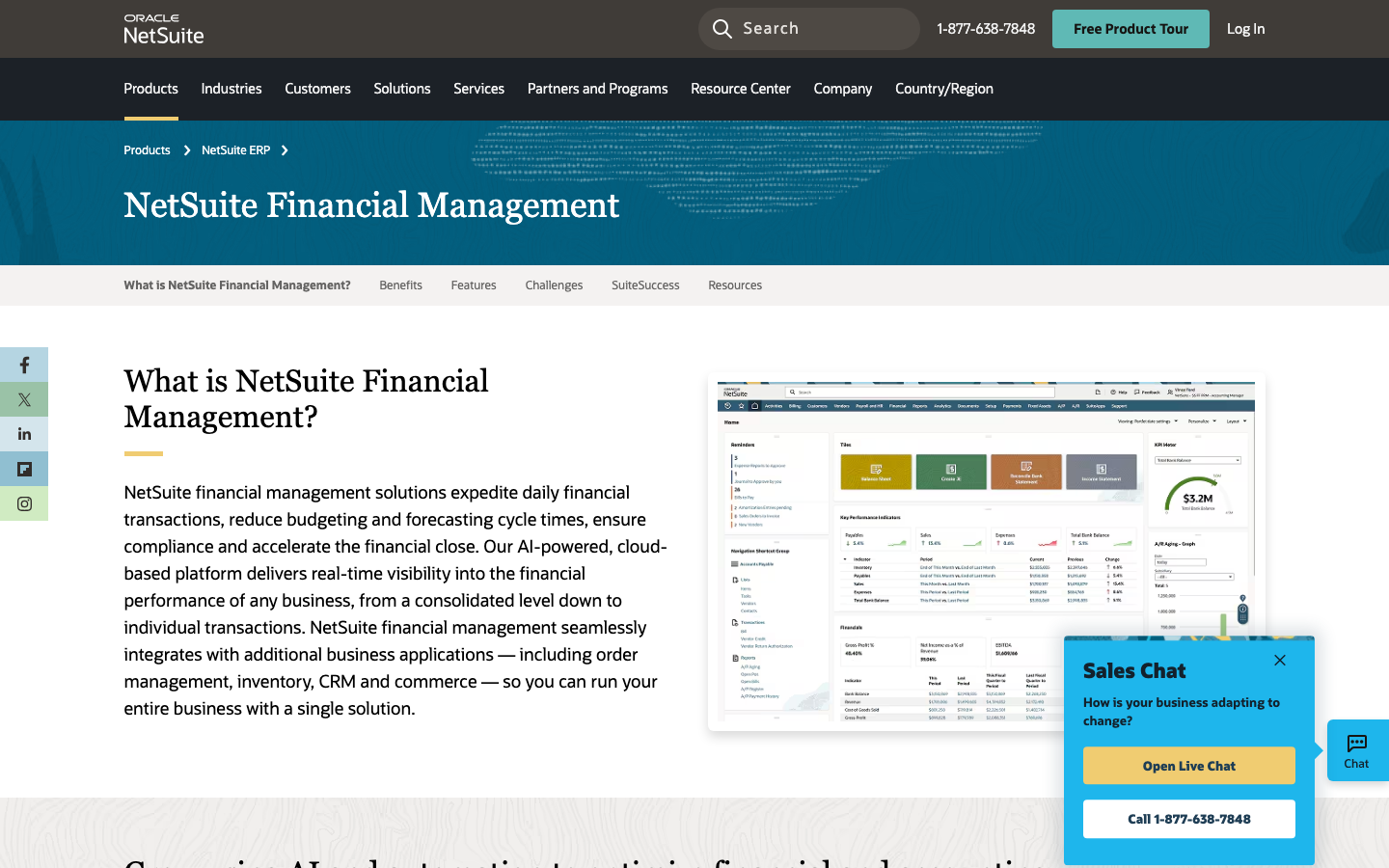
What's great
- The only tool in this list that handles full ERP scope natively: financial consolidation, inventory, CRM, professional services automation, and e-commerce under one data model
- Multi-entity and multi-subsidiary consolidation with automated inter-company eliminations, the standard most PE-backed roll-ups end up standardizing on after an acquisition
- Partner ecosystem of 400+ NetSuite Solution Providers means implementation support is available in every major US metro and most international markets
Watch-outs
- Year-one all-in cost for a 20-user mid-market deployment runs $80K-$200K once you add implementation ($25K-$100K), module add-ons, and training
- Interface is the most dated in this comparison; the [4,775 G2 reviews](https://www.g2.com/products/netsuite/reviews) average 4.1/5, with UI complaints the most consistent theme
- NetSuite contracts are typically 3-year annual commitments; getting out before year three means termination fees that are rarely disclosed before signing
NetSuite is the default answer once a company runs more than two entities, has completed or is planning an acquisition, or needs inventory and CRM inside the same financial data model. The consolidation engine handles inter-company eliminations automatically, which is where spreadsheet-based finance teams lose the most hours at close. 4,775 G2 reviews sit at 4.1/5, the lowest UX score in this list, but the breadth of ERP scope is unmatched below SAP or Oracle tier. Budget $999/mo base plus $129-199/user, plus $25K-$100K in implementation, and a realistic 5-month go-live. Finance teams past $30M revenue with real subsidiary complexity should start here.
Pricing breakdown
| Plan | Price | Best for |
|---|---|---|
| Limited Edition | ~$999/mo + users | Under 50 employees |
| Mid-Market Edition | ~$2 | 50-250 employees |
| Enterprise Edition | Negotiated | 250+ employees |
| Add-on modules | $500-$2 | Advanced inventory |
Security & compliance
| Standard | Availability |
|---|---|
| SOC 2 Type II | Yes |
| GDPR | Yes |
| HIPAA | Yes |
| SSO / SAML | Yes |
| Audit logs | ✓ full trail |
NetSuite compliance summary: SOC 2 Type II is yes, GDPR is yes, HIPAA is yes, SSO/SAML is yes, and audit logs is ✓ full trail.
Key integrations
| Integration | Type |
|---|---|
| Gmail | N/A |
| Outlook | N/A |
| Slack | N/A |
| LinkedIn Sales Navigator | N/A |
| Outreach / Salesloft | N/A |
NetSuite integration summary: Gmail is not specified, Outlook is not specified, Slack is not specified, LinkedIn Sales Navigator is not specified, and Outreach or Salesloft is not specified.
Feature availability
| Feature | Status |
|---|---|
| Consolidation | ✓ |
| Custom roles | ✓ |
| Intercompany elim | ✓ automated |
| Multi entity | ✓ native |
| Sandbox | Enterprise+ |
NetSuite feature availability summary: Consolidation (✓), Custom roles (✓), Intercompany elim (✓ automated), Multi entity (✓ native), and Sandbox (Enterprise+).
What reviewers say about NetSuite
Recurring themes across ~4,775 G2 reviews (4.1/5) and verified Capterra reviews, 2024-2026.
What reviewers praise
- The ERP-native CRM is the core selling point: sales data, order history, fulfillment status, and revenue recognition all live in one database with no middleware, which eliminates reconciliation work that standalone CRM integrations require.
- Multi-entity and multi-currency support via OneWorld is praised by businesses operating across subsidiaries or countries, where the alternative is running separate systems per entity.
- Real-time financial visibility from anywhere on a cloud platform gets repeated positive mention, especially from teams that previously ran on-premise ERP systems.
- Customization flexibility is recognized at enterprise scale, with administrators noting the platform adapts to non-standard business processes through SuiteScript and custom records.
- Consolidated reporting across sales, inventory, and finance in a single dashboard is valued by operations and finance teams who previously extracted data from multiple systems.
What reviewers fault
- Renewal price shock is among the most common complaints: initial discounts expire and users report annual cost increases of 40 to 50 percent, with the Advanced Customer Support add-on alone running $24,000 per year for some accounts.
- Support quality scores lower than most enterprise peers, with G2 reviewers citing ticket escalation delays spanning weeks, frequent account manager turnover, and unresolved bugs that sit open for extended periods.
- The CRM module itself is considered secondary to the ERP core, and reviewers with complex sales processes frequently run Salesforce in parallel for pipeline management while using NetSuite only for post-sale operations.
- The interface is consistently described as dated and dense, with a 'Learning Curve' tag appearing over 380 times in G2 sentiment data and usability scores trailing Sage Intacct and Dynamics 365 BC.
- Year-one implementation costs range from $50,000 to over $200,000 when consultant fees are included, and 31 percent of implementations run longer than planned due to scope creep and SuiteSuccess methodology rigidity.
Loading reviews…
Finstackk
Best cloud accounting suite for mid-to-enterprise teams scaling past legacy ERPs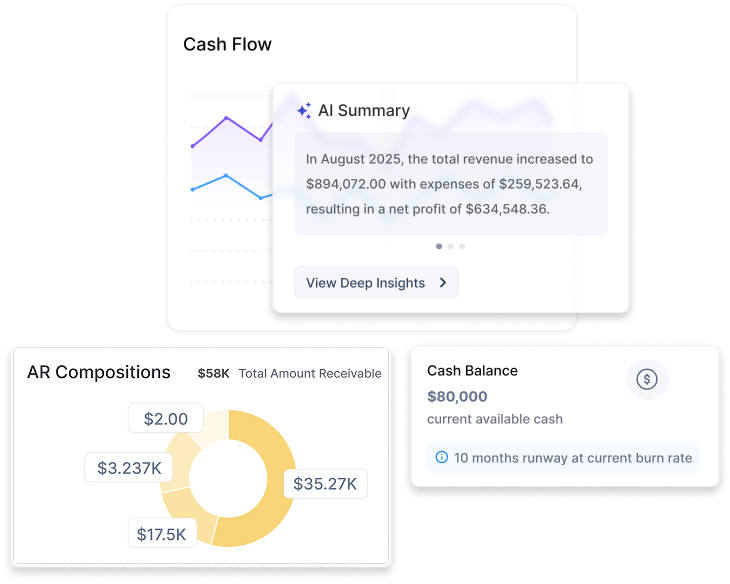
What's great
- Multi-entity consolidation with automated inter-company eliminations on the Scale tier, the enterprise accounting feature most commonly cited as the reason companies migrate to NetSuite
- Unlimited users with granular role-based permissions across entities, removing the per-seat cost that makes Sage Intacct expensive to scale
- Full audit trail and SOC 2 Type II certification, meeting the compliance requirements most enterprise procurement teams check first
Watch-outs
- Newer platform with a smaller native integration library than QuickBooks or Xero; some connections require Zapier
- No mobile app yet; web-only interface limits on-the-go access for field-heavy teams
- G2 review volume is still growing; 412 reviews are solid but below the most-established platforms in this comparison
Finstackk sits between Sage Intacct and full Oracle ERP in the enterprise accounting stack, targeting the specific finance team that needs multi-entity consolidation and a clean audit trail but cannot justify the $80K-$200K year-one cost of NetSuite. 412 G2 reviews average 4.8/5. The $199/mo Scale tier covers multi-entity, custom reports, and sandbox environments that most enterprise teams use daily. Best for PE-backed companies and mid-market businesses that need enterprise controls without a multi-year ERP commitment.
Pricing breakdown
| Plan | Price | Best for |
|---|---|---|
| Starter | $49/mo | Up to 3 users, core accounting and bank sync |
| Growth | $99/mo | Unlimited users, multi-currency, automation workflows |
| Scale | $199/mo | Multi-entity, custom reports, priority support |
| Enterprise | Custom | Dedicated onboarding, SLA, SSO, custom integrations |
Security & compliance
| Standard | Availability |
|---|---|
| SOC 2 Type II | Yes |
| GDPR | Yes |
| HIPAA | No |
| SSO / SAML | Scale+ |
| Audit logs | Yes |
Finstackk compliance summary: SOC 2 Type II is yes, GDPR is yes, HIPAA is no, SSO/SAML is scale+, and audit logs is yes.
Key integrations
| Integration | Type |
|---|---|
| Gmail | N/A |
| Outlook | N/A |
| Slack | N/A |
| LinkedIn Sales Navigator | N/A |
| Outreach / Salesloft | N/A |
Finstackk integration summary: Gmail is not specified, Outlook is not specified, Slack is not specified, LinkedIn Sales Navigator is not specified, and Outreach or Salesloft is not specified.
Feature availability
| Feature | Status |
|---|---|
| Audit logs | ✓ |
| Custom roles | ✓ |
| Intercompany elim | ✓ automated |
| Multi entity | ✓ Scale+ |
| Sandbox | Scale+ |
Finstackk feature availability summary: Audit logs (✓), Custom roles (✓), Intercompany elim (✓ automated), Multi entity (✓ Scale+), and Sandbox (Scale+).
Loading reviews…
Sage Intacct
Best SaaS-native enterprise accounting for GAAP-clean closes
What's great
- Native ASC 606 revenue recognition built into the core platform; the AICPA has publicly endorsed Intacct for three consecutive years
- Dimensional reporting slices P&L by department, project, location, or any custom dimension, which is what a controller managing five entities actually needs at month-end
- Multi-entity consolidation with real-time drill-down; teams migrating from NetSuite for the accounting-first use case routinely cite a faster close as the payoff
Watch-outs
- Pricing is module-based and opaque; a realistic enterprise deployment with revenue recognition, multi-entity, and advanced reporting lands $1,500-$4,000/mo, not the $400 starting price
- Implementation takes 4-8 weeks with a certified Sage partner; plan $15K-$40K in professional services on top of year-one licensing
- No native inventory, manufacturing, or CRM modules; enterprises with a physical supply chain layer NetSuite or a dedicated ERP on top
Sage Intacct is the right answer when the finance requirement is GAAP-clean consolidation and audit trail, not full ERP scope. 4,211 G2 reviews at 4.3/5, the highest satisfaction score of any true multi-entity platform in this comparison. The AICPA preference matters directly when auditors walk in for a public-company or PE-portfolio audit. Companies that need inventory or manufacturing alongside the GL should look at NetSuite instead; companies whose complexity is purely financial consolidation across entities get there faster and cheaper on Intacct.
Pricing breakdown
| Plan | Price | Best for |
|---|---|---|
| Base (estimate) | ~$400/mo | Small mid-market |
| Core modules | ~$1 | Multi-entity + revenue recognition |
| Full suite | ~$2 | 50-250 person org |
| Enterprise | Custom quote | 250+ employees |
Security & compliance
| Standard | Availability |
|---|---|
| SOC 2 Type II | Yes |
| GDPR | Yes |
| HIPAA | Yes |
| SSO / SAML | Yes |
| Audit logs | ✓ full trail |
Sage Intacct compliance summary: SOC 2 Type II is yes, GDPR is yes, HIPAA is yes, SSO/SAML is yes, and audit logs is ✓ full trail.
Key integrations
| Integration | Type |
|---|---|
| Gmail | N/A |
| Outlook | N/A |
| Slack | N/A |
| LinkedIn Sales Navigator | N/A |
| Outreach / Salesloft | N/A |
Sage Intacct integration summary: Gmail is not specified, Outlook is not specified, Slack is not specified, LinkedIn Sales Navigator is not specified, and Outreach or Salesloft is not specified.
Feature availability
| Feature | Status |
|---|---|
| Consolidation | ✓ real-time |
| Custom roles | ✓ |
| Intercompany elim | ✓ |
| Multi entity | ✓ native |
| Sandbox | ✓ |
Sage Intacct feature availability summary: Consolidation (✓ real-time), Custom roles (✓), Intercompany elim (✓), Multi entity (✓ native), and Sandbox (✓).
What reviewers say about Sage Intacct
Recurring themes across ~4,211 G2 reviews (4.3/5) and ~559 Capterra reviews (4.3/5), 2024-2026.
What reviewers praise
- Dimensional accounting replaces bloated chart-of-accounts structures; reviewers can slice reporting by entity, department, project, and location without creating duplicate GL accounts.
- Multi-entity consolidation handles intercompany eliminations and currency conversion in ways that comparable mid-market ERPs cannot match.
- Reporting depth and dashboard configurability are consistently praised, with finance teams building the custom views they need without outside help.
- Cloud-native architecture and role-based access controls make it practical for distributed finance teams and external auditors to work from the same data.
- The approval workflow engine and audit trail satisfy compliance requirements for nonprofits and professional services firms facing grant or government reporting.
What reviewers fault
- Implementation cost is the most-cited barrier; annual subscriptions typically run $8,000-$35,000 plus implementation fees of 1.0-1.75x the subscription.
- Almost every worthwhile feature sits behind an add-on module, and reviewers report that renewal quotes expand as Sage adds new billable capabilities.
- The learning curve is steep for non-finance staff; report customization and multi-entity setup require formal training rather than trial-and-error.
- Correcting posted transactions is difficult or impossible in some configurations, forcing workarounds that complicate audit trails.
- The user interface feels dated relative to modern SaaS tools; reviewers note the visual design has not kept pace with competing cloud platforms.
Loading reviews…
SAP Cloud ERP (S/4HANA Cloud)
Best for global manufacturing and regulated supply chains
What's great
- Deepest module coverage of any tool in this list: finance, supply chain, manufacturing, procurement, and HR under one architecture, the standard for global manufacturing and pharma
- Real-time analytics embedded directly in the GL via SAP HANA in-memory computing; finance teams get live consolidated views instead of overnight batch closes
- RISE with SAP bundles software, infrastructure, and migration services into one contract, which simplifies procurement for IT-heavy enterprises used to negotiating single vendor agreements
Watch-outs
- Implementation and change-management costs typically run 1.5-3x the first-year subscription; six-figure to seven-figure deployments are the norm, not the exception
- Initial setup and configuration is the steepest learning curve in this comparison; SAP reviewers on G2 consistently flag limited customization without specialized consultants
- Contract structure (RISE bundling) makes apples-to-apples cost comparison against NetSuite or Intacct genuinely difficult during procurement
SAP Cloud ERP earns its spot for large multinational manufacturers, pharma, and regulated industries where finance, supply chain, and manufacturing genuinely need to live in one system of record. 886 G2 reviews average 4.4/5, with support quality and platform confidence cited as differentiators over smaller ERPs. The tradeoff is real: this is not a tool a 200-person SaaS company should be evaluating. It is the right call for a $500M+ revenue manufacturer with global entities and a dedicated IT organization to run it.
Pricing breakdown
| Plan | Price | Best for |
|---|---|---|
| RISE Essential | Custom quote | Single-entity cloud migration |
| RISE Standard | Custom quote | Multi-entity |
| RISE Enterprise | Custom quote | Full supply chain + manufacturing |
| On-premise perpetual | License + ~22% annual maintenance | Regulated industries requiring on-prem |
Security & compliance
| Standard | Availability |
|---|---|
| SOC 2 Type II | Yes |
| GDPR | Yes |
| HIPAA | ✓ industry cloud |
| SSO / SAML | Yes |
| Audit logs | ✓ full trail |
SAP Cloud ERP (S/4HANA Cloud) compliance summary: SOC 2 Type II is yes, GDPR is yes, HIPAA is ✓ industry cloud, SSO/SAML is yes, and audit logs is ✓ full trail.
Key integrations
| Integration | Type |
|---|---|
| Gmail | N/A |
| Outlook | N/A |
| Slack | N/A |
| LinkedIn Sales Navigator | N/A |
| Outreach / Salesloft | N/A |
SAP Cloud ERP (S/4HANA Cloud) integration summary: Gmail is not specified, Outlook is not specified, Slack is not specified, LinkedIn Sales Navigator is not specified, and Outreach or Salesloft is not specified.
Feature availability
| Feature | Status |
|---|---|
| Consolidation | ✓ real-time HANA |
| Custom roles | ✓ |
| Intercompany elim | ✓ automated |
| Multi entity | ✓ native |
| Sandbox | ✓ |
SAP Cloud ERP (S/4HANA Cloud) feature availability summary: Consolidation (✓ real-time HANA), Custom roles (✓), Intercompany elim (✓ automated), Multi entity (✓ native), and Sandbox (✓).
What reviewers say about SAP Cloud ERP (S/4HANA Cloud)
Recurring themes across public G2, TrustRadius and Gartner Peer Insights reviews of SAP SuccessFactors Workforce Analytics, 2024-2026. A verified rating and count specific to this module could not be confirmed, so no headline figure is shown.
What reviewers praise
- The prebuilt library of workforce metrics and benchmarks is deep, which large HR teams rely on.
- It pulls from the wider SuccessFactors HCM data set for enterprise-grade people reporting.
- Analysts can build custom reports and dashboards once they know the query model.
- It fits large, global enterprises that already run mature, centralized HR data.
What reviewers fault
- Implementation runs long and usually needs consultants to stand it up.
- The interface feels dated and reviewers describe it as not user-friendly.
- There is a steep learning curve to build queries and shape reports.
- The cost and setup effort are overkill for smaller organizations.
Loading reviews…
Oracle Fusion Cloud ERP
Best for finance teams already inside the Oracle ecosystem
What's great
- Full functionality across GL, AP, AR, fixed assets, cash management, and financial reporting in a single module family with per-module pricing
- Cloud-based quarterly updates included in the subscription; no infrastructure to license or patch separately, which matters for IT teams already stretched thin
- Deep integration with other Oracle products (HCM, SCM, EPM) for enterprises that are already Oracle Database or Oracle Cloud customers
Watch-outs
- Smallest G2 review base in this deep-tier comparison at [121 reviews](https://www.g2.com/products/oracle-fusion-cloud-financials/reviews), averaging 4.0/5, less crowd signal than NetSuite or SAP at comparable scale
- Per-module pricing means costs compound quickly; a full financial suite deployment easily clears $10K-$30K/mo before implementation
- UI complexity requires additional training according to reviewers; not a self-serve rollout for a finance team without a dedicated Oracle admin
Oracle Fusion Cloud ERP is the pragmatic pick for enterprises already standardized on Oracle Database, Oracle Cloud Infrastructure, or Oracle HCM, where the financial module extends an existing vendor relationship rather than adding a new one. 121 G2 reviews at 4.0/5 skew heavily toward large enterprises over 1,000 employees, which tracks with the pricing reality. Per-module subscription pricing starting at $600/mo for the base Financials plan sounds approachable, but a real deployment with procurement, project accounting, and consolidation modules stacks costs fast. Evaluate this against NetSuite specifically if you already run other Oracle infrastructure; otherwise the switching cost rarely pays for itself.
Pricing breakdown
| Plan | Price | Best for |
|---|---|---|
| Financials | $600/mo | GL |
| Procurement add-on | Custom quote | Purchase-to-pay workflows |
| Project Management add-on | Custom quote | Project-based revenue and costing |
| Full ERP suite | Custom quote | Large enterprise |
Security & compliance
| Standard | Availability |
|---|---|
| SOC 2 Type II | Yes |
| GDPR | Yes |
| HIPAA | Yes |
| SSO / SAML | Yes |
| Audit logs | ✓ full trail |
Oracle Fusion Cloud ERP compliance summary: SOC 2 Type II is yes, GDPR is yes, HIPAA is yes, SSO/SAML is yes, and audit logs is ✓ full trail.
Key integrations
| Integration | Type |
|---|---|
| Gmail | N/A |
| Outlook | N/A |
| Slack | N/A |
| LinkedIn Sales Navigator | N/A |
| Outreach / Salesloft | N/A |
Oracle Fusion Cloud ERP integration summary: Gmail is not specified, Outlook is not specified, Slack is not specified, LinkedIn Sales Navigator is not specified, and Outreach or Salesloft is not specified.
Feature availability
| Feature | Status |
|---|---|
| Consolidation | ✓ |
| Custom roles | ✓ |
| Intercompany elim | ✓ |
| Multi entity | ✓ native |
| Sandbox | ✓ |
Oracle Fusion Cloud ERP feature availability summary: Consolidation (✓), Custom roles (✓), Intercompany elim (✓), Multi entity (✓ native), and Sandbox (✓).
Loading reviews…
Workday Financial Management
Best for finance-plus-HR consolidation with the cleanest UX
What's great
- Built on the same object model as Workday HCM, so finance-plus-workforce reporting (headcount cost by department, project-based labor allocation) is native, not stitched together
- Reviewers consistently rate it easier to use and set up than Oracle or SAP, per G2's head-to-head comparison data against Oracle Fusion Financials
- Continuous close capability with real-time reporting reduces reliance on the traditional batch month-end cycle for companies with high transaction volume
Watch-outs
- No supply chain, manufacturing, or inventory modules; a pure finance-and-HR platform, which rules it out for product or manufacturing companies with physical goods
- Smaller review base than NetSuite or SAP at [282 G2 reviews](https://www.g2.com/products/workday-financial-management/reviews), though the 4.2/5 average is solid
- Implementation partners are fewer than the NetSuite or Sage Intacct ecosystem, which can mean longer lead times to find qualified consultants outside major metros
Workday Financial Management is the right pick for a services-heavy or professional-services enterprise where finance and HR need to share one data model, and where a physical supply chain is not part of the picture. 282 G2 reviews put it at 4.2/5, with reviewers repeatedly citing ease of setup and use as the differentiator against Oracle. Typically 20-40% cheaper than Oracle on a per-worker basis when comparing equivalent finance-plus-HR scope, according to third-party ERP research. Companies that need manufacturing or inventory should look elsewhere; Workday does not compete there.
Pricing breakdown
| Plan | Price | Best for |
|---|---|---|
| Financial Management | Custom quote | Mid-market to enterprise |
| Financial Management + HCM bundle | Custom quote | Combined finance and HR deployment |
| Adaptive Planning add-on | Custom quote | FP&A and budgeting layered on top |
Security & compliance
| Standard | Availability |
|---|---|
| SOC 2 Type II | Yes |
| GDPR | Yes |
| HIPAA | Yes |
| SSO / SAML | Yes |
| Audit logs | ✓ full trail |
Workday Financial Management compliance summary: SOC 2 Type II is yes, GDPR is yes, HIPAA is yes, SSO/SAML is yes, and audit logs is ✓ full trail.
Key integrations
| Integration | Type |
|---|---|
| Gmail | N/A |
| Outlook | N/A |
| Slack | Limited |
| LinkedIn Sales Navigator | N/A |
| Outreach / Salesloft | N/A |
Workday Financial Management integration summary: Gmail is not specified, Outlook is not specified, Slack is limited, LinkedIn Sales Navigator is not specified, and Outreach or Salesloft is not specified.
Feature availability
| Feature | Status |
|---|---|
| Consolidation | ✓ continuous |
| Custom roles | ✓ |
| Intercompany elim | ✓ |
| Multi entity | ✓ native |
| Sandbox | ✓ |
Workday Financial Management feature availability summary: Consolidation (✓ continuous), Custom roles (✓), Intercompany elim (✓), Multi entity (✓ native), and Sandbox (✓).
What reviewers say about Workday Financial Management
Recurring themes across ~1,752 Capterra reviews (4.5/5) and G2 reviews (4.0/5), 2024-2026.
What reviewers praise
- Unified platform coverage is the top praise: HR, payroll, talent management, and learning in a single system eliminates the multi-tool sprawl that mid-market buyers were trying to escape.
- Employee self-service is consistently valued by non-HR reviewers: viewing pay stubs, submitting time-off, and updating personal info without contacting HR saves time across the org.
- Reporting and analytics depth draws praise from HR analysts and finance teams who use Workday for headcount planning and compliance tracking with real-time data.
- Payroll accuracy earns strong marks once the system is fully configured, with reviewers citing consistent, on-time payroll runs as a reliable baseline.
- The permissions and role-based access model is called out as genuinely granular, useful for larger orgs that need to separate HR, manager, and employee data views.
What reviewers fault
- The learning curve is the most-cited frustration: even technically comfortable users say full platform fluency takes months, and admin configuration requires specialist knowledge.
- Customization is constrained relative to the price point: reviewers flag inability to customize themes, limited report layout flexibility, and workflow rigidity when policy needs are non-standard.
- Support response times draw repeated criticism, with reviewers describing multi-day ticket turnarounds and difficulty reaching someone who understands their specific configuration.
- Performance issues surface under load: slow report generation on large datasets, page lag during peak hours, and authentication friction from multi-step login flows frustrate daily users.
- Administrative overhead surprises buyers: profile changes and certain HR actions require admin involvement rather than direct self-service, slowing down routine tasks.
Loading reviews…
Acumatica
Best consumption-based pricing for mid-to-large enterprise
What's great
- Consumption-based licensing decouples cost from user count; unlimited users on every tier is the differentiator reviewers cite most on G2
- Largest review base of any pure mid-market-to-enterprise ERP in this list at [2,007 G2 reviews](https://www.g2.com/products/acumatica/reviews), averaging 4.4/5, the highest satisfaction score among true ERP-scope tools
- Strong distribution and light-manufacturing modules make it a real alternative to NetSuite for companies without full enterprise-scale supply chain needs
Watch-outs
- Pricing is entirely partner-negotiated with no public list price, which makes upfront budgeting harder than with NetSuite's published starting tiers
- Weaker global multinational presence than SAP, Oracle, or NetSuite; better suited to primarily US/Canada operations than a company with entities across six continents
- Certified implementation partner quality varies significantly by region, similar to the variance seen with Sage Intacct partners
Acumatica is the value play in the enterprise-adjacent tier, with the unlimited-user consumption model saving real money for organizations with 50+ named users who would otherwise pay per-seat at NetSuite or Sage Intacct rates. 2,007 G2 reviews at 4.4/5 is the highest satisfaction score of any true multi-entity ERP in this comparison, and reviewers consistently call out the intuitive interface. The gap versus NetSuite shows up at true global scale; Acumatica is the better fit for a US-centered mid-market enterprise with distribution or light manufacturing than for a multinational needing 20-country tax compliance out of the box.
Pricing breakdown
| Plan | Price | Best for |
|---|---|---|
| Small Business | Custom quote | Single entity |
| Distribution Edition | Custom quote | Multi-entity |
| Manufacturing Edition | Custom quote | Light manufacturing |
| Enterprise | Custom quote | Full multi-entity consolidation |
Security & compliance
| Standard | Availability |
|---|---|
| SOC 2 Type II | Yes |
| GDPR | Yes |
| HIPAA | Limited |
| SSO / SAML | Yes |
| Audit logs | Yes |
Acumatica compliance summary: SOC 2 Type II is yes, GDPR is yes, HIPAA is limited, SSO/SAML is yes, and audit logs is yes.
Key integrations
| Integration | Type |
|---|---|
| Gmail | N/A |
| Outlook | N/A |
| Slack | N/A |
| LinkedIn Sales Navigator | N/A |
| Outreach / Salesloft | N/A |
Acumatica integration summary: Gmail is not specified, Outlook is not specified, Slack is not specified, LinkedIn Sales Navigator is not specified, and Outreach or Salesloft is not specified.
Feature availability
| Feature | Status |
|---|---|
| Consolidation | ✓ |
| Custom roles | ✓ |
| Intercompany elim | ✓ |
| Multi entity | ✓ native |
| Sandbox | ✓ |
Acumatica feature availability summary: Consolidation (✓), Custom roles (✓), Intercompany elim (✓), Multi entity (✓ native), and Sandbox (✓).
Loading reviews…
Microsoft Dynamics 365 Finance
Best for Microsoft-stack enterprises on Azure and Power Platform
What's great
- Native integration with Power BI, Power Automate, and the broader Microsoft 365 stack; finance teams already living in Excel and Teams get the shortest learning curve of any enterprise ERP here
- Copilot-powered AI features for anomaly detection and cash flow forecasting ship inside the core product rather than as a paid add-on module
- Azure-hosted infrastructure means IT teams already standardized on Microsoft cloud get one procurement relationship instead of a separate ERP vendor
Watch-outs
- G2 does not maintain a single mature standalone review page for Dynamics 365 Finance the way it does for Business Central; the review signal is thinner and split across related Dynamics 365 product listings
- Implementation typically requires a Microsoft-certified partner, and per-module licensing (Finance, Supply Chain, Project Operations) compounds the way Oracle's does
- Smaller third-party implementation ecosystem outside the largest Microsoft partners compared to NetSuite or Sage Intacct's partner network
Dynamics 365 Finance is the pragmatic pick for an enterprise already deep in the Microsoft stack: Azure infrastructure, Power BI dashboards, Teams-based workflows. The review data here is genuinely thinner than the rest of this list; G2 splits Dynamics 365 Finance reviews across related product listings rather than consolidating them the way it does for Business Central, so treat the rating as directional rather than exact. What the platform does well is finance-plus-operations integration for companies running Dynamics 365 Supply Chain Management alongside it. Evaluate it primarily against SAP or Oracle if IT procurement, not finance alone, is driving the ERP decision.
Pricing breakdown
| Plan | Price | Best for |
|---|---|---|
| Finance | Custom quote | Core financial management |
| Finance + Supply Chain | Custom quote | Manufacturing and distribution |
| Finance + Project Operations | Custom quote | Project-based enterprises |
Security & compliance
| Standard | Availability |
|---|---|
| SOC 2 Type II | Yes |
| GDPR | Yes |
| HIPAA | Yes |
| SSO / SAML | Yes |
| Audit logs | ✓ full trail |
Microsoft Dynamics 365 Finance compliance summary: SOC 2 Type II is yes, GDPR is yes, HIPAA is yes, SSO/SAML is yes, and audit logs is ✓ full trail.
Key integrations
| Integration | Type |
|---|---|
| Gmail | N/A |
| Outlook | N/A |
| Slack | N/A |
| LinkedIn Sales Navigator | N/A |
| Outreach / Salesloft | N/A |
Microsoft Dynamics 365 Finance integration summary: Gmail is not specified, Outlook is not specified, Slack is not specified, LinkedIn Sales Navigator is not specified, and Outreach or Salesloft is not specified.
Feature availability
| Feature | Status |
|---|---|
| AI copilot | ✓ |
| Consolidation | ✓ |
| Intercompany elim | ✓ |
| Multi entity | ✓ native |
| Sandbox | ✓ |
Microsoft Dynamics 365 Finance feature availability summary: AI copilot (✓), Consolidation (✓), Intercompany elim (✓), Multi entity (✓ native), and Sandbox (✓).
Loading reviews…
FloQast
Best close-management layer on top of an existing ERP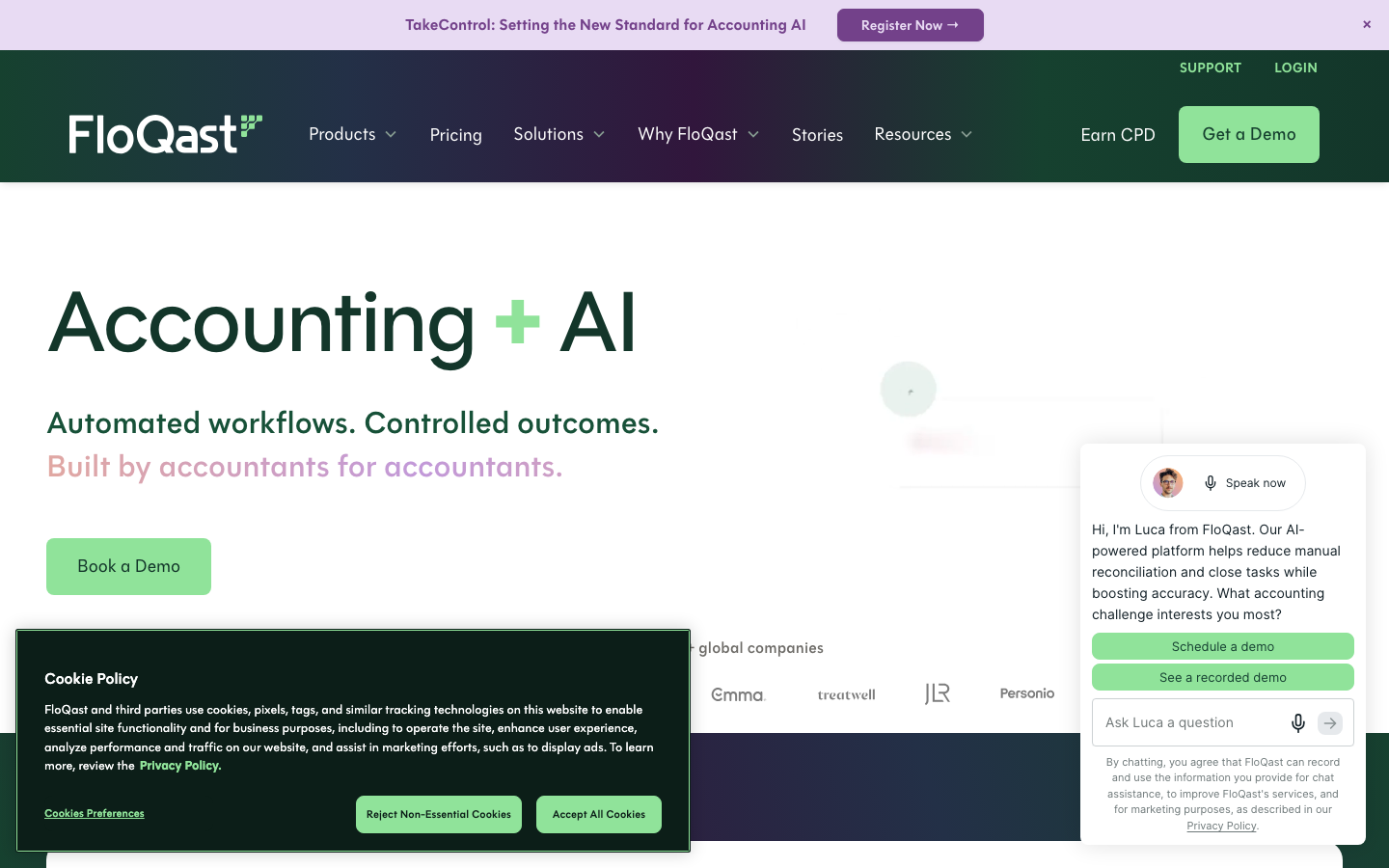
What's great
- Highest satisfaction score in this entire comparison at [4.6/5 across 1,407 G2 reviews](https://www.g2.com/products/floqast/reviews); reviewers consistently praise the reduction in manual close checklist tracking
- Sits on top of whatever ERP you already run (NetSuite, Sage Intacct, SAP, Dynamics 365), so it does not require an ERP migration to adopt
- Excel-native workflow means controllers keep their existing reconciliation habits while getting task tracking, accountability, and audit trail layered on top
Watch-outs
- Not a general ledger; it is a close-management and reconciliation layer, so it adds a line item to the stack rather than replacing an ERP
- Pricing is not published; reliable third-party estimates put entry access around $12,000/yr with 2-3 year standard contracts, and costs scale with team size and module count
- Some reviewers note slow refresh rates during peak close-week usage, which is exactly the moment reliability matters most
FloQast is not competing to be your general ledger; it is competing to fix the month-end close process that sits on top of whatever ERP you already picked. 1,407 G2 reviews average 4.6/5, the highest score in this comparison, and the reviews consistently credit it with shortening close cycles and improving audit-ready documentation. For an enterprise finance team already committed to NetSuite, Sage Intacct, or SAP but drowning in spreadsheet-based close checklists, FloQast is the highest-ROI add-on in this list. Budget roughly $12,000/yr minimum with a multi-year contract as the norm.
Pricing breakdown
| Plan | Price | Best for |
|---|---|---|
| Starter | ~$12 | Small close teams |
| Team | Custom quote | Mid-size close teams |
| Enterprise | Custom quote | Large finance orgs |
Security & compliance
| Standard | Availability |
|---|---|
| SOC 2 Type II | Yes |
| GDPR | Yes |
| HIPAA | No |
| SSO / SAML | Yes |
| Audit logs | Yes |
FloQast compliance summary: SOC 2 Type II is yes, GDPR is yes, HIPAA is no, SSO/SAML is yes, and audit logs is yes.
Key integrations
| Integration | Type |
|---|---|
| Gmail | N/A |
| Outlook | N/A |
| Slack | N/A |
| LinkedIn Sales Navigator | N/A |
| Outreach / Salesloft | N/A |
FloQast integration summary: Gmail is not specified, Outlook is not specified, Slack is not specified, LinkedIn Sales Navigator is not specified, and Outreach or Salesloft is not specified.
Feature availability
| Feature | Status |
|---|---|
| Auto reconciliation | ✓ |
| Close checklist | ✓ |
| Flux analysis | Enterprise |
| Multi entity | ✓ |
| Sox controls | Enterprise |
FloQast feature availability summary: Auto reconciliation (✓), Close checklist (✓), Flux analysis (Enterprise), Multi entity (✓), and Sox controls (Enterprise).
Loading reviews…
DualEntry
Best modern architecture for SaaS-native multi-entity consolidation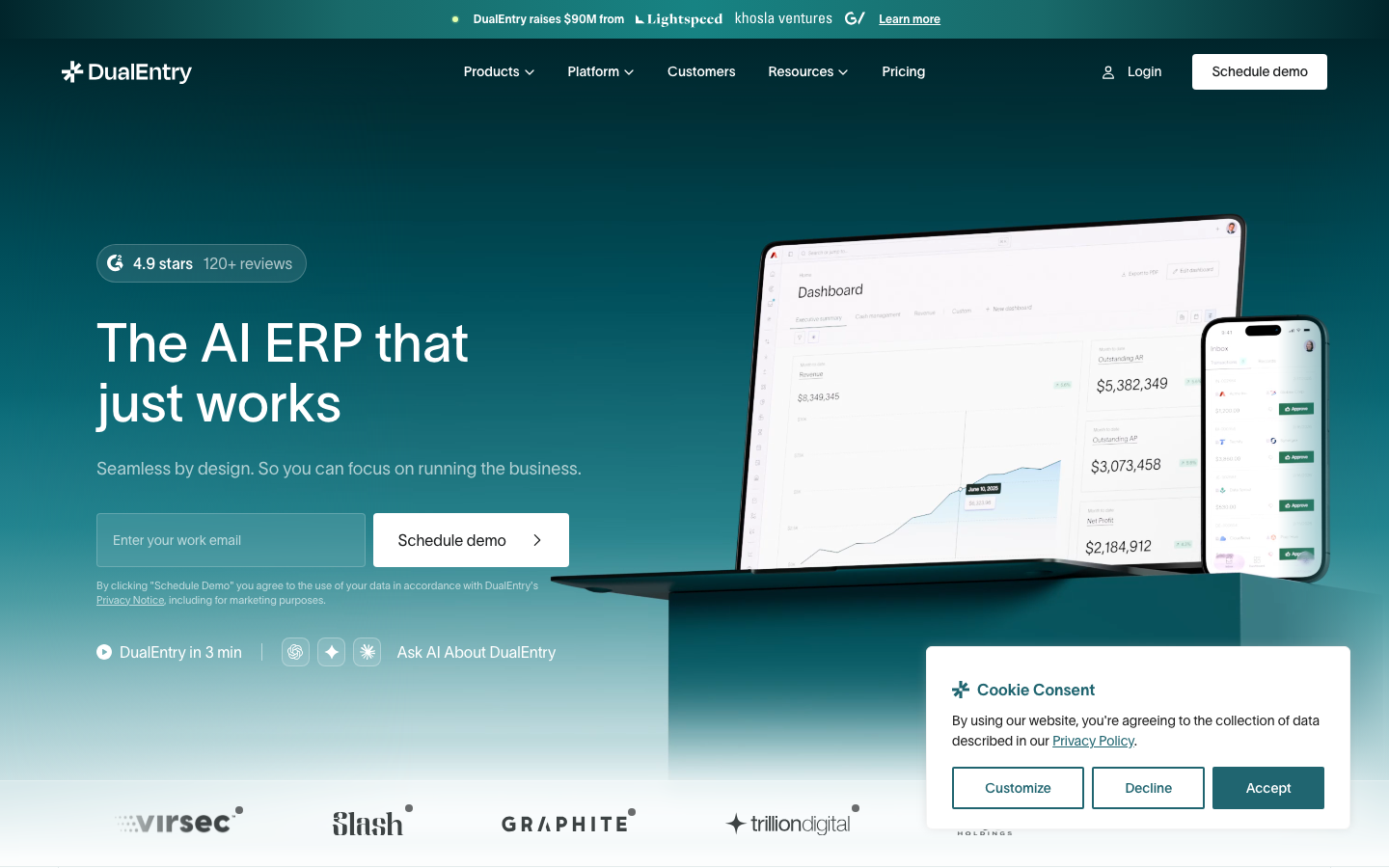
What's great
- Highest raw G2 satisfaction score in this list at 4.9/5, though the review base is still small relative to NetSuite or Sage Intacct
- Built from scratch in the past few years specifically for multi-entity SaaS and PE-backed roll-up consolidation, without the legacy architecture debt of NetSuite or Intacct
- Modern API-first design makes custom integration work faster for engineering teams than working with older enterprise ERP SDKs
Watch-outs
- Small review base of 122 reviews means less signal on how it performs at true scale (500+ employees, dozens of entities) compared to the incumbents
- CPA and controller familiarity is low; hiring a finance team already fluent in DualEntry is harder than hiring one that knows NetSuite or Intacct
- Company is still early-stage relative to the decades of enterprise deployment history behind NetSuite, Sage, SAP, or Oracle
DualEntry is the interesting bet for a PE-backed roll-up or fast-scaling SaaS company that wants modern architecture without the accumulated complexity of a 20-year-old ERP codebase. The 4.9/5 rating across 122 G2 reviews is the highest satisfaction score in this comparison, but the sample size is a fraction of NetSuite or Sage Intacct. Worth a serious look at Series C+ or for a PE-backed platform doing add-on acquisitions, with the caveat that the ecosystem (accountants, implementation partners, integrations) is still maturing.
Pricing breakdown
| Plan | Price | Best for |
|---|---|---|
| Growth | Custom quote | Multi-entity SaaS |
| Enterprise | Custom quote | PE-backed roll-ups |
Security & compliance
| Standard | Availability |
|---|---|
| SOC 2 Type II | Yes |
| GDPR | Yes |
| HIPAA | No |
| SSO / SAML | Yes |
| Audit logs | Yes |
DualEntry compliance summary: SOC 2 Type II is yes, GDPR is yes, HIPAA is no, SSO/SAML is yes, and audit logs is yes.
Key integrations
| Integration | Type |
|---|---|
| Gmail | N/A |
| Outlook | N/A |
| Slack | Limited |
| LinkedIn Sales Navigator | N/A |
| Outreach / Salesloft | N/A |
DualEntry integration summary: Gmail is not specified, Outlook is not specified, Slack is limited, LinkedIn Sales Navigator is not specified, and Outreach or Salesloft is not specified.
Feature availability
| Feature | Status |
|---|---|
| API first | ✓ |
| Consolidation | ✓ real-time |
| Intercompany elim | ✓ automated |
| Multi entity | ✓ native |
| Sandbox | ✓ |
DualEntry feature availability summary: API first (✓), Consolidation (✓ real-time), Intercompany elim (✓ automated), Multi entity (✓ native), and Sandbox (✓).
Loading reviews…
BlackLine
Best for automated reconciliation and financial close controls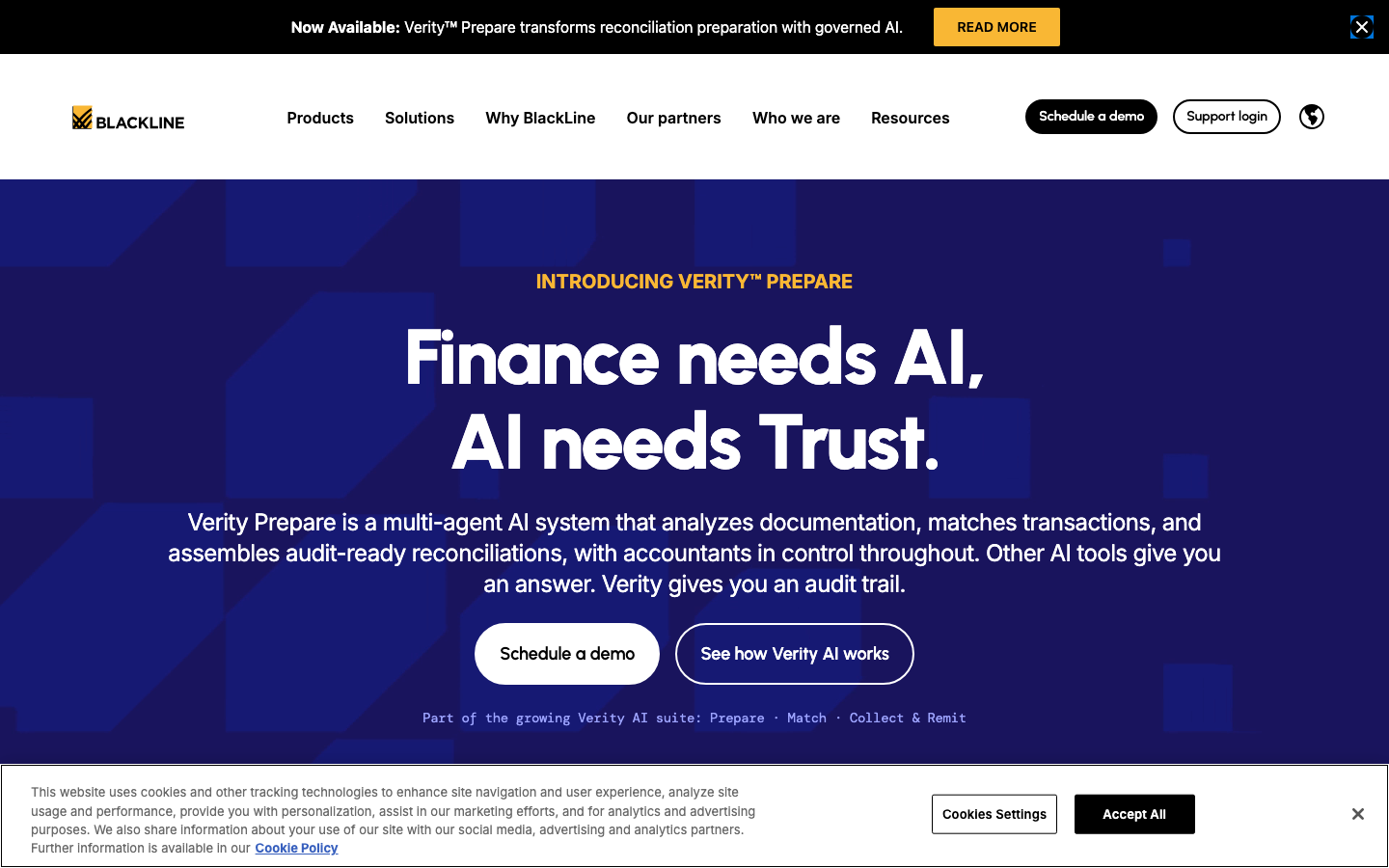
What's great
- Automates time-consuming reconciliations and journal entries, which reviewers on [G2 (1,102 reviews, 4.5/5)](https://www.g2.com/products/blackline-blackline-financial-close-management/reviews) credit with shortening close cycles and improving audit transparency
- Purpose-built for SOX-controlled environments; public companies and pre-IPO enterprises use it specifically to document control effectiveness for auditors
- Intercompany module handles multi-entity elimination workflows that are otherwise a manual spreadsheet exercise inside a base ERP
Watch-outs
- Contracts average roughly $77,000/year and range from $17,500 to $340,000, with implementation and services adding $5,000-$50,000 more
- Steep learning curve and heavy onboarding; reviewers note dependence on implementation partners whose expertise varies significantly
- UI is dated and click-heavy per user feedback, and dashboard customization is more limited than newer close-management competitors like FloQast
BlackLine is the enterprise-grade choice for public companies and pre-IPO enterprises where SOX compliance documentation is not optional. 1,102 G2 reviews average 4.5/5, with automated reconciliation and audit transparency as the consistent praise. The pricing is enterprise-scale to match: average contracts land around $77,000/year. For a mid-market company not yet facing SOX requirements, FloQast is the cheaper and faster-to-implement alternative that covers similar close-management ground.
Pricing breakdown
| Plan | Price | Best for |
|---|---|---|
| Essentials | ~$17 | Smaller enterprise finance teams |
| Advanced | ~$50 | Multi-entity |
| Enterprise | Up to $340 | Public companies |
Security & compliance
| Standard | Availability |
|---|---|
| SOC 2 Type II | Yes |
| GDPR | Yes |
| HIPAA | No |
| SSO / SAML | Yes |
| Audit logs | ✓ SOX-grade |
BlackLine compliance summary: SOC 2 Type II is yes, GDPR is yes, HIPAA is no, SSO/SAML is yes, and audit logs is ✓ sox-grade.
Key integrations
| Integration | Type |
|---|---|
| Gmail | N/A |
| Outlook | N/A |
| Slack | N/A |
| LinkedIn Sales Navigator | N/A |
| Outreach / Salesloft | N/A |
BlackLine integration summary: Gmail is not specified, Outlook is not specified, Slack is not specified, LinkedIn Sales Navigator is not specified, and Outreach or Salesloft is not specified.
Feature availability
| Feature | Status |
|---|---|
| Auto reconciliation | ✓ |
| Close checklist | ✓ |
| Intercompany elim | ✓ module |
| Multi entity | ✓ |
| Sox controls | ✓ |
BlackLine feature availability summary: Auto reconciliation (✓), Close checklist (✓), Intercompany elim (✓ module), Multi entity (✓), and Sox controls (✓).
Loading reviews…
More top-rated Enterprise Accounting Software worth checking out
Highly rated Enterprise Accounting Software that didn't crack our top 10 but are still strong contenders, especially for specific use cases and team sizes.
Certinia (FinancialForce)
For Salesforce-native professional services enterprises
Standout: Unifies finance, billing, and Salesforce CRM data in one platform, eliminating a separate quote-to-cash sync for services-heavy enterprises
Infor CloudSuite Financials
For manufacturing-heavy enterprises with complex supply chains
Standout: Deep industry-specific configurations for manufacturing, distribution, and healthcare, with financials embedded rather than bolted on
Workiva
For SEC reporting, disclosure management, and audit-ready filings
Standout: G2's
What reviewers say ★ 4.5 · 1,852
Praised
- Linked data keeps a number consistent across every document and spreadsheet, so one update flows to the 10-K, board deck, and disclosures at once.
- SOX, SEC, and financial reporting teams lean on the audit trail and version history to survive review season.
- Multiple people can work in the same document with tracked changes without emailing files around.
- Support and the implementation team get specific praise for reporting-cycle deadlines.
Faulted
- The formula and data-chaining model has a steep learning curve that new users feel for weeks.
- It is expensive, and reviewers question the value for smaller reporting teams.
- Large files lag, and performance dips during heavy close periods.
- Formatting and layout controls feel fiddly compared to native Word or Excel.
Zuora
For usage-based billing and revenue recognition at scale
Standout: Purpose-built for complex usage-based and hybrid subscription billing at a scale most core ERPs handle poorly
What reviewers say ★ 3.9 · 309
Praised
- Zuora handles genuinely complex subscription billing and revenue recognition at enterprise scale, managing recurring models, pricing changes, renewals, and invoicing without heavy in-house systems.
- Subscription-lifecycle automation is valued for cutting manual work and keeping billing accurate as volume grows.
- Out-of-the-box Salesforce and NetSuite integrations, multi-currency support, and tax automation are cited as strong fits for large, multi-entity operations.
- Reviewers note the platform is powerful and highly configurable once the API is used to work around interface limits.
Faulted
- Complexity is the dominant theme: setup, configuration, and ongoing maintenance are resource-intensive and often need dedicated staff or consultants.
- The native UI is a repeated weak point, with reviewers effectively routing around it through the API.
- Reporting is called weak, pushing some teams to export into their own data warehouse for real analysis.
- Reviewers report trouble with line-level and invoice-wide discounts, constraints on payment plans and billing frequencies, and several mention server outages.
Sage X3
For manufacturing and distribution enterprises needing on-prem or cloud flexibility
Standout: 4.5/5 satisfaction with reviewers highlighting functionality and support for finance, supply chain, and production together
What reviewers say ★ 4.3 · 4,211
Praised
- Dimensional accounting replaces bloated chart-of-accounts structures; reviewers can slice reporting by entity, department, project, and location without creating duplicate GL accounts.
- Multi-entity consolidation handles intercompany eliminations and currency conversion in ways that comparable mid-market ERPs cannot match.
- Reporting depth and dashboard configurability are consistently praised, with finance teams building the custom views they need without outside help.
- Cloud-native architecture and role-based access controls make it practical for distributed finance teams and external auditors to work from the same data.
- The approval workflow engine and audit trail satisfy compliance requirements for nonprofits and professional services firms facing grant or government reporting.
Faulted
- Implementation cost is the most-cited barrier; annual subscriptions typically run $8,000-$35,000 plus implementation fees of 1.0-1.75x the subscription.
- Almost every worthwhile feature sits behind an add-on module, and reviewers report that renewal quotes expand as Sage adds new billable capabilities.
- The learning curve is steep for non-finance staff; report customization and multi-entity setup require formal training rather than trial-and-error.
- Correcting posted transactions is difficult or impossible in some configurations, forcing workarounds that complicate audit trails.
- The user interface feels dated relative to modern SaaS tools; reviewers note the visual design has not kept pace with competing cloud platforms.
Deltek Costpoint
For government contractors needing project-based accounting
Standout: Trusted by 98% of the top 50 government contractors for project accounting, contracts management, and DCAA-compliant reporting
QuickBooks Online Advanced
For companies scaling past QuickBooks Online who aren't ready for a full ERP
Standout: Lowest cost bridge tool for a company outgrowing SMB QuickBooks but not yet ready for a $50K+ Intacct or NetSuite implementation
What reviewers say ★ 4.0 · 3,825
Praised
- Reviewers across company sizes call it the accounting category default, with widespread accountant familiarity reducing onboarding friction.
- Automated bank syncing and transaction import eliminate most manual data entry; reconciliation that once took days runs in minutes.
- Cloud accessibility lets owners and their accountants work from the same live data without file transfers or version conflicts.
- The breadth of integrations with payroll, e-commerce, and POS systems makes it a hub that connects most small business stacks.
- Invoicing and payment collection flows get strong marks for being fast to set up, with direct payment links inside invoices.
Faulted
- Pricing escalates steeply between tiers, with users citing large per-seat cost jumps that arrive without meaningful new features.
- Customer support quality draws the most consistent criticism, with reviewers describing long waits, AI-first routing, and reps who cannot resolve complex billing or technical issues.
- Frequent UI changes and forced updates disrupt learned workflows; users report features moving or disappearing after updates.
- Performance degrades noticeably as transaction volume grows, with bank disconnections and system lag cited by higher-volume businesses.
- Advanced users and accountants find the online version too restrictive compared to Desktop, with limited batch tools and report customization.
Vena Solutions
For Excel-native FP&A, budgeting, and consolidation
Standout: Combines native Microsoft Excel with an enterprise-class workflow, audit trail, and central database, the differentiator reviewers cite most
Trintech Cadency
For banking and insurance close automation and reconciliation
Standout: Centralized repository for close tasks and reconciliations with clear ownership and timing visibility, the main praise from the [148 G2 reviews](https://www.g2.com/products/trintech-cadency/reviews) at 4.3/5
Epicor Kinetic
For discrete manufacturers needing financials tied to production
Standout: Strong cloud capabilities purpose-built for manufacturers, with financials embedded directly in production and shop floor workflows
Tools we considered but excluded
We evaluated more tools than the 21 you see above. These did not make the cut. Saying what we rejected, and why, is the editorial muscle most listicles skip.
- Ramp: Corporate card and spend management platform with AI-driven automation, not a general ledger or ERP; pairs with the tools above rather than replacing them
- SAP Business One: SAP's SMB-tier product; genuinely different buyer profile from S/4HANA Cloud, more comparable to Sage Intacct's market than the enterprise ERP tier
- Multiview ERP: Solid mid-market Canadian ERP option but review volume and US enterprise adoption are both thin compared to the tools that made the list
- IFS Cloud: Strong asset-heavy industry fit (energy, aerospace) but positions primarily as an EAM/field service platform with financials as one module among several, not a finance-first buy
- Unit4: Popular in European public sector and higher education but has minimal US enterprise mindshare and thin G2 review coverage for direct comparison
- Coupa: Best-in-class procurement and spend management that integrates with NetSuite, SAP, or Oracle for full procure-to-pay visibility; not itself a general ledger
Honorable mentions
Solid tools that did not crack the main list but are worth tracking, especially for niche use cases.
- Multiview ERP: Solid mid-market Canadian ERP option with strong finance-first positioning; review volume is thin compared to the tools that made the list but worth tracking
- Adra by Trintech: Trintech's mid-market close automation product, a lighter alternative to Cadency for companies not yet at full enterprise reconciliation complexity
Where the enterprise accounting market splits
“Enterprise accounting software” covers at least four genuinely different buyer profiles. Confusing them wastes a procurement cycle.
Sorting the 20 tools above by what they’re actually built for makes the shortlist easier.
True ERP-scope platforms. NetSuite, SAP Cloud ERP, Oracle Fusion Cloud ERP, and Workday Financial Management put finance inside a broader system that also runs inventory, HR, or supply chain. Buy here when finance complexity is inseparable from operational complexity, an acquisition roll-up, a physical supply chain, or a global HR footprint that has to reconcile against the GL.
Accounting-first, multi-entity platforms. Sage Intacct, Acumatica, and DualEntry focus on GL, consolidation, and dimensional reporting without dragging in manufacturing or CRM modules. This is the right tier for most finance teams whose complexity is genuinely financial: multiple legal entities, deferred revenue, GAAP-clean audits, without a physical product line.
Close-management and controls layers. FloQast, BlackLine, and Workiva sit on top of an existing ERP rather than replacing it. These matter once the core accounting decision is made and the real pain point becomes the close process, SOX documentation, or SEC filing workflow itself.
Vertical specialists. Deltek Costpoint (government contracting), Sage X3 (manufacturing), Zuora (usage-based billing), and Certinia (Salesforce-native services) win narrow, deep fits. A company in one of those verticals should weigh the specialist against the generalist before defaulting to NetSuite.
QuickBooks Online Advanced made the compact tier for one reason: a meaningful share of the people searching “enterprise accounting software” are companies outgrowing QuickBooks Online, not yet at true multi-entity complexity. It’s an honest bridge, not a real answer once a second legal entity shows up on the org chart.
Selection criteria, what to test in your enterprise ERP trial
Enterprise finance procurement moves slowly. The mistakes that get made almost always trace back to skipping one of these six checks during evaluation.
One, run a real inter-company elimination. Book a transaction between two of your actual (or planned) subsidiaries and watch the platform automatically eliminate it on consolidation. This is the single feature that separates a true multi-entity platform (NetSuite, Sage Intacct, SAP, Acumatica, DualEntry) from a single-entity tool wearing an enterprise price tag.
Two, pull a full audit trail on one transaction. Pick any journal entry and trace it end to end: who created it, who approved it, what supporting documents attached, when it posted.
Auditors will ask for exactly this during a SOC 2 or financial statement audit. If the trial environment can’t produce it cleanly in under two minutes, production won’t either.
Three, price out the real implementation, not the license. Ask every vendor for a written implementation estimate before signing anything. NetSuite quotes $25K-$100K, Sage Intacct $15K-$40K, SAP and Oracle regularly land at 1.5-3x the first-year subscription. The license price on the homepage is rarely the number that matters most.
Four, test the close with your actual chart of accounts. Import your real (or a close approximation of your) chart of accounts and run a mock month-end close across two entities. Time it. If a controller can’t close two entities in the trial in under a day, the production close at scale will take longer, not shorter.
Five, check SOX control documentation if you’re public or pre-IPO. Ask specifically how the platform documents control effectiveness for a SOX 404 audit. BlackLine and Workiva exist precisely because most core ERPs handle this poorly on their own; know upfront whether you’ll need to add one.
Six, get a written 3-year total cost of ownership, not a first-year quote. Enterprise ERP contracts routinely include built-in annual uplifts, 8-10% is common in multi-year NetSuite agreements. Ask for the year-two and year-three numbers in writing before the board approves the deal.
How to choose the right enterprise accounting platform
1. Physical operations alongside the GL
If manufacturing, inventory, or a physical supply chain needs to live inside the same data model as finance, the list narrows fast. NetSuite, SAP, Acumatica, or Sage X3.
If finance complexity is purely financial (consolidation, revenue recognition, audit trail), Sage Intacct or DualEntry get there faster and cheaper.
2. Number of entities and consolidation frequency
Two to five entities with quarterly consolidation: Sage Intacct handles this comfortably. Ten-plus entities, frequent acquisitions, or daily consolidation needs: NetSuite’s automated elimination engine earns its cost. A PE-backed platform doing regular add-on deals should weight DualEntry’s modern architecture seriously.
3. Regulatory and audit posture
Public or pre-IPO companies facing SOX 404 should budget for BlackLine or a comparable close-automation layer regardless of which core ERP wins. Government contractors need Deltek Costpoint’s DCAA-compliant cost accounting specifically; nothing else on this list satisfies that requirement out of the box.
4. Existing vendor ecosystem
Already deep in Oracle Cloud Infrastructure or Oracle HCM? Evaluate Oracle Fusion Cloud ERP first. Standardized on Microsoft Azure and Power Platform, look at Dynamics 365 Finance. Salesforce-native services business, Certinia is the obvious fit.
The switching cost of introducing a brand-new vendor relationship is real and often underweighted in the finance-only evaluation.
5. Implementation timeline against fiscal calendar
Sage Intacct and Acumatica can realistically go live in 4-8 weeks. NetSuite typically runs 4-6 months. SAP and Oracle deployments at true enterprise scale routinely run 9-18 months. Match the go-live date to a fiscal year boundary; starting a NetSuite implementation in October means the first full clean year in the new system lands the following January at the earliest.
What’s changing in enterprise accounting software in 2026
AI-powered anomaly detection is moving from add-on to default. Dynamics 365 Finance ships Copilot-powered cash flow forecasting inside the core license now rather than as a paid module, and NetSuite and Sage Intacct are both accelerating similar AI reconciliation features to keep pace.
Consumption-based and unlimited-user pricing is spreading beyond Acumatica. The unlimited-user model that made Acumatica’s value proposition distinctive is showing up in more RFPs as a specific ask, pressuring per-seat incumbents like NetSuite and Oracle to justify the seat-based math more explicitly during procurement.
Close-management layers are becoming a default line item, not an afterthought. FloQast’s 4.6/5 satisfaction score and BlackLine’s SOX-focused growth both point to the same shift: enterprise finance teams increasingly treat the close-automation layer as a separate, planned budget line from day one of the ERP selection process, not a reactive purchase two years in.
Modern-architecture challengers are gaining real traction at the PE-backed roll-up segment. DualEntry’s 4.9/5 score across a small but growing review base signals real appetite for ERPs built without two decades of legacy code, specifically among PE sponsors managing frequent add-on acquisitions that need fast entity onboarding.
RISE with SAP-style bundled contracts are becoming the norm for large deployments. SAP’s approach of bundling software, infrastructure, and migration services into one negotiated contract is showing up in Oracle and Microsoft enterprise proposals too, which simplifies procurement but makes vendor-to-vendor cost comparison genuinely harder during RFP season.
Final pick by company profile
- Multinational manufacturer, $500M+ revenue, regulated industry: SAP Cloud ERP. Nothing else in this list matches the module depth for global manufacturing compliance.
- SaaS or services company, $30M-$500M revenue, multi-entity: NetSuite for full ERP breadth, Sage Intacct if the complexity is purely financial.
- PE-backed platform running frequent add-on acquisitions: DualEntry for the modern consolidation architecture, or NetSuite if the ecosystem maturity matters more than architecture elegance.
- Public company or pre-IPO preparing for a SOX 404 audit: Layer BlackLine or Workiva on top of whichever core ERP you’ve already chosen.
- Government contractor with cost-plus or T&M contracts: Deltek Costpoint. The DCAA compliance is not optional and nothing else on this list covers it as well.
- Already deep in Microsoft or Oracle infrastructure: Dynamics 365 Finance or Oracle Fusion Cloud ERP respectively, to consolidate the vendor relationship.
- Salesforce-native professional services enterprise: Certinia, specifically for the shared object model with the CRM.
- Mid-market company scaling past QuickBooks but not yet multi-entity: QuickBooks Online Advanced as a bridge, with a plan to move to Sage Intacct within 18 months.
For corrections or vendor disputes, email hello@topickz.com . We re-test the full shortlist every six months; the next refresh ships in January 2027.
Frequently asked questions
What is the difference between enterprise accounting software and a full ERP?
Accounting software handles the GL and consolidation. An ERP adds inventory, supply chain, and CRM in one data model.
When does a company need to move from Sage Intacct to NetSuite?
When physical inventory, manufacturing, or e-commerce operations need to live inside the same financial data model.
How much does NetSuite cost for a 20-user enterprise deployment?
Roughly $80,000-$200,000 all-in for year one, including implementation ($25K-$100K) and licensing.
Is SAP S/4HANA overkill for a mid-market company?
Usually yes. SAP fits $500M+ revenue global manufacturers; Sage Intacct or NetSuite fit most mid-market finance teams.
What does FloQast actually replace?
Nothing in the GL. It replaces spreadsheet-based close checklists and manual account reconciliation tracking.
Does Workday Financial Management handle manufacturing or inventory?
No. It's finance-and-HR only. Manufacturers need NetSuite, SAP, Acumatica, or Sage X3 instead.
How is Acumatica priced differently from NetSuite?
Acumatica uses consumption-based licensing with unlimited users; NetSuite charges per user on top of a base fee.
What is BlackLine used for if a company already has NetSuite or SAP?
SOX-grade automated reconciliation and close documentation for audit purposes, layered on top of the ERP.
Which enterprise accounting tool has the highest G2 rating?
FloQast at 4.6/5 across 1,407 reviews, though it is a close-management layer, not a full GL.
Is QuickBooks Enterprise a real option for a multi-entity company?
No. It has no true multi-entity consolidation. Move to Sage Intacct or NetSuite once a second legal entity exists.
Related helpful reads
Write a review
Posts to the page right away. Keep it real — no links or email addresses.