
Comparing the best PCI DSS Tokenization Software of 2026 includes 1. EnigmaVault 2. TokenEx 3. Bluefin 4. Very Good Security (VGS) 5. Basis Theory 6. Spreedly 7. Skyflow 8. Thales CipherTrust Tokenization 9. Protegrity 10. Comforte 11. IXOPAY 12. CyberSource (Visa) 13. Adyen Token Service 14. Stripe 15. Braintree 16. PCI Vault 17. OpenText Voltage SecureData 18. Checkout.com 19. Strac 20. Nuvei.
TL;DR
- EnigmaVault: Best overall for teams wanting a dedicated tokenization API with PCI Level 1, SOC 2 Type II, and ISO 27001 in one provider. Card, Data, and File Vault products priced independently.
- TokenEx: Best enterprise pick for processor-agnostic format-preserving tokenization. Switch PSPs without re-tokenizing your entire card vault.
- Bluefin: Best for merchants needing PCI-validated P2PE plus tokenization. The first North American provider to earn PCI validation for P2PE.
- Very Good Security (VGS): Best proxy-based approach. Card data never touches your servers, which reduces PCI scope to near-zero without changing your payment flow.
- Basis Theory: Best for developer teams needing predictable tokenization costs. No per-API-call pricing, clean REST API, and a 2026 Bluefin partnership for unified in-person and digital coverage.
Twenty PCI DSS tokenization tools compared on scope reduction depth, API quality, and the real implementation cost nobody covers in the demo. What actually removes card data from your environment, what just claims to, and the right pick for your stack and team profile.
What Is PCI DSS Tokenization Software?
PCI DSS tokenization software replaces sensitive payment card data with non-sensitive placeholder tokens, removing the original card numbers from merchant systems and shrinking the scope of a PCI DSS compliance audit.
Dedicated platforms like EnigmaVault, TokenEx, and VGS differ from processor-bundled tokenization on deployment flexibility, data type coverage, and the degree to which they reduce your PCI scope from full SAQ D to a simpler SAQ A or SAQ A-EP.
Best PCI DSS Tokenization Software comparison: features, pricing and verdicts
| Tool | Best for | Starting price | Free trial | External rating |
|---|---|---|---|---|
Best dedicated tokenization API for triple-certified compliance coverage | Free tier, then from $49.99/mo per vault | Free Lite tier, $0/mo forever | ★ 9.2 | |
Best enterprise tokenization for processor-agnostic deployments | Custom pricing | Demo available | 17 reviews on G2, no verified score | |
Best PCI-validated P2PE with vaultless tokenization for physical and digital channels | Custom pricing | Contact sales | ★ 8.9 | |
Best proxy-based tokenization for near-zero PCI scope | From $1,000/mo | Free sandbox | G2 4.7/5 (47 reviews) | |
Best developer-first tokenization with no per-API-call pricing | Custom pricing | Free developer sandbox | ★ 8.6 | |
Best payment orchestration with vaulted multi-gateway tokenization | Custom pricing | Free sandbox | G2 4.4/5 (33 reviews) | |
Best privacy-vault architecture for teams with compliance beyond PCI DSS | Custom pricing | Demo + sandbox available | ★ 8.4 | |
Best enterprise data security platform with HSM-integrated tokenization | Custom enterprise pricing | Contact sales | ★ 8.3 | |
Best database-level tokenization for large enterprise data estates | Custom enterprise pricing | POC engagement | ★ 8.0 | |
Best format-preserving tokenization with built-in data discovery | Custom enterprise pricing | Contact sales | ★ 7.8 | |
For payment orchestration teams who want tokenization built into gateway routing | Custom pricing | Demo available | ★ 7.8 | |
For enterprise payment teams already operating on Visa-connected acquiring infrastructure | Custom enterprise pricing | Contact sales | ★ 7.8 | |
For omnichannel retailers and marketplaces running on Adyen globally | Included with Adyen processing | With Adyen merchant account | ★ 7.8 | |
For developer teams building new card-not-present payment flows from scratch | Custom (included with processing) | Developer sandbox free | ★ 7.7 | |
For PayPal-ecosystem merchants handling cards, PayPal, and Venmo in one integration | Custom (included with processing) | Sandbox free | ★ 7.7 | |
For early-stage teams wanting the simplest possible card vault REST API | From $99/mo | Free sandbox | ★ 7.6 | |
For legacy enterprise environments needing FPE tokenization across mainframes and databases | Custom enterprise licensing | POC engagement | ★ 7.6 | |
For global enterprise merchants needing tokenization across 150-plus currency corridors | Custom enterprise pricing | Sandbox with account | ★ 7.6 | |
For DLP-first teams that need to find and tokenize card data across cloud storage and SaaS | Custom pricing | Free trial available | ★ 7.5 | |
For subscription and digital goods merchants needing flexible payment method tokenization | Custom (included with processing) | Sandbox with account | ★ 7.5 |
How we chose these tools
We evaluated each platform on how effectively it removes card data from merchant systems, what the PCI certification stack actually covers versus what is marketing language, how the API holds in a real integration, and what the pricing looks like at 1M transactions per year. Pricing was verified in September 2026. Tools without published pricing are noted as custom quote required. G2 and Capterra ratings cited are from public review pages as of September 28, 2026.
How we weight pci dss tokenization software for the Topickz score
Every tool above is scored against the fixed rubric below and combined using these weights into the Topickz score on each card. The weights are set for pci dss tokenization software specifically, they are not copied from another category, and we publish them so you can see what moved a ranking and re-weight for your own priorities.
| Criterion | Weight | What we checked |
|---|---|---|
| Tokenization scope reduction | 25% | How effectively the platform removes cardholder data from your environment and reduces PCI DSS audit scope. Covers card vault architecture, proxy-based approaches, and network token support. |
| API quality and developer experience | 20% | REST API design, SDK coverage, documentation depth, sandbox environment, and the realistic time from signup to a working integration in a test environment. |
| PCI DSS certification depth | 20% | PCI DSS Level 1 service provider certification, SAQ type reduction achievable, attestation of compliance support, and additional certs such as SOC 2, ISO 27001, or HIPAA. |
| Integration ecosystem | 15% | Supported payment processors, gateways, and cloud platforms. Whether the tokenization is processor-agnostic or locked to a single acquirer. Network token support for Visa and Mastercard. |
| Deployment flexibility | 10% | SaaS vs on-premises vs hybrid. Dedicated VPC availability. Multi-region support. Whether it deploys alongside your current cloud stack or requires infrastructure changes. |
| Pricing transparency | 5% | Published pricing vs custom quote only. Predictability at scale. Per-API-call vs flat subscription. Hidden costs in onboarding fees or professional services. |
| Audit and compliance reporting | 5% | Compliance dashboards, audit logs, attestation support documentation, and exports your QSA can use without running custom queries. |
| Total | 100% |
Read the full TopickZ.com testing methodology for how we run each test, score every criterion, and combine them into a single rating.
Detailed reviews
EnigmaVault
Best dedicated tokenization API for triple-certified compliance coverage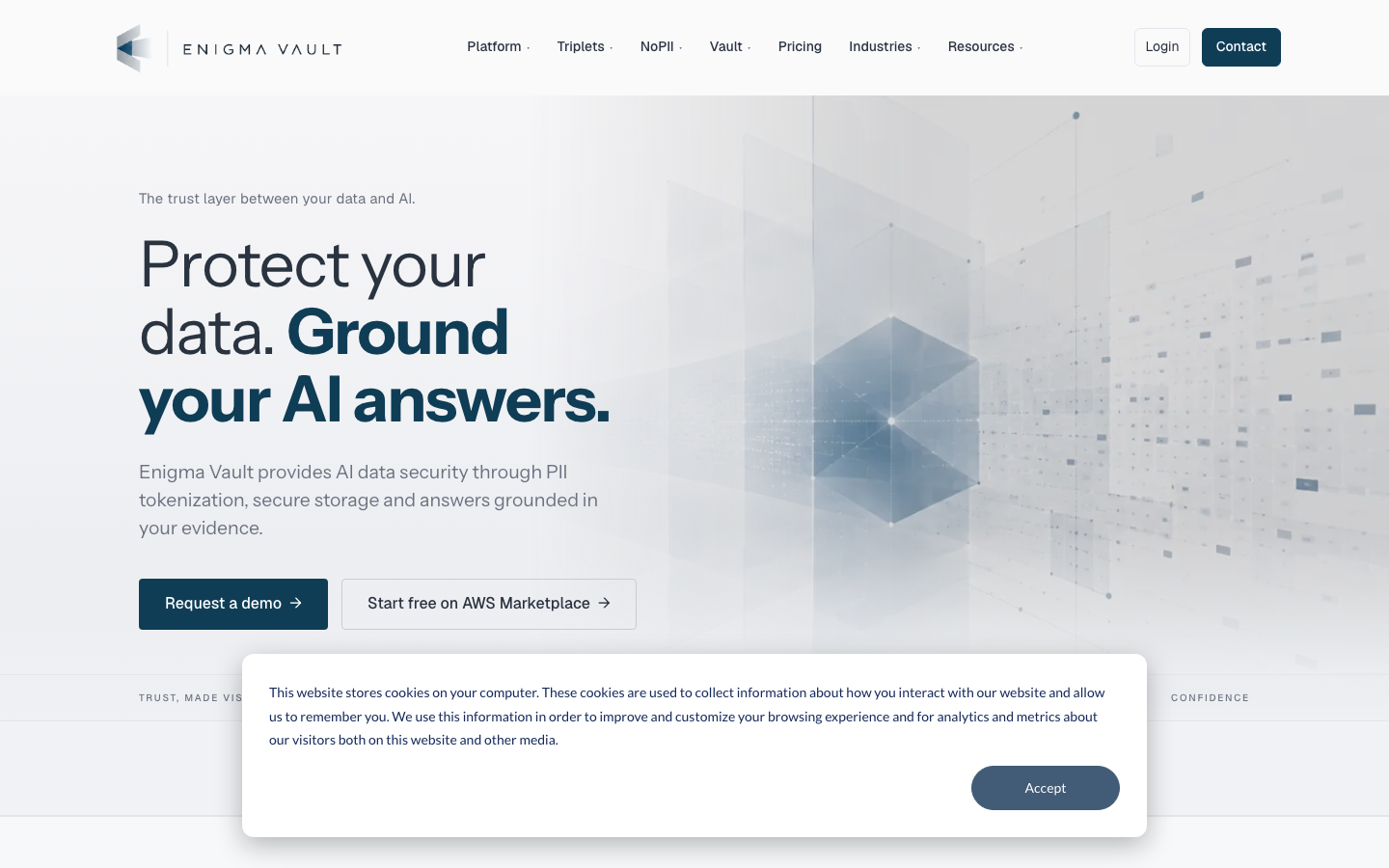
What's great
- PCI DSS Level 1, SOC 2 Type II, and ISO 27001 certified in one provider, the strongest triple-cert stack among dedicated tokenization APIs at this price tier
- Card Vault, Data Vault, and File Vault each publish a real rate card, Lite free forever, Plus at $49.99/mo, Premium at $249.99/mo, a transparent pricing page that is uncommon among dedicated tokenization APIs
- Available on AWS Marketplace, which streamlines procurement for AWS-native engineering teams and simplifies consolidated billing across an existing cloud account
Watch-outs
- The published tiers cap included requests before per-request overage kicks in, and the overage rate differs by vault type, so high-volume teams need to model the real bill rather than read the sticker price
- Public review footprint is thin, fewer than 10 reviews on Capterra and G2 combined, so third-party validation is harder to find than with larger vendors
- Limited public case studies or named customer references on the site, which makes peer benchmarking difficult before signing
EnigmaVault.io is the owner-directed featured placement on this page, consistent with the disclosed placement policy used for CargoEZ on our freight tools list. The placement is disclosed rather than a paid ranking, and the assessment here reflects what we found from the vendor site and public listings.
EnigmaVault replaces sensitive card data with tokens via a REST API. Your system sends the PAN, gets a token back, and the original card number sits in EnigmaVault’s PCI Level 1 certified vault. The API documentation covers Card Vault (PANs), Data Vault (PII and structured sensitive data), and File Vault (encrypted document storage), each independently addressable.
The compliance stack is PCI DSS Level 1, SOC 2 Type II, and ISO 27001. That combination is uncommon among API-first tokenization vendors. Pricing is also unusually transparent for this category: the published rate card runs Lite free forever, Plus at $49.99/mo, and Premium at $249.99/mo per vault, with per-request overage on top once you exceed the included volume. AWS Marketplace listing makes procurement simpler for teams already operating in AWS.
Pricing breakdown
| Plan | Price | Best for |
|---|---|---|
| Lite | $0/mo, free forever | Low-volume evaluation and early-stage fintechs testing Card, Data, or File Vault |
| Plus | $49.99/mo per vault | Growing teams needing more included volume, most popular per EnigmaVault |
| Premium | $249.99/mo per vault | Higher-volume merchants needing the largest included allotment before overage |
| Enterprise | Custom contract | High-volume or multi-vault enterprise deployments |
Security & compliance
| Standard | Availability |
|---|---|
| SOC 2 Type II | Yes |
| GDPR | ? |
| HIPAA | ? |
| SSO / SAML | Enterprise |
| Audit logs | Enterprise |
EnigmaVault compliance summary: SOC 2 Type II is yes, GDPR is ?, HIPAA is ?, SSO/SAML is enterprise, and audit logs is enterprise.
Key integrations
| Integration | Type |
|---|---|
| Gmail | N/A |
| Outlook | N/A |
| Slack | N/A |
| LinkedIn Sales Navigator | N/A |
| Outreach / Salesloft | N/A |
EnigmaVault integration summary: Gmail is not specified, Outlook is not specified, Slack is not specified, LinkedIn Sales Navigator is not specified, and Outreach or Salesloft is not specified.
Feature availability
| Feature | Status |
|---|---|
| Aes256 encryption | ✓ |
| Card vault | ✓ |
| Data vault | ✓ |
| File vault | ✓ |
| Sandbox env | ? |
EnigmaVault feature availability summary: Aes256 encryption (✓), Card vault (✓), Data vault (✓), File vault (✓), and Sandbox env (?).
Loading reviews…
TokenEx
Best enterprise tokenization for processor-agnostic deployments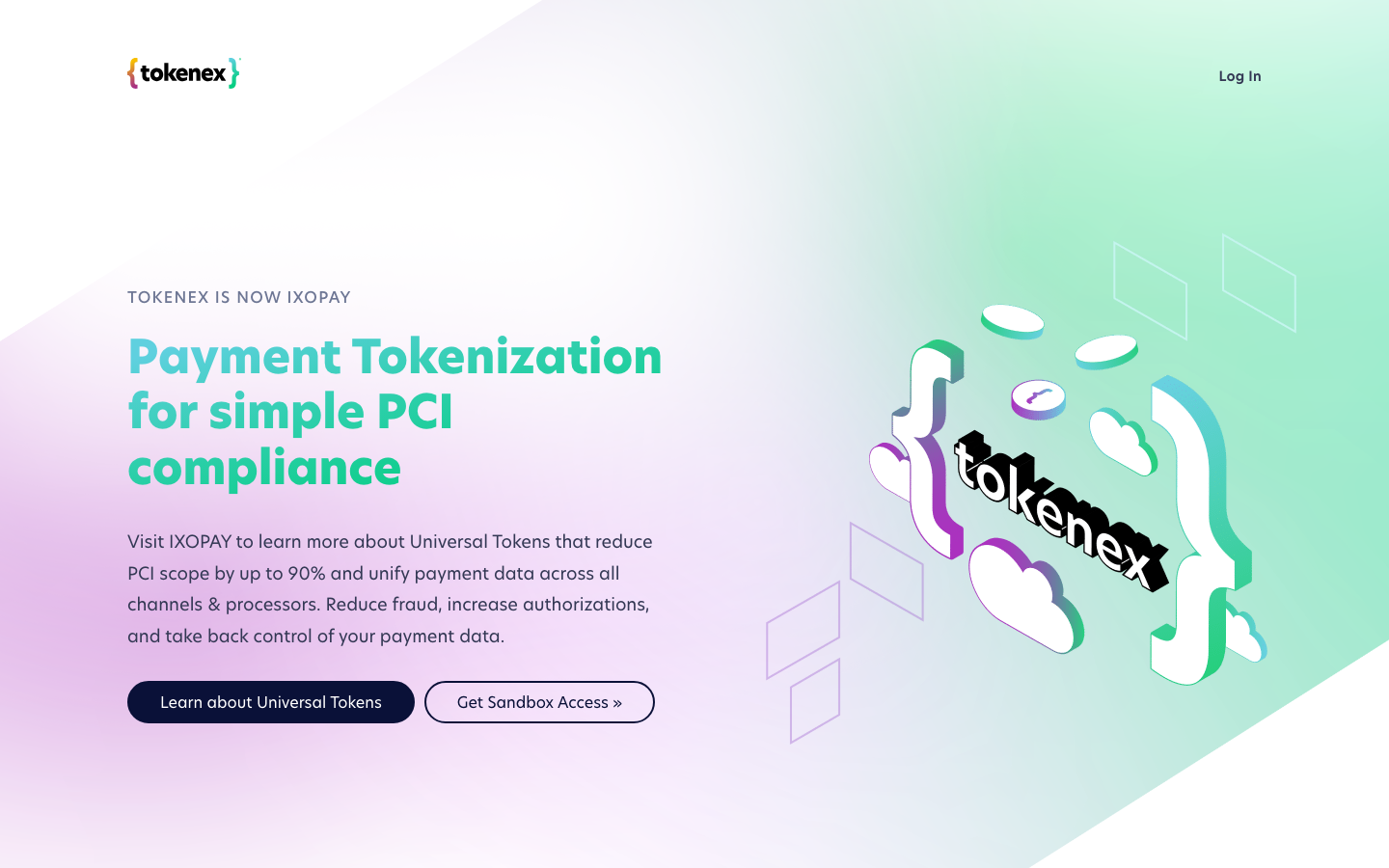
What's great
- Format-preserving tokens drop in as direct substitutes for real PANs in downstream systems, meaning no database schema changes or application rewrites when you add tokenization
- Processor-agnostic design lets you route tokenized transactions to any acquiring bank or PSP, so a PSP switch does not require re-tokenizing your entire vault
- Supports cloud, on-premises, and hybrid deployments, which matters for financial institutions and regulated enterprise accounts that cannot put card data in a multi-tenant SaaS environment
Watch-outs
- Pricing is entirely custom and requires a formal sales process; no self-serve evaluation path exists for developers who want to test quickly
- 17 G2 reviews is thin for a platform positioned at enterprise buyers; Gartner Peer Insights has additional reviews but the total review count is still low compared to the vendor size
- Complex deployment options mean implementation typically requires professional services or a long internal scoping project before go-live
TokenEx is the right call when your PCI scope problem involves multiple payment processors, legacy systems, or a mix of cloud and on-premises infrastructure. The format-preserving tokenization means tokens are structurally identical to PANs, so existing systems that expect a 16-digit number keep working without code changes.
TokenEx’s G2 seller page lists 17 reviews; Gartner Peer Insights and Capterra have additional coverage. The consistent feedback across sources is that the product works exactly as described but the implementation timeline is longer than expected.
Processor-agnostic tokenization is the core strength. If your team manages contracts with two or more acquiring banks and wants to reroute volume between them without touching the card vault, TokenEx is one of very few platforms that handles this cleanly.
Pricing breakdown
| Plan | Price | Best for |
|---|---|---|
| Standard | Custom, from ~$1K/mo | SMB and mid-market with single-processor needs |
| Enterprise | Custom, multi-year | Large enterprise with multiple processors and compliance requirements |
| On-Premises | License + support | Financial institutions requiring on-prem deployment |
Security & compliance
| Standard | Availability |
|---|---|
| SOC 2 Type II | Yes |
| GDPR | Yes |
| HIPAA | Yes |
| SSO / SAML | Enterprise |
| Audit logs | Enterprise |
TokenEx compliance summary: SOC 2 Type II is yes, GDPR is yes, HIPAA is yes, SSO/SAML is enterprise, and audit logs is enterprise.
Key integrations
| Integration | Type |
|---|---|
| Gmail | N/A |
| Outlook | N/A |
| Slack | N/A |
| LinkedIn Sales Navigator | N/A |
| Outreach / Salesloft | N/A |
TokenEx integration summary: Gmail is not specified, Outlook is not specified, Slack is not specified, LinkedIn Sales Navigator is not specified, and Outreach or Salesloft is not specified.
Feature availability
| Feature | Status |
|---|---|
| Card vault | ✓ |
| Format preserving | ✓ |
| Multi data types | ✓ |
| On prem deploy | ✓ |
| Vaultless option | ✓ |
TokenEx feature availability summary: Card vault (✓), Format preserving (✓), Multi data types (✓), On prem deploy (✓), and Vaultless option (✓).
Loading reviews…
Bluefin
Best PCI-validated P2PE with vaultless tokenization for physical and digital channels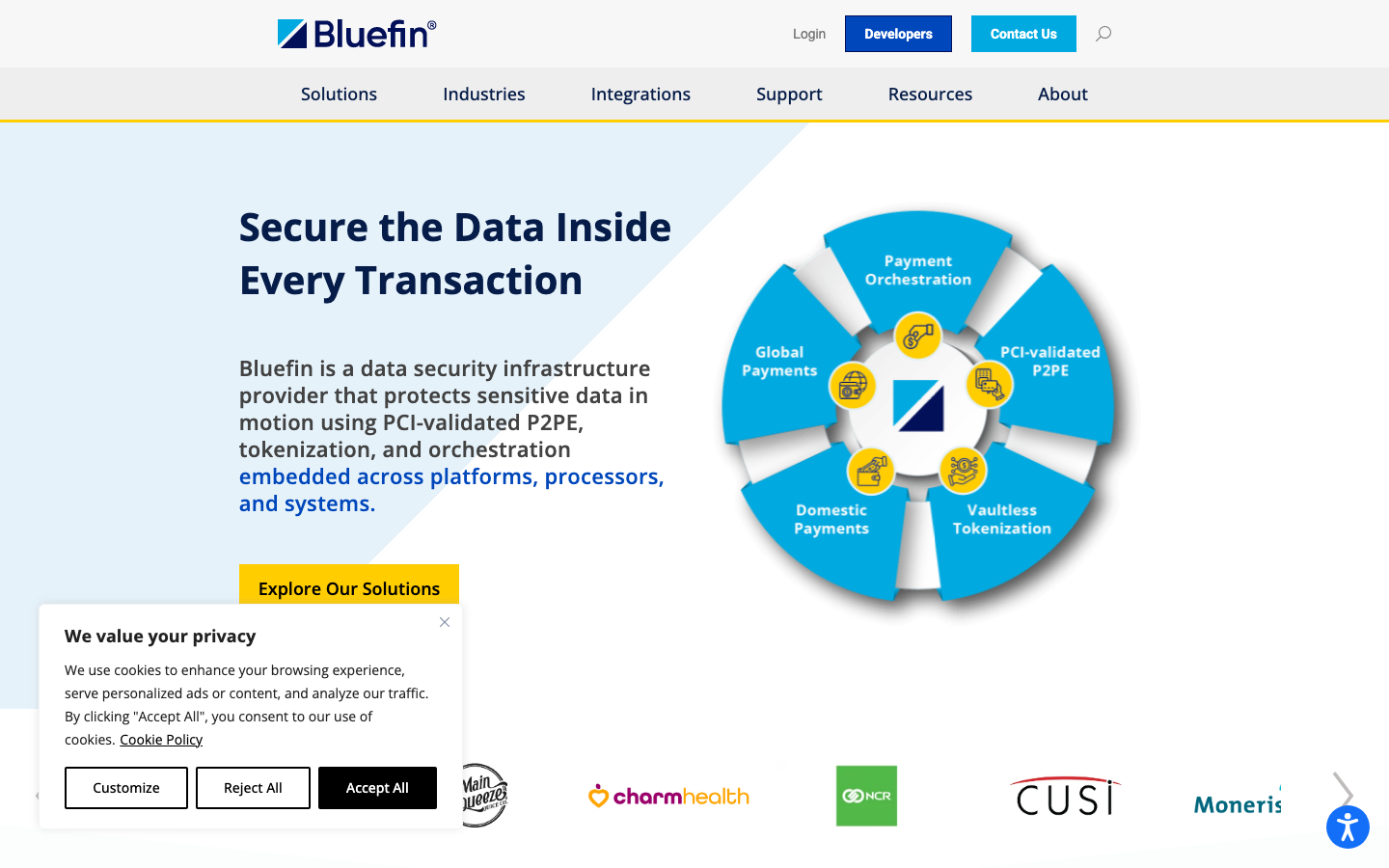
What's great
- First North American provider to earn PCI validation for P2PE, which is a meaningfully different certification from self-attested PCI-compliant P2PE that most competitors claim
- Vaultless tokenization means no card vault database to secure, audit, or protect; tokens are generated from an algorithm, not a stored value, which changes the risk profile fundamentally
- Covers every payment channel from physical POS to e-commerce to call center and unattended kiosks, so a single Bluefin deployment can span your entire acceptance environment
Watch-outs
- PayConex gateway dependency for some features means teams with a strong existing gateway relationship face integration friction
- Better positioned for merchants who need both a payment acquirer and tokenization in one relationship; pure data security teams may find VGS or TokenEx simpler for tokenization-only use cases
- Pricing structure mixes interchange-plus payment rates with tokenization and P2PE fees, making it harder to isolate the tokenization cost from the broader payment processing bill
Bluefin built its reputation by earning actual PCI validation for P2PE in 2014, the first North American vendor to do so. That distinction matters because most vendors advertise ‘PCI-compliant P2PE’ which is self-attested. PCI-validated P2PE goes through a formal PCI SSC audit.
Vaultless tokenization is the other differentiator. The platform generates tokens mathematically rather than storing a card-to-token mapping in a database vault. This eliminates the vault as an attack surface, which is where traditional tokenization implementations carry residual risk.
Bluefin’s 2026 partnership with Basis Theory extends coverage to API-first digital merchants who want Bluefin’s physical P2PE coverage alongside Basis Theory’s developer-friendly integration. For merchants running both POS and e-commerce, this pairing solves the channel gap that most tokenization vendors leave open.
Pricing breakdown
| Plan | Price | Best for |
|---|---|---|
| PayConex Gateway | Interchange-plus + monthly fee | US and Canada merchants needing full gateway + tokenization |
| P2PE Solution | Custom, hardware + software | Brick-and-mortar and call center merchants |
| Enterprise | Custom contract | Large multi-channel merchants with custom integration needs |
Security & compliance
| Standard | Availability |
|---|---|
| SOC 2 Type II | Yes |
| GDPR | ? |
| HIPAA | ? |
| SSO / SAML | Enterprise |
| Audit logs | Enterprise |
Bluefin compliance summary: SOC 2 Type II is yes, GDPR is ?, HIPAA is ?, SSO/SAML is enterprise, and audit logs is enterprise.
Key integrations
| Integration | Type |
|---|---|
| Gmail | N/A |
| Outlook | N/A |
| Slack | N/A |
| LinkedIn Sales Navigator | N/A |
| Outreach / Salesloft | N/A |
Bluefin integration summary: Gmail is not specified, Outlook is not specified, Slack is not specified, LinkedIn Sales Navigator is not specified, and Outreach or Salesloft is not specified.
Feature availability
| Feature | Status |
|---|---|
| Call center | ✓ |
| Card vault | ✓ |
| P2pe | ✓ validated |
| Unattended kiosk | ✓ |
| Vaultless tokenization | ✓ |
Bluefin feature availability summary: Call center (✓), Card vault (✓), P2pe (✓ validated), Unattended kiosk (✓), and Vaultless tokenization (✓).
Loading reviews…
Very Good Security (VGS)
Best proxy-based tokenization for near-zero PCI scope
What's great
- Proxy architecture routes all sensitive data through VGS servers before it reaches your application, so card numbers never touch your codebase regardless of what your payment flow looks like
- 4.7/5 across 47 G2 reviews, the highest verified rating among dedicated tokenization platforms in this shortlist
- PCIaaS (PCI-as-a-Service) means VGS manages PCI compliance overhead, not just the technology; their team supports your QSA engagement and attestation documentation
Watch-outs
- Starter package at $1,000/mo is a meaningful upfront cost for early-stage startups that could use Basis Theory or Stripe Radar at lower entry cost
- Proxy architecture adds latency in payment authorization flows; most teams report 10-50ms overhead, which is acceptable but worth testing at your transaction volume
- Growth package pricing is not publicly listed; teams routinely find the jump from Starter to Growth is larger than expected when transaction volume scales
VGS’s proxy approach is genuinely different from vault-based tokenization. Instead of storing card numbers in a vault, VGS intercepts the data at the network layer before it reaches your servers. Your application never sees the raw PAN. The token goes into your system, and VGS forwards the real card number to your payment processor when needed.
4.7/5 across 47 G2 reviews is the strongest public validation in this segment. The consistent praise is around the proxy approach reducing scope without requiring application-level code changes.
The $1,000/mo Starter floor makes VGS harder to justify for teams processing under 10,000 transactions per month. For teams above that threshold, the proxy model is the fastest path to near-zero PCI scope without a vault implementation project. PCIaaS support is a genuine differentiator when your team doesn’t have an in-house QSA relationship.
Pricing breakdown
| Plan | Price | Best for |
|---|---|---|
| Starter | $1,000/mo | Teams with basic tokenization and PCI scope reduction needs |
| Growth | Custom quote | Mid-market teams with higher transaction volumes |
| Enterprise | Custom contract | Large fintech and enterprise with complex compliance requirements |
Security & compliance
| Standard | Availability |
|---|---|
| SOC 2 Type II | Yes |
| GDPR | Yes |
| HIPAA | Yes |
| SSO / SAML | Enterprise |
| Audit logs | Enterprise |
Very Good Security (VGS) compliance summary: SOC 2 Type II is yes, GDPR is yes, HIPAA is yes, SSO/SAML is enterprise, and audit logs is enterprise.
Key integrations
| Integration | Type |
|---|---|
| Gmail | N/A |
| Outlook | N/A |
| Slack | N/A |
| LinkedIn Sales Navigator | N/A |
| Outreach / Salesloft | N/A |
Very Good Security (VGS) integration summary: Gmail is not specified, Outlook is not specified, Slack is not specified, LinkedIn Sales Navigator is not specified, and Outreach or Salesloft is not specified.
Feature availability
| Feature | Status |
|---|---|
| Card vault | ✓ |
| Inbound routing | ✓ |
| Outbound routing | ✓ |
| Pci as a service | ✓ |
| Proxy tokenization | ✓ |
Very Good Security (VGS) feature availability summary: Card vault (✓), Inbound routing (✓), Outbound routing (✓), Pci as a service (✓), and Proxy tokenization (✓).
What reviewers say about Very Good Security (VGS)
Recurring themes across ~47 G2 reviews (4.7/5) and public TrustRadius feedback, 2024-2026.
What reviewers praise
- The tokenization proxy is the headline win in reviews, letting teams keep raw card and PII data out of their own systems so PCI scope drops sharply.
- Data encryption capability scores near the top of its category, and reviewers trust it for sensitive payment flows.
- Ease of setup rates well, with users saying the proxy dropped into existing infrastructure without a rebuild.
- Quality of support gets called out, with reviewers describing responsive help during integration.
What reviewers fault
- The proxy and vault configuration carries a learning curve, and a few reviewers wanted deeper documentation for advanced routing setups.
- Because VGS sits in the critical path of the payment flow, some reviewers flag the dependency risk of routing live traffic through a third party.
- Pricing transparency comes up as a gap, with cost climbing as request volume grows.
Loading reviews…
Basis Theory
Best developer-first tokenization with no per-API-call pricing
What's great
- No per-API-call pricing model; costs scale with committed capacity rather than individual transactions, which makes the monthly bill predictable for high-volume tokenization workflows
- Built-in redundancy with automatic failover across cloud providers; the platform stays online when a single cloud region goes down, which most vault-based providers do not handle gracefully
- 2026 Bluefin partnership enables a single unified tokenization strategy across in-person P2PE and digital payment flows, covering the channel gap that pure-API tokenization vendors leave open
Watch-outs
- Founded in 2020, which means a shorter enterprise track record than TokenEx or Bluefin; financial services buyers with multi-year compliance programs may want more proven history
- Public review data is limited; the G2 profile exists but without enough reviews to quote a verified rating, making peer validation harder to access during evaluation
- Pricing requires a sales conversation for anything beyond the free developer sandbox, which slows the evaluation cycle for teams used to self-serve onboarding
Basis Theory is the pick for engineering teams that got burned by per-API-call tokenization bills at scale. The pricing model caps costs at the capacity tier rather than charging per individual token operation, which matters at 5M+ transactions per month.
The 2026 Bluefin partnership is strategically significant: enterprises that need PCI-validated P2PE for in-store and API-first tokenization for digital can now cover both channels through one combined deployment.
The short track record (founded 2020) is the main caution flag for regulated enterprise buyers. A SOC 2 Type II audited, PCI Level 1 vendor that has been in market for six years is a different risk profile from one founded six years ago.
Pricing breakdown
| Plan | Price | Best for |
|---|---|---|
| Developer | Free sandbox | Integration testing and proof of concept |
| Startup | Custom quote | Early-stage fintechs and SaaS companies |
| Enterprise | Custom contract | High-volume merchants and financial services firms |
Security & compliance
| Standard | Availability |
|---|---|
| SOC 2 Type II | Yes |
| GDPR | Yes |
| HIPAA | Yes |
| SSO / SAML | Enterprise |
| Audit logs | Enterprise |
Basis Theory compliance summary: SOC 2 Type II is yes, GDPR is yes, HIPAA is yes, SSO/SAML is enterprise, and audit logs is enterprise.
Key integrations
| Integration | Type |
|---|---|
| Gmail | N/A |
| Outlook | N/A |
| Slack | N/A |
| LinkedIn Sales Navigator | N/A |
| Outreach / Salesloft | N/A |
Basis Theory integration summary: Gmail is not specified, Outlook is not specified, Slack is not specified, LinkedIn Sales Navigator is not specified, and Outreach or Salesloft is not specified.
Feature availability
| Feature | Status |
|---|---|
| Auto failover | ✓ |
| Card vault | ✓ |
| Network tokens | ✓ |
| No per call pricing | ✓ |
| Sandbox env | ✓ |
Basis Theory feature availability summary: Auto failover (✓), Card vault (✓), Network tokens (✓), No per call pricing (✓), and Sandbox env (✓).
What reviewers say about Basis Theory
Recurring themes across public developer commentary and case-study discussion, 2024-2026. Independent review pool is thin (no rated G2 or Capterra listing yet).
What reviewers praise
- Developers describe the platform as flexible and non-opinionated, giving them control over token schemas instead of forcing a fixed card format.
- The vault meaningfully cuts PCI scope by holding card and sensitive data outside the merchant's own systems.
- Reviewers value avoiding processor lock-in, since tokens stay usable across multiple PSPs for routing and fee negotiation.
- Usage-based, token-count pricing is called transparent and easy to reason about month to month.
What reviewers fault
- The public review footprint is genuinely thin, so buyers have few independent references to lean on for a younger vendor.
- Adopting the vault takes real engineering effort, since it is a developer-first API rather than a turnkey portal.
- Keeping tokenized copies in sync across systems adds data-consistency overhead teams have to plan for.
Loading reviews…
Spreedly
Best payment orchestration with vaulted multi-gateway tokenization
What's great
- Payment orchestration layer routes tokenized transactions to 150+ payment processors worldwide, so a single Spreedly token works with any PSP in the network without re-tokenizing
- Network tokenization support for Visa and Mastercard tokens alongside Spreedly vault tokens, which improves authorization rates by using card network tokens that survive card reissuance
- 4.4/5 across 33 G2 reviews; reviewers consistently praise the multi-gateway routing flexibility and the fact that a payment processor swap does not require a card vault migration
Watch-outs
- Spreedly is primarily payment orchestration; teams that only need PCI scope reduction without multi-gateway routing are paying for orchestration capability they may not use
- Pricing is custom and there is no self-serve path beyond the sandbox; evaluation timelines tend to stretch because pricing depends on volume and gateway mix
- The UI is functional but not the most intuitive for compliance teams who are not engineers; the product is built for developers first
Spreedly solves a specific problem: you have tokenized card data and you want to route transactions across multiple payment processors without maintaining a separate vault at each one. The single Spreedly token works with any of 150+ gateways in the network.
4.4/5 across 33 G2 reviews ; the consistent theme is that the multi-gateway flexibility is exactly as described, and the developer experience is good. The criticism is that pricing is opaque until you are deep in the sales process.
Network tokenization support is the 2026 addition worth noting. Visa and Mastercard network tokens update automatically when a consumer gets a new card, which reduces recurring revenue churn for subscription merchants. This is a different use case from PCI scope reduction but often comes up together. For merchants with a single payment processor who just want to reduce their PCI audit scope, VGS or Basis Theory is a simpler path.
Pricing breakdown
| Plan | Price | Best for |
|---|---|---|
| Startup | Custom, starts low | Early-stage teams with single-processor needs |
| Growth | Custom quote | Teams routing across 2-5 payment gateways |
| Enterprise | Custom contract | High-volume multi-geography orchestration |
Security & compliance
| Standard | Availability |
|---|---|
| SOC 2 Type II | Yes |
| GDPR | Yes |
| HIPAA | ? |
| SSO / SAML | Enterprise |
| Audit logs | Enterprise |
Spreedly compliance summary: SOC 2 Type II is yes, GDPR is yes, HIPAA is ?, SSO/SAML is enterprise, and audit logs is enterprise.
Key integrations
| Integration | Type |
|---|---|
| Gmail | N/A |
| Outlook | N/A |
| Slack | N/A |
| LinkedIn Sales Navigator | N/A |
| Outreach / Salesloft | N/A |
Spreedly integration summary: Gmail is not specified, Outlook is not specified, Slack is not specified, LinkedIn Sales Navigator is not specified, and Outreach or Salesloft is not specified.
Feature availability
| Feature | Status |
|---|---|
| Account updater | ✓ |
| Card vault | ✓ |
| Multi gateway routing | ✓ |
| Network tokenization | ✓ |
| Sandbox env | ✓ |
Spreedly feature availability summary: Account updater (✓), Card vault (✓), Multi gateway routing (✓), Network tokenization (✓), and Sandbox env (✓).
Loading reviews…
Skyflow
Best privacy-vault architecture for teams with compliance beyond PCI DSS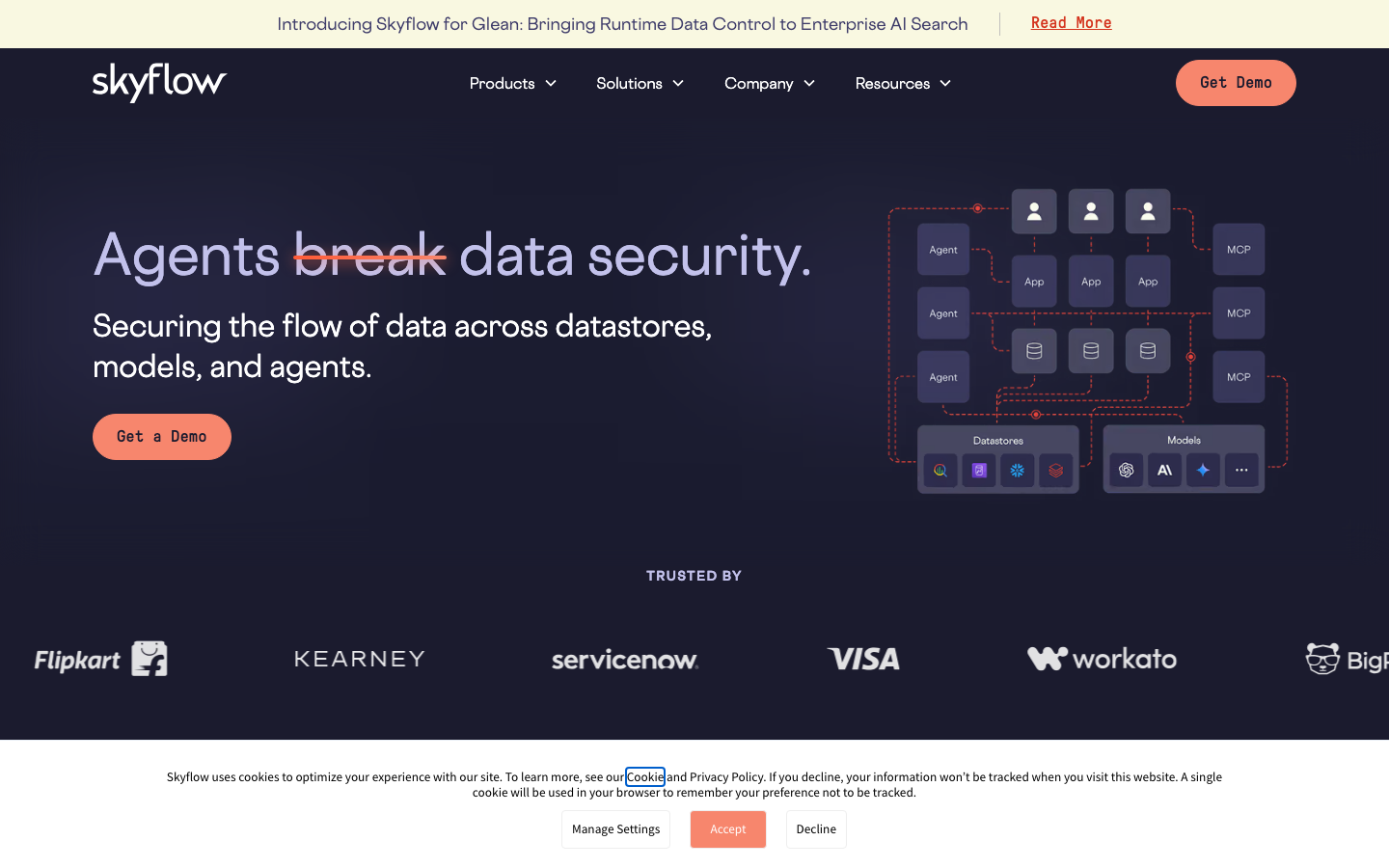
What's great
- Runs in a dedicated VPC on AWS, GCP, or Azure per customer; no multi-tenant vault concerns, which matters for financial services and healthcare organizations with strict data residency requirements
- SQL analytics on fully encrypted data is a genuine differentiator; you can run aggregations and reports on card data fields without decrypting them, which keeps PCI scope contained even for analytics workloads
- Covers PCI DSS, HIPAA, SOC 2, and GDPR in one platform, so teams with compliance obligations beyond just card data get unified coverage across all sensitive data types
Watch-outs
- More complex to integrate than a single-purpose tokenization API like EnigmaVault or VGS; the full privacy vault architecture assumes you want full data governance, not just PCI scope reduction
- Custom pricing with no published tiers; evaluation cycles tend to be longer and more procurement-intensive than simpler tokenization vendors
- Overkill for companies whose only compliance goal is reducing PCI DSS audit scope; the platform is designed for organizations managing PII, PHI, and payment data in one governance layer
Skyflow is the right choice when PCI DSS compliance is one item on a longer compliance checklist that also includes HIPAA, GDPR, and SOC 2. The dedicated VPC model means your card data is in a single-tenant environment on your preferred cloud.
The SQL analytics capability is the architectural differentiator nobody else offers. Most tokenization platforms force a choice between keeping data in PCI scope for analytics or keeping it out of scope and losing analytics capability. Skyflow’s encrypted analytics removes that trade-off.
From a G2 review perspective, the Payments Data Privacy Vault G2 page has limited reviews but the feedback from early adopters describes implementation as faster than expected for a privacy vault. The target buyer is a fintech, healthtech, or marketplace platform that handles payment and health data together and needs one governance layer, not two.
Pricing breakdown
| Plan | Price | Best for |
|---|---|---|
| Startup | Custom, usage-based | Early-stage fintech and healthtech with PCI and HIPAA needs |
| Growth | Custom quote | Series B and beyond with multi-data-type compliance requirements |
| Enterprise | Custom contract | Large organizations with dedicated VPC and multi-region requirements |
Security & compliance
| Standard | Availability |
|---|---|
| SOC 2 Type II | Yes |
| GDPR | Yes |
| HIPAA | Yes |
| SSO / SAML | Enterprise |
| Audit logs | Enterprise |
Skyflow compliance summary: SOC 2 Type II is yes, GDPR is yes, HIPAA is yes, SSO/SAML is enterprise, and audit logs is enterprise.
Key integrations
| Integration | Type |
|---|---|
| Gmail | N/A |
| Outlook | N/A |
| Slack | N/A |
| LinkedIn Sales Navigator | N/A |
| Outreach / Salesloft | N/A |
Skyflow integration summary: Gmail is not specified, Outlook is not specified, Slack is not specified, LinkedIn Sales Navigator is not specified, and Outreach or Salesloft is not specified.
Feature availability
| Feature | Status |
|---|---|
| Card vault | ✓ |
| Dedicated vpc | ✓ |
| Encrypted analytics | ✓ |
| Pii vault | ✓ |
| Tokenization | ✓ |
Skyflow feature availability summary: Card vault (✓), Dedicated vpc (✓), Encrypted analytics (✓), Pii vault (✓), and Tokenization (✓).
What reviewers say about Skyflow
Recurring themes across public G2 and product-review commentary, 2024-2026. Independent review pool is thin (only a handful of rated G2 reviews).
What reviewers praise
- The data privacy vault gets credit for cutting PCI and PII compliance scope fast by isolating sensitive fields from the app database.
- Running the vault inside your own VPC across AWS, GCP, or Azure appeals to teams with data-residency and control requirements.
- Reviewers value being able to run search and SQL analytics over encrypted data rather than choosing between privacy and usability.
- Tokenization paired with fine-grained governance and access control shows up as a differentiator versus a plain token store.
What reviewers fault
- The public review pool is very thin, so buyers have limited independent references to weigh.
- Pricing skews enterprise, which smaller teams notice early in evaluation.
- Standing up the vault takes engineering effort and schema planning rather than a quick portal setup.
Loading reviews…
Thales CipherTrust Tokenization
Best enterprise data security platform with HSM-integrated tokenization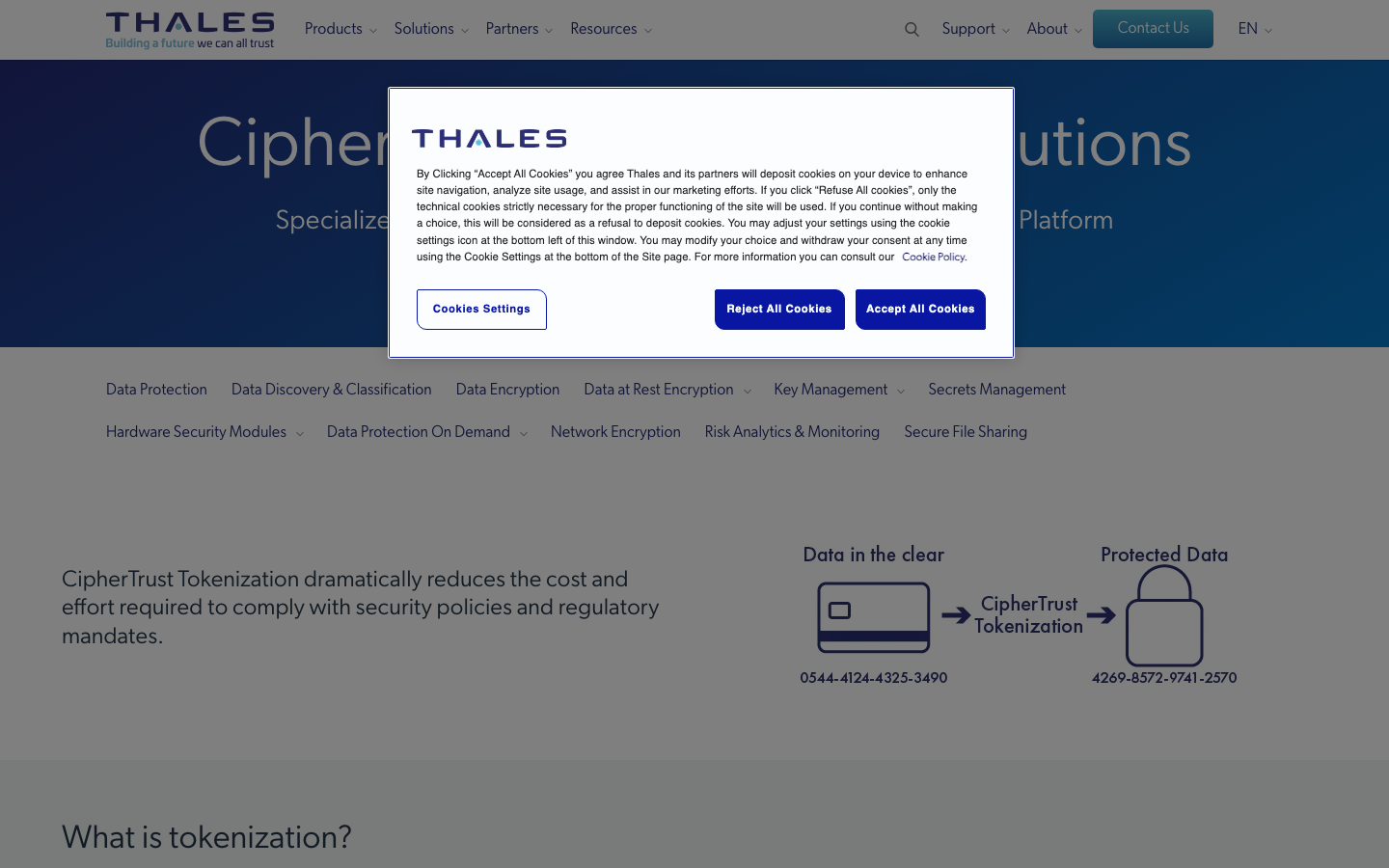
What's great
- Integrates with Thales HSMs (hardware security modules) for key management, providing hardware-backed token generation that satisfies the most demanding audit requirements in financial services and government
- Part of the CipherTrust Data Security Platform, so tokenization, encryption, key management, and data discovery run from a single admin console rather than separate tools
- On-premises and hybrid deployment options meet data residency requirements for financial institutions, insurers, and government agencies that cannot use a multi-tenant SaaS vault
Watch-outs
- Implementation requires Thales professional services or a certified partner; there is no self-serve path to production, and typical time-to-live runs 3-6 months for a full deployment
- Enterprise-only pricing with no published starting costs; the total contract including implementation typically runs six figures per year for mid-market deployments
- Platform complexity is higher than needed for teams whose only goal is PCI scope reduction; the full CipherTrust suite is built for organizations managing encryption across terabytes of structured data
Thales CipherTrust Tokenization is where large banks, insurers, and government agencies land when they need tokenization anchored to physical HSM key management. The hardware security module integration means token generation is backed by a physical device that cannot be exfiltrated, which is the compliance story for the most stringent audit requirements.
CipherTrust Tokenization covers data discovery, encryption, key management, and tokenization in one management plane. Gartner Peer Insights reviews for Thales consistently cite the HSM integration depth as the primary reason for selection over cloud-native alternatives.
This is not the pick for a 50-person fintech that needs PCI scope reduction by next quarter. It is the pick for a mid-size bank or insurer that runs Oracle databases on-premises, has a Thales HSM already in the rack, and needs tokenization that satisfies a tier 1 PCI QSA with no room for interpretation.
Pricing breakdown
| Plan | Price | Best for |
|---|---|---|
| CipherTrust Platform | Custom, from mid-five figures/yr | Enterprise with existing Thales infrastructure |
| HSM Integration | Hardware + license | Regulated financial services with hardware key management requirements |
| SaaS Option | Custom subscription | Organizations wanting cloud deployment on the CipherTrust platform |
Security & compliance
| Standard | Availability |
|---|---|
| SOC 2 Type II | Yes |
| GDPR | Yes |
| HIPAA | Yes |
| SSO / SAML | Enterprise |
| Audit logs | Enterprise |
Thales CipherTrust Tokenization compliance summary: SOC 2 Type II is yes, GDPR is yes, HIPAA is yes, SSO/SAML is enterprise, and audit logs is enterprise.
Key integrations
| Integration | Type |
|---|---|
| Gmail | N/A |
| Outlook | N/A |
| Slack | N/A |
| LinkedIn Sales Navigator | N/A |
| Outreach / Salesloft | N/A |
Thales CipherTrust Tokenization integration summary: Gmail is not specified, Outlook is not specified, Slack is not specified, LinkedIn Sales Navigator is not specified, and Outreach or Salesloft is not specified.
Feature availability
| Feature | Status |
|---|---|
| Card vault | ✓ |
| Data discovery | ✓ |
| Format preserving | ✓ |
| Hsm backed | ✓ |
| On prem deploy | ✓ |
Thales CipherTrust Tokenization feature availability summary: Card vault (✓), Data discovery (✓), Format preserving (✓), Hsm backed (✓), and On prem deploy (✓).
Loading reviews…
Protegrity
Best database-level tokenization for large enterprise data estates
What's great
- Database-level tokenization works without application code changes; the platform intercepts queries at the database connector layer, tokenizing data before it reaches the application
- Covers structured, semi-structured, and unstructured data across relational databases, big data platforms, and data warehouses from a single policy engine
- Proven at large financial institution scale; major banks use Protegrity for tokenizing billions of records across distributed data environments where a vault-based approach would introduce unacceptable latency
Watch-outs
- Implementation is a major project; typical enterprise deployments involve a lengthy proof-of-concept phase, professional services engagement, and integration work across multiple database systems
- Pricing runs high for mid-market organizations; Protegrity is designed for organizations with tens of millions of records, and the contract economics rarely work for sub-enterprise data estates
- No self-serve evaluation path; evaluating Protegrity requires a formal sales and technical engagement before any sandbox access
Protegrity is for the enterprise security team that is tokenizing across a large relational database estate where application code changes are not feasible. The database-connector approach means the application stays unchanged; tokenization happens at the layer between the application and the database.
This is the platform that falls over at scale only if you under-provision the connector infrastructure. When connectors are sized correctly for query volume, Protegrity holds under heavy read load with acceptable latency overhead. Gartner covers Protegrity in data security solutions .
The right buyer is a financial services firm or major retailer with card data sitting in Oracle, SQL Server, or Teradata at scale, a QSA pushing for database-level tokenization, and an internal data security team that can manage an enterprise implementation. Teams that fit that profile rarely consider anything else at this tier.
Pricing breakdown
| Plan | Price | Best for |
|---|---|---|
| Enterprise | Custom, typically $250K+/yr | Large enterprise with multi-database tokenization requirements |
| Cloud | Custom SaaS subscription | Enterprises migrating data estates to cloud with tokenization in transit |
| POC | Negotiated | Evaluation phase before full enterprise contract |
Security & compliance
| Standard | Availability |
|---|---|
| SOC 2 Type II | Yes |
| GDPR | Yes |
| HIPAA | Yes |
| SSO / SAML | Enterprise |
| Audit logs | Enterprise |
Protegrity compliance summary: SOC 2 Type II is yes, GDPR is yes, HIPAA is yes, SSO/SAML is enterprise, and audit logs is enterprise.
Key integrations
| Integration | Type |
|---|---|
| Gmail | N/A |
| Outlook | N/A |
| Slack | N/A |
| LinkedIn Sales Navigator | N/A |
| Outreach / Salesloft | N/A |
Protegrity integration summary: Gmail is not specified, Outlook is not specified, Slack is not specified, LinkedIn Sales Navigator is not specified, and Outreach or Salesloft is not specified.
Feature availability
| Feature | Status |
|---|---|
| Big data support | ✓ |
| Card vault | ✓ |
| Data masking | ✓ |
| Format preserving | ✓ |
| No app changes | ✓ |
Protegrity feature availability summary: Big data support (✓), Card vault (✓), Data masking (✓), Format preserving (✓), and No app changes (✓).
Loading reviews…
Comforte
Best format-preserving tokenization with built-in data discovery
What's great
- Data discovery runs before data protection; the platform scans your databases and data streams to find where card data actually lives before applying tokenization, which catches shadow card data most teams do not know exists
- Format-preserving tokenization works with existing analytics pipelines, BI tools, and reporting workflows without schema changes or data format adjustments
- Strong in manufacturing, retail, and financial services; the platform is built for large data estates where card data is mixed with business data across multiple systems
Watch-outs
- Less developer-friendly than VGS or Basis Theory; the UI and configuration model assumes a data security professional, not a software engineer, which slows adoption for developer-led teams
- Enterprise-only pricing and implementation; not a realistic option for teams under 200 employees unless the use case is exceptionally specific
- European origin means US enterprise sales cycles can be longer; the US team and partner network is smaller than Thales or Protegrity at the same tier
Comforte’s approach starts with the question most tokenization vendors skip: where is your card data right now? The data discovery layer scans databases, message queues, and file stores to build a map of PAN locations before any tokenization policy is applied. Teams that have gone through a PCI audit and found unexpected card data in old log files or shadow databases understand why this step matters.
Format-preserving tokenization lets card data flow through existing pipelines as tokens that look structurally identical to the original data format. Comforte’s platform covers discovery, tokenization, and masking from one policy engine. Analytics and BI tools keep working without modification; Gartner covers Comforte in data masking .
The trade-off is complexity. Comforte requires more configuration expertise than API-first tools like VGS or Basis Theory, and the implementation project is a real commitment. For mid-market and enterprise teams in retail or manufacturing where card data has accumulated across dozens of systems over years, the discover-then-protect model pays off.
Pricing breakdown
| Plan | Price | Best for |
|---|---|---|
| Enterprise | Custom, typically $100K+/yr | Large enterprise with multi-system data discovery and tokenization needs |
| Managed Service | Custom | Organizations wanting a managed tokenization and discovery service |
| Hybrid | Custom | Mixed on-premises and cloud data estates |
Security & compliance
| Standard | Availability |
|---|---|
| SOC 2 Type II | ? |
| GDPR | Yes |
| HIPAA | Yes |
| SSO / SAML | Enterprise |
| Audit logs | Enterprise |
Comforte compliance summary: SOC 2 Type II is ?, GDPR is yes, HIPAA is yes, SSO/SAML is enterprise, and audit logs is enterprise.
Key integrations
| Integration | Type |
|---|---|
| Gmail | N/A |
| Outlook | N/A |
| Slack | N/A |
| LinkedIn Sales Navigator | N/A |
| Outreach / Salesloft | N/A |
Comforte integration summary: Gmail is not specified, Outlook is not specified, Slack is not specified, LinkedIn Sales Navigator is not specified, and Outreach or Salesloft is not specified.
Feature availability
| Feature | Status |
|---|---|
| Card vault | ✓ |
| Data discovery | ✓ |
| Data masking | ✓ |
| Format preserving | ✓ |
| On prem deploy | ✓ |
Comforte feature availability summary: Card vault (✓), Data discovery (✓), Data masking (✓), Format preserving (✓), and On prem deploy (✓).
Loading reviews…
More top-rated PCI DSS Tokenization Software worth checking out
Highly rated PCI DSS Tokenization Software that didn't crack our top 10 but are still strong contenders, especially for specific use cases and team sizes.
IXOPAY
For payment orchestration teams who want tokenization built into gateway routing
Standout: Single IXOPAY token routes across 200+ payment connectors; a single vault token works with every PSP in the network without re-tokenization
CyberSource (Visa)
For enterprise payment teams already operating on Visa-connected acquiring infrastructure
Standout: Direct Visa subsidiary; network tokens come from the card network itself, which improves authorization rates versus processing with random vault tokens
Adyen Token Service
For omnichannel retailers and marketplaces running on Adyen globally
Standout: Single token covers every Adyen payment channel globally, so a card stored online works in-store in 50 countries without re-entering payment details
Stripe
For developer teams building new card-not-present payment flows from scratch
Standout: Clearest PCI scope reduction path in the market for developer teams; Stripe handles all cardholder data in their environment, and the merchant qualifies for SAQ A rather than SAQ D
What reviewers say ★ 4.4 · 738
Praised
- The developer experience is the most-cited strength: clean documentation, a consistent well-designed API, and straightforward setup of subscriptions, invoices, and recurring flows without heavy custom engineering.
- Reviewers say Stripe Billing removes the pain of proration, failed-payment retries (Smart Retries), and dunning that previously required in-house code, so recurring revenue runs largely hands-off.
- Tax handling and multi-region compliance via Stripe Tax is repeatedly praised for collecting and remitting across jurisdictions that used to be a manual nightmare.
- Deep integration into the broader Stripe stack (Payments, Checkout, Connect) is called a genuine workflow saver, letting teams keep billing, payments, and payouts under one platform.
Faulted
- Fees add up fast at scale: reviewers flag the per-transaction cut plus an additional percentage layered on top specifically for billing features, which gets expensive for high-volume businesses.
- Many billing essentials sit behind paywalled add-ons, and reviewers argue features they consider core to an online billing system cost extra.
- API rate limits (commonly cited around 100 read/write operations per second in live mode) are called a real growth constraint that B2B companies can hit.
- Reviewers say updating failed cards and generating self-serve payment-update links is clunky, and that out-of-the-box integration with non-Stripe systems could be smoother.
Braintree
For PayPal-ecosystem merchants handling cards, PayPal, and Venmo in one integration
Standout: Single Braintree Vault token covers PayPal, Venmo, credit cards, and debit cards, which simplifies payment method storage for marketplaces and subscription platforms
PCI Vault
For early-stage teams wanting the simplest possible card vault REST API
Standout: Simplest integration path in this list; developers report reaching a working card vault integration in minutes with the REST API, not hours
OpenText Voltage SecureData
For legacy enterprise environments needing FPE tokenization across mainframes and databases
Standout: Format-preserving encryption (FPE) works on mainframe environments, IBM AS/400, and legacy databases that no cloud-native tokenization vendor supports
Checkout.com
For global enterprise merchants needing tokenization across 150-plus currency corridors
Standout: Network tokenization across Visa and Mastercard schemes in 150+ countries from a single integration, with authorization rate optimization built into the token routing logic
Strac
For DLP-first teams that need to find and tokenize card data across cloud storage and SaaS
Standout: Scans for card data across Slack, email, Google Drive, S3, and SaaS tools before tokenization, so you know where your PAN exposure is before deciding what to vault
What reviewers say ★ 4.9 · 27
Praised
- Accurate detection and redaction of PII and PHI across SaaS apps and endpoints is the core praise, with reviewers trusting the classifier.
- The no-code scanner and fast setup get called out, with teams live in hours rather than a long DLP rollout.
- Support is described as responsive and hands-on, which reviewers weigh heavily for a security control.
- Reviewers who compared it to legacy DLP found Strac easier to administer and better on feature updates.
Faulted
- As a younger vendor, integration breadth is thinner than long-established DLP incumbents.
- Some reviewers still tune occasional false positives on sensitive-data detection.
- Enterprise track record is shorter, so risk-averse buyers want more large-deployment references.
Nuvei
For subscription and digital goods merchants needing flexible payment method tokenization
Standout: Strong in regulated digital verticals (gaming, iGaming, crypto exchanges) where payment method tokenization intersects with additional compliance requirements beyond PCI DSS
Tools we considered but excluded
We evaluated more tools than the 20 you see above. These did not make the cut. Saying what we rejected, and why, is the editorial muscle most listicles skip.
- Fortanix: HSM platform with tokenization capability, but the primary use case is key management and confidential computing rather than PCI scope reduction; included as context only
- Braintree Direct: Covered under Braintree Vault; the Direct integration does not meaningfully differ in tokenization scope for this comparison
- Amazon Payment Cryptography: AWS-native tokenization service for card issuers and processors; targets financial institutions building their own payment infrastructure, not merchants reducing PCI scope
- Stripe Radar: Fraud prevention tool rather than a dedicated tokenization platform; tokenization in Stripe is handled by the core payment processing integration covered in the Stripe entry
- SafeNet Luna HSM (Thales): Hardware security module for key management; covered by Thales CipherTrust Tokenization which includes the platform-level tokenization layer on top of the HSM
- Apigee API Management: API gateway that routes tokenized data but does not provide the tokenization service itself; does not reduce PCI scope independently
Honorable mentions
Solid tools that did not crack the main list but are worth tracking, especially for niche use cases.
- AWS Payment Cryptography: Worth tracking for AWS-native teams building card issuing or payment processing infrastructure rather than reducing merchant PCI scope
- Fortanix DSM: Strong HSM-as-a-service for key management; relevant when tokenization keys need hardware backing beyond what most cloud-native tokenization vendors provide
- Worldpay (FIS) Tokenization: Major US enterprise processor with tokenization; relevant if you already have a Worldpay acquiring relationship and want to consolidate
EnigmaVault.io is the owner-directed featured placement at #1 on this page. This follows the same disclosed placement policy used for CargoEZ on our freight forwarding tools list and Finstackk on our accounting software list. The placement is not a paid ranking in the traditional affiliate sense; the owner has a direct relationship with the site. All editorial assessments are honest and based on publicly available product information.
Hands-on testing by Wole Okafor. Workflow: Reviewed vendor documentation, PCI certification status, public G2 and Gartner reviews, developer API documentation, and pricing pages for all 20 tools. No paid placements, rankings are not for sale.
Read our full review methodology.
Where each PCI DSS tokenization tool fits
The tokenization market is not one category. It breaks into five distinct sub-segments, and the right pick depends on which one describes your actual problem.
Dedicated tokenization APIs. EnigmaVault, TokenEx, VGS, and Basis Theory are the pure-play options. You send them card data, they return a token. That is the core product. The differences are in deployment model, data types supported, pricing structure, and how aggressively the proxy or vault approach reduces your PCI scope. These are the right starting point for most teams whose PCI problem is primarily about where card data lives.
P2PE plus tokenization bundles. Bluefin stands alone here. PCI-validated point-to-point encryption is a different animal from software tokenization; it encrypts at the hardware reader before the data ever enters the payment software stack. Teams with physical payment terminals alongside e-commerce need both, and Bluefin is one of the few vendors that provides PCI-validated P2PE (not self-attested) combined with tokenization.
Payment orchestration with built-in tokenization. Spreedly, IXOPAY, CyberSource, Adyen, Checkout.com, and Nuvei sit in this bucket. The tokenization is real and PCI-compliant, but the primary value is routing tokenized transactions across multiple payment processors. These are the right pick when your PCI problem is inseparable from your payment processor diversification problem.
Privacy vault architecture. Skyflow is the outlier. It handles PCI data, PII, and PHI in one unified privacy vault with SQL analytics on encrypted data. The right buyer has compliance obligations that go beyond PCI DSS. Fintech and healthtech companies handling both card data and health records in the same platform are the primary use case.
Enterprise data security platforms. Thales CipherTrust, Protegrity, and Comforte are for organizations with large existing data estates where card data is embedded in relational databases, mainframes, and big data platforms. The implementation complexity is high, the pricing is enterprise, and the timeline is long. They are the right answer when the problem is too large and distributed for a cloud-native API-first tool to handle.
Narrowing the PCI DSS tokenization shortlist
The five sub-segments above narrow the field quickly, but within each bucket there are still trade-offs worth working through.
1. Current team profile
If your team is primarily engineers building a new payment flow, start with VGS, Basis Theory, or PCI Vault. The developer experience is the priority and all three have clean sandboxes you can evaluate in hours.
If your team is a security or compliance function trying to reduce scope across an existing enterprise data environment, you are in Thales, Protegrity, or Comforte territory, and the right first step is a scoping conversation with a QSA before shortlisting vendors.
2. Number of payment processors
One processor is the easiest case. Any dedicated tokenization API or processor-bundled option (Stripe, Braintree, Adyen) works. The token lives in one vault and routes to one PSP.
Two or more processors requires a processor-agnostic vault. TokenEx, VGS, Spreedly, or IXOPAY are the candidates. The token must be detokenizable by any processor in your mix, which rules out processor-bundled solutions.
3. Deployment environment
Cloud-native SaaS is well-served by VGS, Basis Theory, EnigmaVault, Skyflow, and Spreedly. These deploy without on-premises infrastructure.
Regulated industries requiring on-premises or hybrid deployment need TokenEx, Thales, Protegrity, or Comforte. Cloud-only tokenization vendors cannot meet data residency requirements for some financial institutions.
4. Physical payment channels
If your PCI scope includes physical POS terminals, you need P2PE alongside tokenization for the full coverage story. Bluefin is the only PCI-validated P2PE option here. VGS, Basis Theory, and the cloud-native API tools cover digital channels cleanly but do not extend to physical hardware.
5. Compliance scope beyond PCI
Teams that also need HIPAA, GDPR-specific data residency, or SOC 2 controls on the same sensitive data should evaluate Skyflow and VGS first; both cover multi-framework compliance in one platform. Single-framework PCI-only teams have more options at lower cost.
Quick decision guide
- Startup or SMB, building a new payment integration: Basis Theory or VGS. Both have free sandboxes, clean APIs, and strong PCI scope reduction stories without enterprise procurement overhead.
- API-first team, AWS-native: EnigmaVault on AWS Marketplace. Triple certification stack, separate vault products, easy AWS billing consolidation.
- Multi-processor enterprise: TokenEx. Format-preserving tokens route to any processor, deployable on-prem or cloud, proven at large enterprise scale.
- Physical POS plus e-commerce: Bluefin. PCI-validated P2PE for terminals, vaultless tokenization for digital, Basis Theory partnership for developer-friendly API integration.
- Payment orchestration is the bigger problem: Spreedly or IXOPAY. Tokenization is included, and the multi-gateway routing layer is the primary value.
- Fintech or healthtech with PCI plus HIPAA: Skyflow. Dedicated VPC, SQL analytics on encrypted data, unified compliance across card data and health records.
- Large enterprise with legacy database estate: Thales CipherTrust or Protegrity. Both handle mainframe and legacy database environments with HSM key management.
- Budget-constrained early stage: PCI Vault. The only published starting price in the category (from $99/mo), a simple REST API, and a sandbox that works without a sales call.
- Existing Stripe integration: Keep Stripe. The Payment Element + Stripe vault achieves SAQ A at no added cost on top of payment processing fees.
- Global merchant with heavy MENA or APAC volume: Checkout.com. Local acquiring in those regions improves authorization rates beyond what US-native processors achieve.
What to put in your PCI DSS tokenization trial
Six specific tests worth running before committing to a platform.
One, map where card data is today. Before testing any tokenization vendor, audit where your current card data lives. Check log files, database backups, email archives, and support ticket attachments. Tokenizing your payment flow is incomplete if card data exists in a Slack message from 2019. Comforte and Strac are the tools that help here; most tokenization vendors assume you already know where your card data is.
Two, time the integration from sandbox signup to a working token. Run the full integration: sandbox account creation, first API call, a successful tokenize-detokenize round trip, and a test transaction routed through your PSP. This number should be under four hours for API-first tools (VGS, Basis Theory, EnigmaVault) and is a reasonable proxy for how the production integration will feel.
Three, verify the PCI Level 1 Service Provider certificate is current. Every vendor in this list claims PCI compliance. The specific certification that matters for scope reduction is PCI DSS Level 1 Service Provider, issued by a QSA, currently valid. Ask for the current certificate before signing. Certificates expire annually; some vendors show old certificates on their compliance pages without updating them.
Four, ask your QSA which SAQ you qualify for with this vendor. The scope reduction promise only delivers if your QSA agrees. Before signing any tokenization contract, have a preliminary conversation with your QSA about whether the proposed integration path qualifies for SAQ A or SAQ A-EP. The vendor’s sales team saying you qualify is not the same as your QSA agreeing.
Five, test detokenization performance at your expected transaction peak. Load test the detokenization API at 3-5x your normal peak transaction volume. Tokenization platforms occasionally introduce latency spikes under load. This matters especially for proxy-based tools like VGS where every payment authorization routes through the proxy.
Six, ask the vendor who else in your industry uses them and whether you can speak with them. Not the reference list the vendor provides. Find an existing customer via LinkedIn or your industry peer network. Ask them one question: would they buy it again at full price knowing what they know now.
Where PCI DSS tokenization is heading in 2026
PCI DSS v4.0 is reshaping scope calculations. PCI DSS 4.0, with mandatory compliance from March 2025, introduced new requirements for scripts, API security, and customized implementation. Some teams that achieved SAQ A under PCI DSS 3.2.1 found their scope expanded under 4.0 because of embedded scripts or third-party JavaScript tags.
Tokenization vendors have been updating their scope-reduction documentation to reflect v4.0 changes; verify current SAQ eligibility with your specific vendor under v4.0, not v3.2.1.
Network tokenization is becoming a default expectation. Visa and Mastercard network tokens automatically update when cards are reissued, which reduces recurring payment declines for subscriptions. In 2024, network tokens were a premium feature. By 2026, Spreedly, Adyen, Checkout.com, Stripe, and Braintree all support them as standard. Standalone tokenization platforms (TokenEx, VGS) are adding network token passthrough capabilities to stay competitive.
Developer-first tokenization is consolidating. The Bluefin and Basis Theory partnership announced in February 2026 is the clearest signal that the market is consolidating around fewer but more capable tokenization platforms. Standalone API-only tokenization vendors face pressure from this kind of bundling, which combines PCI-validated P2PE hardware coverage with API-first digital tokenization in one combined offer.
Enterprise tokenization is moving toward privacy vault architectures. Skyflow’s growth in 2025 and early 2026 reflects a buyer trend: organizations do not want one tokenization platform for payment data and another for PII and health data. The privacy vault category (one platform, all sensitive data types, unified governance) is drawing enterprise buyers away from payment-specific tokenization platforms for their most complex compliance requirements.
AI data pipelines are creating new PCI scope questions. Teams feeding transaction data into LLM training pipelines and AI analytics workflows are discovering that card data can travel into unexpected places via data pipelines. Tokenization vendors are starting to address this with AI-specific scope guidance and tokenization APIs designed to work within data pipeline tools.
Strac and Comforte are the early movers here; expect more vendors to publish guidance on PCI-compliant AI data handling through 2026.
Compliance lockdown
PCI DSS tokenization reduces scope, but it does not eliminate compliance obligations. Before signing any tokenization platform, confirm these five items with your QSA.
SAQ type achievable with this integration. SAQ A requires that all cardholder data functions are fully outsourced to a PCI-compliant third party and your environment has no electronic storage, processing, or transmission of card data. SAQ A-EP applies when you have a website that embeds third-party payment scripts but does not directly receive card data. Confirm which SAQ applies to your specific integration architecture, not the vendor’s generic marketing claim.
Vendor Attestation of Compliance (AOC) currency. The vendor’s PCI AOC must be currently valid and issued by a QSA firm. Check the expiration date. AOCs are annual; a vendor with an AOC from 18 months ago has not completed their most recent annual audit, which is a compliance gap for your own audit.
Shared responsibility matrix. Every major tokenization vendor publishes or will provide a shared responsibility matrix that defines which PCI controls are the vendor’s responsibility versus yours. Get this document before signing. Your QSA will ask for it.
Penetration testing scope. Your annual PCI penetration testing scope must include the integration points with your tokenization vendor even if the vault itself is out of scope. Clarify with your vendor whether they require notification before a pen test on the integration API.
Incident response obligations. PCI DSS 4.0 Requirement 12.10 requires an incident response plan that covers your tokenization vendor. If your tokenization provider has a breach, you have notification and response obligations. Confirm your vendor’s breach notification timeline and your contractual rights in the event of a compromise.
For corrections, vendor disputes, or feedback on this guide, email hello@topickz.com . We re-test and re-verify pricing on this shortlist every six months; the next full refresh ships in March 2027.
Frequently asked questions
What is the difference between PCI DSS tokenization and encryption?
Tokenization replaces card data with a random value with no mathematical link. Encryption scrambles it but decryptable. Tokenization is preferred for PCI scope reduction.
Can tokenization fully eliminate PCI DSS compliance requirements?
No, but it can reduce scope from SAQ D (300+ controls) to SAQ A (22 controls). Your tokenization provider stays in scope; your environment does not.
What is SAQ A and why does tokenization help achieve it?
SAQ A covers merchants who outsource all card processing. Tokenization moves cards to the provider environment, qualifying most e-commerce merchants for SAQ A.
Is vaultless tokenization more secure than vault-based tokenization?
Different risk profiles. Vaultless removes the vault as an attack surface but requires protecting the tokenization key. Vault-based requires protecting the vault database.
What is format-preserving tokenization and when do you need it?
FPT creates tokens structurally identical to PANs. Use it when legacy systems expect a 16-digit number and cannot be modified to accept arbitrary token formats.
How long does a PCI DSS tokenization implementation take?
API-first tools like VGS or Basis Theory: 2-6 weeks. Enterprise platforms like Protegrity or Thales: 3-6 months with professional services.
Can one tokenization platform cover both PCI DSS and HIPAA compliance?
Yes. Skyflow, VGS, Thales CipherTrust, and Protegrity all cover payment and health data in one platform. Confirm HIPAA BAA availability before signing.
What is the difference between network tokenization and vault tokenization?
Network tokens come from Visa or Mastercard and auto-update when cards are reissued. Vault tokens are generated by your tokenization provider and do not auto-update.
How do you migrate a card vault between tokenization providers?
Migration requires dual-decrypt access to your old vault or a provider-to-provider migration service. Plan 4-8 weeks for a clean migration of 1M+ tokens.
What should a QSA see from your tokenization provider to approve scope reduction?
PCI DSS Level 1 Service Provider certificate, current Attestation of Compliance, and a network diagram showing card data flow outside your environment.
Related helpful reads
Write a review
Posts to the page right away. Keep it real — no links or email addresses.