

Comparing the best PCI DSS Compliance Software of 2026 includes 1. Vanta 2. SecurityMetrics 3. Sprinto 4. Drata 5. Secureframe 6. Thoropass 7. VGS (Very Good Security) 8. Qualys 9. Scytale 10. Strike Graph 11. Basis Theory 12. A-LIGN 13. OneTrust 14. NetSPI 15. Trustwave 16. Skyflow 17. Strac 18. VikingCloud 19. ControlCase 20. Coalfire.
TL;DR
- Best overall: Vanta, the broadest framework library for teams running PCI DSS alongside SOC 2 or ISO 27001 in one contract.
- Best PCI-only specialist: SecurityMetrics, over 20 years doing nothing but PCI, bundling ASV scanning and QSA guidance for merchants who do not need a general compliance platform.
- Best budget pick: Sprinto, a 4.8 G2 score at roughly $7K/yr entry pricing for startups adding PCI to a first SOC 2 push.
- Best scope-reduction play: VGS (Very Good Security), tokenize card data at capture and a meaningful chunk of your environment drops out of PCI scope entirely.
- Best bundled audit service: Thoropass, the only compliance-automation platform in this guide that ships an in-house assessor alongside the software.
PCI DSS compliance software actually spans four different product categories that vendors love to blur together, compliance automation platforms that map controls to evidence, ASV scanners and QSA firms that validate your environment, and tokenization vaults that shrink how much cardholder data touches your systems in the first place.
We compared 20 of them for security and payments leads working under PCI DSS v4.0.1.
None of them make you compliant by themselves; a QSA assessment or a signed SAQ is what does that.
What is PCI DSS compliance software?
Best PCI DSS Compliance Software for Security Teams comparison: features, pricing and verdicts
| Tool | Best for | Starting price | Free trial | External rating |
|---|---|---|---|---|
Best overall for teams running PCI DSS alongside SOC 2 or ISO 27001 | ~$12K/yr | Demo only | G2 4.6/5 (2,454 reviews) | |
Best PCI-only specialist bundling ASV scanning and QSA guidance | ~$150/quarter | Free PCI scoping call | G2 4.7/5 (39 reviews) | |
Best budget pick for startups adding PCI DSS to a first SOC 2 push | ~$7K/yr | Demo only | G2 4.8/5 (1,655 reviews) | |
Best continuous monitoring for PCI DSS bundled with SOC 2 | ~$7.5K/yr | Demo only | G2 4.7/5 (1,153 reviews) | |
Best hand-holding with built-in PCI-relevant security training | ~$7.5K/yr | Demo only | G2 4.7/5 (804 reviews) | |
Best bundled QSA audit service for a first PCI DSS assessment | ~$14.5K/yr | Demo only | G2 4.7/5 (568 reviews) | |
Best scope-reduction platform, tokenize card data before it touches your systems | ~$1,000/mo | Free sandbox | G2 4.7/5 (47 reviews) | |
Best ASV vulnerability scanning at enterprise scale | Custom quote | Demo only | G2 4.4/5 (256 reviews) | |
Best AI-native advisor-led compliance including PCI DSS | ~$7.5K/yr | Demo only | G2 4.8/5 (578 reviews) | |
Best transparent pricing for self-serve PCI DSS prep | $10K/yr | Free Launch tier | G2 4.7/5 (188 reviews) | |
For developer-first tokenization across every payment channel | $995/mo | Free sandbox tier | ★ 7.8 | |
For enterprise QSA assessment partners running PCI alongside SOC 2 | Custom quote | n/a, assessment firm | G2 4.7/5 (69 reviews) | |
For enterprise GRC teams folding PCI into an existing deployment | ~$10K/yr minimum | Demo only | G2 4.4/5 (283 reviews) | |
For PCI DSS segmentation testing and penetration testing | Custom quote | n/a, services firm | G2 4.9/5 (11 reviews) | |
For managed ASV scanning bundled with threat detection | Custom quote | Demo only | ★ 7.6 | |
For fintechs needing a data privacy vault beyond just card data | Custom quote | No free trial | ★ 7.6 | |
For finding cardholder data hiding in Slack, email, and SaaS apps | Custom quote | 30-day free trial | G2 4.9/5 (27 reviews) | |
For high-volume multi-location merchants and franchises | Custom quote | n/a, services firm | ★ 7.5 | |
For multi-framework QSA engagements that share evidence | Custom quote | n/a, assessment firm | ★ 7.5 | |
For federal and large-enterprise PCI DSS assessments | Custom quote | n/a, assessment firm | ★ 7.5 |
How we chose these tools
This is a research-led roundup built from live 2026 SERP research, G2 seller-page verification, and direct vendor pricing pages, not a hands-on trial of all 20 tools.
PCI DSS compliance software is really four overlapping categories: compliance automation platforms with PCI framework support, ASV scanning and segmentation-testing vendors, QSA audit firms, and tokenization or vaulting providers that reduce PCI scope.
We pulled G2 ratings from each vendor’s g2.com/sellers aggregate page on July 19, 2026, and omitted the rating entirely wherever the G2 review count was too thin to be a meaningful signal, which is common for QSA firms and newer tokenization vendors.
Pricing was checked against each vendor’s live pricing page or, where pricing is quote-only, against recent third-party contract data. Software on this list supports PCI DSS compliance; it does not certify it.
A Qualified Security Assessor engagement or a signed Self-Assessment Questionnaire is what actually validates your compliance status. See our full methodology for how we build every Topickz comparison.
How we weight pci dss compliance software for the Topickz score
Every tool above is scored against the fixed rubric below and combined using these weights into the Topickz score on each card. The weights are set for pci dss compliance software specifically, they are not copied from another category, and we publish them so you can see what moved a ranking and re-weight for your own priorities.
| Criterion | Weight | What we checked |
|---|---|---|
| Scope reduction and tokenization | 23% | We rated how much of your environment a tool can pull out of PCI scope in the first place, tokenizing or vaulting card data at capture so fewer systems ever touch a PAN. Shrinking scope is the cheapest way to pass, so it leads here. |
| ASV scanning and scan cadence | 18% | We checked whether the vendor is an Approved Scanning Vendor and how the quarterly external scan cycle is handled: scheduling, rescans after a fix, and clean attestations. PCI DSS is a cadence, not a one-time push. |
| Control mapping and evidence automation | 16% | We looked at how cleanly the platform maps the PCI DSS v4.0.1 requirements to evidence and pulls the technical controls automatically: encryption status, access logging, and patch and scan results. |
| QSA and assessor support | 12% | We noted which vendors bundle a Qualified Security Assessor or guide you through the SAQ, versus leaving you to hire an audit firm separately. First-time merchants lean on this. |
| Segmentation and vulnerability testing | 11% | We assessed segmentation validation and vulnerability testing depth, since proving your cardholder data environment is properly walled off is where scope claims get checked. |
| Framework breadth beyond PCI | 8% | We gave credit for running PCI alongside SOC 2, ISO 27001, and HIPAA in one contract, which matters when PCI is one of several certifications you are chasing at once. |
| Security posture and monitoring | 7% | We checked continuous monitoring and how fast the tool flags a control that has drifted out of compliance between assessments, not just at scan time. |
| Pricing and total cost | 5% | We modeled real cost across the platform, the ASV scans, and any QSA engagement, since PCI spend is spread across several line items that no single pricing page shows. |
| Total | 100% |
Read the full TopickZ.com testing methodology for how we run each test, score every criterion, and combine them into a single rating.
Detailed reviews
Vanta
Best overall for teams running PCI DSS alongside SOC 2 or ISO 27001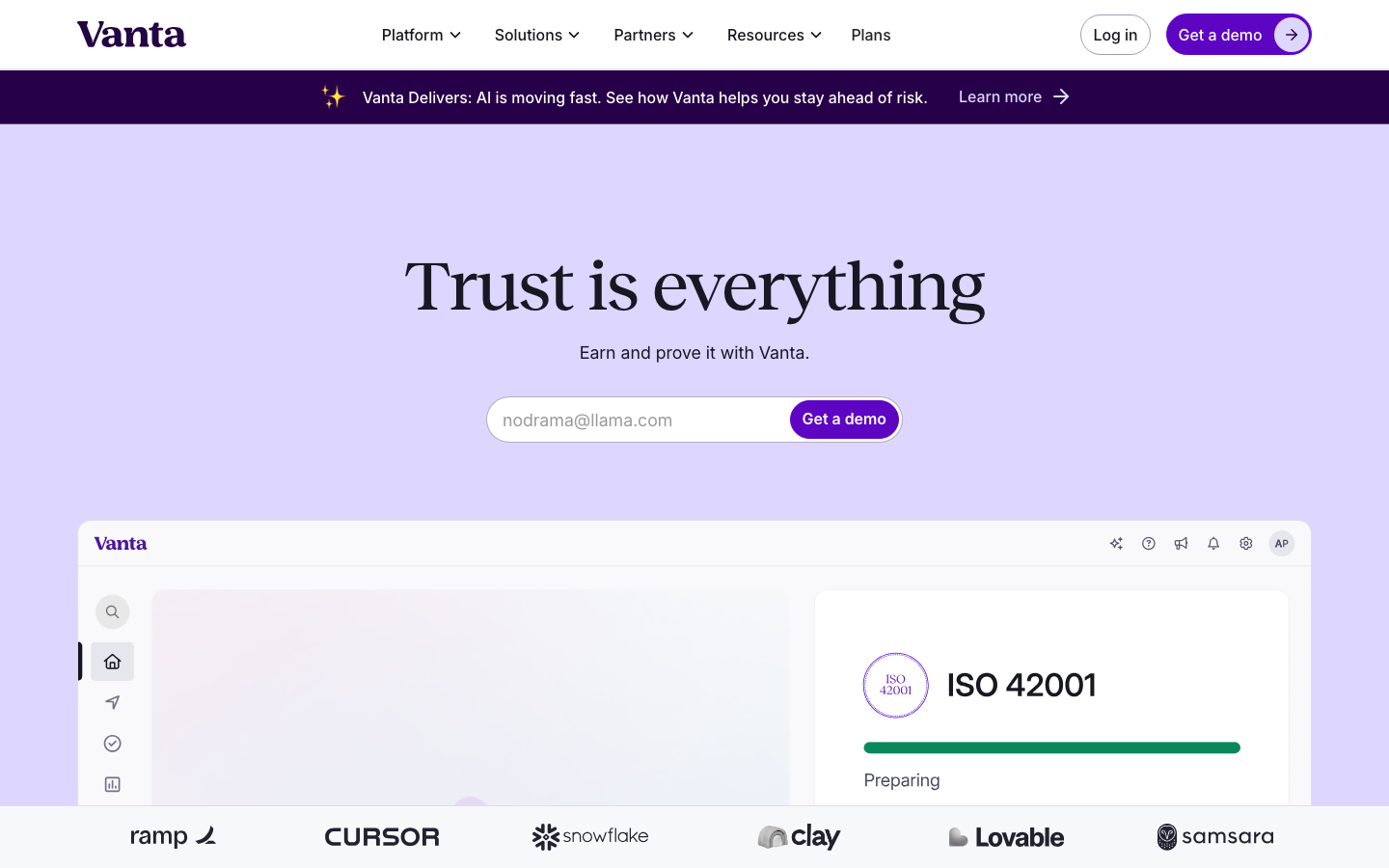
What's great
- Broadest framework library in this guide: PCI DSS v4.0.1 sits alongside SOC 2, ISO 27001, HIPAA, and 30-plus others under one contract, useful when PCI is one of several certifications you are chasing at once
- 1,200-plus automated tests across 400-plus integrations pull evidence for the technical PCI controls that map cleanly to software, encryption status, access logging, patch cadence, and vulnerability scan results
- Trust Center on the Plus tier and above gives a payment processor's security team a live link instead of a stale PDF questionnaire response
Watch-outs
- Vanta automates evidence collection and control mapping toward PCI DSS; it does not run the ASV scans or issue the SAQ or ROC that actually closes out validation. You still need a QSA or an ASV partner for that part.
- Year-2 renewal increases of 30 to 50 percent are the most-cited complaint on G2 and r/soc2. Negotiate a cap into the original contract before you sign.
- PCI-specific control depth is thinner than the SOC 2 or ISO 27001 modules. A few reviewers note the tokenization and network-segmentation evidence still needs manual supplementing.
Vanta is the default pick when PCI DSS is not your only certification.
Most companies buying it are running SOC 2 or ISO 27001 at the same time and want PCI mapped into the same evidence pipeline instead of a second vendor relationship.
2,454 G2 reviews average 4.6/5, with the automated evidence pulls for cloud infrastructure controls getting the most consistent praise.
What Vanta will not do is replace your QSA or ASV: it gets your technical controls audit-ready, then you still book a Qualified Security Assessor or complete a Self-Assessment Questionnaire to actually validate compliance.
Skip it if PCI DSS is your only framework and you want a cheaper, more focused tool; SecurityMetrics or Sprinto will get you there for less.
Pricing breakdown
| Plan | Price | Best for |
|---|---|---|
| Essentials | ~$12K-$28K/yr | Under 50 employees |
| Plus | ~$20K-$45K/yr | 50-200 employees |
| Professional | ~$35K-$80K/yr | 200-500 employees |
| Enterprise | $80K-$250K+/yr | 500+ employees |
Security & compliance
| Standard | Availability |
|---|---|
| SOC 2 Type II | Yes |
| GDPR | Yes |
| HIPAA | Yes |
| SSO / SAML | Plus+ |
| Audit logs | Yes |
Vanta compliance summary: SOC 2 Type II is yes, GDPR is yes, HIPAA is yes, SSO/SAML is plus+, and audit logs is yes.
Key integrations
| Integration | Type |
|---|---|
| Gmail | N/A |
| Outlook | N/A |
| Slack | N/A |
| LinkedIn Sales Navigator | N/A |
| Outreach / Salesloft | N/A |
Vanta integration summary: Gmail is not specified, Outlook is not specified, Slack is not specified, LinkedIn Sales Navigator is not specified, and Outreach or Salesloft is not specified.
Feature availability
| Feature | Status |
|---|---|
| Free tier | No, demo only |
| Asv scanning | ✗ partner required |
| Continuous monitoring | ✓ |
| Pci dss v4 | ✓ framework mapping |
| Tokenization | ✗ not offered |
Vanta feature availability summary: Free tier (No, demo only), Asv scanning (✗ partner required), Continuous monitoring (✓), Pci dss v4 (✓ framework mapping), and Tokenization (✗ not offered).
Loading reviews…
SecurityMetrics
Best PCI-only specialist bundling ASV scanning and QSA guidance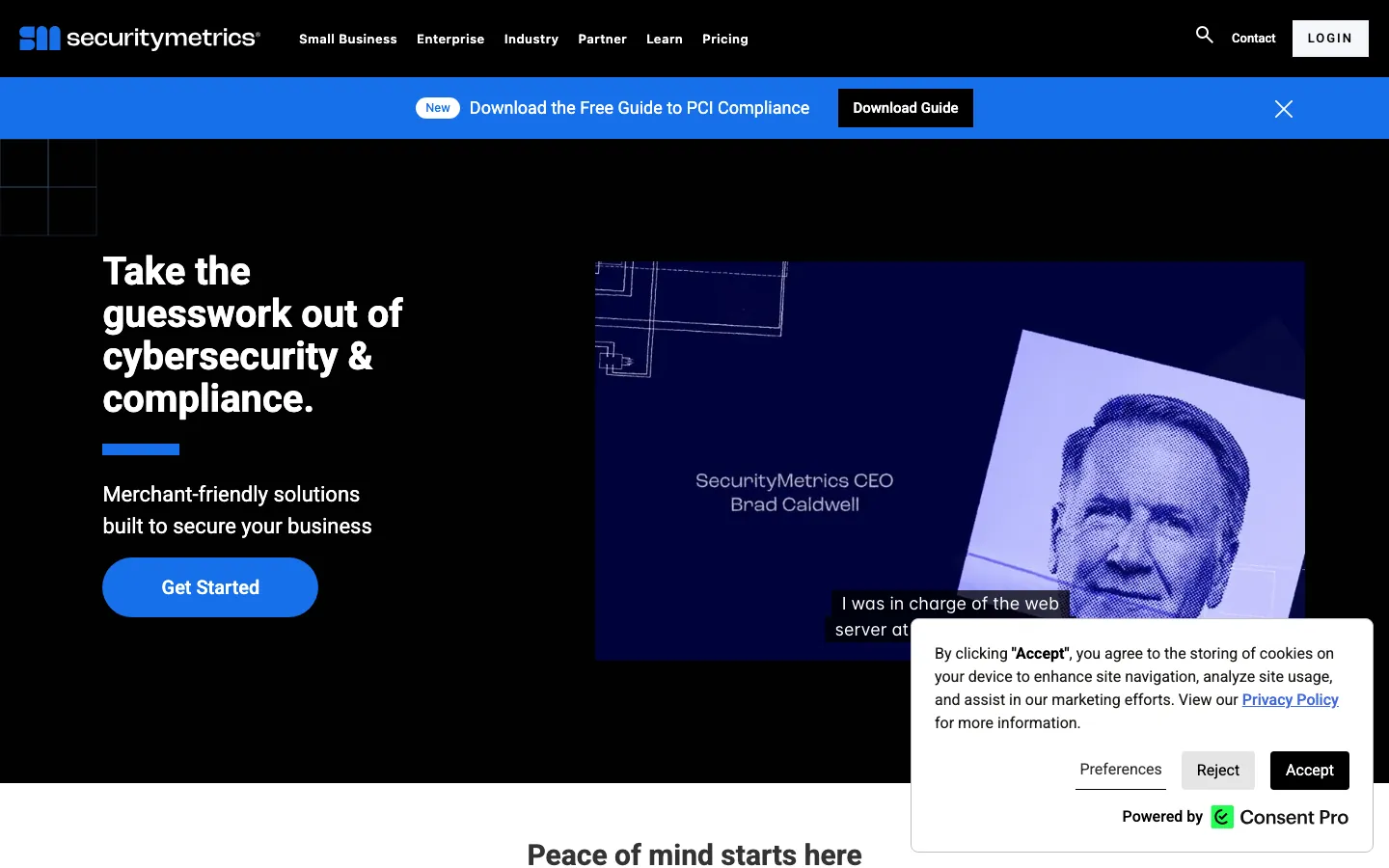
What's great
- Over 20 years doing nothing but payment card and healthcare data security, holding both ASV and QSA certifications so scanning and assessment can run through one vendor
- Serves 300,000-plus businesses per the company's own published customer list, which means the SAQ wizard and support team have seen most edge cases a smaller merchant will hit
- Pricing scales down to genuinely small-merchant budgets; a single-IP quarterly ASV scan lists around $150 per quarter, well below what a general compliance automation platform charges just for the software
Watch-outs
- G2 review base is thin at 39 reviews, small enough that a handful of unhappy customers move the average noticeably. Cross-check against Capterra or direct references before a Level 1 commitment.
- Built around PCI DSS specifically. There is no SOC 2, ISO 27001, or HIPAA framework support if you need a broader compliance platform down the line.
- Support quality reviews skew toward small-merchant experiences. A couple of larger accounts note slower turnaround on custom scoping questions compared to a dedicated enterprise QSA firm.
SecurityMetrics is the tool to reach for when PCI DSS is the only framework on your list and you would rather not pay for a general compliance platform’s SOC 2 and ISO 27001 machinery you will never use.
The company holds both Approved Scanning Vendor and Qualified Security Assessor status, so quarterly ASV scans and the SAQ or ROC process can run through the same account.
G2 shows 39 reviews at 4.7/5 , a small sample worth supplementing with a reference call given the size of a Level 1 engagement.
Pricing for small merchants stays genuinely accessible; published small-business pricing starts in the low hundreds per year for SAQ A merchants.
Best for merchants who want PCI handled end to end without adding a second compliance-automation vendor on top.
Pricing breakdown
| Plan | Price | Best for |
|---|---|---|
| SAQ + ASV Starter | ~$300-$600/yr | Small merchants completing SAQ A or SAQ A-EP |
| SAQ + ASV Bundle | ~$600-$1 | SAQ B-D merchants with broader scan scope |
| Managed PCI Program | ~$3K-$10K/yr | Level 2-3 merchants needing recurring QSA guidance |
| Level 1 QSA Assessment | Custom quote | On-site or remote QSA-led ROC for Level 1 merchants |
Security & compliance
| Standard | Availability |
|---|---|
| SOC 2 Type II | No |
| GDPR | No |
| HIPAA | ✓ healthcare division |
| SSO / SAML | No |
| Audit logs | Yes |
SecurityMetrics compliance summary: SOC 2 Type II is no, GDPR is no, HIPAA is ✓ healthcare division, SSO/SAML is no, and audit logs is yes.
Key integrations
| Integration | Type |
|---|---|
| Gmail | N/A |
| Outlook | N/A |
| Slack | N/A |
| LinkedIn Sales Navigator | N/A |
| Outreach / Salesloft | N/A |
SecurityMetrics integration summary: Gmail is not specified, Outlook is not specified, Slack is not specified, LinkedIn Sales Navigator is not specified, and Outreach or Salesloft is not specified.
Feature availability
| Feature | Status |
|---|---|
| Free tier | Free scoping call only |
| Asv scanning | ✓ native, in-house |
| Continuous monitoring | • limited, scan-cycle based |
| Pci dss v4 | ✓ core focus |
| Tokenization | ✗ not offered |
SecurityMetrics feature availability summary: Free tier (Free scoping call only), Asv scanning (✓ native, in-house), Continuous monitoring (• limited, scan-cycle based), Pci dss v4 (✓ core focus), and Tokenization (✗ not offered).
What reviewers say about SecurityMetrics
Recurring themes across ~39 G2 reviews (4.8/5) plus public Trustpilot feedback, 2024-2026.
What reviewers praise
- Reviewers repeatedly point to the assigned QSAs as knowledgeable and responsive, which takes a lot of the guesswork out of a formal PCI DSS audit.
- The guided SAQ questionnaire wizard gets praise for walking smaller merchants through scoping without needing an outside consultant.
- ASV scanning and the audit workflow are described as well structured, with clear remediation guidance rather than a raw list of findings.
- Support quality shows up as the standout theme on Trustpilot, with reviewers citing patient, hands-on help through the certification cycle.
What reviewers fault
- The lack of a single login across the different SecurityMetrics tools frustrates users who juggle scanning, SAQ, and audit portals separately.
- Several reviewers mention being upsold into extra services beyond the compliance scope they signed up for.
- Integrations with other security and IT software are called thin, so evidence collection stays fairly manual.
Loading reviews…
Sprinto
Best budget pick for startups adding PCI DSS to a first SOC 2 push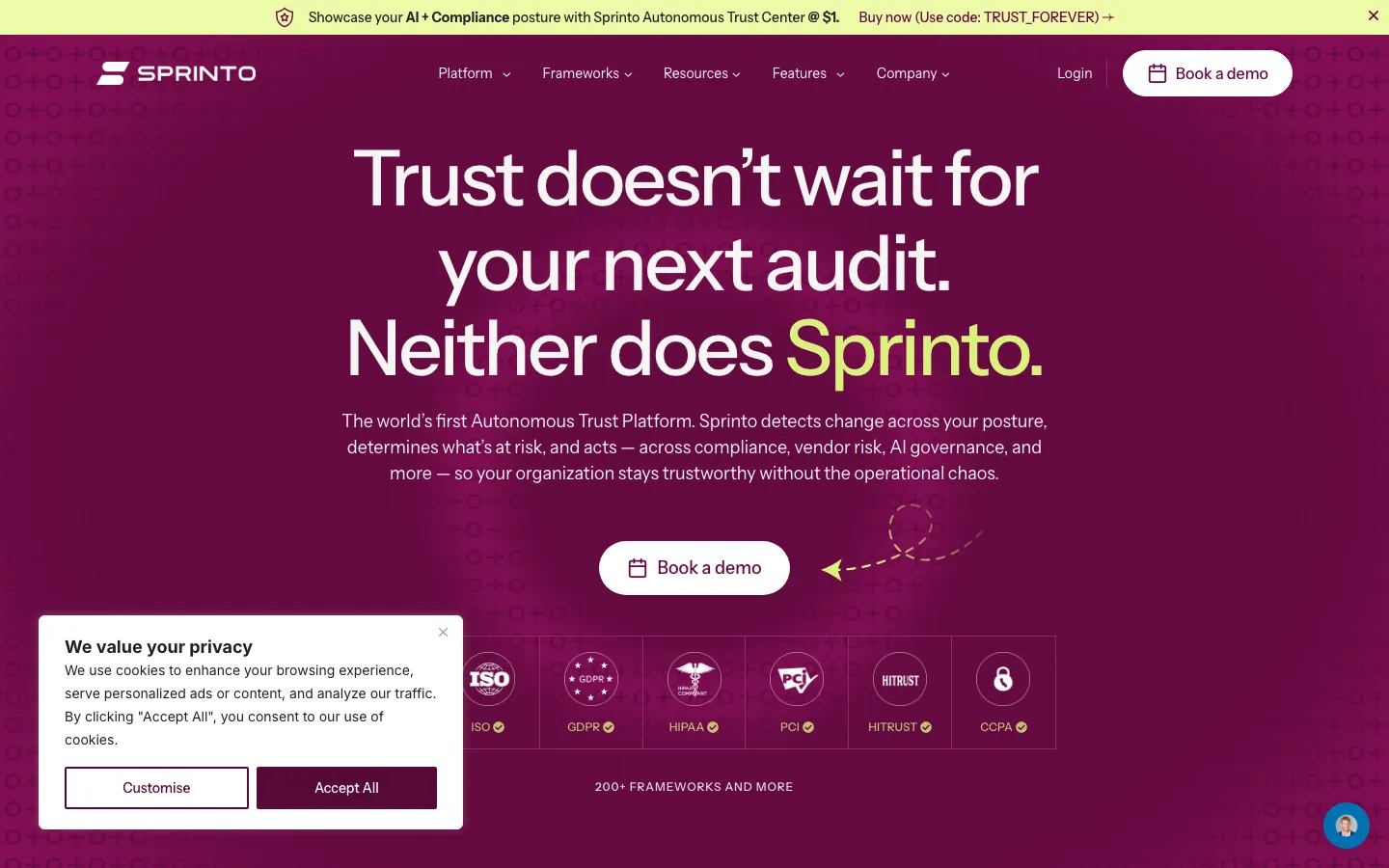
What's great
- 4.8/5 across 1,655 G2 reviews, the highest raw score of any multi-framework platform in this guide, with PCI DSS included among the 200-plus frameworks it maps
- Startup program pricing brings entry cost to roughly $7K-$8K/yr, the cheapest serious multi-framework option for a company doing PCI alongside a first SOC 2
- 300-plus integrations pull technical evidence automatically, useful for PCI's heavy technical-control burden around encryption, logging, and vulnerability management
Watch-outs
- Rigid, opinionated workflow structure. Teams with unusual card-data flows (in-person plus online plus call center) find the platform pushes toward its own standard structure rather than flexing to match.
- Sprinto automates evidence and monitoring toward PCI DSS controls. It does not perform ASV scans or issue the actual attestation, so pair it with an ASV vendor and either a QSA or an in-house SAQ process.
- Renewal pricing can jump 30-40 percent from year one, and the startup-program discount does not automatically carry through to renewal
Sprinto is the platform to point a 20-person fintech toward when they are doing SOC 2 and PCI DSS at the same time on a startup budget.
The 1,655 G2 reviews at 4.8/5 is a genuinely strong score for a platform priced this low, and the automated evidence pulls handle a meaningful chunk of PCI’s technical requirements around encryption and access logging.
What it will not do is replace your ASV scan or your QSA relationship; Sprinto gets you evidence-ready, but the actual scan and attestation still happen outside the platform.
The real cost shows up at renewal, not at signup, so get the year-two number in writing before you commit.
Best for pre-Series-B fintech and payments startups running PCI as a second framework alongside SOC 2.
Pricing breakdown
| Plan | Price | Best for |
|---|---|---|
| Starter | ~$7K-$8K/yr | Under 50 employees |
| Professional | ~$8K-$10K/yr | Growing teams with custom controls |
| Advanced | ~$11K-$15K/yr | Multi-framework |
| Enterprise | ~$20K+/yr | 150+ employees |
Security & compliance
| Standard | Availability |
|---|---|
| SOC 2 Type II | Yes |
| GDPR | Yes |
| HIPAA | Yes |
| SSO / SAML | ✓ all tiers |
| Audit logs | Yes |
Sprinto compliance summary: SOC 2 Type II is yes, GDPR is yes, HIPAA is yes, SSO/SAML is ✓ all tiers, and audit logs is yes.
Key integrations
| Integration | Type |
|---|---|
| Gmail | N/A |
| Outlook | N/A |
| Slack | N/A |
| LinkedIn Sales Navigator | N/A |
| Outreach / Salesloft | N/A |
Sprinto integration summary: Gmail is not specified, Outlook is not specified, Slack is not specified, LinkedIn Sales Navigator is not specified, and Outreach or Salesloft is not specified.
Feature availability
| Feature | Status |
|---|---|
| Free tier | No, demo only |
| Asv scanning | ✗ partner required |
| Continuous monitoring | ✓ |
| Pci dss v4 | ✓ framework mapping |
| Tokenization | ✗ not offered |
Sprinto feature availability summary: Free tier (No, demo only), Asv scanning (✗ partner required), Continuous monitoring (✓), Pci dss v4 (✓ framework mapping), and Tokenization (✗ not offered).
Loading reviews…
Drata
Best continuous monitoring for PCI DSS bundled with SOC 2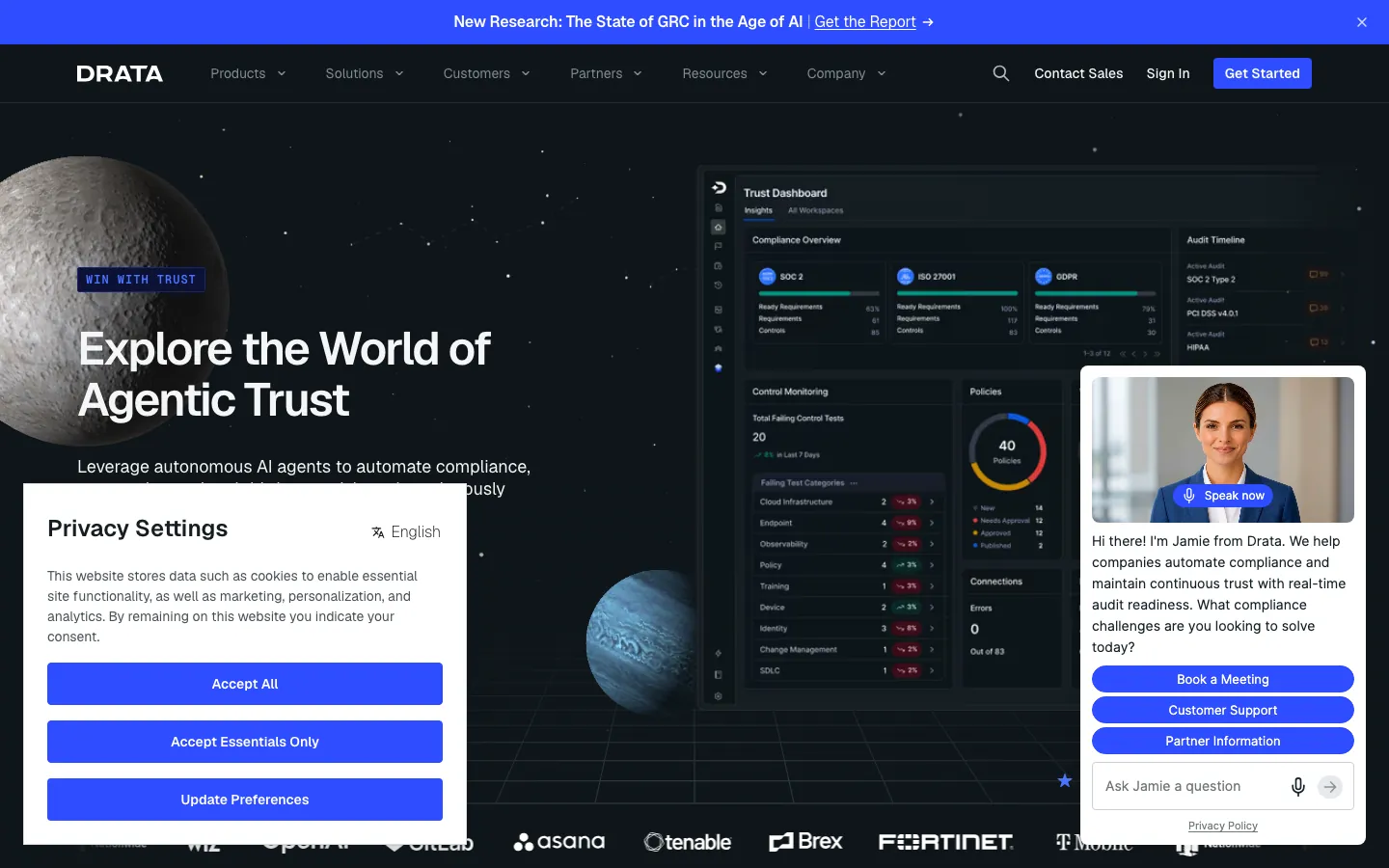
What's great
- Real-time control drift detection means a PCI control that breaks, an expired encryption certificate, a misconfigured logging rule, surfaces immediately instead of two days before the auditor review
- Compliance Advisory team includes former auditors who help map PCI DSS's more technical requirements, particularly around network segmentation evidence, which trips up first-time buyers
- 4.7/5 across 1,153 G2 reviews with consistently high marks for support responsiveness, useful when a PCI deadline is close and you need an answer same-day
Watch-outs
- Pricing scales with headcount bands rather than a flat per-seat model, so a 70-person payments company can land in the same bracket as a 200-person one. Confirm your band before signing.
- Custom integrations for unusual payment infrastructure, legacy POS systems, on-prem card readers, run $5K-$10K each
- Like the other compliance-automation platforms here, Drata maps and monitors PCI controls. It does not perform the ASV scan or issue the attestation itself.
Drata earns its spot for the continuous-monitoring story specifically. A broken control shows up on the dashboard the moment it breaks rather than surfacing during audit prep.
That matters more for PCI DSS than for SOC 2 because several PCI requirements, firewall rule reviews, quarterly access reviews, are recurring obligations, not one-time evidence pulls.
1,153 G2 reviews average 4.7/5 , with the Advisory team’s auditor background getting repeated praise for catching network-segmentation gaps early.
Drata is not an ASV scanner and does not replace a QSA relationship, so budget for both separately.
Best for companies running PCI DSS as an ongoing operational program rather than a once-a-year scramble.
Pricing breakdown
| Plan | Price | Best for |
|---|---|---|
| Foundation | ~$7.5K-$15K/yr | Under 50 employees |
| Advanced | ~$15K-$25K/yr | 50-250 employees |
| Enterprise | ~$25K-$100K+/yr | 250+ employees |
| Custom integrations | $5K-$10K each | Non-standard payment infrastructure add-on |
Security & compliance
| Standard | Availability |
|---|---|
| SOC 2 Type II | Yes |
| GDPR | Yes |
| HIPAA | Yes |
| SSO / SAML | ✓ all tiers |
| Audit logs | Yes |
Drata compliance summary: SOC 2 Type II is yes, GDPR is yes, HIPAA is yes, SSO/SAML is ✓ all tiers, and audit logs is yes.
Key integrations
| Integration | Type |
|---|---|
| Gmail | N/A |
| Outlook | N/A |
| Slack | N/A |
| LinkedIn Sales Navigator | N/A |
| Outreach / Salesloft | N/A |
Drata integration summary: Gmail is not specified, Outlook is not specified, Slack is not specified, LinkedIn Sales Navigator is not specified, and Outreach or Salesloft is not specified.
Feature availability
| Feature | Status |
|---|---|
| Free tier | No, demo only |
| Asv scanning | ✗ partner required |
| Continuous monitoring | ✓ real-time drift detection |
| Pci dss v4 | ✓ framework mapping |
| Tokenization | ✗ not offered |
Drata feature availability summary: Free tier (No, demo only), Asv scanning (✗ partner required), Continuous monitoring (✓ real-time drift detection), Pci dss v4 (✓ framework mapping), and Tokenization (✗ not offered).
Loading reviews…
Secureframe
Best hand-holding with built-in PCI-relevant security training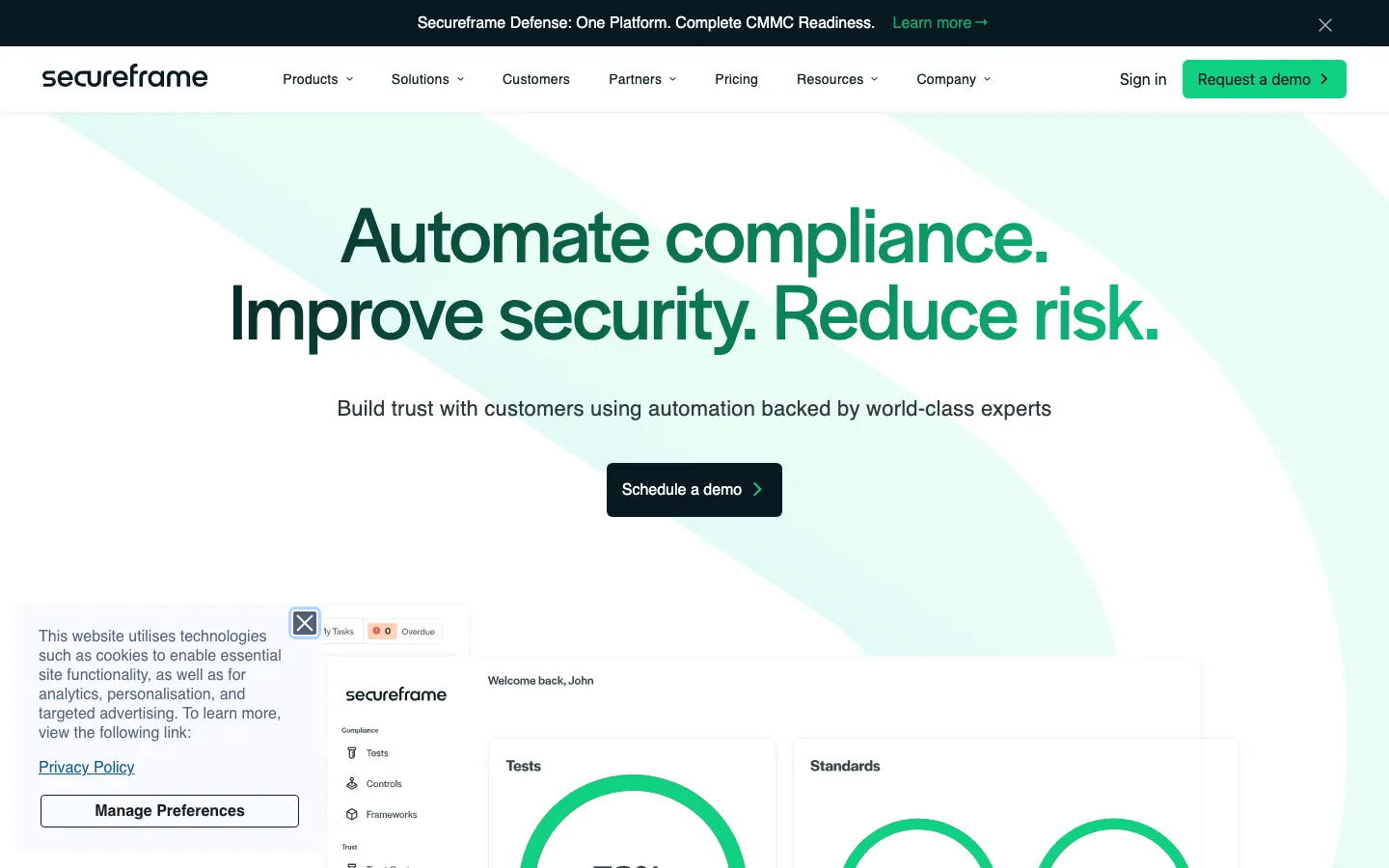
What's great
- 20-plus SCORM training modules ship built in, useful because PCI DSS Requirement 12 mandates a formal security awareness program and most platforms make you buy that separately
- 20-plus compliance frameworks including SOC 2, ISO 27001, HIPAA, PCI DSS, GDPR, and CMMC under one contract for companies stacking certifications
- Vendor risk management and trust portal both ship in the Complete tier, useful for the vendor due-diligence documentation PCI-regulated payment partners increasingly ask for
Watch-outs
- Each additional framework adds roughly $7.5K/yr. A PCI DSS plus SOC 2 plus ISO 27001 stack costs meaningfully more than Vanta or Sprinto for equivalent coverage.
- Less workflow flexibility than Drata for companies with non-standard card-data flows; the platform pushes toward its own opinionated control structure
- Median contract sits around $20K/yr per third-party contract data. The $7.5K entry price only applies to the smallest single-framework deployments.
Secureframe is the pick when the built-in training module actually saves you a separate KnowBe4 or Proofpoint line item, and PCI DSS Requirement 12’s security-awareness mandate makes that more relevant here than in most compliance categories.
804 G2 reviews average 4.7/5 , with the templated evidence-upload workflow getting consistent praise from first-time compliance buyers.
The vendor risk management module is genuinely useful if your acquiring bank or payment processor sends you their own security questionnaire, which happens more in payments than in most SaaS verticals.
Best for 50-500 person companies running PCI DSS alongside two or more other frameworks where training and vendor risk management would otherwise be separate purchases.
Pricing breakdown
| Plan | Price | Best for |
|---|---|---|
| Fundamentals | ~$7.5K-$20K/yr | Under 50 employees |
| Complete | ~$20K-$45K/yr | 50-500 employees |
| Defense | ~$50K-$100K+/yr | CMMC Level 2 or FedRAMP targets |
| Additional framework | ~$7.5K/yr each | Each framework beyond the base plan |
Security & compliance
| Standard | Availability |
|---|---|
| SOC 2 Type II | Yes |
| GDPR | Yes |
| HIPAA | ? |
| SSO / SAML | ✓ all tiers |
| Audit logs | Yes |
Secureframe compliance summary: SOC 2 Type II is yes, GDPR is yes, HIPAA is ?, SSO/SAML is ✓ all tiers, and audit logs is yes.
Key integrations
| Integration | Type |
|---|---|
| Gmail | N/A |
| Outlook | N/A |
| Slack | N/A |
| LinkedIn Sales Navigator | N/A |
| Outreach / Salesloft | N/A |
Secureframe integration summary: Gmail is not specified, Outlook is not specified, Slack is not specified, LinkedIn Sales Navigator is not specified, and Outreach or Salesloft is not specified.
Feature availability
| Feature | Status |
|---|---|
| Free tier | No, demo only |
| Asv scanning | ✗ partner required |
| Continuous monitoring | ✓ |
| Pci dss v4 | ✓ framework mapping |
| Tokenization | ✗ not offered |
Secureframe feature availability summary: Free tier (No, demo only), Asv scanning (✗ partner required), Continuous monitoring (✓), Pci dss v4 (✓ framework mapping), and Tokenization (✗ not offered).
Loading reviews…
Thoropass
Best bundled QSA audit service for a first PCI DSS assessment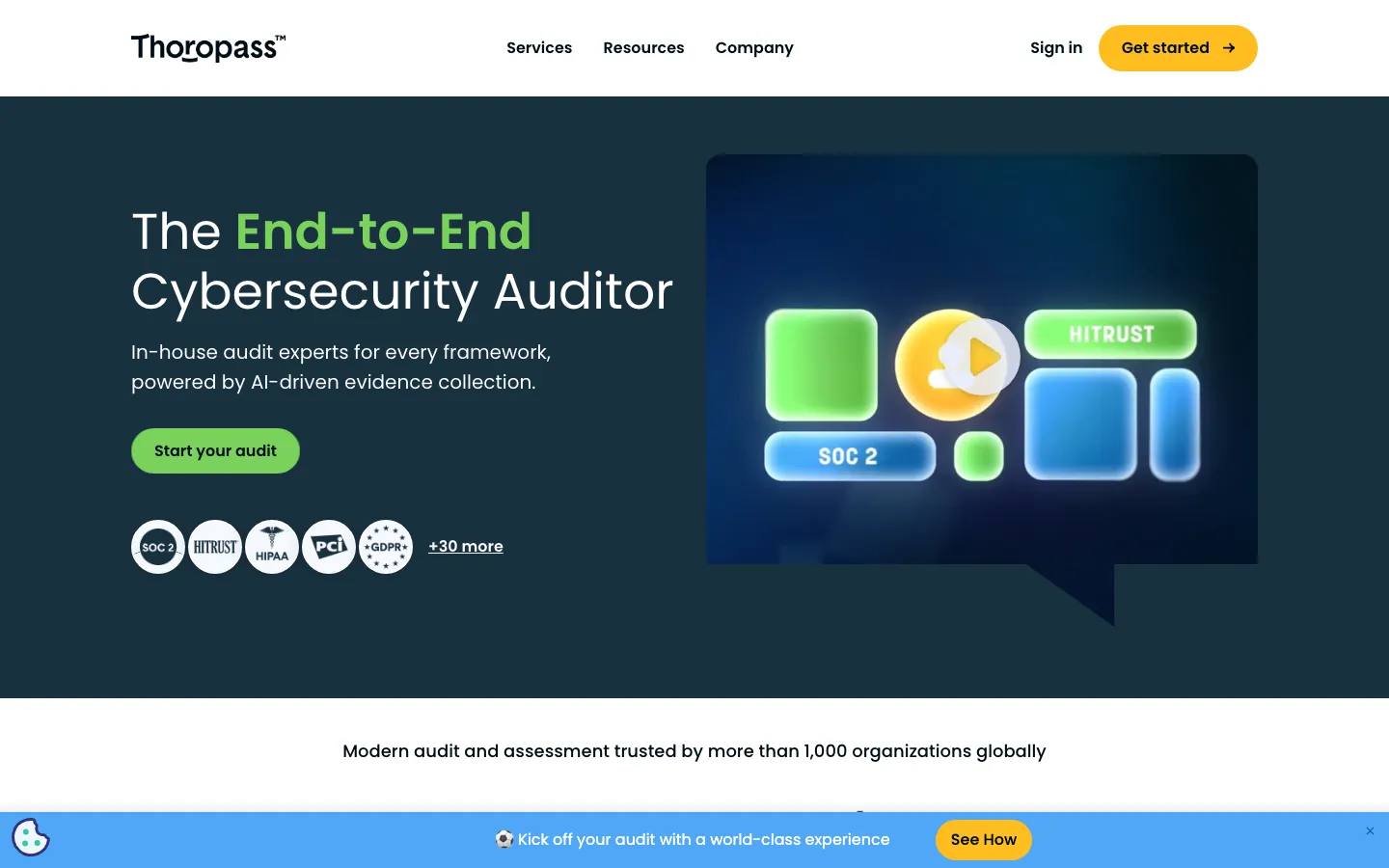
Screenshots of Thoropass 4 images
What's great
- Only compliance-automation platform in this guide with in-house assessors who can perform the actual PCI DSS attestation, not just evidence prep, removing the need to separately source and vet a QSA
- Bundled pricing starting around $14.5K/yr for platform plus first audit typically beats buying the platform and a QSA engagement separately by $5K-$20K for small-to-mid-market buyers
- Supports SOC 1, SOC 2, ISO 27001, HIPAA, PCI DSS, and several other frameworks in one platform for companies stacking certifications over time
Watch-outs
- Smaller review base than Vanta or Drata. 568 G2 reviews limits the signal on edge-case failures specific to payments environments.
- The bundled model means you lose auditor choice. Teams with an existing QSA relationship or a preferred assessor find the structure constraining.
- Less automation depth for continuous PCI monitoring than Drata or Vanta; the product is built around the audit event rather than year-round control drift
Thoropass made a bet that most first-time PCI buyers find the two-vendor process, buy the software, then separately hire a QSA, confusing and expensive, so it collapses both into one contract.
568 G2 reviews average 4.7/5 , with consistent praise for the responsiveness of the in-house assessment team during fieldwork.
That structure is the whole value proposition: instead of shopping for a QSA after buying the software, the assessor is already part of the deal.
Best for companies doing a first PCI DSS assessment who want one vendor accountable for the entire outcome instead of managing a software vendor and an assessor separately.
Pricing breakdown
| Plan | Price | Best for |
|---|---|---|
| Platform + Audit bundle | ~$14.5K-$25K/yr | First-time PCI DSS or SOC 2 buyers |
| Multi-framework bundle | ~$25K-$50K/yr | PCI DSS plus SOC 2 or HIPAA simultaneously |
| Enterprise | Custom | 200+ employees |
| Add-on framework | $4K-$10K/yr | Each additional framework beyond the base |
Security & compliance
| Standard | Availability |
|---|---|
| SOC 2 Type II | Yes |
| GDPR | Yes |
| HIPAA | Yes |
| SSO / SAML | Enterprise |
| Audit logs | Yes |
Thoropass compliance summary: SOC 2 Type II is yes, GDPR is yes, HIPAA is yes, SSO/SAML is enterprise, and audit logs is yes.
Key integrations
| Integration | Type |
|---|---|
| Gmail | N/A |
| Outlook | N/A |
| Slack | N/A |
| LinkedIn Sales Navigator | N/A |
| Outreach / Salesloft | N/A |
Thoropass integration summary: Gmail is not specified, Outlook is not specified, Slack is not specified, LinkedIn Sales Navigator is not specified, and Outreach or Salesloft is not specified.
Feature availability
| Feature | Status |
|---|---|
| Free tier | No, demo only |
| Asv scanning | ✗ partner required |
| Continuous monitoring | • limited, audit-event centric |
| Pci dss v4 | ✓ QSA-in-house |
| Tokenization | ✗ not offered |
Thoropass feature availability summary: Free tier (No, demo only), Asv scanning (✗ partner required), Continuous monitoring (• limited, audit-event centric), Pci dss v4 (✓ QSA-in-house), and Tokenization (✗ not offered).
Loading reviews…
VGS (Very Good Security)
Best scope-reduction platform, tokenize card data before it touches your systems
Screenshots of VGS (Very Good Security) 3 images
What's great
- Tokenizes card data at the point of capture so raw PANs never touch your application servers or database, which is what actually shrinks your PCI DSS assessment from a SAQ D down toward a SAQ A
- Zero-data architecture means a breach of your own infrastructure exposes tokens, not usable card numbers, a materially different incident-response conversation with your acquiring bank
- Reviewers specifically cite the developer integration experience as faster than building tokenization in-house, weeks instead of months for a first production integration
Watch-outs
- Tokenization reduces scope; it does not eliminate PCI DSS obligations entirely. You still need a SAQ or QSA engagement for whatever scope remains, and VGS is explicit about that in its own documentation.
- Pricing starts around $1,000/mo for production use and scales with interaction volume, which can get expensive fast for high-transaction-volume merchants
- Smaller G2 footprint than the compliance-automation platforms. 47 reviews is a real but limited sample for a decision this infrastructure-critical.
VGS represents the most valuable and least-discussed idea in this whole category: the cheapest way to pass a PCI DSS assessment is to touch less cardholder data in the first place.
Tokenizing PANs at capture through VGS moves the raw card number out of your environment entirely, which is what lets ecommerce and fintech teams shrink from a lengthy SAQ D down to the much shorter SAQ A.
47 G2 reviews average 4.7/5 , with developers repeatedly noting the integration is faster than the vault-and-tokenization system they were planning to build themselves.
To be clear, tokenization reduces your PCI scope, it does not make you compliant on its own; you still complete a SAQ or QSA assessment for the reduced environment that remains.
Best for ecommerce and fintech teams building new payment flows who want to design PCI scope down from day one rather than retrofit compliance onto an existing architecture.
Pricing breakdown
| Plan | Price | Best for |
|---|---|---|
| Sandbox | Free | Development and testing |
| Production Starter | ~$1 | Early-stage teams tokenizing under 10K interactions/mo |
| Growth | ~$5K+/yr and up | Mid-market payment flows across multiple processors |
| Enterprise | Custom | High-volume tokenization with dedicated infrastructure and SLAs |
Security & compliance
| Standard | Availability |
|---|---|
| SOC 2 Type II | Yes |
| GDPR | Yes |
| HIPAA | Yes |
| SSO / SAML | Growth+ |
| Audit logs | Yes |
VGS (Very Good Security) compliance summary: SOC 2 Type II is yes, GDPR is yes, HIPAA is yes, SSO/SAML is growth+, and audit logs is yes.
Key integrations
| Integration | Type |
|---|---|
| Gmail | N/A |
| Outlook | N/A |
| Slack | N/A |
| LinkedIn Sales Navigator | N/A |
| Outreach / Salesloft | N/A |
VGS (Very Good Security) integration summary: Gmail is not specified, Outlook is not specified, Slack is not specified, LinkedIn Sales Navigator is not specified, and Outreach or Salesloft is not specified.
Feature availability
| Feature | Status |
|---|---|
| Free tier | Sandbox only |
| Asv scanning | ✗ not offered |
| Continuous monitoring | • limited, vault logs |
| Pci dss v4 | ✓ scope-reduction focus |
| Tokenization | ✓ native, core product |
VGS (Very Good Security) feature availability summary: Free tier (Sandbox only), Asv scanning (✗ not offered), Continuous monitoring (• limited, vault logs), Pci dss v4 (✓ scope-reduction focus), and Tokenization (✓ native, core product).
What reviewers say about VGS (Very Good Security)
Recurring themes across ~47 G2 reviews (4.7/5) and public TrustRadius feedback, 2024-2026.
What reviewers praise
- The tokenization proxy is the headline win in reviews, letting teams keep raw card and PII data out of their own systems so PCI scope drops sharply.
- Data encryption capability scores near the top of its category, and reviewers trust it for sensitive payment flows.
- Ease of setup rates well, with users saying the proxy dropped into existing infrastructure without a rebuild.
- Quality of support gets called out, with reviewers describing responsive help during integration.
What reviewers fault
- The proxy and vault configuration carries a learning curve, and a few reviewers wanted deeper documentation for advanced routing setups.
- Because VGS sits in the critical path of the payment flow, some reviewers flag the dependency risk of routing live traffic through a third party.
- Pricing transparency comes up as a gap, with cost climbing as request volume grows.
Loading reviews…
Qualys
Best ASV vulnerability scanning at enterprise scale
Screenshots of Qualys 4 images
What's great
- Certified Approved Scanning Vendor status built on a platform for continuous vulnerability management, not just point-in-time PCI scans, useful if you also need general vulnerability management outside PCI
- Enterprise asset-scale scanning covers thousands of IPs and cloud assets in one dashboard, appropriate for Level 1 merchants and large multi-site retailers
- Very few false positives reported by reviewers relative to competing scanners, which matters because false-positive remediation cycles are a real time cost on a quarterly ASV schedule
Watch-outs
- No published list pricing. Every quote is custom and sales-driven, expect a multi-call sales process even for a straightforward small-business ASV need.
- The 4.4/5, 256-review rating reflects the entire Qualys Cloud Platform (VMDR, WAS, and other modules combined) on G2's seller aggregate, not a PCI-specific product rating in isolation
- Reviewers note a real learning curve for teams new to vulnerability management. This is not a self-serve tool for a small merchant doing their first SAQ A.
Qualys is the vulnerability-management-first pick for merchants who need serious ASV scanning at scale, not a lightweight quarterly check.
The G2 seller aggregate shows 4.4/5 across 256 reviews covering the broader Qualys Cloud Platform, and reviewers consistently point to low false-positive rates as the differentiator over competing scanners.
Qualys does not publish pricing; every quote is custom, and industry pricing trackers put small-business PCI scanning packages in the low thousands per year with enterprise multi-IP contracts reaching well into five figures.
Best for Level 1 merchants and larger retailers who already need vulnerability management beyond PCI and want the ASV requirement satisfied inside the same platform.
Pricing breakdown
| Plan | Price | Best for |
|---|---|---|
| Small Business ASV | ~$1.5K/yr | Single-IP merchants needing quarterly ASV scans |
| Mid-Market PCI | ~$5K-$8K/yr | Multi-IP environments with recurring vulnerability management |
| Enterprise VMDR + PCI | ~$15K+/yr | Full vulnerability management suite with PCI reporting module |
| Custom | Custom quote | Large enterprise asset counts and multi-cloud scanning |
Security & compliance
| Standard | Availability |
|---|---|
| SOC 2 Type II | Yes |
| GDPR | Yes |
| HIPAA | Yes |
| SSO / SAML | Yes |
| Audit logs | Yes |
Qualys compliance summary: SOC 2 Type II is yes, GDPR is yes, HIPAA is yes, SSO/SAML is yes, and audit logs is yes.
Key integrations
| Integration | Type |
|---|---|
| Gmail | N/A |
| Outlook | N/A |
| Slack | N/A |
| LinkedIn Sales Navigator | N/A |
| Outreach / Salesloft | N/A |
Qualys integration summary: Gmail is not specified, Outlook is not specified, Slack is not specified, LinkedIn Sales Navigator is not specified, and Outreach or Salesloft is not specified.
Feature availability
| Feature | Status |
|---|---|
| Free tier | ✗ |
| Asv scanning | ✓ native, in-house |
| Continuous monitoring | ✓ |
| Pci dss v4 | ✓ ASV certified |
| Tokenization | ✗ not offered |
Qualys feature availability summary: Free tier (✗), Asv scanning (✓ native, in-house), Continuous monitoring (✓), Pci dss v4 (✓ ASV certified), and Tokenization (✗ not offered).
What reviewers say about Qualys
Recurring themes across ~256 G2 reviews (4.4/5) across the Qualys product family, 2024-2026.
What reviewers praise
- Vulnerability management breadth is the core praise, with reviewers trusting Qualys scanning to cover large, mixed estates.
- The ASV-certified PCI scanning module is cited as a reliable way to clear quarterly external scan requirements.
- The lightweight cloud agent architecture gets credit for continuous visibility without heavy on-prem appliances.
- Reviewers like consolidating VM, WAS, and policy compliance under one VMDR console instead of stitching point tools.
- Reporting and dashboards are called detailed enough to hand straight to auditors.
What reviewers fault
- The interface is frequently described as dated and dense, with a real learning curve for new analysts.
- Support response times draw repeated criticism, especially on lower support tiers.
- Report customization is called limited, so teams end up exporting to build the view they actually want.
- Licensing and module pricing are described as complex, and costs stack up as you add capabilities.
- Scan tuning takes effort, with reviewers noting false positives that need manual triage.
Loading reviews…
Scytale
Best AI-native advisor-led compliance including PCI DSS
What's great
- Dedicated GRC expert assigned to each account handles PCI DSS control mapping directly rather than leaving you to interpret requirement language alone, closer to Thoropass's model than a self-serve dashboard
- Won the [2026 G2 Best Software Award in GRC](https://www.globenewswire.com/news-release/2026/02/19/3241271/0/en/Scytale-Earns-Spot-on-G2-s-2026-Best-Software-Awards-for-Best-Governance-Risk-Compliance-GRC-Products.html), with 96 percent of G2 reviewers recommending the platform
- AI-native cross-mapping across 80-plus frameworks including PCI DSS, SOC 2, ISO 27001, and ISO 42001 for teams stacking multiple certifications
Watch-outs
- Product depth is thinner than the advisory layer; some reviewers note the underlying software is less mature than Vanta or Drata for automated evidence collection at scale
- Add-on pricing compounds fast, pen testing, additional frameworks, and vCISO services can push a $7.5K base to $20K-$35K before the QSA bill
- G2 review counts differ between the seller aggregate page (578) and the individual product review page (605 at the time we checked), a reminder to verify the specific number before quoting it in a negotiation
Scytale sells compliance-by-proxy: you get a dedicated GRC expert who handles the interpretation work, and the software is the evidence repository sitting behind them.
G2’s seller page shows 578 reviews at 4.8/5 ; the individual product review page showed 605 at the same rating when we checked it, a discrepancy worth noting rather than picking whichever number looks better.
Teams that choose Scytale over a pure self-serve platform are usually the ones who want a person accountable for getting PCI DSS control language right, not just a dashboard.
Best for growing US companies that want a hands-on advisor for a first or second framework and cannot yet justify a full-time compliance hire.
Pricing breakdown
| Plan | Price | Best for |
|---|---|---|
| Base platform | ~$7.5K-$12K/yr | Single framework |
| With GRC expert + multi-framework | ~$15K-$25K/yr | 50-200 employees |
| With pen testing + vCISO add-ons | ~$20K-$35K/yr | Sales-led companies needing full security posture |
| Enterprise | Custom | 200+ employees |
Security & compliance
| Standard | Availability |
|---|---|
| SOC 2 Type II | Yes |
| GDPR | Yes |
| HIPAA | Yes |
| SSO / SAML | ✓ all tiers |
| Audit logs | Yes |
Scytale compliance summary: SOC 2 Type II is yes, GDPR is yes, HIPAA is yes, SSO/SAML is ✓ all tiers, and audit logs is yes.
Key integrations
| Integration | Type |
|---|---|
| Gmail | N/A |
| Outlook | N/A |
| Slack | N/A |
| LinkedIn Sales Navigator | N/A |
| Outreach / Salesloft | N/A |
Scytale integration summary: Gmail is not specified, Outlook is not specified, Slack is not specified, LinkedIn Sales Navigator is not specified, and Outreach or Salesloft is not specified.
Feature availability
| Feature | Status |
|---|---|
| Free tier | No, demo only |
| Asv scanning | ✗ partner required |
| Continuous monitoring | ✓ |
| Pci dss v4 | ✓ framework mapping |
| Tokenization | ✗ not offered |
Scytale feature availability summary: Free tier (No, demo only), Asv scanning (✗ partner required), Continuous monitoring (✓), Pci dss v4 (✓ framework mapping), and Tokenization (✗ not offered).
Loading reviews…
Strike Graph
Best transparent pricing for self-serve PCI DSS prep
Screenshots of Strike Graph 3 images
What's great
- Only platform in this guide with published transparent pricing on its website, no sales call required to find out what you'll pay before you invest evaluation time
- Free Launch tier lets you set up your control framework and explore the platform before committing a dollar
- Cross-framework control mapping covers PCI DSS alongside SOC 2, ISO 27001, HIPAA, CMMC, and NIST for teams planning to add certifications later
Watch-outs
- 188 G2 reviews is the smallest review base among the compliance-automation platforms in this guide, limiting signal on long-term renewal experience
- Framework add-on pricing of $2K-$8K/yr each compounds; a PCI DSS plus SOC 2 stack lands in the same price band as Vanta or Sprinto but with a smaller integration library
- Smaller installed base than Vanta or Sprinto means fewer community answers and less-proven QSA familiarity with the platform's evidence export format for a PCI-specific engagement
Strike Graph earns the spot for the thing almost no compliance-automation vendor does: it publishes its prices.
That matters when you are evaluating four platforms in parallel and do not want to burn a week booking sales calls just to rule three of them out.
188 G2 reviews average 4.7/5 , with the AI Security Assistant and the clean audit export getting the most consistent praise.
Before signing, show the platform’s evidence export to whichever QSA you are planning to use for the actual PCI assessment; an assessor unfamiliar with the format adds friction during fieldwork.
Best for developer-led companies under 100 employees who want pricing clarity before committing evaluation time.
Pricing breakdown
| Plan | Price | Best for |
|---|---|---|
| Launch | Free | Exploring the platform |
| Certify | $10K/yr | Single Tier 1 framework |
| Scale | $21.5K/yr | One framework at any tier + advanced AI features |
| Enterprise | $35K+/yr | 200+ employees |
Security & compliance
| Standard | Availability |
|---|---|
| SOC 2 Type II | Yes |
| GDPR | Yes |
| HIPAA | Yes |
| SSO / SAML | Scale+ |
| Audit logs | Yes |
Strike Graph compliance summary: SOC 2 Type II is yes, GDPR is yes, HIPAA is yes, SSO/SAML is scale+, and audit logs is yes.
Key integrations
| Integration | Type |
|---|---|
| Gmail | N/A |
| Outlook | N/A |
| Slack | N/A |
| LinkedIn Sales Navigator | N/A |
| Outreach / Salesloft | N/A |
Strike Graph integration summary: Gmail is not specified, Outlook is not specified, Slack is not specified, LinkedIn Sales Navigator is not specified, and Outreach or Salesloft is not specified.
Feature availability
| Feature | Status |
|---|---|
| Free tier | ✓ Launch tier |
| Asv scanning | ✗ partner required |
| Continuous monitoring | ✓ |
| Pci dss v4 | ✓ framework mapping |
| Tokenization | ✗ not offered |
Strike Graph feature availability summary: Free tier (✓ Launch tier), Asv scanning (✗ partner required), Continuous monitoring (✓), Pci dss v4 (✓ framework mapping), and Tokenization (✗ not offered).
Loading reviews…
More top-rated PCI DSS Compliance Software worth checking out
Highly rated PCI DSS Compliance Software that didn't crack our top 10 but are still strong contenders, especially for specific use cases and team sizes.
Basis Theory
For developer-first tokenization across every payment channel
Standout: API-driven tokenization built for developers who want to wire PCI scope reduction directly into existing payment code rather than adopt a new dashboard-first workflow
What reviewers say
Praised
- Developers describe the platform as flexible and non-opinionated, giving them control over token schemas instead of forcing a fixed card format.
- The vault meaningfully cuts PCI scope by holding card and sensitive data outside the merchant's own systems.
- Reviewers value avoiding processor lock-in, since tokens stay usable across multiple PSPs for routing and fee negotiation.
- Usage-based, token-count pricing is called transparent and easy to reason about month to month.
Faulted
- The public review footprint is genuinely thin, so buyers have few independent references to lean on for a younger vendor.
- Adopting the vault takes real engineering effort, since it is a developer-first API rather than a turnkey portal.
- Keeping tokenized copies in sync across systems adds data-consistency overhead teams have to plan for.
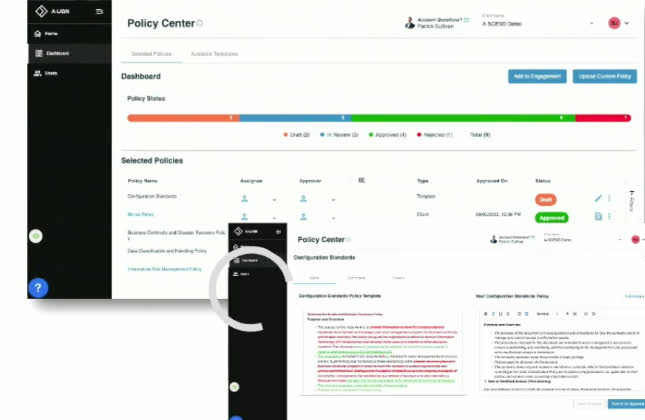
A-LIGN
For enterprise QSA assessment partners running PCI alongside SOC 2
Standout: Accredited QSA firm that can run the actual PCI DSS assessment, not just software evidence prep, alongside SOC 2, ISO 27001, and FedRAMP under a shared-evidence assessment approach
What reviewers say ★ 4.7 · 64
Praised
- Consolidating several frameworks (SOC 2, ISO 27001, PCI, HITRUST) under one auditor is the top theme, cutting duplicate evidence work.
- Reviewers credit A-LIGN auditors with understanding their business context and giving practical, prioritized recommendations.
- The single-audit approach produces a consistent methodology year over year rather than restarting with each new assessor.
- Scale gets cited as a trust signal, since A-LIGN is one of the largest SOC 2 issuers and buyers feel they are a known quantity.
- Project managers on engagements are described as responsive and good at keeping the timeline moving.
Faulted
- Scheduling and timeline slips during peak audit season are the most common gripe.
- The A-SCEND evidence portal draws criticism for clunkiness and manual upload steps.
- Pricing lands on the higher end, which smaller startups notice when comparing quotes.
- Auditor or contact turnover between engagements frustrates clients who wanted continuity.
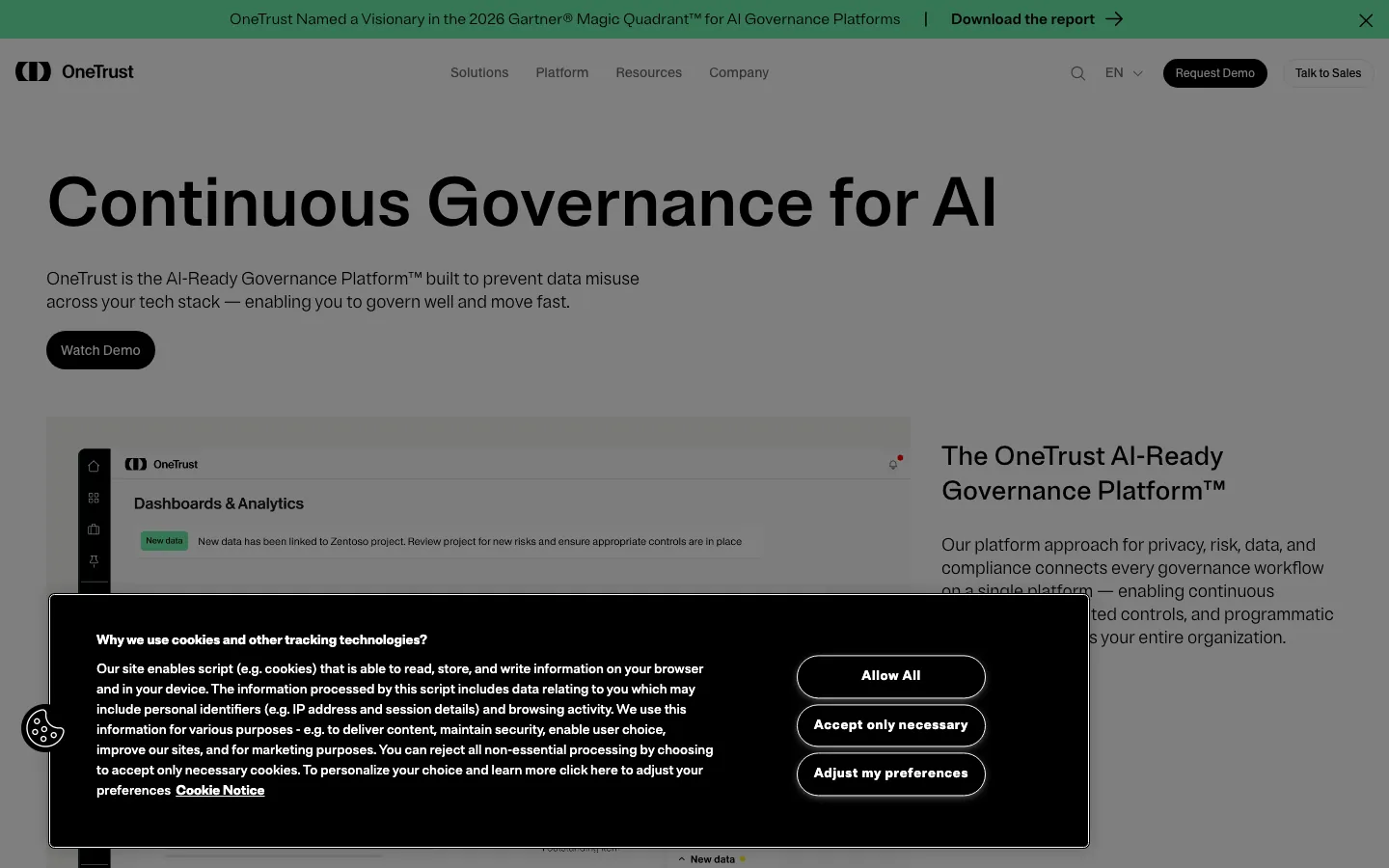
OneTrust
For enterprise GRC teams folding PCI into an existing deployment
Standout: Already the incumbent GRC platform at many large enterprises for privacy and third-party risk; adding PCI DSS as a framework inside an existing OneTrust deployment avoids introducing a fourth or fifth vendor
What reviewers say ★ 4.3 · 154
Praised
- Regulatory intelligence tracks 50+ frameworks and pushes real-time law updates, which teams cite as worth more than the software alone.
- DSAR intake and fulfillment automation cuts the manual load on privacy teams handling high request volume.
- The third-party risk database ships pre-scored profiles on tens of thousands of vendors, so assessments start faster.
- Assessment automation for PIAs, DPIAs, and risk workflows covers most global obligations from one console.
- Mid-market and enterprise reviewers value having privacy, security, and consent tooling in a single suite.
Faulted
- Setup is not plug-and-play, and configuring every module correctly takes weeks of training and internal effort.
- Pricing lands well above budget for small teams, cited as the main reason it is not a fit below mid-market.
- The interface feels cluttered given the number of settings, and new admins get lost in the configuration depth.
- Post-sale support and account handoff draw repeated complaints about slow response once the contract closes.
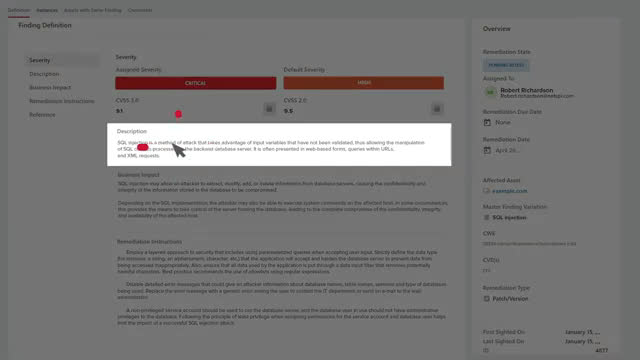
NetSPI
For PCI DSS segmentation testing and penetration testing
Standout: PCI DSS Requirement 11.4.5 mandates annual segmentation testing for merchants relying on network segmentation to reduce scope; NetSPI's Resolve platform is purpose-built for exactly that recurring requirement
What reviewers say ★ 4.9 · 11
Praised
- Depth of manual penetration testing is the standout theme, with reviewers saying human testers find issues automated scanners miss.
- Quality of support rates at the top of its category, and reviewers describe clear communication throughout each engagement.
- The PTaaS platform gets credit for real-time findings and a centralized dashboard instead of waiting on a static PDF.
- Reviewers trust NetSPI for enterprise-scope work where the assessment has to hold up to scrutiny.
Faulted
- Export and reporting options are the recurring ask, with reviewers wanting more flexible output formats.
- Pricing is described as complex and premium, and not the cheapest choice for a single engagement.
- The service skews enterprise, so smaller teams evaluating one test can find it heavy.
Trustwave
For managed ASV scanning bundled with threat detection
Standout: ASV-certified alongside Qualys and SecurityMetrics, and bundles PCI scanning with SpiderLabs managed detection and response, useful for merchants who want scanning and monitoring from one vendor
What reviewers say ★ 4.1 · 31
Praised
- Breadth of managed security and MDR coverage is the main draw, with reviewers leaning on Trustwave to watch a wide threat surface around the clock.
- The management console and reporting are called user friendly, with granular control over user access.
- Integrated logging and the managed SIEM offering get credit for pulling alerts into one place.
- The scale of the SOC and global footprint reassures reviewers who need coverage across regions.
- PCI and compliance-oriented scanning services fit teams that want an outsourced path rather than in-house tooling.
Faulted
- Support responsiveness is inconsistent, with reviewers reporting slow turnaround on lower-priority tickets.
- The portal and some interfaces feel dated relative to newer MDR competitors.
- Onboarding and initial tuning take time before alert noise settles down.
- A few reviewers question value for money after ownership and product changes at the company.
Skyflow
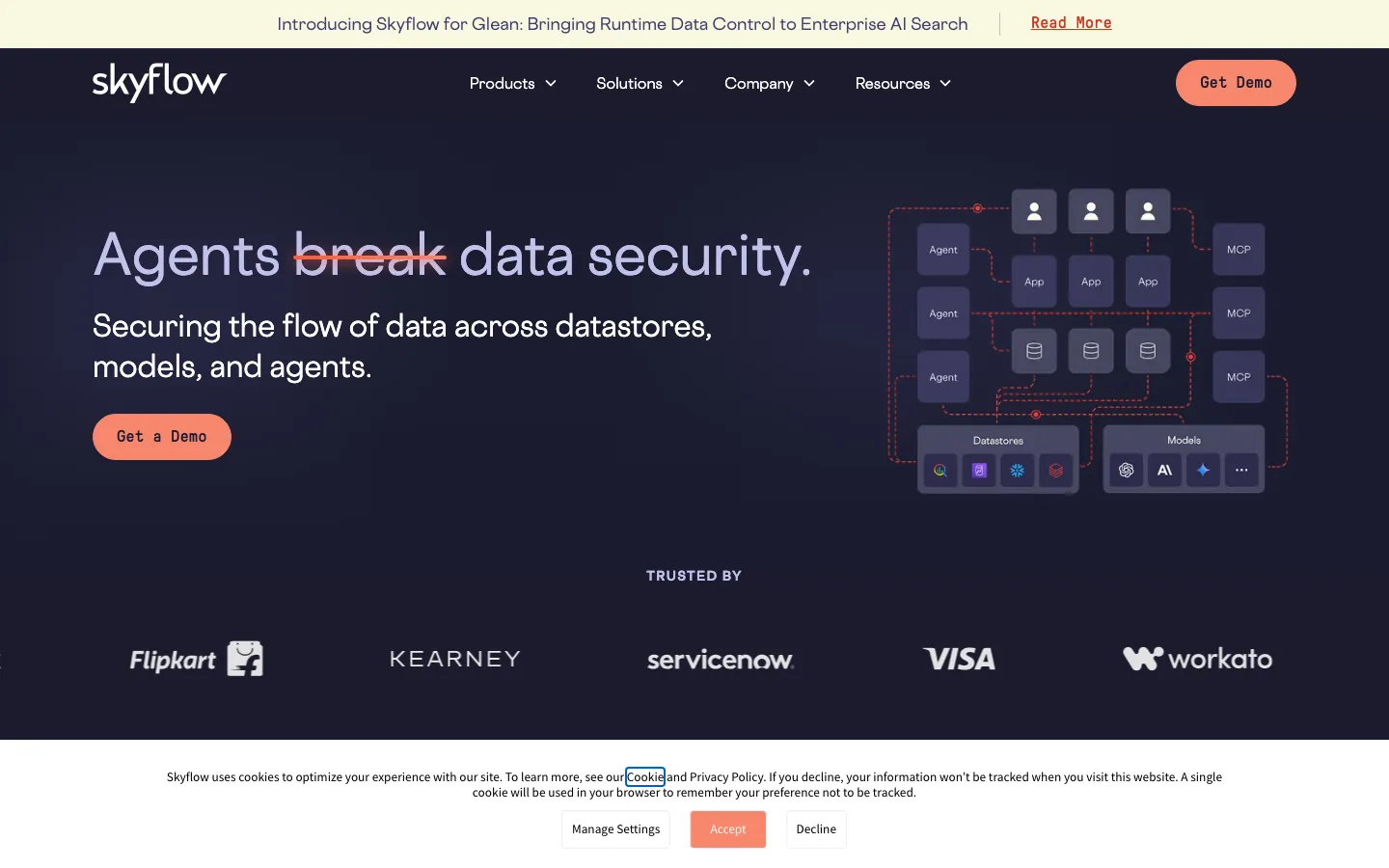
For fintechs needing a data privacy vault beyond just card data
Standout: Data privacy vault architecture handles PCI cardholder data alongside PII and PHI in one system, useful for fintechs that need PCI plus broader data residency and privacy controls, not payments alone
What reviewers say
Praised
- The data privacy vault gets credit for cutting PCI and PII compliance scope fast by isolating sensitive fields from the app database.
- Running the vault inside your own VPC across AWS, GCP, or Azure appeals to teams with data-residency and control requirements.
- Reviewers value being able to run search and SQL analytics over encrypted data rather than choosing between privacy and usability.
- Tokenization paired with fine-grained governance and access control shows up as a differentiator versus a plain token store.
Faulted
- The public review pool is very thin, so buyers have limited independent references to weigh.
- Pricing skews enterprise, which smaller teams notice early in evaluation.
- Standing up the vault takes engineering effort and schema planning rather than a quick portal setup.
Strac
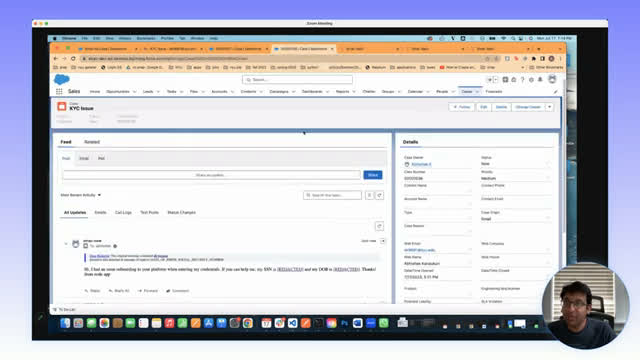
For finding cardholder data hiding in Slack, email, and SaaS apps
Standout: Purpose-built DLP and DSPM for the PCI DSS gap most evidence-collection platforms miss entirely, a cardholder number pasted into a Slack DM or an email attachment that no compliance dashboard ever sees
What reviewers say ★ 4.9 · 27
Praised
- Accurate detection and redaction of PII and PHI across SaaS apps and endpoints is the core praise, with reviewers trusting the classifier.
- The no-code scanner and fast setup get called out, with teams live in hours rather than a long DLP rollout.
- Support is described as responsive and hands-on, which reviewers weigh heavily for a security control.
- Reviewers who compared it to legacy DLP found Strac easier to administer and better on feature updates.
Faulted
- As a younger vendor, integration breadth is thinner than long-established DLP incumbents.
- Some reviewers still tune occasional false positives on sensitive-data detection.
- Enterprise track record is shorter, so risk-averse buyers want more large-deployment references.
VikingCloud
For high-volume multi-location merchants and franchises
Standout: Manages PCI compliance programs for 4 million-plus merchant locations per the company's own published figures, built specifically for multi-location retailers, restaurants, and franchises rather than a single-site business
What reviewers say
Praised
- Scale is the headline strength, since VikingCloud runs one of the largest QSA and ASV benches and can handle PCI programs at high volume.
- The Asgard platform centralizes compliance workstreams (task management, evidence review, approvals, alerts) instead of email threads.
- Rare PCI Forensic Investigator accreditation means the same vendor can handle breach investigation, which enterprises value.
- Small-business PCI packages with quarterly ASV scans get credit for making compliance approachable at scale.
Faulted
- Scan portals and false-positive tuning draw the usual ASV gripes, with reviewers spending time clearing findings.
- Support responsiveness varies by tier, and smaller accounts report a more templated experience.
- Communication during assessments can lag when programs run across large, distributed teams.
ControlCase
For multi-framework QSA engagements that share evidence
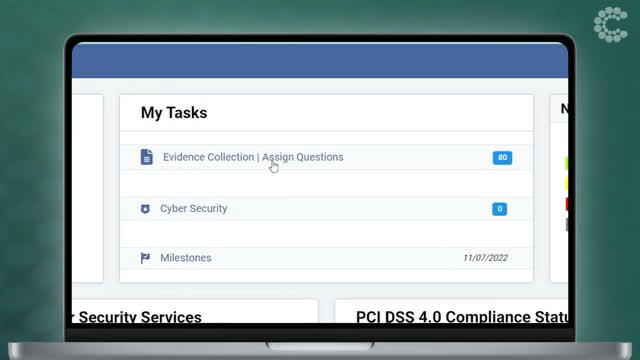
Standout: One Audit methodology maps evidence across PCI DSS, SOC 2, ISO 27001, HITRUST, and other frameworks simultaneously, genuinely useful for companies certifying against three or more standards at once
What reviewers say
Praised
- OneAudit is the standout theme, letting clients collect evidence once and map it across PCI DSS, SOC 2, ISO 27001, HITRUST and more.
- The fixed-fee model gives reviewers predictable budgeting instead of open-ended assessment costs.
- A human auditor review at the end of the automated workflow reassures clients who distrust pure tooling.
- Reviewers describe a partnership that improves year over year, with the same team learning their environment.
Faulted
- The Compliance as a Service portal and tooling feel dated compared with newer automation platforms.
- Evidence-collection back-and-forth still takes coordination effort from the client side.
- The public review footprint is small, so buyers have limited independent references.
Coalfire
For federal and large-enterprise PCI DSS assessments
Standout: Global QSA and cyber-risk firm with deep federal and enterprise assessment experience, a natural fit for companies also pursuing FedRAMP, StateRAMP, or CMMC alongside PCI DSS
What reviewers say
Praised
- FedRAMP advisory is the strongest theme, with reviewers crediting Coalfire for rapid paths to an Authorization to Operate.
- Consulting teams are described as responsive and deep on compliance and penetration-testing expertise.
- Reviewers trust Coalfire for cloud and enterprise assessments where the report has to satisfy federal or regulated scrutiny.
- Breadth across advisory, assessment, and testing lets clients keep one partner across the program.
Faulted
- Pricing sits at the premium end, which reviewers weigh against smaller boutique assessors.
- Scheduling and consultant availability can be a constraint during busy assessment cycles.
- The enterprise-grade process feels heavy for smaller organizations wanting a lighter engagement.
Tools we considered but excluded
We evaluated more tools than the 20 you see above. These did not make the cut. Saying what we rejected, and why, is the editorial muscle most listicles skip.
- Tenable: Solid vulnerability management platform with PCI ASV certification, but PCI-specific SAQ workflow support is thinner than the specialists in this guide
- Rapid7: Strong general vulnerability management, but PCI reporting is a bolt-on module rather than a purpose-built PCI workflow
- SISA: Established PCI-focused QSA across Asia-Pacific and the Middle East; US support hours and presence are still thin for US-based buyers
- Anecdotes: Enterprise GRC platform built for teams managing 10-plus frameworks simultaneously; minimum contract size rules out most PCI-only buyers
- PCI Pal: Call center and IVR payment security specialist; narrow voice-channel use case makes it a poor fit as a general PCI compliance platform
- Tugboat Logic: Folded into OneTrust's broader Tech Risk & Compliance product line years ago; we list OneTrust directly instead
Honorable mentions
Solid tools that did not crack the main list but are worth tracking, especially for niche use cases.
- Bluefin: Payment gateway with built-in point-to-point encryption that can shrink PCI scope similarly to a tokenization vault; worth a look if you are already re-platforming payment processing
- AuditBoard: Enterprise audit and GRC platform used by large public companies running PCI alongside SOX; overkill for most PCI-only buyers but the right tool past 1,000 employees
- Sysnet Global Solutions: PCI-specific compliance management platform used heavily by acquirers and payment facilitators to manage merchant portfolios; more relevant to acquirers than individual merchants
PCI DSS compliance tools, sorted by what they’re actually good at
Vendors in this category love to blur four genuinely different products into one pitch deck.
Sorting them out first saves a lot of wasted demo calls, and a lot of budget.
Compliance automation platforms map PCI DSS’s 12 requirements to evidence, pull technical proof from your cloud infrastructure automatically, and keep a dashboard of what’s covered and what’s not.
Vanta, Sprinto, Drata, Secureframe, Thoropass, Scytale, and Strike Graph all live here. None of them perform the actual scan or sign the attestation.
ASV scanners and segmentation testers run the quarterly external vulnerability scans and annual segmentation tests PCI DSS requires by name.
Qualys, SecurityMetrics, Trustwave, and NetSPI cover this ground, and a couple of them (SecurityMetrics in particular) bundle in the assessment role too.
QSA audit firms are the ones who can actually sign your Report on Compliance. A-LIGN, ControlCase, Coalfire, and VikingCloud fall here, alongside SecurityMetrics and Thoropass, which blend software with an in-house assessor.
No software signs a ROC. Only a QSA does.
Tokenization and vaulting providers take a different approach entirely: instead of helping you pass an assessment of your full environment, they shrink how much of your environment is in scope to begin with. VGS, Basis Theory, and Skyflow lead this group.
Two outliers round out the list. OneTrust is a general-purpose enterprise GRC platform where PCI DSS is one framework among fifty.
Strac is a data-loss-prevention tool that finds cardholder data hiding outside your infrastructure entirely, in Slack threads and support tickets, a gap none of the other categories cover.
Cutting PCI scope before you buy anything
The most valuable idea in this whole category rarely makes it into a vendor pitch: the cheapest way to pass a PCI DSS assessment is to touch less cardholder data.
A merchant on SAQ D, the longest and most expensive self-assessment questionnaire, is answering roughly 300 questions about a full cardholder data environment.
Tokenize card numbers at the point of capture, so raw PANs never reach your servers or database, and a lot of merchants can move to SAQ A, which asks around 20 questions because there’s effectively nothing left in scope to assess.
Twenty questions instead of three hundred. That’s the whole pitch.
VGS, Basis Theory, and Skyflow all sell this exact trade. A payment gateway with point-to-point encryption built in, like Bluefin, gets you partway there too.
None of them eliminate PCI DSS entirely; you still complete a SAQ or QSA engagement for whatever scope remains after tokenization.
But the size of that remaining scope is the whole ballgame for a small or mid-size merchant’s compliance budget.
The catch is timing.
Retrofitting tokenization onto an existing payment flow is a real engineering project, weeks to months depending on how many systems currently touch raw card data.
Teams building new payment infrastructure get the scope-reduction benefit almost for free by designing tokenization in from day one.
If you’re evaluating this for the first time, read our broader compliance automation comparison alongside this one; several of the platforms overlap, and the SOC 2 and ISO 27001 buying logic transfers directly.
Trial checklist for PCI DSS compliance software
Every sales call makes the platform look effortless.
Here’s what to actually verify before you sign.
One, ask exactly which PCI DSS requirements the software automates versus which ones stay manual. Compliance automation platforms are strong on technical controls, encryption status, access logging, patch management, and weak on physical security and some documentation requirements.
Get the specific requirement-by-requirement breakdown, not a general “we cover PCI DSS” answer.
Two, confirm who performs your ASV scan and how that connects to the software. Most compliance automation platforms don’t run ASV scans themselves.
Ask directly: does this integrate with an ASV partner, or do you need a completely separate vendor relationship and a completely separate invoice.
Three, request a sample evidence export and show it to your actual QSA. Not the vendor’s canned demo export, your QSA.
Assessors who are unfamiliar with a platform’s export format add friction during fieldwork, and that friction shows up as extra billable hours on the QSA invoice.
Four, ask what happens to your merchant level classification if transaction volume changes mid-year. Level thresholds are based on annual transaction count, and a platform that’s sized right for Level 3 today can leave you scrambling if a big customer pushes you into Level 2 territory next quarter.
Five, pressure-test the tokenization scope-reduction math with real numbers. If you’re evaluating VGS, Basis Theory, or Skyflow, ask them to walk through your actual current SAQ type and show you, specifically, which questions drop off after tokenization.
A vague “significantly reduces scope” answer isn’t good enough for a decision this size.
Six, get the year-two renewal number in writing before you sign year one. This applies to every vendor in this guide with subscription pricing.
Compliance software renewal increases in the 20 to 50 percent range are common enough across the category that “we’ll figure it out at renewal” is not an acceptable answer from a sales rep.
Match the PCI compliance stack to your risk profile
Six variables decide which corner of this market you actually belong in. Most buyers only need to answer two or three of them.
1. Merchant level and transaction volume
Level 4 merchants (under 20,000 ecommerce transactions a year for most card brands) typically need only a self-serve SAQ and quarterly ASV scans; SecurityMetrics or a lightweight Qualys package covers this without a compliance automation platform at all.
Level 1 merchants (6 million-plus transactions) need an on-site QSA, a full ROC, and usually a compliance automation platform to manage the evidence volume.
2. Number of frameworks beyond PCI DSS
If PCI DSS is the only certification you need, a specialist like SecurityMetrics is cheaper and more focused than a general compliance automation platform.
If you’re also running SOC 2 or ISO 27001, Vanta, Drata, Secureframe, or Sprinto let you manage all three in one evidence pipeline instead of three separate vendor relationships.
3. How much cardholder data actually touches your systems
Companies using a fully hosted checkout (Stripe Checkout, Shopify Payments) with no raw card data ever hitting their servers can often complete SAQ A without any tokenization investment at all.
Companies storing or processing card numbers directly should seriously evaluate VGS, Basis Theory, or Skyflow before their next assessment cycle, not after.
4. Whether you already have a QSA relationship
If you have an existing QSA you trust, avoid Thoropass’s bundled model, it locks you into their in-house assessors.
Every compliance automation platform in this guide works with any accredited QSA of your choosing.
5. Multi-location or franchise complexity
A single-office SaaS company with embedded payments has straightforward scope.
A retail chain, restaurant group, or franchise operation with dozens of point-of-sale locations needs a vendor built for portfolio-level PCI programs, which is exactly what VikingCloud specializes in and what most compliance automation platforms are not designed to handle well.
6. Internal security engineering capacity
Basis Theory and VGS both require real engineering time to integrate tokenization into existing payment flows.
Teams without dedicated security engineering headcount should weigh whether a fully hosted payment processor with built-in tokenization, avoiding the DIY integration entirely, gets them most of the same scope-reduction benefit for less internal effort.
Which PCI DSS compliance tool for which team
- Pre-seed fintech, first PCI assessment, tight budget: SecurityMetrics for SAQ A or A-EP bundled with quarterly ASV scanning, likely under $1,000 a year all-in for the software portion.
- Series A SaaS adding payments, also chasing SOC 2: Sprinto or Vanta Essentials, mapping PCI DSS into the same evidence pipeline as your first SOC 2.
- Ecommerce platform building new checkout infrastructure: VGS or Basis Theory, design tokenization in from day one and shrink your assessment scope before you ever complete a SAQ.
- Growth-stage payments company, multi-framework, wants continuous monitoring: Drata Advanced, the real-time control drift detection matters more once PCI is an ongoing operational program rather than an annual scramble.
- Company that wants one vendor accountable for the whole outcome: Thoropass, platform plus in-house assessor in a single contract.
- Multi-location retail or restaurant franchise: VikingCloud, built specifically for portfolio-level PCI programs across dozens or hundreds of sites.
- Enterprise already standardized on a GRC platform: OneTrust, fold PCI DSS into an existing Tech Risk & Compliance deployment rather than adding a new vendor.
- Company relying on network segmentation to reduce scope: NetSPI, for the annual segmentation test PCI DSS explicitly requires under Requirement 11.4.5.
- Support or sales teams handle card numbers in Slack, email, or tickets: Strac, layered on top of whichever compliance automation platform you’re already running.
- Federal contractor or large enterprise also pursuing FedRAMP or CMMC: Coalfire or A-LIGN, QSA firms with the deepest bench in adjacent federal frameworks.
The 2026 PCI compliance landscape
PCI DSS v4.0.1 is now fully in force, and there’s no more grace period. The PCI Security Standards Council confirms v4.0.1 is the only active version.
The 51 future-dated requirements that were optional through early 2025 became mandatory on March 31, 2025.
Every assessment run in 2026 tests against the full v4.0.1 requirement set, including the more demanding authentication and encryption controls that were phased in gradually.
Tokenization is shifting from a nice-to-have to the default architecture for new payment flows. VGS, Basis Theory, and Skyflow have all reported growing interest from teams building new payment infrastructure rather than retrofitting an existing one.
Designing scope reduction in from the start is measurably cheaper than bolting it on after your first failed assessment.
Compliance automation platforms are adding PCI DSS as a checkbox framework, not a deep specialty. Vanta, Drata, Secureframe, Sprinto, and Scytale all list PCI DSS support, but the depth varies.
None of them replace the ASV scan or the QSA relationship, and buyers evaluating these platforms specifically for PCI DSS need to ask pointed questions about what’s actually automated versus what’s a checklist item.
Renewal pricing pressure has spread from SOC 2 platforms to the whole compliance-automation category. The same 20 to 50 percent year-two increases that became a known problem in the SOC 2 world are showing up in PCI-adjacent contracts too, driven by the same venture-backed growth pressure across the vendor landscape.
Data discovery for shadow cardholder data is a growing niche. Strac’s positioning, finding card numbers that leaked into Slack, email, or support tickets outside any structured payment flow, points at a real and underserved problem as more companies run distributed customer support and sales teams who occasionally handle card numbers manually.
AI agents handling payment data are creating a genuinely new scope question. As AI customer support agents and AI-assisted checkout flows start touching payment information, vendors like Skyflow are explicitly positioning around keeping sensitive values out of LLM context windows, an angle that barely existed in this category two years ago.
For corrections, vendor disputes, or feedback on this methodology, email hello@topickz.com .
We re-check ratings and pricing on this page every three months given how fast the tokenization and compliance-automation segments are moving; next refresh is scheduled for October 2026.
Frequently asked questions
What's the difference between PCI DSS compliance software and a QSA?
Which PCI DSS version applies in 2026?
Can tokenization help me avoid PCI DSS scope entirely?
Do I need a quarterly ASV scan?
How much does PCI DSS compliance cost for a small merchant?
Can one platform cover PCI DSS and SOC 2 together?
What's the difference between SAQ A and SAQ D?
Does tokenization remove the need for a QSA?
How long does a Level 1 PCI DSS assessment take?
What happens if we fail a PCI DSS assessment?
Related helpful reads
Write a review
Posts to the page right away. Keep it real — no links or email addresses.