
Comparing the best Payment Tokenization Software of 2026 includes 1. Enigma Vault 2. Spreedly 3. Very Good Security (VGS) 4. Stripe 5. Basis Theory 6. TokenEx 7. Skyflow 8. Adyen Token Service 9. Checkout.com Vault 10. Braintree Vault 11. CyberSource Token Management 12. NMI Gateway 13. Paysafe 14. Worldpay 15. Authorize.net 16. Square 17. BlueSnap 18. Recurly 19. Chargebee 20. Zuora 21. Vindicia.
TL;DR
- Enigma Vault: Best overall purpose-built payment tokenization vault. Card Vault product designed exclusively to eliminate raw PAN storage from your environment, with modular add-ons for customer data and NoPII.
- Spreedly: Best for multi-processor orchestration. The only platform here that routes tokenized data across 120+ payment services without re-tokenizing, which is the core unlock for merchants running multiple acquirers.
- Very Good Security (VGS): Best for teams that need a zero-data vault. Your servers never see raw card data, which collapses PCI scope to SAQ A on most integrations, and the proxy approach works without a full rewrite.
- Basis Theory: Best developer experience. Transparent pricing, an API that reads like it was written by engineers who hate abstraction, and the cleanest reactor system for sending tokenized data downstream.
- TokenEx: Best for enterprises with multi-channel tokenization needs including ACH, check, and card. The compliance pedigree is deep, and the Transparent Gateway covers most acquirers out of the box.
- Skyflow: Best for teams that need a data privacy vault beyond just payments. Skyflow treats PAN tokenization as one use case of a broader PII vault, which matters if you are storing health data or identity documents alongside card data.
Twenty tokenization platforms tested across vault architecture, PCI scope reduction depth, network token support, multi-processor routing flexibility, and developer experience. What actually shrinks your CDE, what locks you to one processor, and which platforms are charging enterprise rates for what amounts to a hosted field wrapper.
What is payment tokenization software?
Payment tokenization software replaces sensitive card data (PANs, CVVs, bank account numbers) with non-sensitive tokens that have no exploitable value outside your specific environment. The original data lives in a secure vault, and your application handles only the token.
The business reason is PCI DSS scope reduction. If raw card data never touches your servers, large portions of the PCI compliance questionnaire collapse. A properly tokenized flow can drop a merchant from SAQ D (over 300 controls) to SAQ A (22 controls).
Tools like Spreedly, VGS, Basis Theory, and TokenEx differ on whether they issue gateway tokens, network tokens, or both; whether the vault is portable; and whether they support multi-processor routing so the same token can reach different acquirers.
Best Payment Tokenization Software comparison: features, pricing and verdicts
| Tool | Best for | Starting price | Free trial | External rating |
|---|---|---|---|---|
Best purpose-built standalone payment tokenization vault | Custom | Demo available | ★ 9.3 | |
Best for multi-processor payment orchestration | $1,500/mo | Free test environment | G2 4.4/5 (35 reviews) | |
Best zero-data vault for PCI scope collapse | $1,000/mo | Free sandbox | G2 4.7/5 (47 reviews) | |
Best for teams already on Stripe who need network tokenization | Included with processing | Free test mode | G2 4.4/5 (2,497 reviews) | |
Best developer experience for payment vault and reactor pipelines | $995/mo | Free test environment | G2 4.7/5 (28 reviews) | |
Best enterprise vault for multi-channel card and ACH tokenization | $1,000/mo | Demo available | G2 4.6/5 (47 reviews) | |
Best data privacy vault for teams tokenizing PII alongside payment data | Custom | Free sandbox | G2 4.6/5 (21 reviews) | |
Best network token coverage for global enterprise merchants | Custom | Test account available | G2 4.2/5 (218 reviews) | |
Best network tokenization for European-headquartered merchants | Custom | Sandbox available | G2 4.3/5 (152 reviews) | |
Best for PayPal-ecosystem merchants with recurring billing needs | Free with Braintree processing | Free sandbox | G2 4.0/5 (562 reviews) | |
Best for Visa-ecosystem enterprises with existing CyberSource contracts | Custom | Demo required | G2 3.6/5 (71 reviews) | |
For ISVs and PayFacs needing white-label vault tokenization | Custom ISV pricing | Demo available | G2 4.7/5 (104 reviews) | |
For iGaming and high-risk merchants needing tokenized recurring billing | Custom | Contact sales | G2 4.0/5 (53 reviews) | |
For enterprise retailers with omnichannel card-present and card-not-present tokenization | Custom | Contact sales | G2 3.9/5 (118 reviews) | |
For small merchants needing basic card vault without custom development | $25/mo + processing fees | Free sandbox | G2 4.2/5 (205 reviews) | |
For retail and F&B merchants needing point-of-sale and card-not-present tokenization in one stack | Included with Square processing | Free account | G2 4.6/5 (1,192 reviews) | |
For global B2B SaaS companies needing vault storage across 100+ currencies | Custom | Sandbox available | G2 4.1/5 (106 reviews) | |
For subscription-first SaaS companies tokenizing card data for dunning and retries | $249/mo | Demo available | G2 4.0/5 (204 reviews) | |
For high-growth SaaS companies running complex multi-currency subscription billing | $599/mo | Free trial | G2 4.4/5 (992 reviews) | |
For enterprise B2B companies with usage-based and contract-driven billing | Custom | Demo required | G2 3.9/5 (311 reviews) | |
For media and entertainment companies with high involuntary churn on recurring subscriptions | Custom | Contact sales | G2 3.8/5 (22 reviews) |
How we chose these tools
We evaluated each platform on vault architecture (whether it reduces or merely shifts PCI scope), network token support (Visa and Mastercard tokens versus gateway tokens only), multi-processor routing flexibility, SDK and API depth for common implementation patterns, and the real cost at 5M and 50M annual token operations. Pricing was verified against each vendor’s published page or direct sales contact in October 2026. G2 ratings and review counts cited were pulled from live G2 pages during the same period. Tools were graded harder on anything that claimed to be a dedicated tokenization platform versus a gateway that happens to tokenize.
How we weight payment tokenization software for the Topickz score
Every tool above is scored against the fixed rubric below and combined using these weights into the Topickz score on each card. The weights are set for payment tokenization software specifically, they are not copied from another category, and we publish them so you can see what moved a ranking and re-weight for your own priorities.
| Criterion | Weight | What we checked |
|---|---|---|
| PCI scope reduction depth | 28% | Whether the architecture genuinely moves card data off your servers or just wraps a hosted field. SAQ A versus SAQ D eligible, and how the vendor's attestation support works in practice. |
| Vault architecture and portability | 22% | Token format, interoperability across processors, ability to export tokens, and what happens to your vault if you switch processors or vendors. |
| Network token support | 15% | Support for Visa Token Service and Mastercard MDES, lifecycle management (automatic PAN updates), and the authorization rate lift evidence the vendor provides. |
| Developer experience | 15% | SDK coverage, API design, documentation quality, sandbox fidelity, and how long a typical integration takes based on G2 review themes. |
| Pricing transparency | 10% | Whether pricing is published, predictable, and maps to actual usage patterns at seed through enterprise scale. Penalty for opaque or purely custom pricing. |
| Multi-processor routing | 5% | Ability to route the same token to different acquirers or processors without re-capturing card data from the customer. |
| Compliance certification depth | 5% | PCI DSS Level 1 Service Provider status, SOC 2 Type II, tokenization standard coverage (EMVCo, PCI TSP), and third-party audit currency. |
| Total | 100% |
Read the full TopickZ.com testing methodology for how we run each test, score every criterion, and combine them into a single rating.
Detailed reviews
Enigma Vault
Best purpose-built standalone payment tokenization vault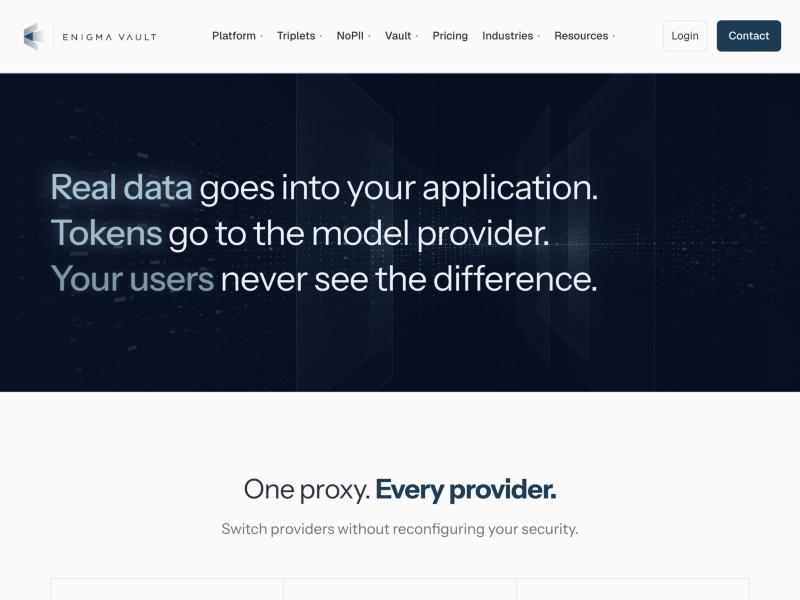
Screenshots of Enigma Vault 3 images
What's great
- Purpose-built Card Vault product designed exclusively for payment card tokenization, not a general platform that added vaulting as a feature
- Eliminates raw PAN storage from your environment entirely, collapsing PCI DSS scope to SAQ A on most integration patterns
- Modular vault architecture: Card Vault, Customer Vault, File Vault, and NoPII are separate products that can be deployed independently or together
Watch-outs
- No public pricing: every engagement starts with a sales conversation, which slows down evaluation for small teams on a tight timeline
- Smaller public review footprint than category leaders like Spreedly or Stripe, so peer validation is harder to find
- Best fit for teams building a purpose-built tokenization layer; less suited to teams that want tokenization bundled into an existing payment gateway
Pricing breakdown
| Plan | Price | Best for |
|---|---|---|
| Card Vault | Custom | Merchants and fintechs eliminating raw PAN storage |
| Enterprise | Custom | Multi-product deployments across Card, Customer, and File Vault |
Security & compliance
| Standard | Availability |
|---|---|
| SOC 2 Type II | Yes |
| GDPR | Yes |
| HIPAA | Yes |
| SSO / SAML | Yes |
| Audit logs | Yes |
Enigma Vault compliance summary: SOC 2 Type II is yes, GDPR is yes, HIPAA is yes, SSO/SAML is yes, and audit logs is yes.
Key integrations
| Integration | Type |
|---|---|
| Gmail | N/A |
| Outlook | N/A |
| Slack | N/A |
| LinkedIn Sales Navigator | N/A |
| Outreach / Salesloft | N/A |
Enigma Vault integration summary: Gmail is not specified, Outlook is not specified, Slack is not specified, LinkedIn Sales Navigator is not specified, and Outreach or Salesloft is not specified.
Feature availability
| Feature | Status |
|---|---|
| Hosted fields | ✓ |
| Multi processor routing | ✓ |
| Network tokens | ✓ |
| Sandbox | ✓ |
| Vault portability | ✓ |
Enigma Vault feature availability summary: Hosted fields (✓), Multi processor routing (✓), Network tokens (✓), Sandbox (✓), and Vault portability (✓).
Loading reviews…
Spreedly
Best for multi-processor payment orchestration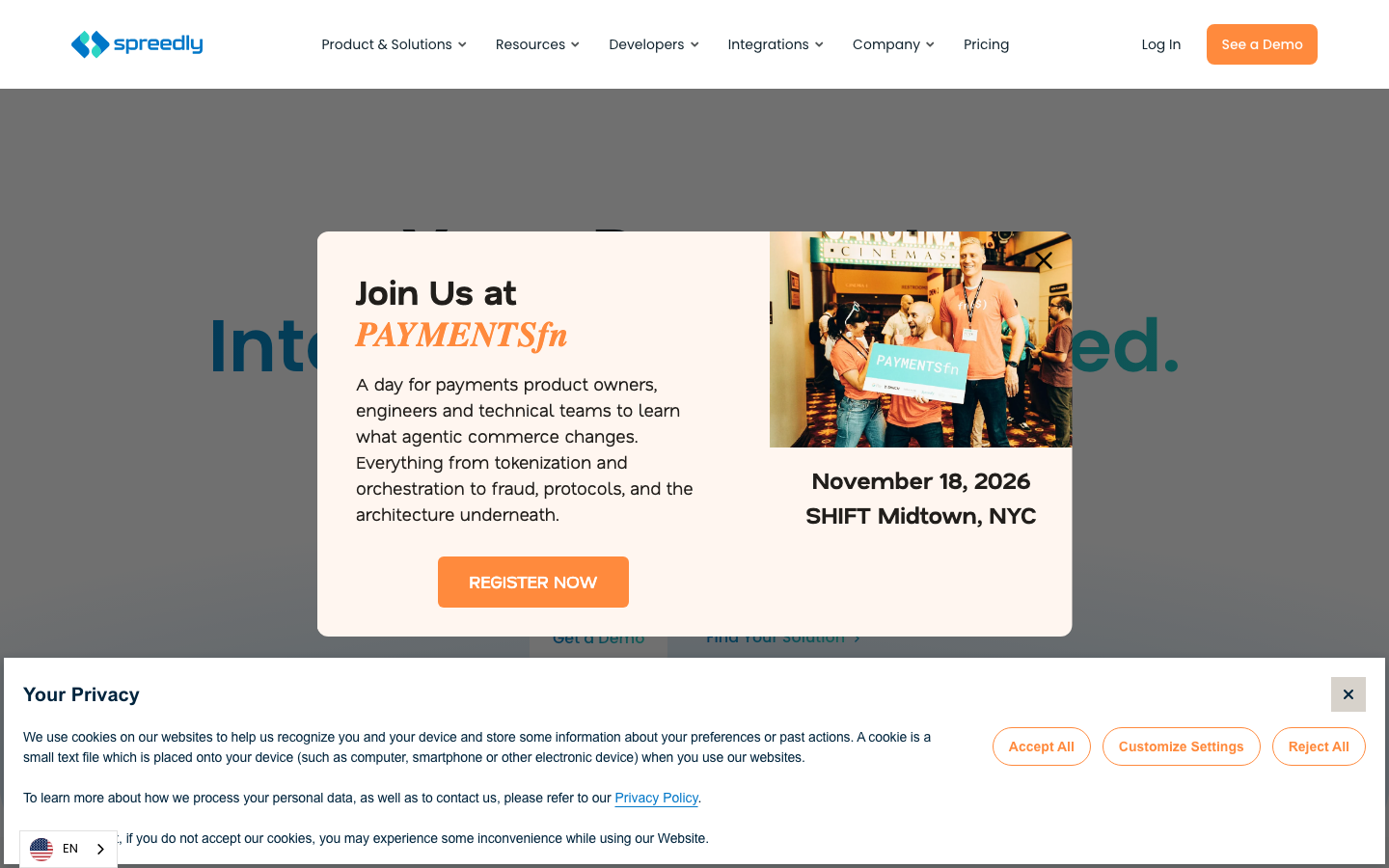
Screenshots of Spreedly 4 images
What's great
- Routes tokenized data to 120+ payment services without re-tokenizing, the largest processor network of any dedicated vault here
- Universal vault stores PAN once and routes to any connected gateway, so a processor switch does not require a new card capture campaign
- Transaction redundancy and failover logic built into the orchestration layer, not just the vault
Watch-outs
- Flex plan starts at $1,500/mo with usage fees on top, which prices out early-stage merchants before they have transaction volume to justify it
- No native network token support from Visa/Mastercard in the base tier; network tokens require the higher Enterprise plan
- The admin console UI is functional but dated compared to Basis Theory and VGS, and multi-environment management takes some learning
Pricing breakdown
| Plan | Price | Best for |
|---|---|---|
| Flex | $1,500/mo | Single-processor merchants, 10M-50M annual transactions |
| Professional | Custom | Multi-processor merchants, network token support, advanced orchestration rules |
| Enterprise | Custom | Platforms and marketplaces, full orchestration suite, dedicated support |
Security & compliance
| Standard | Availability |
|---|---|
| SOC 2 Type II | Yes |
| GDPR | Yes |
| HIPAA | No |
| SSO / SAML | Yes |
| Audit logs | Yes |
Spreedly compliance summary: SOC 2 Type II is yes, GDPR is yes, HIPAA is no, SSO/SAML is yes, and audit logs is yes.
Key integrations
| Integration | Type |
|---|---|
| Gmail | N/A |
| Outlook | N/A |
| Slack | N/A |
| LinkedIn Sales Navigator | N/A |
| Outreach / Salesloft | N/A |
Spreedly integration summary: Gmail is not specified, Outlook is not specified, Slack is not specified, LinkedIn Sales Navigator is not specified, and Outreach or Salesloft is not specified.
Feature availability
| Feature | Status |
|---|---|
| Hosted fields | ✓ |
| Multi processor routing | ✓ |
| Network tokens | Enterprise |
| Sandbox | ✓ |
| Vault portability | ✓ |
Spreedly feature availability summary: Hosted fields (✓), Multi processor routing (✓), Network tokens (Enterprise), Sandbox (✓), and Vault portability (✓).
Loading reviews…
Very Good Security (VGS)
Best zero-data vault for PCI scope collapse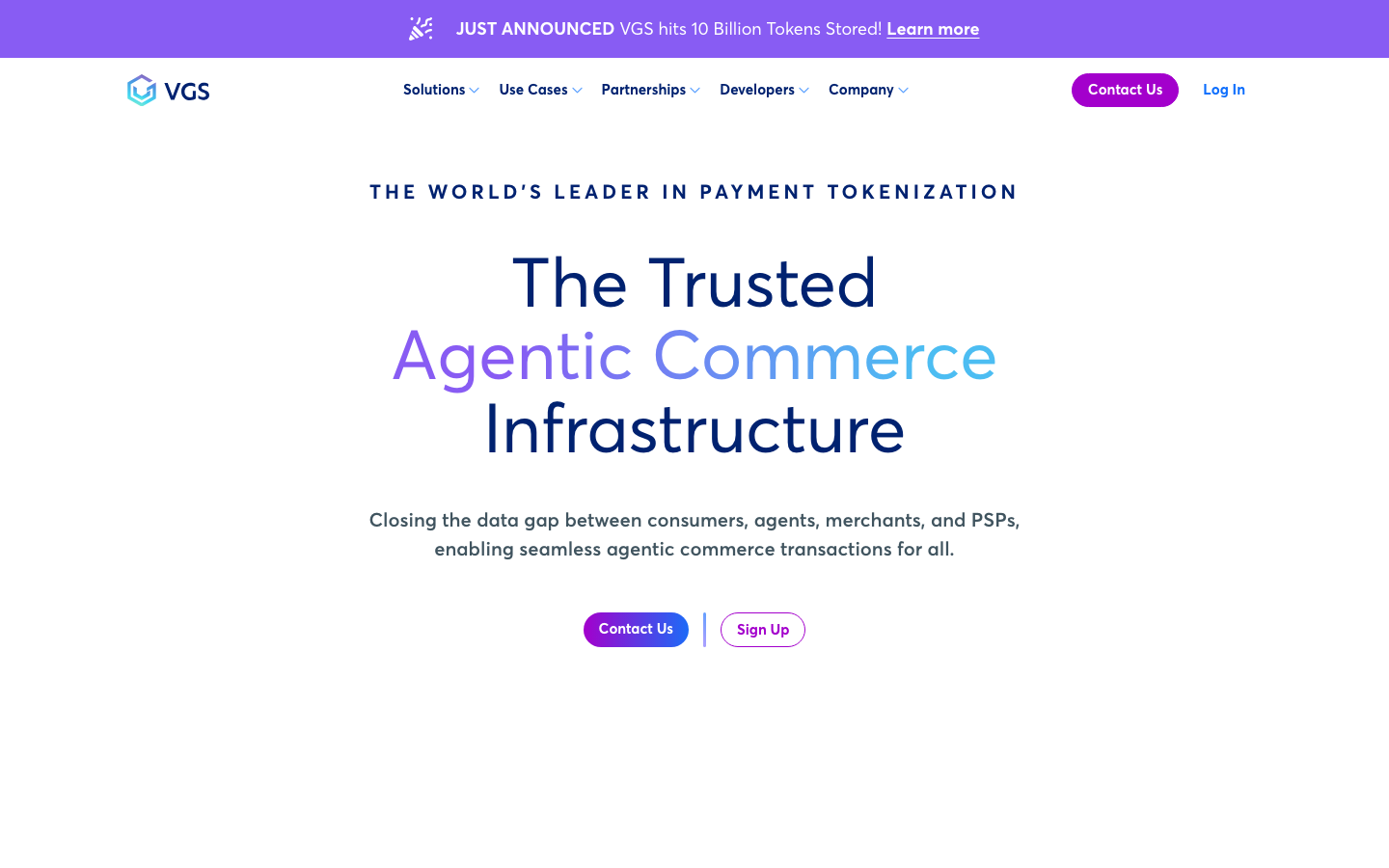
Screenshots of Very Good Security (VGS) 4 images
What's great
- Reverse proxy architecture means raw card data never touches your application servers at all, not just that you store tokens instead of PANs
- SAQ A scope is achievable on most integrations because VGS intercepts and replaces card data in-flight before it reaches your environment
- Vault aliases are format-preserving by default, so downstream systems that validate card number format still work without code changes
Watch-outs
- Starter plan at $1,000/mo is competitive, but the Growth plan pricing is contact-sales with no published ceiling, which makes budget planning difficult
- The proxy setup takes more upfront infrastructure work than a pure hosted-fields implementation, and the learning curve is steeper for teams without a dedicated security engineer
- VGS does not natively issue network tokens through Visa Token Service or Mastercard MDES; you need an acquirer or a third party for that layer
Pricing breakdown
| Plan | Price | Best for |
|---|---|---|
| Starter | $1,000/mo | Single environment, up to 10M token operations/year |
| Growth | Custom | Multiple environments, higher volume, dedicated CSM |
| Enterprise | Custom | Custom SLA, HIPAA, dedicated infrastructure |
Security & compliance
| Standard | Availability |
|---|---|
| SOC 2 Type II | Yes |
| GDPR | Yes |
| HIPAA | $ add-on |
| SSO / SAML | Yes |
| Audit logs | Yes |
Very Good Security (VGS) compliance summary: SOC 2 Type II is yes, GDPR is yes, HIPAA is $ add-on, SSO/SAML is yes, and audit logs is yes.
Key integrations
| Integration | Type |
|---|---|
| Gmail | N/A |
| Outlook | N/A |
| Slack | N/A |
| LinkedIn Sales Navigator | N/A |
| Outreach / Salesloft | N/A |
Very Good Security (VGS) integration summary: Gmail is not specified, Outlook is not specified, Slack is not specified, LinkedIn Sales Navigator is not specified, and Outreach or Salesloft is not specified.
Feature availability
| Feature | Status |
|---|---|
| Hosted fields | ✓ |
| Multi processor routing | ✓ via proxy |
| Network tokens | ✗ native |
| Sandbox | ✓ |
| Vault portability | ✓ |
Very Good Security (VGS) feature availability summary: Hosted fields (✓), Multi processor routing (✓ via proxy), Network tokens (✗ native), Sandbox (✓), and Vault portability (✓).
What reviewers say about Very Good Security (VGS)
Recurring themes across ~47 G2 reviews (4.7/5) and public TrustRadius feedback, 2024-2026.
What reviewers praise
- The tokenization proxy is the headline win in reviews, letting teams keep raw card and PII data out of their own systems so PCI scope drops sharply.
- Data encryption capability scores near the top of its category, and reviewers trust it for sensitive payment flows.
- Ease of setup rates well, with users saying the proxy dropped into existing infrastructure without a rebuild.
- Quality of support gets called out, with reviewers describing responsive help during integration.
What reviewers fault
- The proxy and vault configuration carries a learning curve, and a few reviewers wanted deeper documentation for advanced routing setups.
- Because VGS sits in the critical path of the payment flow, some reviewers flag the dependency risk of routing live traffic through a third party.
- Pricing transparency comes up as a gap, with cost climbing as request volume grows.
Loading reviews…
Stripe
Best for teams already on Stripe who need network tokenization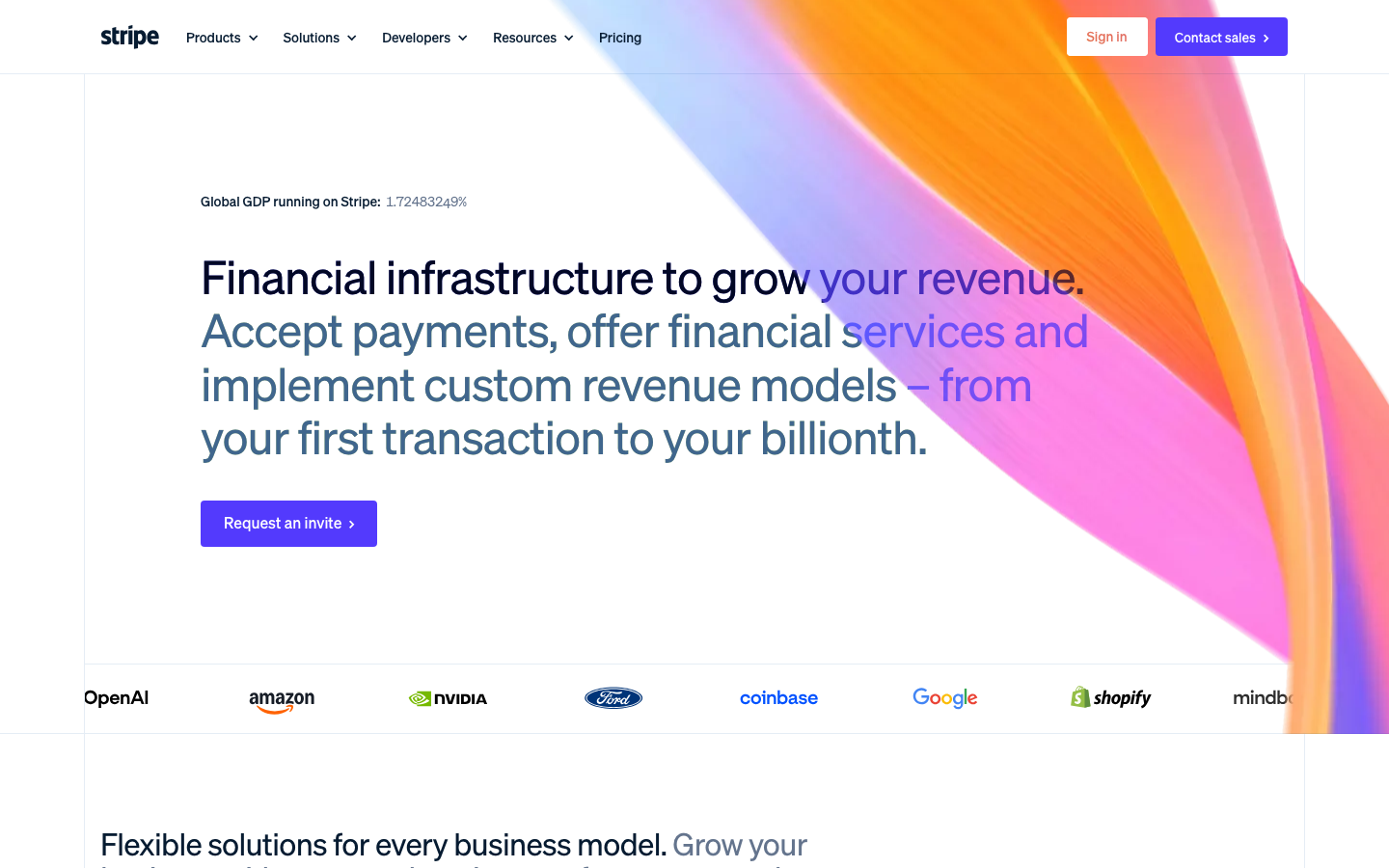
Screenshots of Stripe 4 images
What's great
- Network tokenization with Visa Token Service and Mastercard MDES is automatic for Stripe-processed transactions with no integration work required
- Customer object and PaymentMethod API handles multi-use token storage, subscriptions, and future charges in a single unified model
- Stripe Radar sits on top of the same tokenized data, meaning fraud scoring and tokenization share context that standalone vault providers cannot replicate
Watch-outs
- Tokens are Stripe-proprietary: if you migrate to Adyen or Braintree, you need a new card capture campaign or a PAN migration process
- No native support for routing Stripe-stored tokens to a non-Stripe processor, which locks your vault to Stripe pricing and uptime
- Network token coverage on Stripe is automatic but not fully transparent, and the authorization rate lift data is disclosed only in aggregate, not per-merchant
Pricing breakdown
| Plan | Price | Best for |
|---|---|---|
| Integrated (pay-per-transaction) | 2.9% + $0.30 | Standard card present and card not present, vault included |
| Custom (Stripe Payments enterprise) | Custom | High volume, interchange-plus pricing, dedicated support |
Security & compliance
| Standard | Availability |
|---|---|
| SOC 2 Type II | Yes |
| GDPR | Yes |
| HIPAA | No |
| SSO / SAML | Yes |
| Audit logs | Yes |
Stripe compliance summary: SOC 2 Type II is yes, GDPR is yes, HIPAA is no, SSO/SAML is yes, and audit logs is yes.
Key integrations
| Integration | Type |
|---|---|
| Gmail | N/A |
| Outlook | N/A |
| Slack | N/A |
| LinkedIn Sales Navigator | N/A |
| Outreach / Salesloft | N/A |
Stripe integration summary: Gmail is not specified, Outlook is not specified, Slack is not specified, LinkedIn Sales Navigator is not specified, and Outreach or Salesloft is not specified.
Feature availability
| Feature | Status |
|---|---|
| Hosted fields | ✓ |
| Multi processor routing | ✗ |
| Network tokens | ✓ automatic |
| Sandbox | ✓ |
| Vault portability | ✗ Stripe-only |
Stripe feature availability summary: Hosted fields (✓), Multi processor routing (✗), Network tokens (✓ automatic), Sandbox (✓), and Vault portability (✗ Stripe-only).
What reviewers say about Stripe
Recurring themes across ~738 G2 reviews (4.4/5), 2024-2026.
What reviewers praise
- The developer experience is the most-cited strength: clean documentation, a consistent well-designed API, and straightforward setup of subscriptions, invoices, and recurring flows without heavy custom engineering.
- Reviewers say Stripe Billing removes the pain of proration, failed-payment retries (Smart Retries), and dunning that previously required in-house code, so recurring revenue runs largely hands-off.
- Tax handling and multi-region compliance via Stripe Tax is repeatedly praised for collecting and remitting across jurisdictions that used to be a manual nightmare.
- Deep integration into the broader Stripe stack (Payments, Checkout, Connect) is called a genuine workflow saver, letting teams keep billing, payments, and payouts under one platform.
What reviewers fault
- Fees add up fast at scale: reviewers flag the per-transaction cut plus an additional percentage layered on top specifically for billing features, which gets expensive for high-volume businesses.
- Many billing essentials sit behind paywalled add-ons, and reviewers argue features they consider core to an online billing system cost extra.
- API rate limits (commonly cited around 100 read/write operations per second in live mode) are called a real growth constraint that B2B companies can hit.
- Reviewers say updating failed cards and generating self-serve payment-update links is clunky, and that out-of-the-box integration with non-Stripe systems could be smoother.
Loading reviews…
Basis Theory
Best developer experience for payment vault and reactor pipelines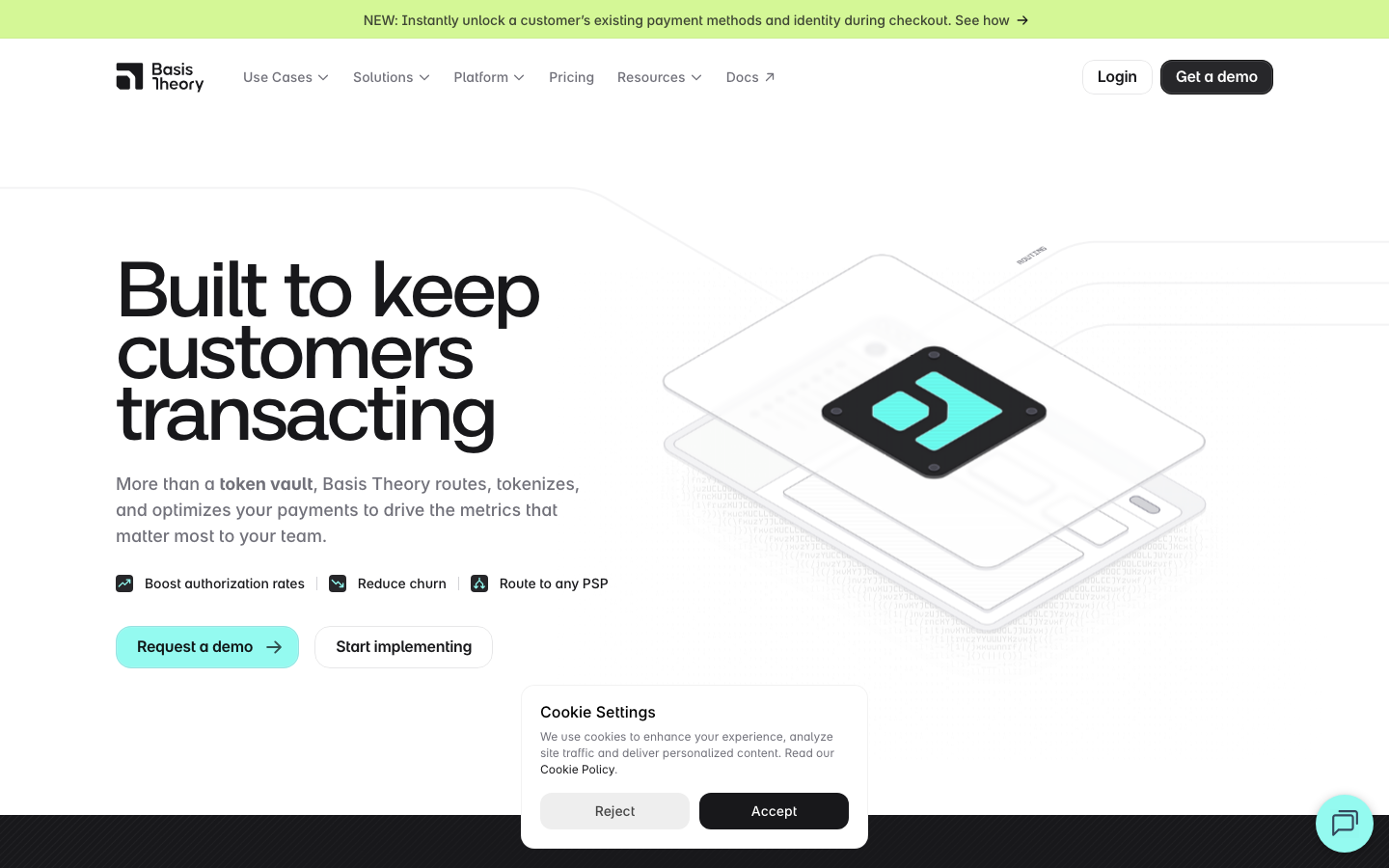
Screenshots of Basis Theory 4 images
What's great
- Reactors are serverless functions that execute code against tokenized data without ever decrypting it to your application layer, which is the cleanest downstream forwarding model in this category
- API documentation is among the best in the segment: typed SDKs in six languages, interactive API explorer in the sandbox, and a test environment that mirrors production fidelity
- Transparent published pricing with no per-transaction fees and no usage-based surprises at $995/mo floor, unusual in a category where almost everyone else is custom-quote-only
Watch-outs
- Smaller review base than Spreedly or Stripe makes it harder to find peer references at enterprise scale, and the company is still building its enterprise customer list
- Does not issue native Visa or Mastercard network tokens directly; you still need an acquirer integration or a processor that supports VTS/MDES to get network token benefits
- The reactor model is powerful but conceptually unfamiliar for teams used to traditional vault APIs, and the learning curve shows up in integration timelines
Pricing breakdown
| Plan | Price | Best for |
|---|---|---|
| Starter | $995/mo | Single environment, unlimited token operations, up to 3 applications |
| Enterprise | Custom | Multiple environments, SLA, custom data residency, dedicated support |
Security & compliance
| Standard | Availability |
|---|---|
| SOC 2 Type II | Yes |
| GDPR | Yes |
| HIPAA | Yes |
| SSO / SAML | Yes |
| Audit logs | Yes |
Basis Theory compliance summary: SOC 2 Type II is yes, GDPR is yes, HIPAA is yes, SSO/SAML is yes, and audit logs is yes.
Key integrations
| Integration | Type |
|---|---|
| Gmail | N/A |
| Outlook | N/A |
| Slack | N/A |
| LinkedIn Sales Navigator | N/A |
| Outreach / Salesloft | N/A |
Basis Theory integration summary: Gmail is not specified, Outlook is not specified, Slack is not specified, LinkedIn Sales Navigator is not specified, and Outreach or Salesloft is not specified.
Feature availability
| Feature | Status |
|---|---|
| Hosted fields | ✓ |
| Multi processor routing | ✓ via Reactors |
| Network tokens | ✗ native |
| Sandbox | ✓ |
| Vault portability | ✓ |
Basis Theory feature availability summary: Hosted fields (✓), Multi processor routing (✓ via Reactors), Network tokens (✗ native), Sandbox (✓), and Vault portability (✓).
What reviewers say about Basis Theory
Recurring themes across public developer commentary and case-study discussion, 2024-2026. Independent review pool is thin (no rated G2 or Capterra listing yet).
What reviewers praise
- Developers describe the platform as flexible and non-opinionated, giving them control over token schemas instead of forcing a fixed card format.
- The vault meaningfully cuts PCI scope by holding card and sensitive data outside the merchant's own systems.
- Reviewers value avoiding processor lock-in, since tokens stay usable across multiple PSPs for routing and fee negotiation.
- Usage-based, token-count pricing is called transparent and easy to reason about month to month.
What reviewers fault
- The public review footprint is genuinely thin, so buyers have few independent references to lean on for a younger vendor.
- Adopting the vault takes real engineering effort, since it is a developer-first API rather than a turnkey portal.
- Keeping tokenized copies in sync across systems adds data-consistency overhead teams have to plan for.
Loading reviews…
TokenEx
Best enterprise vault for multi-channel card and ACH tokenization
Screenshots of TokenEx 4 images
What's great
- Transparent Gateway covers 150+ payment processors with no re-tokenization needed, matching Spreedly for processor breadth and surpassing it on ACH and check tokenization
- Token formats are highly configurable: numeric-only, alphanumeric, format-preserving, and luhn-valid tokens available depending on downstream system requirements
- Deep compliance history: PCI DSS Level 1 Service Provider with audit coverage going back a decade, which matters during enterprise security reviews
Watch-outs
- Pricing is not fully published; while the $1,000/mo floor is cited on some review sites, actual contract pricing requires a sales call and scales opaquely with volume
- The UI and developer documentation have lagged behind Basis Theory and VGS; teams report that the sandbox environment is less polished than the production system
- Customer support quality gets mixed reviews on G2: the technical team is strong, but first-tier support escalation timelines are cited as a recurring friction point
Pricing breakdown
| Plan | Price | Best for |
|---|---|---|
| Standard | $1,000/mo | Single-channel, up to 300K annual token operations |
| Professional | Custom | Multi-channel, Transparent Gateway, higher volume |
| Enterprise | Custom | Custom SLA, dedicated infrastructure, full audit support |
Security & compliance
| Standard | Availability |
|---|---|
| SOC 2 Type II | Yes |
| GDPR | Yes |
| HIPAA | ✓ add-on |
| SSO / SAML | Yes |
| Audit logs | Yes |
TokenEx compliance summary: SOC 2 Type II is yes, GDPR is yes, HIPAA is ✓ add-on, SSO/SAML is yes, and audit logs is yes.
Key integrations
| Integration | Type |
|---|---|
| Gmail | N/A |
| Outlook | N/A |
| Slack | N/A |
| LinkedIn Sales Navigator | N/A |
| Outreach / Salesloft | N/A |
TokenEx integration summary: Gmail is not specified, Outlook is not specified, Slack is not specified, LinkedIn Sales Navigator is not specified, and Outreach or Salesloft is not specified.
Feature availability
| Feature | Status |
|---|---|
| Hosted fields | ✓ |
| Multi processor routing | ✓ |
| Network tokens | Enterprise |
| Sandbox | ✓ |
| Vault portability | ✓ |
TokenEx feature availability summary: Hosted fields (✓), Multi processor routing (✓), Network tokens (Enterprise), Sandbox (✓), and Vault portability (✓).
Loading reviews…
Skyflow
Best data privacy vault for teams tokenizing PII alongside payment data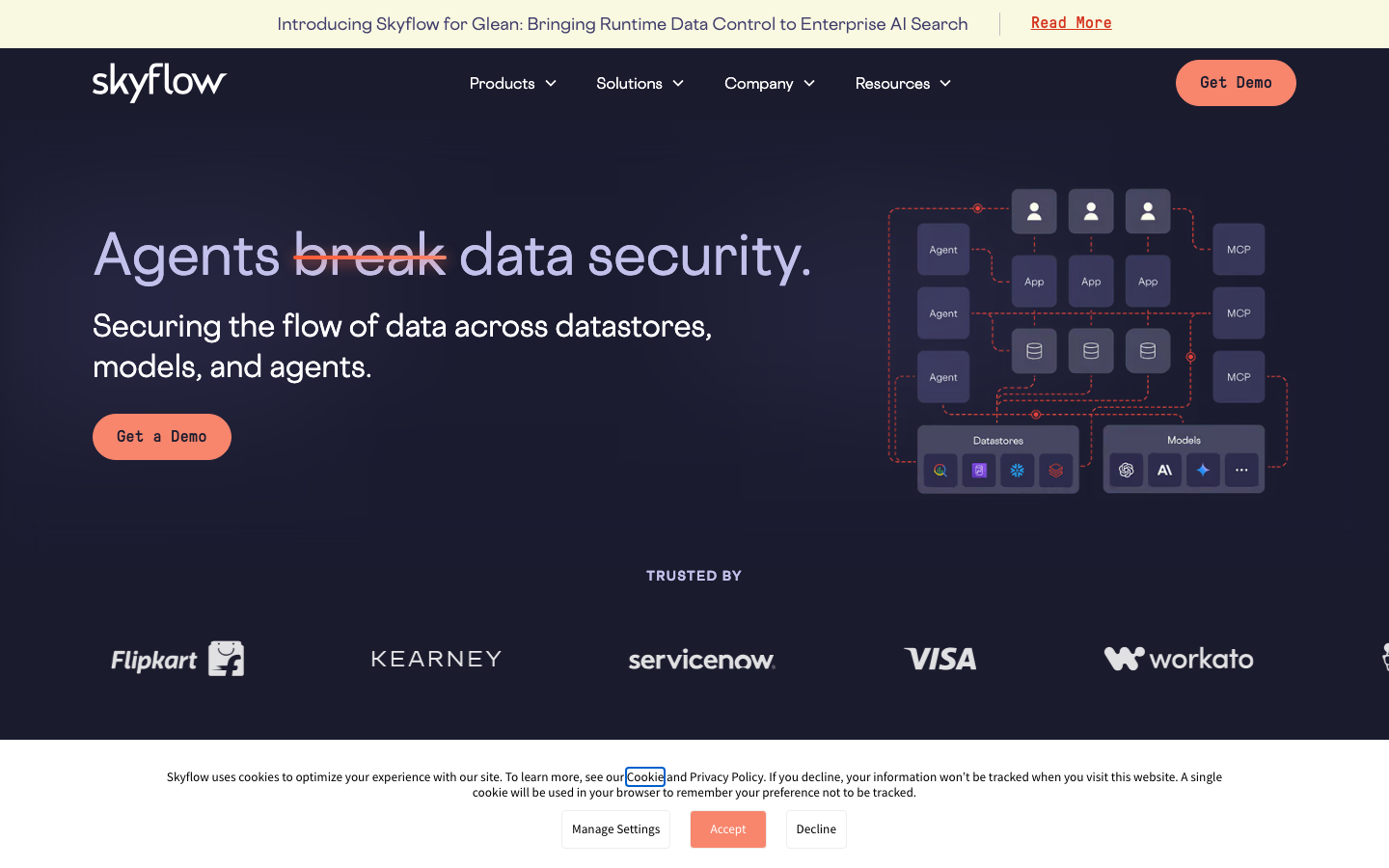
Screenshots of Skyflow 4 images
What's great
- Purpose-built data privacy vault covers PAN, SSN, health identifiers, and any PII in a single system with consistent tokenization and access control logic
- Policy-based access control model lets you define exactly which services can detokenize which fields under which conditions, a level of granularity the payment-only vaults do not offer
- SOC 2 Type II, PCI DSS Level 1, and HIPAA coverage from a single platform, which collapses the vendor count for regulated-industry companies handling multiple data types
Watch-outs
- All pricing is custom and requires a sales conversation; no published floor, which makes it unsuitable for teams trying to budget without a vendor call
- Overkill for teams that only need payment tokenization: the broader PII vault architecture adds implementation complexity that pure-play payment teams do not need
- The integration ecosystem for payments specifically is smaller than Spreedly or TokenEx; processor connections require more custom work
Pricing breakdown
| Plan | Price | Best for |
|---|---|---|
| Growth | Custom | Early-stage companies, limited vault operations |
| Business | Custom | Production workloads, multi-environment, dedicated support |
| Enterprise | Custom | Custom SLA, data residency, procurement compliance |
Security & compliance
| Standard | Availability |
|---|---|
| SOC 2 Type II | Yes |
| GDPR | Yes |
| HIPAA | Yes |
| SSO / SAML | Yes |
| Audit logs | Yes |
Skyflow compliance summary: SOC 2 Type II is yes, GDPR is yes, HIPAA is yes, SSO/SAML is yes, and audit logs is yes.
Key integrations
| Integration | Type |
|---|---|
| Gmail | N/A |
| Outlook | N/A |
| Slack | N/A |
| LinkedIn Sales Navigator | N/A |
| Outreach / Salesloft | N/A |
Skyflow integration summary: Gmail is not specified, Outlook is not specified, Slack is not specified, LinkedIn Sales Navigator is not specified, and Outreach or Salesloft is not specified.
Feature availability
| Feature | Status |
|---|---|
| Hosted fields | ✓ |
| Multi processor routing | custom |
| Network tokens | ✗ native |
| Sandbox | ✓ |
| Vault portability | ✓ |
Skyflow feature availability summary: Hosted fields (✓), Multi processor routing (custom), Network tokens (✗ native), Sandbox (✓), and Vault portability (✓).
What reviewers say about Skyflow
Recurring themes across public G2 and product-review commentary, 2024-2026. Independent review pool is thin (only a handful of rated G2 reviews).
What reviewers praise
- The data privacy vault gets credit for cutting PCI and PII compliance scope fast by isolating sensitive fields from the app database.
- Running the vault inside your own VPC across AWS, GCP, or Azure appeals to teams with data-residency and control requirements.
- Reviewers value being able to run search and SQL analytics over encrypted data rather than choosing between privacy and usability.
- Tokenization paired with fine-grained governance and access control shows up as a differentiator versus a plain token store.
What reviewers fault
- The public review pool is very thin, so buyers have limited independent references to weigh.
- Pricing skews enterprise, which smaller teams notice early in evaluation.
- Standing up the vault takes engineering effort and schema planning rather than a quick portal setup.
Loading reviews…
Adyen Token Service
Best network token coverage for global enterprise merchants
Screenshots of Adyen Token Service 4 images
What's great
- Direct participation in Visa Token Service and Mastercard MDES as a principal member means Adyen handles network token lifecycle (provisioning, updates, cryptograms) natively without third-party dependencies
- Tokenized recurring payments work across 40+ local payment methods globally, not just card schemes, which matters for merchants with subscription revenue in APAC or LATAM
- Merchant-initiated transaction framework for subscriptions and installments is built on the same token object, reducing the state management burden on the merchant side
Watch-outs
- Tokens are Adyen-proprietary: switching processors requires a PAN migration project, and Adyen cooperation process is not known for speed
- Pricing is entirely custom and built into processing rates, making it hard to separate tokenization costs from processing costs during vendor evaluation
- Implementation complexity is high; most Adyen token service deployments involve a certified integration partner, adding time and cost to the initial rollout
Pricing breakdown
| Plan | Price | Best for |
|---|---|---|
| Processing-bundled | Interchange + 0.3% | Enterprise merchants on Adyen processing, all regions |
| Enterprise custom | Custom | Very large volume, dedicated support, custom SLA |
Security & compliance
| Standard | Availability |
|---|---|
| SOC 2 Type II | Yes |
| GDPR | Yes |
| HIPAA | No |
| SSO / SAML | Yes |
| Audit logs | Yes |
Adyen Token Service compliance summary: SOC 2 Type II is yes, GDPR is yes, HIPAA is no, SSO/SAML is yes, and audit logs is yes.
Key integrations
| Integration | Type |
|---|---|
| Gmail | N/A |
| Outlook | N/A |
| Slack | N/A |
| LinkedIn Sales Navigator | N/A |
| Outreach / Salesloft | N/A |
Adyen Token Service integration summary: Gmail is not specified, Outlook is not specified, Slack is not specified, LinkedIn Sales Navigator is not specified, and Outreach or Salesloft is not specified.
Feature availability
| Feature | Status |
|---|---|
| Hosted fields | ✓ |
| Multi processor routing | ✗ |
| Network tokens | ✓ native |
| Sandbox | ✓ |
| Vault portability | ✗ Adyen-only |
Adyen Token Service feature availability summary: Hosted fields (✓), Multi processor routing (✗), Network tokens (✓ native), Sandbox (✓), and Vault portability (✗ Adyen-only).
Loading reviews…
Checkout.com Vault
Best network tokenization for European-headquartered merchants
Screenshots of Checkout.com Vault 4 images
What's great
- Stored instrument tokens persist across payment sessions with a single payment_instrument_id reference that works for one-click payments, subscriptions, and MIT transactions
- Network token enrollment through Visa and Mastercard is built into the processing flow, with lifecycle management handled server-side by Checkout.com
- Strong SEPA and EU local payment method tokenization coverage, useful for European subscription businesses that need recurring mandates alongside card tokenization
Watch-outs
- Vault is tightly coupled to Checkout.com processing; tokens are not portable to other acquirers and the PAN retrieval process for migration has limited documentation
- G2 reviewer themes include support responsiveness issues during implementation and a documentation set that lags behind Stripe and Adyen in coverage depth
- No published tokenization-specific pricing; costs are bundled into processing agreements and require direct sales to separate
Pricing breakdown
| Plan | Price | Best for |
|---|---|---|
| Processing-bundled | Interchange + fees | EU and global merchants on Checkout.com processing |
| Enterprise | Custom | High volume, custom SLA, regional account management |
Security & compliance
| Standard | Availability |
|---|---|
| SOC 2 Type II | Yes |
| GDPR | Yes |
| HIPAA | No |
| SSO / SAML | Yes |
| Audit logs | Yes |
Checkout.com Vault compliance summary: SOC 2 Type II is yes, GDPR is yes, HIPAA is no, SSO/SAML is yes, and audit logs is yes.
Key integrations
| Integration | Type |
|---|---|
| Gmail | N/A |
| Outlook | N/A |
| Slack | N/A |
| LinkedIn Sales Navigator | N/A |
| Outreach / Salesloft | N/A |
Checkout.com Vault integration summary: Gmail is not specified, Outlook is not specified, Slack is not specified, LinkedIn Sales Navigator is not specified, and Outreach or Salesloft is not specified.
Feature availability
| Feature | Status |
|---|---|
| Hosted fields | ✓ |
| Multi processor routing | ✗ |
| Network tokens | ✓ via processing |
| Sandbox | ✓ |
| Vault portability | ✗ |
Checkout.com Vault feature availability summary: Hosted fields (✓), Multi processor routing (✗), Network tokens (✓ via processing), Sandbox (✓), and Vault portability (✗).
Loading reviews…
Braintree Vault
Best for PayPal-ecosystem merchants with recurring billing needs
Screenshots of Braintree Vault 4 images
What's great
- Vault storage is free when you process through Braintree, which makes it the lowest-cost tokenization option for merchants already on the platform
- Drop-in UI achieves SAQ A-EP compliance with minimal implementation work, and hosted fields give developers direct field-level control for custom checkout designs
- PayPal, Venmo, Apple Pay, and Google Pay all tokenize through the same Braintree vault object, reducing integration complexity for multi-wallet merchants
Watch-outs
- Braintree has not received major product investment from PayPal since the acquisition, and the developer experience feels behind Stripe and Adyen by 2-3 product cycles
- Network token support (VTS/MDES) is available but requires additional configuration and Braintree support engagement, not automatic like Stripe
- Like all processor-bundled vaults, tokens are non-portable; migration away from Braintree requires a PAN migration project or re-capture campaign
Pricing breakdown
| Plan | Price | Best for |
|---|---|---|
| Standard | 2.59% + $0.49 | Card not present, vault included, up to 200K transactions/mo |
| Custom | Custom | High volume, interchange-plus pricing, dedicated support |
Security & compliance
| Standard | Availability |
|---|---|
| SOC 2 Type II | Yes |
| GDPR | Yes |
| HIPAA | No |
| SSO / SAML | Yes |
| Audit logs | Yes |
Braintree Vault compliance summary: SOC 2 Type II is yes, GDPR is yes, HIPAA is no, SSO/SAML is yes, and audit logs is yes.
Key integrations
| Integration | Type |
|---|---|
| Gmail | N/A |
| Outlook | N/A |
| Slack | N/A |
| LinkedIn Sales Navigator | N/A |
| Outreach / Salesloft | N/A |
Braintree Vault integration summary: Gmail is not specified, Outlook is not specified, Slack is not specified, LinkedIn Sales Navigator is not specified, and Outreach or Salesloft is not specified.
Feature availability
| Feature | Status |
|---|---|
| Hosted fields | ✓ |
| Multi processor routing | ✗ |
| Network tokens | ✓ configurable |
| Sandbox | ✓ |
| Vault portability | ✗ |
Braintree Vault feature availability summary: Hosted fields (✓), Multi processor routing (✗), Network tokens (✓ configurable), Sandbox (✓), and Vault portability (✗).
Loading reviews…
CyberSource Token Management
Best for Visa-ecosystem enterprises with existing CyberSource contracts
Screenshots of CyberSource Token Management 4 images
What's great
- Token Management Service (TMS) integrates directly with CyberSource payment processing and Visa network tokenization infrastructure with no third-party dependency
- Established enterprise compliance record with PCI DSS Level 1 Service Provider status and audit history that covers procurement requirements at Fortune 500 buyers
- Transact Token gives merchants a single token that works across all CyberSource-connected processors globally, useful for large enterprises with multi-region acquiring relationships
Watch-outs
- G2 rating of 3.6/5 is the lowest of any deep tool in this guide; recurring review themes are implementation complexity, support responsiveness, and outdated documentation
- The developer experience is decidedly enterprise-grade: integration timelines are measured in months, not weeks, and self-service onboarding does not really exist
- The platform shows its age in API design: REST coverage is incomplete, some token operations still require SOAP calls, and the sandbox environment is less reliable than competitors
Pricing breakdown
| Plan | Price | Best for |
|---|---|---|
| Enterprise | Custom | Large volume merchants on CyberSource processing, existing Visa contracts |
Security & compliance
| Standard | Availability |
|---|---|
| SOC 2 Type II | Yes |
| GDPR | Yes |
| HIPAA | No |
| SSO / SAML | Yes |
| Audit logs | Yes |
CyberSource Token Management compliance summary: SOC 2 Type II is yes, GDPR is yes, HIPAA is no, SSO/SAML is yes, and audit logs is yes.
Key integrations
| Integration | Type |
|---|---|
| Gmail | N/A |
| Outlook | N/A |
| Slack | N/A |
| LinkedIn Sales Navigator | N/A |
| Outreach / Salesloft | N/A |
CyberSource Token Management integration summary: Gmail is not specified, Outlook is not specified, Slack is not specified, LinkedIn Sales Navigator is not specified, and Outreach or Salesloft is not specified.
Feature availability
| Feature | Status |
|---|---|
| Hosted fields | ✓ |
| Multi processor routing | Enterprise |
| Network tokens | ✓ via Visa |
| Sandbox | ✓ limited |
| Vault portability | ✗ |
CyberSource Token Management feature availability summary: Hosted fields (✓), Multi processor routing (Enterprise), Network tokens (✓ via Visa), Sandbox (✓ limited), and Vault portability (✗).
Loading reviews…
More top-rated Payment Tokenization Software worth checking out
Highly rated Payment Tokenization Software that didn't crack our top 10 but are still strong contenders, especially for specific use cases and team sizes.
NMI Gateway
For ISVs and PayFacs needing white-label vault tokenization
Standout: White-label vault tokenization built for ISVs and payment facilitators, with sub-merchant management included in the platform
Paysafe
For iGaming and high-risk merchants needing tokenized recurring billing
Standout: Tokenized vault covers high-risk and regulated merchant categories that most standard processors decline outright
Worldpay
For enterprise retailers with omnichannel card-present and card-not-present tokenization
Standout: OmniToken covers in-store, mobile, and online channels with a single tokenization layer, useful for omnichannel retailers with unified loyalty programs
Authorize.net
For small merchants needing basic card vault without custom development
Standout: Customer Information Manager (CIM) provides tokenized card storage at $25/mo with no usage fees, the most affordable published price in this guide
Square
For retail and F&B merchants needing point-of-sale and card-not-present tokenization in one stack
Standout: Card on File tokenization is built into the Square Payments SDK at no additional cost, covering in-person and online channels from the same token object
What reviewers say ★ 4.7 · 577
Praised
- For businesses already on Square POS, timecards and tips flow straight into payroll, and reviewers running restaurants and retail call this the reason they stay.
- Flat, predictable pricing with a low contractor-only option makes it a favorite for hourly and tipped teams that pay by the shift.
- Tax filing runs automatically, so small owners with no payroll experience get through a run in minutes.
- Handling tipped wages and shift workers is smoother here than on general payroll tools not built for that pattern.
Faulted
- HR and benefits features are bare-bones, so companies needing anything beyond pay and basic filing outgrow it fast.
- Reporting is limited, and finance staff wanting detailed or custom exports find the options shallow.
- Support is hard to reach beyond chat, and reviewers describe slow responses when a payroll issue is time sensitive.
- It is not built for complex multi-state payroll, and occasional sync bugs between the POS and payroll frustrate users.
BlueSnap
For global B2B SaaS companies needing vault storage across 100+ currencies
Standout: VaultedShopper object stores tokenized payment data with multi-currency authorization in 100+ currencies from a single vault record
Recurly
For subscription-first SaaS companies tokenizing card data for dunning and retries
Standout: Revenue recovery on tokenized transactions is the core differentiation: smart dunning, automatic retries with gateway intelligence, and account updater integration
What reviewers say ★ 4.0 · 205
Praised
- Automated dunning and churn recovery draw the most praise, with reviewers crediting reliable retries and one-click payment updates for reducing failed-payment churn.
- Billing reliability is a recurring theme: Recurly charges on the right cycle consistently, and reviewers say that dependability offsets the cost.
- The ability to plug in and swap almost any payment gateway with minimal effort is called out as genuine flexibility.
- The interface is generally seen as user-friendly and support is described as responsive by higher-rated reviewers.
Faulted
- Customization is limited: reviewers say editing invoices, changing line-item pricing or descriptions after issuance, and setting custom renewal notifications is harder than it should be.
- Handling price localization, tax-inclusive versus tax-exclusive setups, and pricing A/B tests is cumbersome, and documentation is described as scattered and inconsistent.
- Reporting lacks depth, especially dunning-email performance (open, click, and cohort-churn visibility), leaving teams without insight into what is working.
- Pricing is called expensive for startups and low-volume businesses (list starts around $1,200), and a few reviewers felt misled or overcharged by fine-print contract terms.
Chargebee
For high-growth SaaS companies running complex multi-currency subscription billing
Standout: Tokenization is gateway-delegated: Chargebee integrates with 30+ payment gateways and stores the gateway-issued token in its own customer vault, so your PCI scope is handled by the gateway layer
What reviewers say ★ 4.4 · 995
Praised
- Automated dunning and smart retries are the standout: reviewers report the follow-up emails and retry logic measurably cut involuntary churn without manual chasing.
- The customer self-service portal for managing subscriptions, upgrades, and cancellations is praised for removing day-to-day billing overhead from finance and support teams.
- Chargebee handles complex billing scenarios (multiple plans, proration, coupons, tiered pricing) that reviewers say would otherwise need heavy custom development.
- Broad integrations and a generally user-friendly interface make it straightforward to plug into existing CRM, accounting, and payment stacks.
Faulted
- Analytics and reporting are the most common gap: reviewers say Chargebee shows billing and invoicing figures but not a full view of business health, with weak dashboards and limited customer segmentation.
- Pricing frustrates teams as they scale, with a sharp jump between tiers and revenue-based overage fees that several reviewers describe as a success tax.
- Customer support quality is a recurring complaint across G2, Capterra, and TrustRadius, with slow or unhelpful responses cited repeatedly.
- Customization is restricted in places, and some reviewers report a poor cancellation and refund experience, including being renewed after attempting to cancel.
Zuora
For enterprise B2B companies with usage-based and contract-driven billing
Standout: Payment Method Updater automates card lifecycle management for enterprise accounts, keeping tokenized B2B payment methods current across multi-year contracts
What reviewers say ★ 3.9 · 309
Praised
- Zuora handles genuinely complex subscription billing and revenue recognition at enterprise scale, managing recurring models, pricing changes, renewals, and invoicing without heavy in-house systems.
- Subscription-lifecycle automation is valued for cutting manual work and keeping billing accurate as volume grows.
- Out-of-the-box Salesforce and NetSuite integrations, multi-currency support, and tax automation are cited as strong fits for large, multi-entity operations.
- Reviewers note the platform is powerful and highly configurable once the API is used to work around interface limits.
Faulted
- Complexity is the dominant theme: setup, configuration, and ongoing maintenance are resource-intensive and often need dedicated staff or consultants.
- The native UI is a repeated weak point, with reviewers effectively routing around it through the API.
- Reporting is called weak, pushing some teams to export into their own data warehouse for real analysis.
- Reviewers report trouble with line-level and invoice-wide discounts, constraints on payment plans and billing frequencies, and several mention server outages.
Vindicia
For media and entertainment companies with high involuntary churn on recurring subscriptions
Standout: CashBox billing engine is purpose-built for high-volume consumer subscription recovery, with payment retry algorithms built specifically for media and streaming billing patterns
Tools we considered but excluded
We evaluated more tools than the 20 you see above. These did not make the cut. Saying what we rejected, and why, is the editorial muscle most listicles skip.
- Stripe Issuing: Card issuance product, not a tokenization vault for accepting payments
- AWS Payment Cryptography: Infrastructure-layer HSM service, requires a full integration build to create a vault; no out-of-box tokenization product
- Thales payShield: Hardware security module, not software SaaS tokenization; requires on-premise or private cloud deployment
- IXOPAY: Primarily a payment orchestration platform that bundles some tokenization; better covered in a payment orchestration listicle
- Payrix: PayFac-in-a-box platform with tokenization built in; only relevant if building a full PayFac, not evaluating standalone tokenization
Honorable mentions
Solid tools that did not crack the main list but are worth tracking, especially for niche use cases.
- Primer.io: Payments workflow automation with vault features; worth tracking as a Spreedly alternative for orchestration-first teams
- Forter: Fraud platform with tokenized payment identity graph; covers a different layer but interacts closely with vault decision-making
- Payroc: Growing ISV-focused gateway with tokenization bundled; watch for 2026 network token rollout
The payment tokenization landscape in 20 tools
Payment tokenization software splits into four distinct architecture families, and picking the wrong one forces a painful migration later.
Dedicated neutral vaults (Spreedly, VGS, Basis Theory, TokenEx, Skyflow) are processor-agnostic. They store your card data independently of which payment processor handles the authorization. You can route the same token to Adyen today and Worldpay tomorrow without a new card capture. These are the right choice for any team that wants processor optionality, is building payment infrastructure for others, or needs a vault that will outlast their current processor relationship.
Processor-bundled vaults (Stripe, Adyen, Checkout.com, Braintree, CyberSource) include tokenization as part of their processing stack. The vault is free or included, implementation is straightforward, and network token support is often native. The cost is lock-in: your tokens are that processor’s proprietary format, and migration requires a PAN export project that the processor controls the timeline of.
Subscription billing platforms (Chargebee, Recurly, Zuora, Vindicia) delegate tokenization to an underlying payment gateway and store the resulting token in their customer record. They are not vaults in the strict sense. The tokenization is a side effect of the billing architecture. Evaluate these if subscription revenue complexity is your actual problem, not if standalone vault architecture is the goal.
Vertical and specialty gateways (NMI, Paysafe, Worldpay) offer tokenization as part of a broader processing product targeted at specific channels (ISV/PayFac, high-risk, omnichannel retail). They are worth considering when your merchant category or distribution model is the primary constraint, not when tokenization architecture is the primary driver.
The dividing line that matters most in 2026 is network token support. Gateway tokens (processor-issued, processor-specific) are the baseline. Network tokens (Visa Token Service, Mastercard MDES) deliver automatic card lifecycle updates that improve authorization rates on recurring charges by 2-5 percentage points in most published studies.
Platforms that issue network tokens natively versus those that only support gateway tokens are meaningfully differentiated, and that gap shows up in renewal authorization rates at scale.
Picking the right tokenization platform
1. Processor optionality in 12 months
If there is any scenario in which you might add a second processor, run A/B routing experiments, or switch acquirers, start with a neutral vault. Spreedly, VGS, or Basis Theory all let you route the same token to any supported gateway. Processor-bundled vaults (Stripe, Adyen, Braintree) do not support this without a PAN migration project.
2. PCI scope reduction target
If your goal is to drop from SAQ D to SAQ A, VGS’s proxy architecture is the most direct path because raw card data never enters your environment. Hosted-fields implementations (Stripe Elements, Braintree Drop-in, Authorize.net Accept.js) achieve SAQ A-EP, which is a significant improvement but not the same. If you need SAQ A and you have a non-standard checkout flow, VGS is the only option in this guide that can deliver it without rewriting the checkout.
3. Data type scope
Payment card data only? Spreedly, VGS, or Basis Theory handle this cleanly. Card data plus PII (SSN, health records, identity documents)? Skyflow is purpose-built for this. The compliance overhead of managing multiple sensitive data types with different regulatory frameworks justifies a platform that handles all of them in a single policy model.
4. Authorization rate optimization as a primary metric
If improving renewal authorization rates on recurring transactions is the main driver, evaluate Adyen, Stripe, or Checkout.com first. Their native Visa and Mastercard network token integration is the most direct path to authorization rate improvement, and the improvement is automatic rather than requiring configuration. NMI and Worldpay also support network tokens for merchants within those ecosystems.
5. Developer self-service versus enterprise procurement
Basis Theory, Stripe, and Braintree support developer self-service onboarding where an engineer can have a working sandbox integration in an afternoon. TokenEx, CyberSource, Adyen, and Skyflow involve enterprise procurement cycles measured in weeks, with sales-led onboarding. Know which mode your team is in before you start evaluating.
The pick by stage
Seed-stage, single-processor, no compliance team yet: Stripe’s built-in tokenization. Zero additional cost, hosted fields in an afternoon, PCI scope reduced automatically. You can revisit vault portability when you have 100K+ customers.
Series A, building subscription billing from scratch: Basis Theory for the vault plus Chargebee for subscription logic. Basis Theory keeps the vault portable; Chargebee handles billing complexity. The combination costs more than a single-processor path but avoids lock-in.
Series B, running Stripe but evaluating multi-processor routing: Add Spreedly above your Stripe integration. Spreedly can wrap existing Stripe tokens in some configurations, and it positions you for acquirer redundancy without a new card capture.
Mid-market, PCI audit coming, security team driving evaluation: TokenEx or VGS. Both have deep compliance documentation that security teams trust during audit cycles. VGS is faster to implement; TokenEx has broader multi-channel coverage for non-card payment types.
Enterprise, existing CyberSource or Adyen relationship: Stay on the processor-bundled vault and invest in network token optimization within the existing stack. The implementation cost of migrating to a neutral vault rarely pays back at this stage unless you are actively switching acquirers.
Marketplace or platform building embedded payments: Spreedly or NMI, depending on whether you need a white-label PayFac model. Spreedly for orchestration-first platforms. NMI for ISV partners who want a white-label gateway relationship.
Healthcare or insurance, PII plus payment data: Skyflow. The policy-based access control model handles the intersection of HIPAA and PCI DSS in a single compliance perimeter.
High-risk or iGaming merchant: Paysafe. Standard acquirers will decline your category; Paysafe’s tokenized vault and acquiring relationships are built for it.
What I check in every tokenization demo
One, confirm the vault is actually yours. Ask the vendor directly: if you terminate the contract, can you export PANs to a new vault? Which partner handles the key ceremony? How long does it take? Processor-bundled vaults will tell you this requires a migration process they manage. Neutral vaults (VGS, Basis Theory, Spreedly) will walk you through a test export.
Two, verify network token enrollment. Ask the sales rep to screen-share a live account with network token enrollment enabled. If the rep cannot show you a live VTS or MDES enrollment event in the dashboard, the feature is not production-ready or is only available at a higher tier than you are being quoted.
Three, test the sandbox fidelity. Decline codes, rate limiting, and multi-gateway failover behavior in the sandbox should mirror production. Platforms where the sandbox only handles happy-path flows (Authorize.net, legacy CyberSource) will produce integration surprises in production.
Four, run the actual PCI scope reduction exercise. Bring your QSA into the technical conversation with the vendor. Some vaults claim SAQ A eligibility in marketing materials but require a detailed architecture review before a QSA will sign off. VGS and Basis Theory both have standard QSA engagement materials. TokenEx has an account management team dedicated to audit support. Adyen and Stripe provide compliance guides but QSA engagement is your responsibility.
Five, ask for the API rate limit and failure mode behavior. Tokenization platforms that are in the critical path of your checkout flow need documented SLAs, rate limits, and graceful degradation behavior. Basis Theory publishes these. Several vendors in this guide require a support ticket to find out.
Six, check the token format compatibility with your downstream systems. If you are sending tokens to a fraud vendor, a data warehouse, or a legacy billing system, format matters. Numeric-only tokens versus alphanumeric versus Luhn-valid-but-fake are different values, and not all downstream systems accept all formats.
Where payment tokenization is heading in 2026
Network token mandates are coming from the card schemes. Visa and Mastercard have been signaling for two years that merchant-initiated transactions on stored credentials will eventually require network tokens rather than gateway tokens for optimal interchange and authorization rates.
The Adyen, Stripe, and Checkout.com customers who have already moved to network tokens are seeing 2-4% authorization rate improvements on recurring charges. Every other platform in this guide is building toward native network token support because merchants will eventually be pushed to it.
AI-driven retry logic is becoming the differentiation in subscription billing. Recurly, Vindicia, and Chargebee are all investing in machine-learning-based retry timing and authorization optimization. The tokenized payment data these platforms hold is the training set for recovery rate improvements. Expect this to become a standard feature across subscription billing platforms by 2027, rather than a premium add-on.
PCI DSS v4.0 compliance deadlines are forcing architecture reviews. The March 2025 deadline for PCI DSS v4.0 adoption has driven a wave of tokenization evaluations by merchants who were still on SAQ D and realized the new requirements around JavaScript security (requirement 6.4.3) apply specifically to their checkout pages. VGS and Basis Theory both reported significant inbound volume from this compliance driver in the first half of 2026.
Vault consolidation is happening. Teams that separately manage a payment vault, a PII vault, and a secrets manager are being pushed toward unified sensitive-data platforms. Skyflow is the clearest expression of this trend. Expect Basis Theory and VGS to extend their non-payment sensitive data capabilities in 2026-2027 as the unified vault category develops.
Processor portability is becoming a procurement requirement. Procurement and vendor risk teams at companies past Series B are starting to include vault exportability as a standard clause in payment processor contracts. This is a direct response to the lock-in experience of the Stripe and Braintree vault generations, and it is pushing mid-market merchants toward neutral vaults even when a processor-bundled vault would have been simpler to implement.
Payment tokenization software decisions age badly when they are made for the current processor relationship rather than the future architecture. Start with what your PCI scope target actually is, then pick the vault architecture that matches, and evaluate processor optionality before you have a reason to need it.
For corrections or pricing updates on this guide, reach editorial@topickz.com . Pricing and G2 ratings on this page are reviewed quarterly, next refresh scheduled January 2027.
Frequently asked questions
What is the difference between a gateway token and a network token?
A gateway token is issued by your processor and only works with that processor. A network token (VTS/MDES) is issued by Visa or Mastercard and works across any processor, with automatic card lifecycle updates.
Which tokenization platforms support Visa Token Service (VTS) and Mastercard MDES natively?
Adyen, Stripe, Checkout.com, and Worldpay support VTS and MDES natively. Spreedly and TokenEx support them at the Enterprise tier via acquirer integration.
Does payment tokenization eliminate PCI DSS compliance?
No. Tokenization reduces PCI scope. A well-implemented vault can drop you from SAQ D (300+ controls) to SAQ A (22 controls), but some compliance obligations remain.
Can I move my token vault from one vendor to another?
Only if your vault vendor supports PAN export and your new vendor supports PAN import. VGS, Basis Theory, and Spreedly support this. Stripe, Adyen, and Braintree do not.
What is the monthly cost for a dedicated tokenization platform at 5M transactions per year?
Expect $1,000-$1,500/mo for Basis Theory, VGS, or TokenEx at 5M annual operations. Processor-bundled vaults (Stripe, Adyen) have no separate line item.
Do I need a separate tokenization platform if I already use Stripe?
Only if you want multi-processor flexibility or plan to switch processors. Stripe's built-in tokenization is sufficient for single-processor Stripe merchants.
What is format-preserving tokenization and when does it matter?
Format-preserving tokens look like valid card numbers (16-digit Luhn-valid). They matter when downstream systems validate card number format and cannot easily accept non-numeric tokens.
How does VGS differ from a traditional vault like TokenEx?
VGS uses a proxy to intercept data in transit so your server never sees raw card data. TokenEx vaults data after collection. Both reduce PCI scope but through different architectural paths.
What compliance certifications should I look for in a tokenization vendor?
Minimum is PCI DSS Level 1 Service Provider. Also look for SOC 2 Type II, current attestation date, and EMVCo tokenization standard coverage if you need network tokens.
Is Basis Theory suitable for non-payment sensitive data like SSNs?
Yes, Basis Theory is a general-purpose sensitive data vault. Skyflow is the stronger choice when PII vaulting at scale is the primary use case alongside payments.
Related helpful reads
Write a review
Posts to the page right away. Keep it real — no links or email addresses.