
Comparing the best GRC Software of 2026 includes 1. Optro (formerly AuditBoard) 2. ServiceNow GRC (Integrated Risk Management) 3. Workiva 4. LogicGate Risk Cloud 5. Hyperproof 6. OneTrust Tech Risk & Compliance 7. Diligent One Platform (formerly HighBond) 8. Riskonnect 9. Archer (Archer Technologies) 10. ZenGRC (Reciprocity) 11. MetricStream 12. SAI360 13. Onspring 14. Resolver 15. VComply 16. LogicManager 17. Ostendio 18. Fusion Risk Management 19. Vanta 20. Drata.
TL;DR
- Best overall: Optro (formerly AuditBoard), the deepest audit-management heritage in the category with G2 Leader status across eight GRC-adjacent grids in 2026.
- Best for ServiceNow shops: ServiceNow GRC, the right call only if you are already running ServiceNow ITSM and want risk data on the same CMDB.
- Best for SOX and public-company reporting: Workiva, ranked #1 in G2's Spring 2026 Disclosure Management grid with real-time collaborative filings.
- Best no-code workflow builder: LogicGate Risk Cloud, a G2 category Leader for 27 straight quarters with genuinely transparent benchmark pricing data.
- Best bridge from startup compliance tooling: Hyperproof, the clearest step up for teams that outgrew Vanta or Drata and need a real risk register.
Twenty governance, risk, and compliance platforms compared on risk register depth, policy management, audit workflows, third-party risk, and real 2026 pricing. This is the enterprise buyer’s guide, not a rerun of SOC 2 automation.
If you just need a certification fast, see our separate guide to compliance automation platforms.
What is GRC software?
Best GRC Software comparison: features, pricing and verdicts
| Tool | Best for | Starting price | Free trial | External rating |
|---|---|---|---|---|
Best overall for audit-led enterprise GRC programs | ~$47K/yr | Demo only | G2 4.6/5 (1,585 reviews) | |
Best for companies already standardized on ServiceNow | ~$50K/yr | Demo only | G2 4.2/5 (108 reviews) | |
Best for public companies running SOX and disclosure alongside GRC | ~$59.6K/yr | Demo only | G2 4.5/5 (1,852 reviews) | |
Best no-code GRC workflow builder for lean risk teams | ~$52.6K/yr | No free trial | G2 4.6/5 (191 reviews) | |
Best for teams graduating from SOC 2 tooling into a real GRC program | ~$12K/yr | Demo only | G2 4.5/5 (213 reviews) | |
Best for teams that already run OneTrust privacy tooling | ~$50K/yr | Demo only | G2 4.6/5 (109 reviews) | |
Best for internal audit teams that own risk and compliance too | ~$100K/yr | Demo only | G2 4.3/5 (137 reviews) | |
Best for enterprises managing risk, claims, and compliance in one system | ~$35K/yr | No public free trial | G2 4.3/5 (172 reviews) | |
Best for regulated-industry customization at massive scale | ~$75K/yr | Demo only | G2 3.6/5 (20 reviews) | |
Best entry point to enterprise-grade GRC for mid-market teams | ~$30K/yr | Demo only | G2 4.4/5 (104 reviews) | |
For AI-first GRC suites built for the most complex regulated enterprises | ~$75K/yr | Demo only | G2 3.8/5 (14 reviews) | |
For ethics and compliance learning bundled with GRC | ~$50K/yr | Demo only | G2 4.1/5 (106 reviews) | |
For no-code GRC process automation without a dev team | ~$20K/yr | Demo only | G2 4.7/5 (80 reviews) | |
For security and incident response teams that need GRC and case management together | Custom | Demo only | G2 4.3/5 (180 reviews) | |
For lean mid-market compliance teams not ready for six-figure GRC | $3,999/yr | Free trial available | G2 4.6/5 (51 reviews) | |
For enterprise risk management with a fixed-price all-inclusive model | ~$10K/yr | Demo only | G2 4.3/5 (107 reviews) | |
For healthcare and defense contractors needing HITRUST and CMMC in one platform | $2,994/yr | Demo only | G2 4.8/5 (40 reviews) | |
For operational resilience and business continuity planning at scale | ~$93K/yr | Demo only | G2 4.4/5 (139 reviews) | |
For teams outgrowing startup compliance tooling into a real risk register | ~$12K/yr | Demo only | G2 4.6/5 (2,454 reviews) | |
For teams whose board just asked for a formal risk register on top of SOC 2 | ~$7.5K/yr | Demo only | G2 4.7/5 (1,153 reviews) |
How we chose these tools
We compared these 20 platforms on risk register depth, policy management, internal audit workflow maturity, third-party and vendor risk management, framework and controls mapping breadth, and real 2026 total cost of ownership.
G2 ratings and review counts were pulled July 19, 2026, using live searches against each product’s current G2 listing (AuditBoard’s listing has moved to the Optro name as of its March 2026 rebrand).
Pricing was cross-checked against vendor pricing pages, Vendr and vendorbenchmark.com contract data, and G2 buyer reports; where a vendor does not publish pricing, we say so rather than invent a number.
A handful of tools (MetricStream, Archer) carry thin G2 review samples relative to their market size, a known quirk of enterprise GRC where reviews are fragmented across many separate product listings; we flag that explicitly in each card rather than smoothing it over.
How we weight grc software for the Topickz score
Every tool above is scored against the fixed rubric below and combined using these weights into the Topickz score on each card. The weights are set for grc software specifically, they are not copied from another category, and we publish them so you can see what moved a ranking and re-weight for your own priorities.
| Criterion | Weight | What we checked |
|---|---|---|
| Risk register depth | 18% | We dug into how each platform builds and maintains a risk register: custom risk taxonomies, scoring models, treatment plans, and whether risks link back to the controls that mitigate them. A flat list of risks with no control mapping is not an enterprise register. |
| Policy management | 15% | We checked the full policy lifecycle: authoring, version control, attestation campaigns, and mapping policies to the frameworks they satisfy. Chasing employee sign-offs by email is the workflow this is meant to kill. |
| Internal audit workflows | 14% | We assessed audit planning, fieldwork, workpapers, and findings tracking, and whether the audit heritage feels native or bolted on. Tools that grew out of real audit software handle this more cleanly. |
| Framework and controls mapping | 12% | We counted how many frameworks map to a single control library, so one control tested once satisfies SOC 2, ISO 27001, and NIST at the same time. Breadth here is what separates GRC from single-cert automation. |
| Third-party and vendor risk | 11% | We looked at vendor onboarding assessments, continuous monitoring, and how the tool rolls fourth-party exposure up into the risk register. |
| Reporting and board-level dashboards | 9% | We rated the reporting layer for how well it turns control and risk data into something a board or auditor reads without an analyst rebuilding it in a spreadsheet. |
| AI and model-risk governance | 8% | We noted which platforms have added AI governance and model-risk assessment, since that is the fastest-moving new demand on GRC teams right now. |
| Security and access controls | 7% | We checked the platform's own security posture: granular roles, SSO, and audit logging, because a GRC tool holds your most sensitive risk data. |
| Total cost of ownership | 6% | We modeled real 2026 contract cost including implementation and the professional services these enterprise rollouts almost always require, not just the license line. |
| Total | 100% |
Read the full TopickZ.com testing methodology for how we run each test, score every criterion, and combine them into a single rating.
Detailed reviews
Optro (formerly AuditBoard)
Best overall for audit-led enterprise GRC programs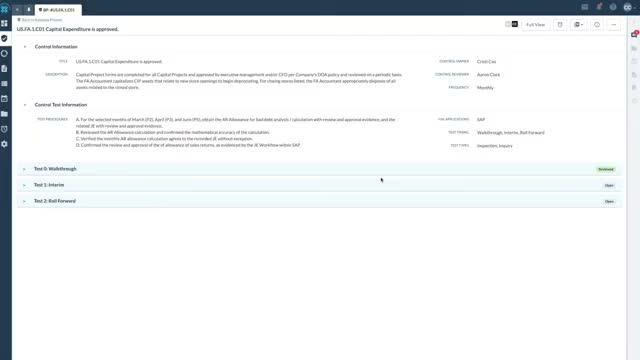
Screenshots of Optro (formerly AuditBoard) 2 images
What's great
- Leader in eight categories in G2''s winter 2026 Grid Report including GRC, Audit Management, Enterprise Risk Management, IT Risk Management, and ESG, per G2''s own grid data
- Deepest audit-management heritage on this list; the product started as SOXHUB in 2014 before expanding into full GRC, so SOX and internal audit workflows feel native, not bolted on
- The fall 2025 FairNow acquisition folded AI governance and model risk assessment directly into the platform ahead of most GRC competitors
Watch-outs
- The March 2026 rebrand from AuditBoard to Optro means support docs, integration marketplaces, and community threads carry a mix of both names for a while; expect some search friction when self-serving support
- Sales-led pricing with no published tiers; median contract lands near $47K/yr but the real range runs $22K to $110K+/yr depending on modules, so budget a real procurement cycle
- Reviewers note the risk and compliance modules sit secondary to the platform''s financial-reporting and SOX roots; demo the vendor-risk and continuous-monitoring modules specifically before assuming audit-side polish carries over
Optro is the new name for AuditBoard, and the rebrand announcement in March 2026 came alongside a new CEO (former Paycor chief Raul Villar Jr.) and the FairNow AI-governance acquisition.
The product itself, and its 1,585 G2 reviews at 4.6/5 , carried straight over from AuditBoard.
Median annual contracts sit around $47,000/yr, though market pricing data shows real deployments ranging from $22K for smaller programs to $110K+ for multi-module enterprise rollouts.
This is the pick for internal audit teams that need SOX, ERM, and IT risk in one connected system, and are comfortable with a sales-led buying process rather than published pricing.
Pricing breakdown
| Plan | Price | Best for |
|---|---|---|
| Starter | ~$22K-$40K/yr | Single module |
| Growth | ~$40K-$80K/yr | Two to three modules |
| Enterprise | ~$80K-$150K+/yr | Multi-module SOX |
| Full suite | Custom | Fortune 500 |
Security & compliance
| Standard | Availability |
|---|---|
| SOC 2 Type II | Yes |
| GDPR | Yes |
| HIPAA | Yes |
| SSO / SAML | Yes |
| Audit logs | Yes |
Optro (formerly AuditBoard) compliance summary: SOC 2 Type II is yes, GDPR is yes, HIPAA is yes, SSO/SAML is yes, and audit logs is yes.
Key integrations
| Integration | Type |
|---|---|
| Gmail | N/A |
| Outlook | N/A |
| Slack | Native integration |
| LinkedIn Sales Navigator | N/A |
| Outreach / Salesloft | N/A |
Optro (formerly AuditBoard) integration summary: Gmail is not specified, Outlook is not specified, Slack is native integration, LinkedIn Sales Navigator is not specified, and Outreach or Salesloft is not specified.
Feature availability
| Feature | Status |
|---|---|
| Free tier | no (demo only) |
| AI controls mapping | ✓ (FairNow AI governance) |
| Policy management | ✓ |
| Risk register | ✓ |
| Vendor risk management | ✓ |
Optro (formerly AuditBoard) feature availability summary: Free tier (no (demo only)), AI controls mapping (✓ (FairNow AI governance)), Policy management (✓), Risk register (✓), and Vendor risk management (✓).
What reviewers say about Optro (formerly AuditBoard)
Recurring themes across ~1,585 G2 reviews (4.6/5) plus Gartner Peer Insights, 2024-2026.
What reviewers praise
- Internal audit and SOX teams like having control testing, workpapers, and issue tracking in one connected system instead of scattered spreadsheets.
- The connected risk model lets a control failure roll up to the risk register and reporting without manual re-keying.
- Reviewers repeatedly call out hands-on onboarding and a customer success team that actually answers during implementation.
- The RiskOversight and OpsAudit modules map cleanly to SOX 404 and internal audit workflows most finance teams already run.
What reviewers fault
- Report and dashboard customization is thinner than expected, so teams export to Excel for anything non-standard.
- Pricing lands high for smaller audit shops, and the modules are licensed separately.
- A few modules feel bolted on rather than native, with inconsistent UI between them.
- Admins face a real learning curve configuring workflows and permissions before the platform pays off.
Loading reviews…
ServiceNow GRC (Integrated Risk Management)
Best for companies already standardized on ServiceNow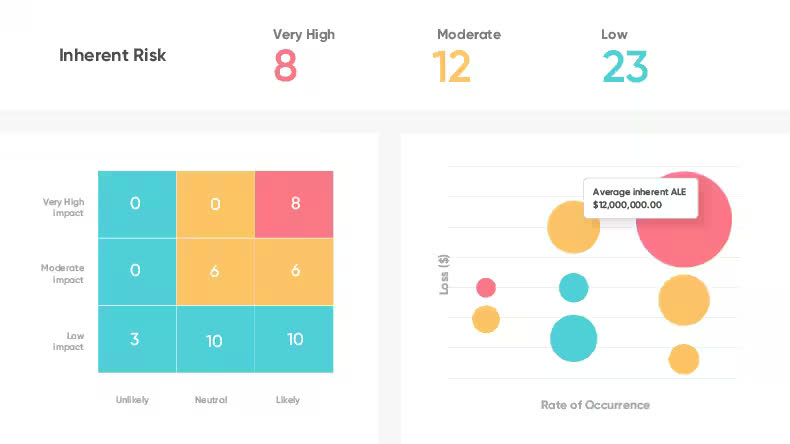
Screenshots of ServiceNow GRC (Integrated Risk Management) 2 images
What's great
- Native use of the CMDB, ITSM tickets, and workflow data your IT team already runs on, so risk and control evidence updates from the same source of truth instead of a separate sync layer
- Five connected modules (Risk, Compliance, Audit, Vendor Risk, Business Continuity) live in one workspace, cutting the tool-switching that plagues most enterprise GRC rollouts
- Negotiated discounts commonly run 60-80% off list price, meaning the real contract is often 20-40% of the published rate card once procurement gets involved
Watch-outs
- Steep learning curve with no built-in onboarding guide for first-time users, a recurring theme in reviews
- The value case falls apart fast if GRC is the only reason you'd buy ServiceNow; teams without existing ITSM investment pay enterprise software prices for a module they use in isolation
- Full-suite IRM at Fortune 500 scale, all five modules plus AI Assist, can exceed $500K/yr before implementation and professional services
ServiceNow GRC only makes sense in the context of a broader ServiceNow deployment.
When it fits, it fits well: the platform reuses the same CMDB and workflow engine your IT team already runs, so ServiceNow’s own GRC pricing page and licensing model scale with total employee headcount rather than a separate seat count.
Entry deployments with two or three modules run $50,000-$100,000/yr, while mid-market Professional Edition rollouts land $120,000-$250,000/yr before discounts.
108 G2 reviews average 4.2/5 , a smaller sample than the audit-native platforms on this list, and reviewers consistently flag the learning curve.
Skip this one if you aren’t already standardized on the ServiceNow platform elsewhere.
Pricing breakdown
| Plan | Price | Best for |
|---|---|---|
| Entry | ~$50K-$100K/yr | Under 500 employees |
| Professional | ~$120K-$250K/yr | 500-2 |
| Enterprise | ~$250K-$500K/yr | 2 |
| Full-suite IRM | $500K+/yr | Fortune 500 |
Security & compliance
| Standard | Availability |
|---|---|
| SOC 2 Type II | Yes |
| GDPR | Yes |
| HIPAA | Yes |
| SSO / SAML | Yes |
| Audit logs | Yes |
ServiceNow GRC (Integrated Risk Management) compliance summary: SOC 2 Type II is yes, GDPR is yes, HIPAA is yes, SSO/SAML is yes, and audit logs is yes.
Key integrations
| Integration | Type |
|---|---|
| Gmail | N/A |
| Outlook | N/A |
| Slack | Native integration |
| LinkedIn Sales Navigator | N/A |
| Outreach / Salesloft | N/A |
ServiceNow GRC (Integrated Risk Management) integration summary: Gmail is not specified, Outlook is not specified, Slack is native integration, LinkedIn Sales Navigator is not specified, and Outreach or Salesloft is not specified.
Feature availability
| Feature | Status |
|---|---|
| Free tier | no |
| AI controls mapping | ✓ (AI Assist) |
| Policy management | ✓ |
| Risk register | ✓ |
| Vendor risk management | ✓ (module) |
ServiceNow GRC (Integrated Risk Management) feature availability summary: Free tier (no), AI controls mapping (✓ (AI Assist)), Policy management (✓), Risk register (✓), and Vendor risk management (✓ (module)).
What reviewers say about ServiceNow GRC (Integrated Risk Management)
Recurring themes across public G2 and Gartner Peer Insights reviews, 2024-2026. Headline rating and count omitted because we could not confirm a single figure from a nameable source.
What reviewers praise
- The CMDB connection ties risk directly back to specific assets and incidents, so teams trace exposure to real infrastructure.
- Running GRC on the same Now Platform as ITSM and SecOps means shared workflows and one data model across the org.
- Heat maps, risk scoring, and native reporting give leadership real-time visibility without a separate BI tool.
- It scales for large regulated enterprises that already live inside ServiceNow.
What reviewers fault
- The UI has a steep learning curve for first-time users and ships with no built-in onboarding guide.
- Initial CMDB configuration demands significant time and internal expertise, often pulling in consultants.
- Pricing is hard to justify as a standalone GRC tool without a broader ServiceNow investment.
- Reviewers say the platform can feel overwhelming until an admin tailors it to their processes.
Loading reviews…
Workiva
Best for public companies running SOX and disclosure alongside GRC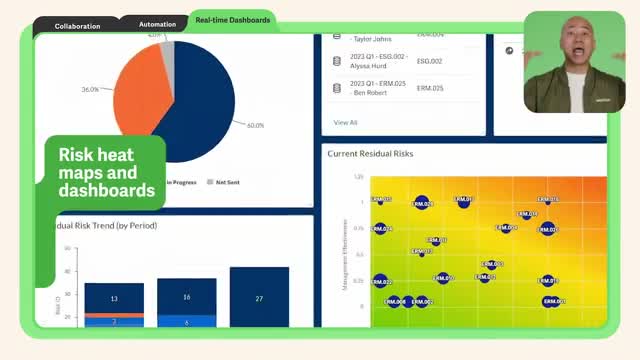
Screenshots of Workiva 2 images
What's great
- Ranked
- Real-time collaborative documents with linked data keep SOX, ESG, and GRC reporting synchronized when multiple teams work the same filing at once
- Solution-based licensing means you pay for the modules you deploy (GRC, SOX, ESG, or all three), not a blanket enterprise fee for capability you don't use
Watch-outs
- Pricing is genuinely opaque and spans a huge range; [Vendr data from 84 purchases](https://www.vendr.com/marketplace/workiva) puts the average at $59,653/yr, but enterprise-scale spend data shows averages closer to $388K/yr
- A standard 10-15% annual price uplift applies unless you negotiate a multi-year agreement with a renewal cap up front
- Steep learning curve for new users and occasional performance issues on very large, heavily-linked datasets
Workiva earned its GRC credibility by starting in SEC disclosure and SOX reporting, then building risk and controls management on top of the same linked-data engine.
That heritage shows: G2’s Spring 2026 report ranks it #1 for Disclosure Management, and 1,852 G2 reviews average 4.5/5 , with users consistently praising the audit-trail quality external auditors rely on.
Pricing is where it gets murky: Vendr’s contract data shows real customer spend from $36K to $156K/yr, and enterprise accounts frequently run past $300K/yr.
Best for public companies or pre-IPO companies where SOX and disclosure reporting are already a budget line and GRC can ride along in the same platform.
Pricing breakdown
| Plan | Price | Best for |
|---|---|---|
| Single module | ~$36K-$60K/yr | SMB or mid-market |
| Multi-module | ~$60K-$150K/yr | Mid-market running GRC plus SOX or ESG |
| Enterprise | ~$150K-$388K/yr | Large public companies |
| Custom | Custom | Fortune 500 |
Security & compliance
| Standard | Availability |
|---|---|
| SOC 2 Type II | Yes |
| GDPR | Yes |
| HIPAA | Yes |
| SSO / SAML | Yes |
| Audit logs | Yes |
Workiva compliance summary: SOC 2 Type II is yes, GDPR is yes, HIPAA is yes, SSO/SAML is yes, and audit logs is yes.
Key integrations
| Integration | Type |
|---|---|
| Gmail | N/A |
| Outlook | N/A |
| Slack | Marketplace add-on |
| LinkedIn Sales Navigator | N/A |
| Outreach / Salesloft | N/A |
Workiva integration summary: Gmail is not specified, Outlook is not specified, Slack is marketplace add-on, LinkedIn Sales Navigator is not specified, and Outreach or Salesloft is not specified.
Feature availability
| Feature | Status |
|---|---|
| Free tier | no |
| AI controls mapping | ✓ |
| Policy management | ✓ |
| Risk register | ✓ |
| Vendor risk management | Add-on |
Workiva feature availability summary: Free tier (no), AI controls mapping (✓), Policy management (✓), Risk register (✓), and Vendor risk management (Add-on).
What reviewers say about Workiva
Recurring themes across ~1,852 G2 reviews (4.5/5) plus Gartner Peer Insights, 2024-2026.
What reviewers praise
- Linked data keeps a number consistent across every document and spreadsheet, so one update flows to the 10-K, board deck, and disclosures at once.
- SOX, SEC, and financial reporting teams lean on the audit trail and version history to survive review season.
- Multiple people can work in the same document with tracked changes without emailing files around.
- Support and the implementation team get specific praise for reporting-cycle deadlines.
What reviewers fault
- The formula and data-chaining model has a steep learning curve that new users feel for weeks.
- It is expensive, and reviewers question the value for smaller reporting teams.
- Large files lag, and performance dips during heavy close periods.
- Formatting and layout controls feel fiddly compared to native Word or Excel.
Loading reviews…
LogicGate Risk Cloud
Best no-code GRC workflow builder for lean risk teams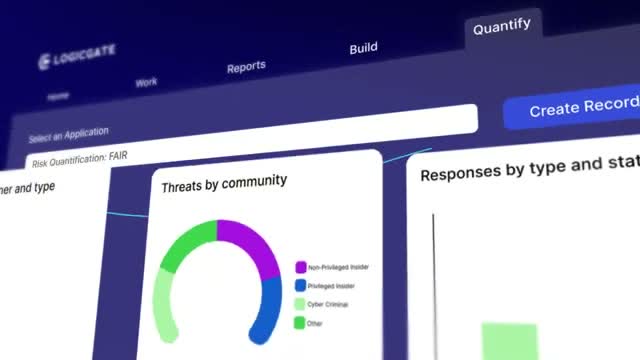
Screenshots of LogicGate Risk Cloud 1 images
What's great
- A no-code visual workflow builder with 40+ purpose-built applications lets risk teams build and modify their own GRC processes without a developer; G2 has named the product a category Leader for 27 straight quarters
- 98% of G2 reviewers report being satisfied with support quality, among the highest support scores of any platform in this guide
- Real benchmark pricing data exists (rare in this category): median buyer pays $52,567/yr, with entry deployments as low as $13,765/yr
Watch-outs
- Per-application and per-user licensing compounds fast as you add applications; enterprise-grade deployments reach $130K+/yr
- Advanced reporting needs extra configuration, or a third-party BI tool bolted on top, per reviewer feedback
- No free plan and no free trial; every evaluation starts with a sales conversation
LogicGate’s pitch is simple: give risk teams a no-code builder instead of forcing them to wait on IT for every workflow change.
It has worked well enough to earn G2 Leader status for 27 consecutive quarters , and 191 G2 reviews average 4.6/5 .
What sets LogicGate apart from most enterprise GRC vendors is that real pricing data exists: vendorbenchmark.com’s cost breakdown puts the median annual contract at $52,567, with entry-level deployments as cheap as $13,765/yr.
That transparency alone makes it easier to budget than Archer or Riskonnect.
Best for mid-market risk teams who want to own their own workflow configuration rather than depend on a vendor’s professional-services team for every change.
Pricing breakdown
| Plan | Price | Best for |
|---|---|---|
| Entry | ~$13.8K-$25K/yr | Single application |
| Growth | ~$25K-$55K/yr | Median buyer |
| Enterprise | ~$55K-$130K+/yr | Multiple applications across risk and compliance |
| Premium Success support | +$50K-$150K/yr | Named CSM and proactive reviews add-on |
Security & compliance
| Standard | Availability |
|---|---|
| SOC 2 Type II | Yes |
| GDPR | Yes |
| HIPAA | Yes |
| SSO / SAML | Yes |
| Audit logs | Yes |
LogicGate Risk Cloud compliance summary: SOC 2 Type II is yes, GDPR is yes, HIPAA is yes, SSO/SAML is yes, and audit logs is yes.
Key integrations
| Integration | Type |
|---|---|
| Gmail | N/A |
| Outlook | N/A |
| Slack | Native integration |
| LinkedIn Sales Navigator | N/A |
| Outreach / Salesloft | N/A |
LogicGate Risk Cloud integration summary: Gmail is not specified, Outlook is not specified, Slack is native integration, LinkedIn Sales Navigator is not specified, and Outreach or Salesloft is not specified.
Feature availability
| Feature | Status |
|---|---|
| Free tier | no |
| AI controls mapping | ✓ (Config Newton AI) |
| Policy management | ✓ |
| Risk register | ✓ |
| Vendor risk management | ✓ |
LogicGate Risk Cloud feature availability summary: Free tier (no), AI controls mapping (✓ (Config Newton AI)), Policy management (✓), Risk register (✓), and Vendor risk management (✓).
What reviewers say about LogicGate Risk Cloud
Recurring themes across ~191 G2 reviews (4.6/5) plus Gartner Peer Insights, 2024-2026.
What reviewers praise
- The no-code workflow builder lets risk teams design their own processes with drag-and-drop instead of waiting on a vendor.
- Applications adapt to custom frameworks, so a bespoke third-party risk or policy process maps without forcing a rigid template.
- Reviewers single out a hands-on customer success team that helps build out apps during rollout.
- Automated notifications and approvals cut the manual chasing that plagues spreadsheet-based programs.
What reviewers fault
- Building useful workflows takes real time and an admin who understands the logic model.
- Reporting is less flexible than the workflow engine, so some teams export for deeper analysis.
- Pricing sits above lightweight compliance tools.
- Advanced configuration sometimes needs support involvement rather than self-serve.
Loading reviews…
Hyperproof
Best for teams graduating from SOC 2 tooling into a real GRC program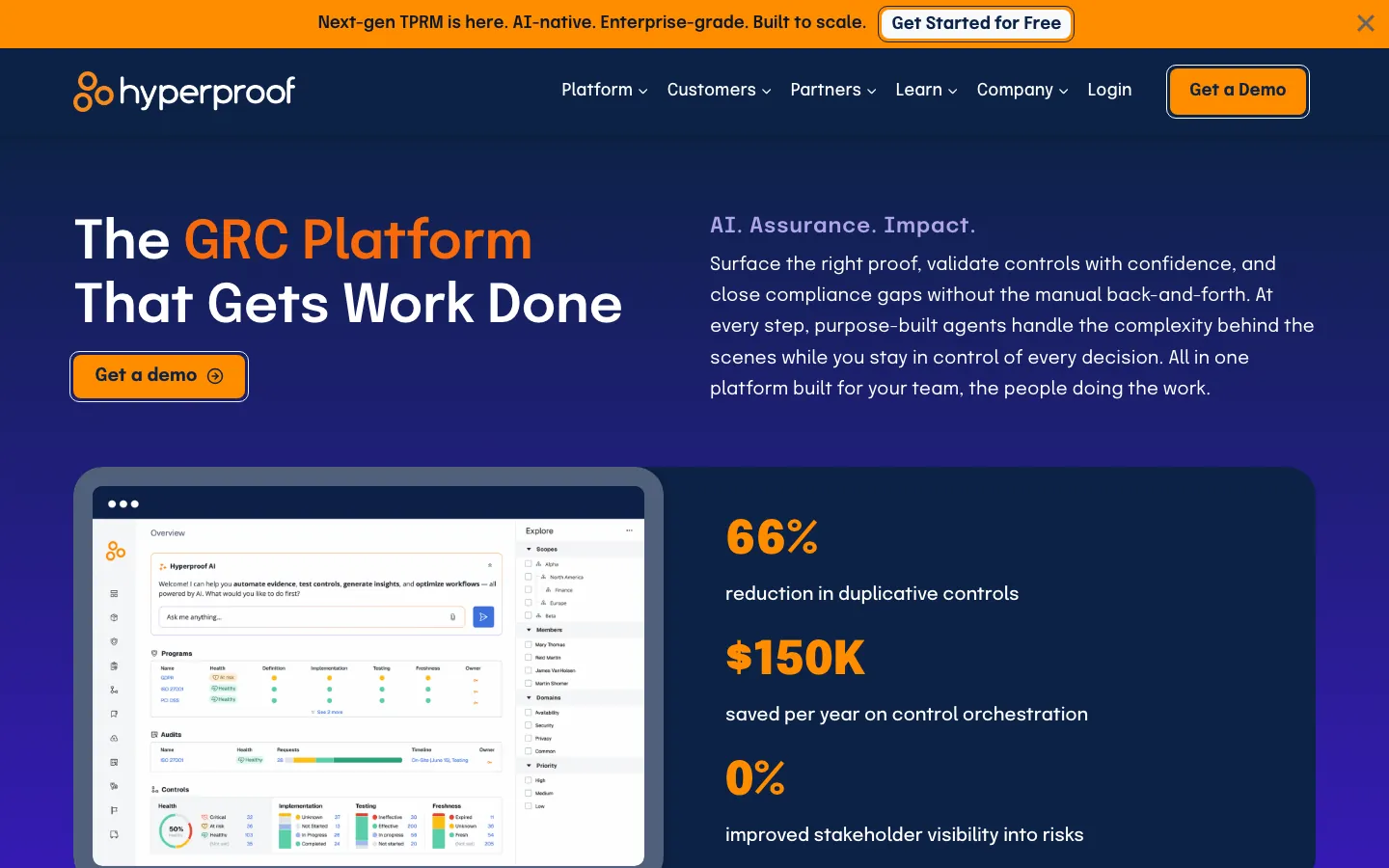
Screenshots of Hyperproof 4 images
What's great
- The clearest on-ramp for teams already running SOC 2 automation (Vanta, Drata) who need a real risk register, policy management, and vendor risk on top of evidence collection
- Cross-framework control reuse means one piece of evidence satisfies SOC 2, ISO 27001, HIPAA, and PCI controls at once, without duplicating the work across frameworks
- Usage-based pricing scales with frameworks and program complexity rather than penalizing you for adding named users
Watch-outs
- Smaller G2 review base than the audit-native enterprise platforms on this list, which limits signal on performance at the largest scale
- Native reporting is basic; most teams export to a BI tool for board-level and management reporting, per [Hyperproof's own G2 pros-and-cons page](https://www.g2.com/products/hyperproof/reviews?qs=pros-and-cons)
- Onboarding takes longer than pure compliance-automation tools like Vanta or Drata, because the platform assumes a real ongoing GRC program, not a first SOC 2 sprint
Hyperproof sits at the exact seam between compliance automation and enterprise GRC, which is why it shows up on both of our buyer guides.
Teams outgrow Vanta or Drata when a board or a new enterprise customer starts asking for a formal risk register, not just a SOC 2 report, and Hyperproof is built for exactly that transition.
213 G2 reviews average 4.5/5 , and the cross-framework control reuse is the most consistently praised feature among teams running three or more active frameworks.
If your GRC needs are purely audit-management or SOX-heavy, look at Optro or Workiva instead; Hyperproof’s strength is continuous multi-framework compliance operations, not internal audit workpapers.
Pricing breakdown
| Plan | Price | Best for |
|---|---|---|
| Entry | ~$12K-$22K/yr | 50-200 employees |
| Growth | ~$22K-$54K/yr | 200-500 employees |
| Enterprise | ~$54K-$150K+/yr | 500+ employees |
| Implementation fee | ~$10K one-time | Negotiable on a multi-year commitment |
Security & compliance
| Standard | Availability |
|---|---|
| SOC 2 Type II | Yes |
| GDPR | Yes |
| HIPAA | Yes |
| SSO / SAML | ✓ all tiers |
| Audit logs | Yes |
Hyperproof compliance summary: SOC 2 Type II is yes, GDPR is yes, HIPAA is yes, SSO/SAML is ✓ all tiers, and audit logs is yes.
Key integrations
| Integration | Type |
|---|---|
| Gmail | N/A |
| Outlook | N/A |
| Slack | Native integration |
| LinkedIn Sales Navigator | N/A |
| Outreach / Salesloft | N/A |
Hyperproof integration summary: Gmail is not specified, Outlook is not specified, Slack is native integration, LinkedIn Sales Navigator is not specified, and Outreach or Salesloft is not specified.
Feature availability
| Feature | Status |
|---|---|
| Free tier | no |
| AI controls mapping | ✓ |
| Policy management | ✓ |
| Risk register | ✓ |
| Vendor risk management | ✓ |
Hyperproof feature availability summary: Free tier (no), AI controls mapping (✓), Policy management (✓), Risk register (✓), and Vendor risk management (✓).
Loading reviews…
OneTrust Tech Risk & Compliance
Best for teams that already run OneTrust privacy tooling
Screenshots of OneTrust Tech Risk & Compliance 2 images
What's great
- Genuinely useful if privacy and tech risk sit under the same team; OneTrust's privacy-automation roots give this module the deepest data-mapping and third-party risk tooling on this list
- Automation depth for recurring vendor risk questionnaires and compliance workflows is a consistent praise point across reviews
- Metered, modular pricing lets smaller programs start with one module instead of committing to a full enterprise GRC buy up front
Watch-outs
- Pricing has gotten more aggressive: OneTrust introduced a $10,000 minimum annual deal size starting Q2 2026, and a shift from per-domain to traffic-based metering on the privacy side has produced renewal increases buyers report as high as 500%
- Dashboard UI needs a refresh according to reviewers, and the interface feels cluttered once you're running multiple modules at once
- GRC baseline program pricing is estimated north of $50,000/yr before you add the third-party risk or privacy modules most enterprise buyers actually need
OneTrust built its name in privacy automation, then expanded into Tech Risk & Compliance as a genuine GRC product, and the two are strongest together.
109 G2 reviews average 4.6/5 for the GRC-specific product line, with reviewers consistently citing unmatched breadth of compliance frameworks and enterprise-grade audit trails.
The catch is pricing momentum: OneTrust’s new $10,000 minimum deal size and metering changes have pushed renewal costs up sharply for existing customers in 2026.
Best for organizations where privacy, third-party risk, and tech risk already report to the same team, less compelling as a pure GRC-only buy against Optro or LogicGate.
Pricing breakdown
| Plan | Price | Best for |
|---|---|---|
| Single module | ~$10K-$50K/yr | One risk or privacy program |
| GRC baseline | ~$50K-$100K/yr | Core Tech Risk & Compliance program |
| Multi-module | ~$100K-$250K/yr | Privacy plus tech risk plus third-party risk |
| Enterprise | $250K+/yr | Full OneTrust suite across risk domains |
Security & compliance
| Standard | Availability |
|---|---|
| SOC 2 Type II | Yes |
| GDPR | Yes |
| HIPAA | Yes |
| SSO / SAML | Yes |
| Audit logs | Yes |
OneTrust Tech Risk & Compliance compliance summary: SOC 2 Type II is yes, GDPR is yes, HIPAA is yes, SSO/SAML is yes, and audit logs is yes.
Key integrations
| Integration | Type |
|---|---|
| Gmail | N/A |
| Outlook | N/A |
| Slack | Native integration |
| LinkedIn Sales Navigator | N/A |
| Outreach / Salesloft | N/A |
OneTrust Tech Risk & Compliance integration summary: Gmail is not specified, Outlook is not specified, Slack is native integration, LinkedIn Sales Navigator is not specified, and Outreach or Salesloft is not specified.
Feature availability
| Feature | Status |
|---|---|
| Free tier | no |
| AI controls mapping | ✓ |
| Policy management | ✓ |
| Risk register | ✓ |
| Vendor risk management | ✓ |
OneTrust Tech Risk & Compliance feature availability summary: Free tier (no), AI controls mapping (✓), Policy management (✓), Risk register (✓), and Vendor risk management (✓).
What reviewers say about OneTrust Tech Risk & Compliance
Recurring themes across ~154 OneTrust Privacy Automation reviews on G2 (4.3/5), plus Capterra and TrustRadius, 2024-2026.
What reviewers praise
- Regulatory intelligence tracks 50+ frameworks and pushes real-time law updates, which teams cite as worth more than the software alone.
- DSAR intake and fulfillment automation cuts the manual load on privacy teams handling high request volume.
- The third-party risk database ships pre-scored profiles on tens of thousands of vendors, so assessments start faster.
- Assessment automation for PIAs, DPIAs, and risk workflows covers most global obligations from one console.
- Mid-market and enterprise reviewers value having privacy, security, and consent tooling in a single suite.
What reviewers fault
- Setup is not plug-and-play, and configuring every module correctly takes weeks of training and internal effort.
- Pricing lands well above budget for small teams, cited as the main reason it is not a fit below mid-market.
- The interface feels cluttered given the number of settings, and new admins get lost in the configuration depth.
- Post-sale support and account handoff draw repeated complaints about slow response once the contract closes.
Loading reviews…
Diligent One Platform (formerly HighBond)
Best for internal audit teams that own risk and compliance too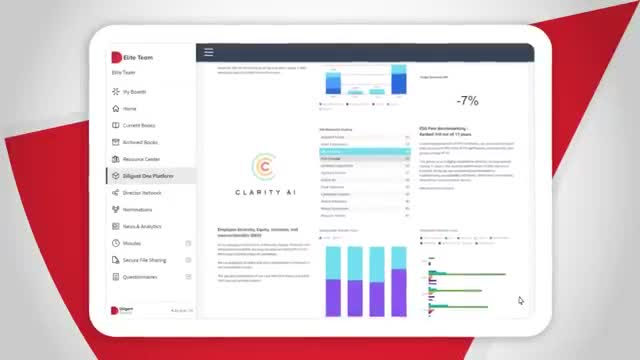
Screenshots of Diligent One Platform (formerly HighBond) 2 images
What's great
- Purpose-built for internal audit teams first, GRC second; working papers, sign-offs, and issue tracking are more mature than tools that started as general risk platforms
- Centralized compliance and integrated audit capabilities keep governance, risk, and audit work in one connected system, a consistent theme in reviews
- Board-level reporting benefits from Diligent's parent-company heritage in board and governance management, useful when GRC output ultimately lands in a board deck
Watch-outs
- Real learning curve and onboarding friction reported by users, with some citing connectivity issues tied to frequent platform updates during the HighBond-to-Diligent-One transition
- Some reviewers flag missing features and incomplete integration between modules, wishing for tighter cross-module workflows
- Enterprise pricing runs high: $100K-$220K/yr for mid-to-large organizations, $300K-$800K/yr at Fortune 500 scale, per market pricing data
Diligent One Platform is what HighBond became after Diligent Corporation’s acquisition, and it still shows its internal-audit DNA more clearly than any other tool on this list except Optro.
137 G2 reviews average 4.3/5 , with users praising the integrated audit capabilities and centralized compliance view, and flagging a real learning curve during the platform’s ongoing domain migration from highbond.com to diligentoneplatform.com (the old domain stays live through July 2026).
Pricing sits firmly in enterprise territory: $100K-$220K/yr is typical for mid-to-large organizations, climbing to $300K-$800K/yr at Fortune 500 scale.
Best for internal audit teams that need GRC to extend from an audit-first foundation, not the other way around.
Pricing breakdown
| Plan | Price | Best for |
|---|---|---|
| Mid-market | ~$100K-$150K/yr | Internal audit team |
| Large enterprise | ~$150K-$220K/yr | Multi-entity internal audit and GRC |
| Fortune 500 | ~$300K-$800K/yr | Global audit |
| Add-on modules | Custom | Board management |
Security & compliance
| Standard | Availability |
|---|---|
| SOC 2 Type II | Yes |
| GDPR | Yes |
| HIPAA | ? |
| SSO / SAML | Yes |
| Audit logs | Yes |
Diligent One Platform (formerly HighBond) compliance summary: SOC 2 Type II is yes, GDPR is yes, HIPAA is ?, SSO/SAML is yes, and audit logs is yes.
Key integrations
| Integration | Type |
|---|---|
| Gmail | N/A |
| Outlook | N/A |
| Slack | Marketplace add-on |
| LinkedIn Sales Navigator | N/A |
| Outreach / Salesloft | N/A |
Diligent One Platform (formerly HighBond) integration summary: Gmail is not specified, Outlook is not specified, Slack is marketplace add-on, LinkedIn Sales Navigator is not specified, and Outreach or Salesloft is not specified.
Feature availability
| Feature | Status |
|---|---|
| Free tier | no |
| AI controls mapping | ✓ |
| Policy management | ✓ |
| Risk register | ✓ |
| Vendor risk management | Limited |
Diligent One Platform (formerly HighBond) feature availability summary: Free tier (no), AI controls mapping (✓), Policy management (✓), Risk register (✓), and Vendor risk management (Limited).
What reviewers say about Diligent One Platform (formerly HighBond)
Recurring themes across ~137 G2 reviews (4.3/5) plus Gartner Peer Insights, 2024-2026.
What reviewers praise
- The built-in data analytics (the old ACL Analytics and Robotics engine) let auditors test full populations instead of sampling.
- Audit, risk, and compliance sit on one platform, so issues and controls stay centralized across teams.
- Board and executive reporting pulls from the same data auditors work in.
- Reviewers value the depth for internal audit shops that need scripting and automation.
What reviewers fault
- Parts of the UI feel dated and clunky compared to newer GRC tools.
- The HighBond to Diligent One rebranding left some navigation and naming confusing.
- Report customization is more limited than the analytics depth would suggest.
- There is a learning curve, and cost climbs as modules are added.
Loading reviews…
Riskonnect
Best for enterprises managing risk, claims, and compliance in one system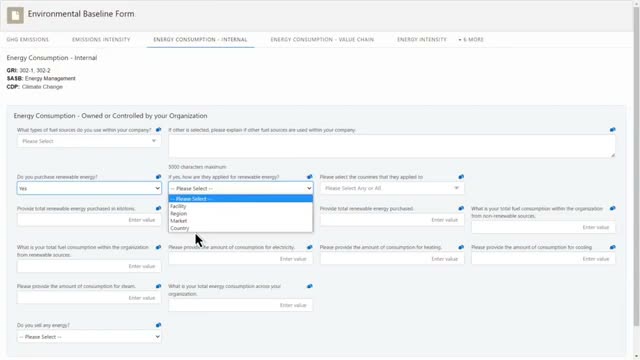
Screenshots of Riskonnect 3 images
What's great
- Built on Salesforce, so teams already running Salesforce get a familiar admin model and can extend the platform with standard Salesforce tooling
- Genuinely multi-domain: IT risk, operational risk, healthcare risk, claims management, and internal audit all live in one system, useful where risk crosses departmental lines
- Users consistently praise the customizability and reporting depth once the platform is fully configured, per G2 and SelectHub aggregated reviews
Watch-outs
- Implementation is a real project, not a rollout; one financial-services case study put total three-year cost including implementation at $683,000, with $400K of that being one-time services and internal cost
- Pricing isn't published anywhere; every evaluation requires a full sales cycle and a custom quote
- Setup complexity is the single most cited criticism in reviews, alongside a steep learning curve for administrators
Riskonnect’s Salesforce foundation is both its biggest selling point and its biggest implementation cost.
172 G2 reviews average 4.3/5 , and reviewers consistently call out the platform’s multi-domain reach: claims, healthcare risk, operational risk, and IT risk all live in the same system, which matters for enterprises where those functions currently sit in five different spreadsheets.
The tradeoff is implementation cost.
Enterprise licensing alone starts around $283,000/yr, and a documented financial-services case study put total three-year investment, license plus implementation, at $683,000.
Best for large enterprises with genuinely multi-domain risk (claims plus IT plus operational) and the budget to match.
Pricing breakdown
| Plan | Price | Best for |
|---|---|---|
| Basic deployment | ~$35K-$75K/yr | Single risk domain |
| Multi-domain | ~$75K-$150K/yr | Risk plus compliance plus claims |
| Enterprise | ~$150K-$283K+/yr | Full IRM across IT |
| Implementation | ~$258K-$400K one-time | Professional services for enterprise rollout |
Security & compliance
| Standard | Availability |
|---|---|
| SOC 2 Type II | Yes |
| GDPR | Yes |
| HIPAA | ✓ (healthcare module) |
| SSO / SAML | Yes |
| Audit logs | Yes |
Riskonnect compliance summary: SOC 2 Type II is yes, GDPR is yes, HIPAA is ✓ (healthcare module), SSO/SAML is yes, and audit logs is yes.
Key integrations
| Integration | Type |
|---|---|
| Gmail | N/A |
| Outlook | N/A |
| Slack | Marketplace add-on |
| LinkedIn Sales Navigator | N/A |
| Outreach / Salesloft | N/A |
Riskonnect integration summary: Gmail is not specified, Outlook is not specified, Slack is marketplace add-on, LinkedIn Sales Navigator is not specified, and Outreach or Salesloft is not specified.
Feature availability
| Feature | Status |
|---|---|
| Free tier | no |
| AI controls mapping | Limited |
| Policy management | ✓ |
| Risk register | ✓ |
| Vendor risk management | ✓ |
Riskonnect feature availability summary: Free tier (no), AI controls mapping (Limited), Policy management (✓), Risk register (✓), and Vendor risk management (✓).
What reviewers say about Riskonnect
Recurring themes across ~172 G2 reviews (4.3/5) plus Gartner Peer Insights, 2024-2026.
What reviewers praise
- It consolidates RMIS, claims, and integrated risk on one platform, which insurance and risk teams like for a single source of truth.
- Dashboards are configurable enough to give each risk owner a view of their own exposure.
- Claims and incident management get specific praise from teams migrating off legacy insurance systems.
- Support and account teams help work through configuration during onboarding.
What reviewers fault
- Implementation is lengthy and complex, often measured in months not weeks.
- The interface is not especially intuitive, so new users need training.
- Building custom reports takes effort and sometimes vendor help.
- Cost and occasional slowness on large data sets come up repeatedly.
Loading reviews…
Archer (Archer Technologies)
Best for regulated-industry customization at massive scale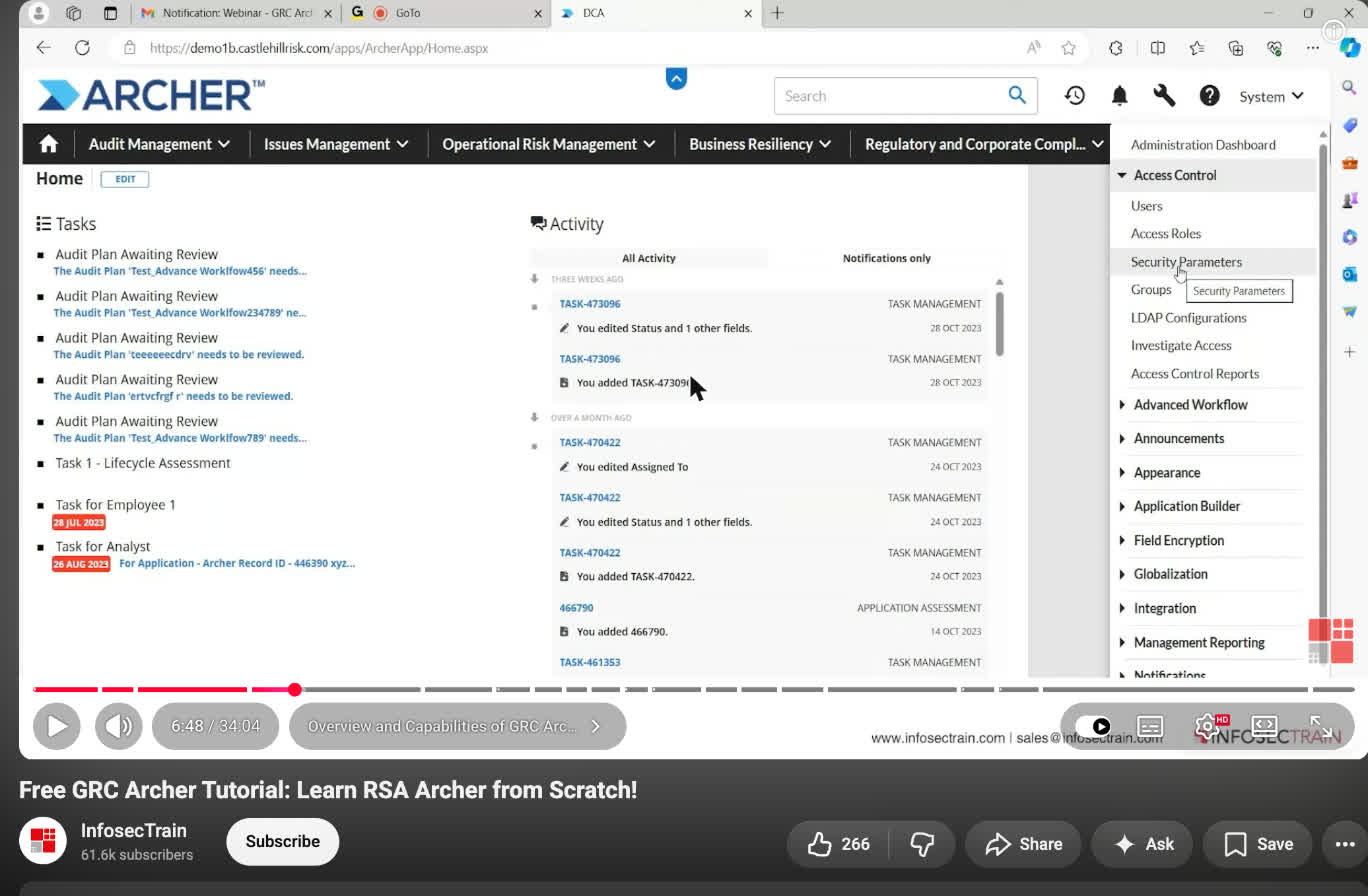
Screenshots of Archer (Archer Technologies) 1 images
What's great
- The deepest customization and control-framework flexibility on this list, reflecting more than two decades of hardening inside regulated banks and insurers
- Archer Evolv, launched in 2026, added compliance-trained AI for regulatory horizon scanning and obligation extraction with full audit lineage, a genuinely new capability for tracking incoming regulatory change automatically
- Advanced reporting, analytics, and workflow-based access controls are strong once a team has invested in configuring the platform properly
Watch-outs
- G2's own review base is thin (20 reviews, 3.6/5) relative to Archer's market footprint, and the star distribution includes real 1-2 star reviews citing a dated, clunky interface
- Steep learning curve; reviewers describe a UI with layers of drop-downs and navigation paths that take real time to learn before finding what they need
- Fixed-price ELA licensing typically runs $75K-$300K+/yr, and enterprise license agreements commonly add $80K-$400K in professional services and customization on top
Archer (formerly RSA Archer) is the legacy heavyweight of enterprise GRC, and its 3.6/5 rating across just 20 G2 reviews undersells how entrenched it is at the largest regulated institutions.
That thin, dated review base is itself the signal: Archer buyers tend to be 10-plus-year installations that don’t shop around on G2, not a reflection of product quality decline.
The 2026 Archer Evolv release added compliance-trained AI for regulatory change tracking, a real capability upgrade for compliance teams drowning in incoming rule changes.
Pricing is enterprise-only: expect $75K-$300K+/yr in licensing plus $80K-$400K in implementation and customization services.
Best for banks, insurers, and other heavily regulated enterprises that need deep custom control frameworks and have the budget and internal team to run them.
Pricing breakdown
| Plan | Price | Best for |
|---|---|---|
| Entry ELA | ~$75K-$150K/yr | Single business unit or geography |
| Standard ELA | ~$150K-$300K/yr | Multiple business units |
| Enterprise ELA | ~$300K-$400K+/yr | Unlimited users |
| Professional services | Custom | Implementation and customization |
Security & compliance
| Standard | Availability |
|---|---|
| SOC 2 Type II | Yes |
| GDPR | Yes |
| HIPAA | Yes |
| SSO / SAML | Yes |
| Audit logs | Yes |
Archer (Archer Technologies) compliance summary: SOC 2 Type II is yes, GDPR is yes, HIPAA is yes, SSO/SAML is yes, and audit logs is yes.
Key integrations
| Integration | Type |
|---|---|
| Gmail | N/A |
| Outlook | N/A |
| Slack | Marketplace add-on |
| LinkedIn Sales Navigator | N/A |
| Outreach / Salesloft | N/A |
Archer (Archer Technologies) integration summary: Gmail is not specified, Outlook is not specified, Slack is marketplace add-on, LinkedIn Sales Navigator is not specified, and Outreach or Salesloft is not specified.
Feature availability
| Feature | Status |
|---|---|
| Free tier | no |
| AI controls mapping | ✓ (Archer Evolv, 2026) |
| Policy management | ✓ |
| Risk register | ✓ |
| Vendor risk management | ✓ |
Archer (Archer Technologies) feature availability summary: Free tier (no), AI controls mapping (✓ (Archer Evolv, 2026)), Policy management (✓), Risk register (✓), and Vendor risk management (✓).
What reviewers say about Archer (Archer Technologies)
Recurring themes across ~20 G2 reviews (3.6/5) plus Gartner Peer Insights, 2024-2026. Thin G2 pool, so themes are kept tight.
What reviewers praise
- It is highly configurable, and large regulated enterprises can bend the use-case apps to almost any risk framework.
- The risk register and control catalog are mature from years of enterprise deployments.
- Teams already standardized on Archer value the breadth across IT, operational, and third-party risk.
What reviewers fault
- The UI feels dated, and reviewers describe heavy admin and configuration effort that needs dedicated specialists.
- It is expensive to license and to maintain.
- Performance can be slow, and version upgrades are painful projects in their own right.
Loading reviews…
ZenGRC (Reciprocity)
Best entry point to enterprise-grade GRC for mid-market teams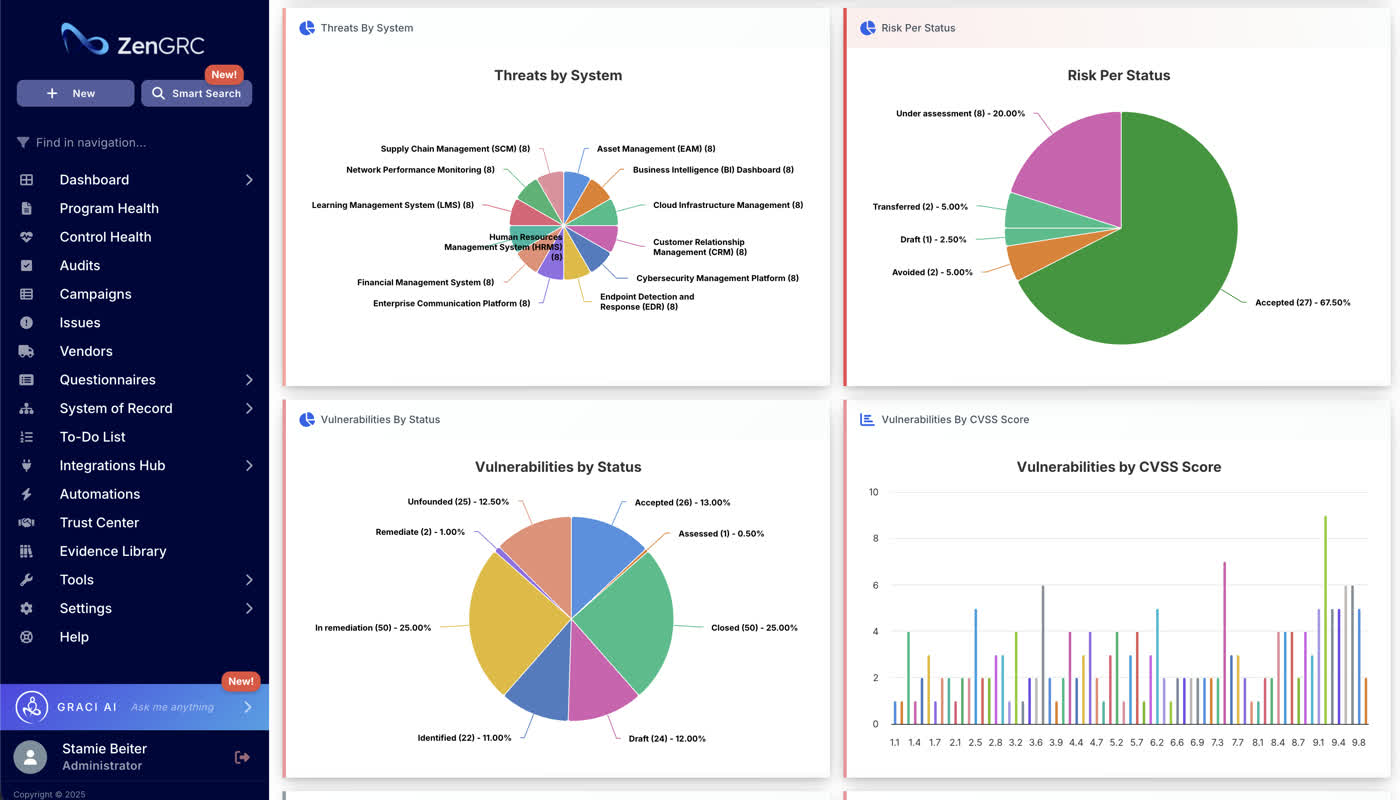
Screenshots of ZenGRC (Reciprocity) 2 images
What's great
- The most approachable enterprise-adjacent GRC platform on this list; reviewers consistently cite ease of use and a genuinely intuitive interface, unusual for this category
- All-inclusive licensing avoids the per-module upsell maze of Archer, Riskonnect, or MetricStream, making total cost more predictable
- Strong multi-framework compliance tracking bridges cleanly from a first SOC 2 program into a broader GRC posture as the company matures
Watch-outs
- Reporting capabilities lag the deeper enterprise platforms; teams with complex board-reporting needs will likely outgrow it
- Enterprise tier pricing ($6,000/mo plus a one-time onboarding fee) is real money for what is still, functionally, a mid-market feature set next to Archer or MetricStream
- Smaller G2 review base (104 reviews) than the audit-native leaders, so less signal on how it holds up at the largest scale
ZenGRC is the platform to look at when a company has outgrown spreadsheet-based risk tracking but isn’t ready for an Archer or MetricStream-scale deployment.
104 G2 reviews average 4.4/5 , with the ease-of-use praise standing out in a category where most tools require real training to operate.
The Start-Up plan runs roughly $30,000/yr for up to two active users and ten collaborators, scaling to around $72,000/yr (billed at $6,000/mo) at the Enterprise tier plus a one-time onboarding fee.
Best for mid-market compliance teams that need genuine GRC (risk register, governance, multi-framework tracking) without committing to a six-figure enterprise contract on day one.
Pricing breakdown
| Plan | Price | Best for |
|---|---|---|
| Start-Up | ~$30K/yr | Up to 2 active users |
| Professional | ~$30K-$42K/yr | Up to 5 active users |
| Enterprise | ~$72K/yr | Larger teams |
| Custom | Custom | Multi-entity |
Security & compliance
| Standard | Availability |
|---|---|
| SOC 2 Type II | Yes |
| GDPR | Yes |
| HIPAA | Yes |
| SSO / SAML | ✓ all tiers |
| Audit logs | Yes |
ZenGRC (Reciprocity) compliance summary: SOC 2 Type II is yes, GDPR is yes, HIPAA is yes, SSO/SAML is ✓ all tiers, and audit logs is yes.
Key integrations
| Integration | Type |
|---|---|
| Gmail | N/A |
| Outlook | N/A |
| Slack | Native integration |
| LinkedIn Sales Navigator | N/A |
| Outreach / Salesloft | N/A |
ZenGRC (Reciprocity) integration summary: Gmail is not specified, Outlook is not specified, Slack is native integration, LinkedIn Sales Navigator is not specified, and Outreach or Salesloft is not specified.
Feature availability
| Feature | Status |
|---|---|
| Free tier | no |
| AI controls mapping | Limited |
| Policy management | ✓ |
| Risk register | ✓ |
| Vendor risk management | ✓ (up to 20 vendors, Professional+) |
ZenGRC (Reciprocity) feature availability summary: Free tier (no), AI controls mapping (Limited), Policy management (✓), Risk register (✓), and Vendor risk management (✓ (up to 20 vendors, Professional+)).
What reviewers say about ZenGRC (Reciprocity)
Recurring themes across ~103 G2 reviews (4.4/5) plus Gartner Peer Insights, 2024-2026.
What reviewers praise
- The interface is clean and approachable, which reviewers contrast against heavier enterprise GRC suites.
- Control mapping lets one piece of evidence satisfy overlapping SOC 2, ISO 27001, and NIST requirements at once.
- Evidence collection and audit request tracking keep compliance teams organized through a cycle.
- Mid-market users call out responsive support during audits.
What reviewers fault
- Reporting is limited, so teams export when they need custom views.
- The platform can feel slow at times, especially loading larger control sets.
- Integrations are fewer than some competing tools offer.
- Pricing feels steep for smaller compliance teams, and some steps stay manual.
Loading reviews…
More top-rated GRC Software worth checking out
Highly rated GRC Software that didn't crack our top 10 but are still strong contenders, especially for specific use cases and team sizes.
MetricStream
For AI-first GRC suites built for the most complex regulated enterprises
Standout: Positioned as an AI-first GRC platform with flexible support for multiple risk frameworks simultaneously, including ISO 31000, NIST, and ISO 27001
What reviewers say ★ 3.8 · 14
Praised
- It supports multiple risk frameworks and standards (ISO 31000, NIST, ISO 27001) out of one platform.
- Workflow automation and risk-scoring models give leadership dashboard visibility into risk posture.
- Large enterprises value the breadth across enterprise, operational, and IT risk modules.
Faulted
- Implementation is complex and the configuration effort is significant, often needing consultants.
- The interface feels dated next to newer GRC tools.
- It sits at the expensive end, and time-to-value is long.
SAI360
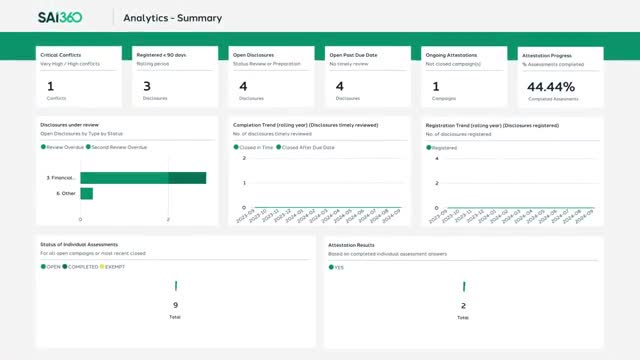
For ethics and compliance learning bundled with GRC
Standout: Merges GRC with ethics and compliance learning in one platform, genuinely useful when training and attestations matter as much as controls tracking
What reviewers say ★ 4.1 · 112
Praised
- It pairs GRC with EHS and an ethics/learning content library, which appeals to teams wanting risk and compliance training together.
- Workflows are configurable, so policy and incident processes bend to how a team already works.
- Policy management and attestation tracking get called out for keeping distributed teams accountable.
- Support helps work through the configuration during rollout.
Faulted
- The UI feels clunky and dated in places compared to newer platforms.
- Initial configuration takes effort and a knowledgeable admin.
- Reporting is more limited than some reviewers expect.
- There is a learning curve, and total cost climbs with added modules.
Onspring
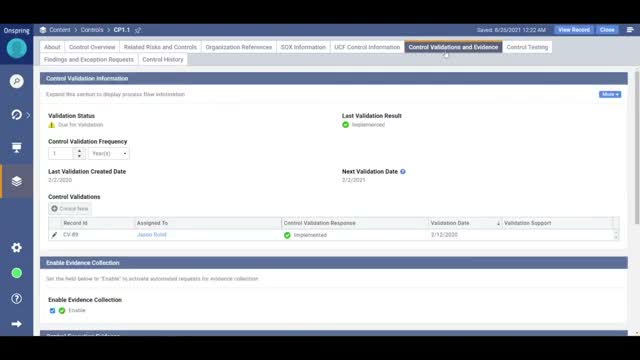
For no-code GRC process automation without a dev team
Standout: No-code drag-and-drop app builder scores 4.7/5 on G2 from 80 reviews, among the highest satisfaction scores in this entire guide
What reviewers say ★ 4.7 · 80
Praised
- The no-code builder lets teams stand up custom risk, audit, and compliance apps fast without developers.
- Reviewers repeatedly praise a responsive customer success team that helps configure the platform to their process.
- Dashboards and reporting are flexible enough that each stakeholder sees the view they need.
- It adapts to a team's existing workflow rather than forcing a rigid template.
Faulted
- Getting the most from it takes admin time and someone willing to learn the build tools.
- The mobile experience is more limited than the desktop app.
- A few use cases need workarounds rather than native features.
- As a smaller vendor, its integration catalog is shorter than the big suites.
Resolver
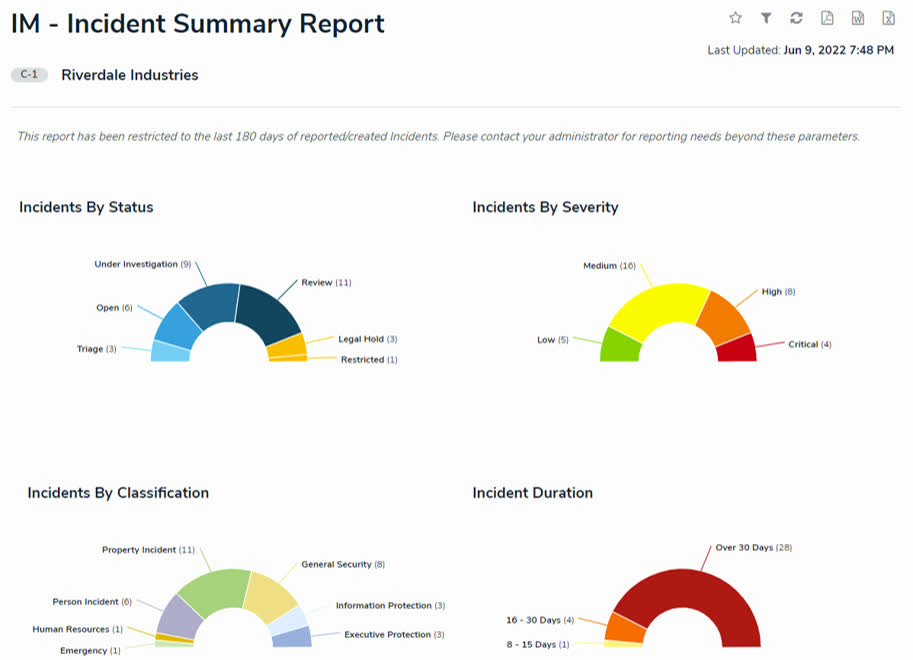
For security and incident response teams that need GRC and case management together
Standout: Strong incident and case management bolted onto the risk register, genuinely useful for security and physical-risk teams that need GRC and incident response in one system
What reviewers say ★ 4.3 · 180
Praised
- It centralizes risk, incident, and compliance data so teams stop juggling separate trackers.
- Incident and security operations management get specific praise from physical-security and corporate-security teams.
- Dashboards and reporting surface trends across incidents and risks in one place.
- Automated workflows, alerts, and approvals cut the manual follow-up.
Faulted
- Implementation and configuration take real effort before value shows up.
- The interface can feel complex, and there is a reporting learning curve.
- Cost is a recurring concern for smaller teams.
- Performance occasionally dips on heavier data loads.
VComply
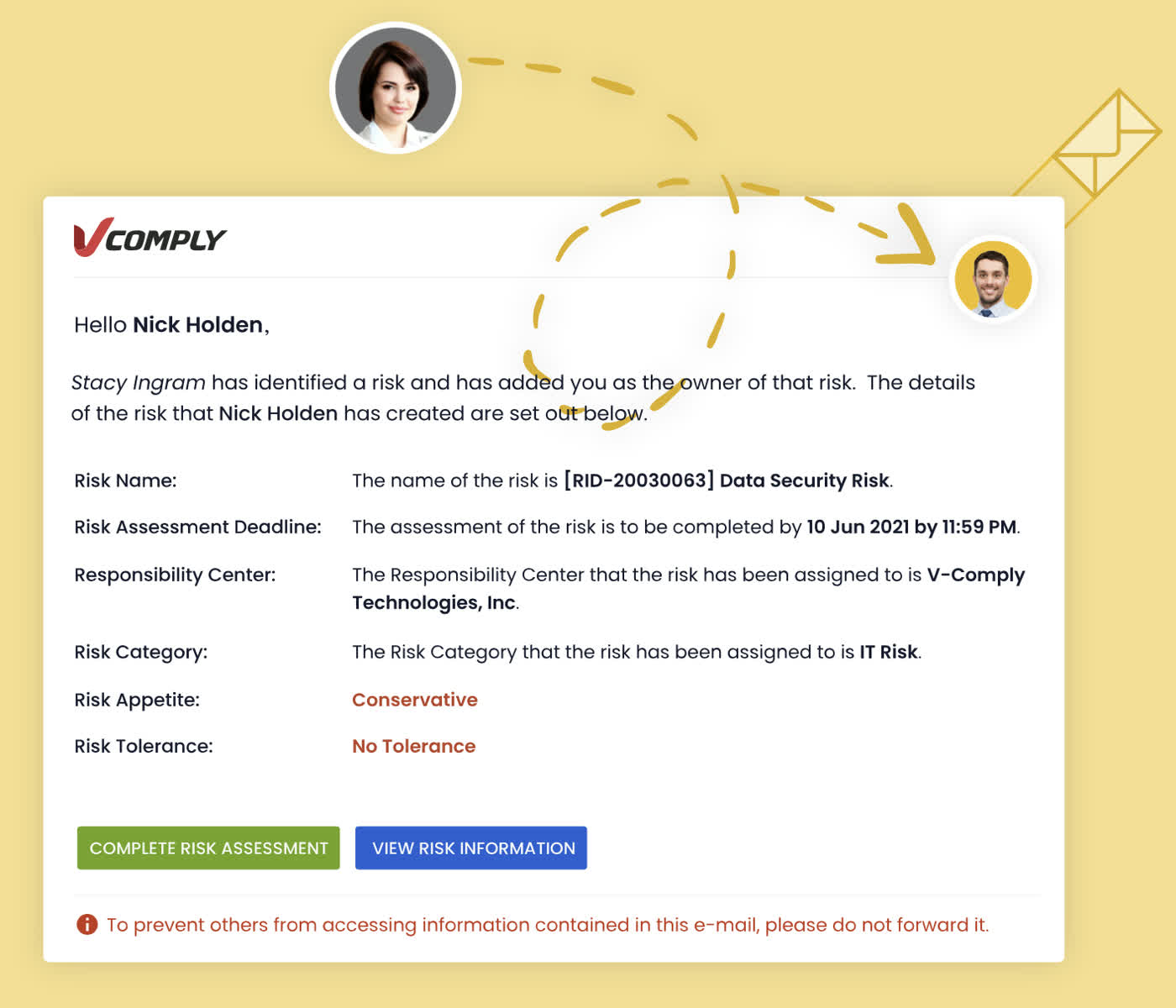
For lean mid-market compliance teams not ready for six-figure GRC
Standout: The lowest published starting price of any tool in this guide at $3,999/yr, with a genuine free trial available, real accessibility for mid-market compliance teams
What reviewers say ★ 4.6 · 51
Praised
- The interface is intuitive, and reviewers get compliance tasks organized without a long ramp.
- It centralizes compliance responsibilities so owners have clear visibility into what is due and by whom.
- Support is responsive and hands-on during setup.
- Setup is quick relative to heavier enterprise GRC suites, which suits lean compliance teams.
Faulted
- Reporting depth is limited compared to enterprise platforms.
- The integration catalog is still short.
- Some features feel early-stage, and the mobile experience lags the web app.
- Occasional bugs surface as new modules ship.
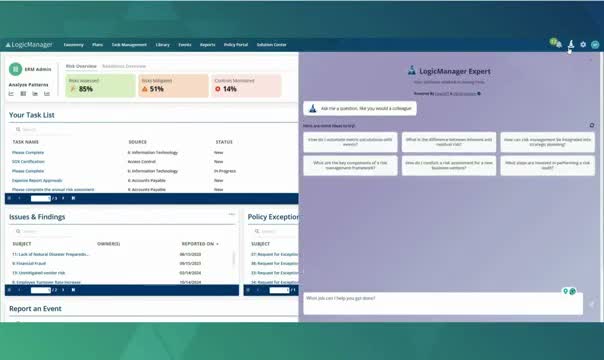
LogicManager
For enterprise risk management with a fixed-price all-inclusive model
Standout: Fixed-price, job-to-be-done licensing bundles workflows, content, and reporting with unlimited licenses for the people who need them, an unusually simple pricing structure for enterprise risk management
What reviewers say ★ 4.2 · 114
Praised
- The taxonomy-based model links risks to controls, processes, and objectives so nothing lives in isolation.
- Reviewers repeatedly credit an assigned advisory analyst who helps build and mature the program.
- It is configurable enough to support a real ERM framework rather than a checklist.
- Risk assessments and control libraries give a defensible structure for board reporting.
Faulted
- The UI feels dated compared to newer GRC platforms.
- There is a learning curve to the taxonomy approach before it clicks.
- Report customization takes effort, and some views need support help.
- Setup time and cost are higher than lightweight compliance tools.
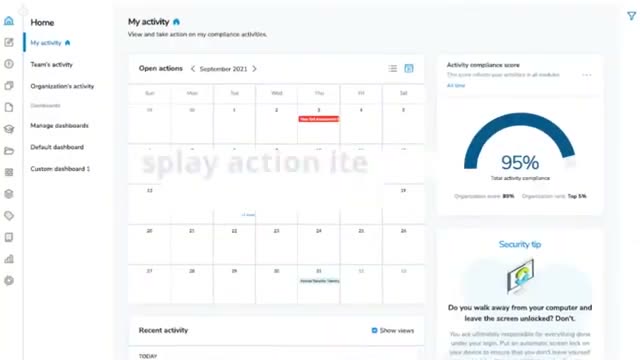
Ostendio
For healthcare and defense contractors needing HITRUST and CMMC in one platform
Standout: 4.8/5 on G2 across 40 reviews, the highest raw rating of any platform in this guide
What reviewers say ★ 4.8 · 40
Praised
- The MyVCM platform centralizes evidence, policies, and vendor risk for SOC 2, HIPAA, and ISO 27001 audits in one place.
- Reviewers value it for guiding healthcare and smaller security teams through their first audits.
- Support and the customer team get specific praise for staying close during audit prep.
- It delivers solid value for SMB budgets that cannot afford enterprise GRC suites.
Faulted
- The interface could feel more modern in spots.
- Reporting is more limited than larger platforms offer.
- Some evidence and task steps stay manual.
- The integration set is smaller, so a few tools need workarounds.
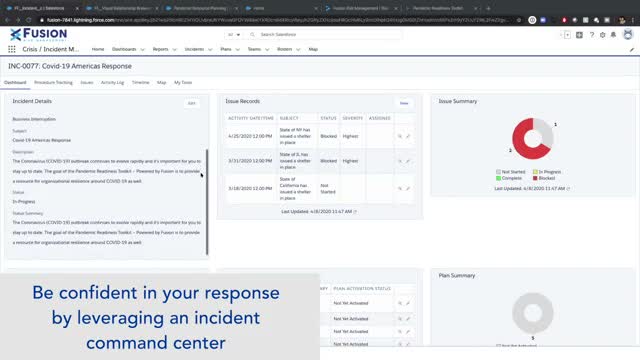
Fusion Risk Management
For operational resilience and business continuity planning at scale
Standout: The strongest business-continuity and operational-resilience tooling in this guide; genuinely different depth from general-purpose GRC platforms
What reviewers say ★ 4.4 · 142
Praised
- It is strong for business continuity and operational resilience, with dependency mapping that shows how a disruption cascades.
- Business impact analysis and recovery-plan workflows are purpose-built rather than bolted onto a generic GRC tool.
- Built on Salesforce, it inherits familiar navigation and reporting for teams already on that platform.
- Reviewers credit the support and professional-services teams during implementation.
Faulted
- Because it sits on Salesforce, configuration carries that platform's complexity and learning curve.
- Building custom reports takes effort and sometimes admin skill.
- Cost is a recurring concern, especially with Salesforce licensing underneath.
- Initial implementation is a project measured in months.
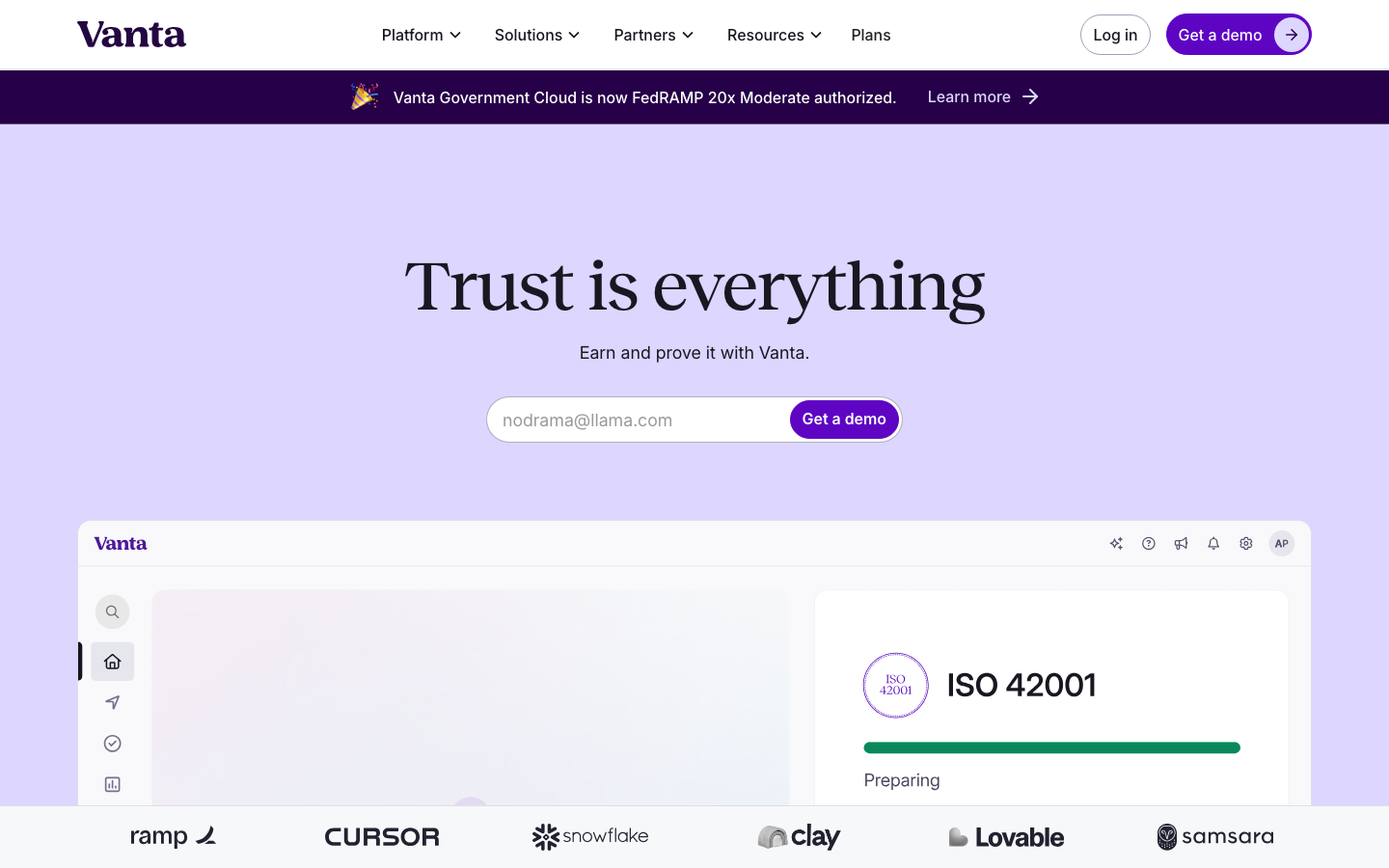
Vanta
For teams outgrowing startup compliance tooling into a real risk register
Standout: Already the default first stop for SOC 2 and ISO 27001 automation with 2,454 G2 reviews at 4.6/5, the largest review base of any tool in this entire guide
Drata
For teams whose board just asked for a formal risk register on top of SOC 2
Standout: 4.7/5 across 1,153 G2 reviews, among the highest-rated platforms in this entire guide for user satisfaction
Tools we considered but excluded
We evaluated more tools than the 20 you see above. These did not make the cut. Saying what we rejected, and why, is the editorial muscle most listicles skip.
- AuditBoard: Not excluded, renamed. The company rebranded to Optro in March 2026; see the Optro entry above for the same product and G2 history
- IBM OpenPages: Legitimate enterprise GRC competitor to Archer, but thin, hard-to-verify current G2 and pricing data made it impossible to confirm live 2026 figures without risking stale or estimated numbers
- SAP GRC (Risk Management): Effectively an SAP-ecosystem add-on rather than a standalone buy; only makes sense inside an existing SAP deployment, similar caveat to ServiceNow GRC but with a narrower non-SAP audience
- Enablon (Wolters Kluwer): Strong EHS and ESG-heavy GRC suite, but positioning skews toward environmental and safety compliance more than general risk and audit; a better fit for a future EHS-specific guide
- Camms: Global GRC platform, but its published case studies and reference base skew UK, Australian, and New Zealand public-sector; thin verifiable US enterprise presence for this guide's audience
- Mitratech Alyne: Real GRC platform inside the Mitratech portfolio, but we could not locate a standalone, current G2 product listing with its own rating; Mitratech's aggregate company-wide rating (4.2/5, 1,331 reviews) spans dozens of unrelated legal and HR products and would misrepresent Alyne specifically
Honorable mentions
Solid tools that did not crack the main list but are worth tracking, especially for niche use cases.
- StandardFusion: A lean, mid-market GRC platform worth watching for smaller security-focused teams that want less overhead than the platforms on this list; thinner track record kept it off the main 20
- Isora GRC (SaaS Alliance): A newer, lighter-weight risk-assessment-first GRC entrant gaining attention among higher-ed and mid-market security teams; worth a look if the core 20 feel over-built for your team size
- Secureframe, Sprinto, Thoropass: All three are compliance automation platforms, not enterprise GRC; see our separate [compliance automation guide](/list/best-compliance-automation/) if a single certification is the actual goal
The GRC software landscape in 20 tools
GRC is not one buyer.
A public company’s SOX and disclosure team, a bank’s internal audit function, and a Series C startup’s first risk manager are all shopping in the same G2 category, with wildly different needs, wildly different budgets, and almost no shared vocabulary for what “done” looks like.
Audit-led GRC. Optro (formerly AuditBoard) and Diligent One Platform both started life as internal audit tools before expanding into full GRC, and it shows. Start here if your buying committee includes an internal audit director.
Platform-native GRC. ServiceNow GRC and, to a lesser extent, Riskonnect, which is built on Salesforce, only make real sense if you’re already running the underlying platform somewhere else in the company, because the entire value case depends on reusing data (a CMDB, an object model, an admin team’s existing muscle memory) that a net-new buyer simply doesn’t have yet.
The math changes completely if GRC would be your only reason to buy ServiceNow in the first place.
No-code and mid-market GRC. Achievable without a seven-figure budget, finally.
LogicGate, Onspring, VComply, LogicManager, and ZenGRC all let smaller risk teams build and run their own program without a large professional-services engagement standing between them and a working risk register.
Legacy enterprise GRC. Two decades of hardening inside banks, insurers, and life sciences.
Archer and MetricStream carry that weight, and their G2 review counts look thin next to their actual market share, a known quirk of enterprise software where the biggest, longest-tenured buyers almost never leave public reviews.
The compliance-automation bridge. Vanta, Drata, and Hyperproof sit at the seam between a first SOC 2 and a real GRC program.
If you clicked into this guide but you’re actually still chasing a first certification, our compliance automation guide is the more precise fit.
Where GRC software is heading in 2026
AI is moving from dashboard feature to actual regulatory work. Archer Evolv added compliance-trained AI that scans regulatory sources, extracts obligations with confidence scoring, and keeps full audit lineage back to the source text, a real step up from a chatbot bolted onto a risk register.
Optro’s FairNow deal folded AI governance and model risk directly into the core product, not as an add-on.
AuditBoard’s rebrand to Optro signals a broader industry identity shift. The name change accompanied a new CEO from outside the GRC world (former Paycor chief Raul Villar Jr.) and an AI-governance acquisition.
Expect more established GRC vendors to reposition around AI-native branding through the rest of 2026, not just add features.
Enterprise pricing discipline is tightening. For buyers, not vendors.
OneTrust’s new $10,000 minimum deal size and metering changes, alongside Vendr-documented Workiva uplifts of 10-15% annually, mean 2026 renewal negotiations need to start earlier in the contract cycle, not at the 60-day mark.
The line between compliance automation and GRC keeps blurring. Vanta added an autonomous AI Agent for policy management and questionnaire responses. Sprinto markets itself as an “autonomous compliance platform.” Hyperproof sits squarely in the middle.
Expect the two categories to keep converging for mid-market buyers over the next 18 months.
Third-party and vendor risk is becoming table stakes. Not an add-on anymore. OneTrust, Riskonnect, and Archer all build it into core tiers now, and platforms that still gate vendor risk behind a premium add-on are increasingly the exception, not the rule.
What to put in your GRC platform trial
Seven things. Test them before the contract gets signed, not after.
One, load your actual risk register, not the vendor’s demo data. Every sales demo shows a clean, pre-populated register with sensible categories and tidy severity scores.
Bring your real, messy 40-row spreadsheet instead, and watch how the platform handles duplicates, ownership assignment, and re-scoring live, in the room, with the rep watching.
Two, run a mock internal audit through the full workflow. Planning, fieldwork, issue tracking, remediation sign-off, the whole chain. Optro and Diligent One Platform should feel purpose-built for it.
Newer entrants to audit management (LogicGate, Onspring) will show more friction here, which is fine if audit isn’t the primary use case.
Three, ask for the exact renewal price range in writing. Get a range, not “it depends on usage.”
Every vendor in this category has year-two pricing that diverges from year-one pricing, and that gap is the single most negotiable thing before you sign the first contract, not after.
Four, test cross-framework control mapping on your real frameworks. If you’re running SOC 2, ISO 27001, and a sector-specific framework at once, ask the platform to show which controls map automatically, control by control, not as a marketing percentage.
The 60-70% overlap claim between SOC 2 and ISO 27001 is real in the aggregate, but which specific controls map for your environment depends entirely on the platform’s own implementation.
Five, measure the vendor risk questionnaire turnaround. Send a sample third-party questionnaire through the platform’s real workflow. Time how long a reviewer takes to process a response.
This is the feature most likely to disappoint once you’re live, if it wasn’t stress-tested during the trial.
Six, get a real implementation cost quote in writing, not a range. Riskonnect and Archer implementations regularly cost as much as the first year of licensing does.
Tie the quote to your actual module selection and user count before comparing total cost across vendors, not the sticker price alone.
Seven, check what happens when a risk owner leaves the company. This one breaks more platforms than any other test on the list.
Ask the vendor to walk through the actual reassignment workflow when a risk or control owner is offboarded. Platforms with genuine workflow depth handle it cleanly. Platforms that are really just a fancy spreadsheet with a login screen struggle.
Matching the GRC platform to your risk program
1. Audit-first versus risk-first buying motion
If your buying committee is led by an internal audit director, Optro and Diligent One Platform will feel like they were built for you. Because they were.
A CISO or risk officer leading the motion instead points somewhere else entirely, toward LogicGate, Hyperproof, or ZenGRC, which map more naturally to a risk-register-first mental model.
2. Existing platform investment
Already running ServiceNow for ITSM? Then ServiceNow GRC gets real value from your existing CMDB, immediately, without a separate data-modeling project. Already on Salesforce? Riskonnect inherits a familiar admin model in the same way.
Neither one makes sense as a standalone purchase if you don’t already run the underlying platform somewhere else in the company.
3. Number of active frameworks and their overlap
One or two frameworks with real overlap, SOC 2 plus ISO 27001 being the common pair, means Vanta, Drata, or Hyperproof can carry you further than you’d expect before a full GRC platform becomes necessary.
Five or more frameworks, especially with sector-specific requirements layered on top, is a different story entirely.
That’s where LogicGate’s cross-application flexibility or Archer’s customization depth starts to earn its price.
4. Public company reporting obligations
SOX and SEC disclosure requirements point hard toward Workiva. The collaborative document engine and audit trail were built for exactly this use case, filing-cycle deadlines and all.
Private companies without disclosure obligations rarely need Workiva’s specific strengths, and should look at the audit-management or risk-register-first platforms instead.
5. Budget reality, not budget aspiration
Under $50K/yr rules out Archer, Riskonnect, MetricStream, and Diligent One Platform outright.
Look at VComply, ZenGRC, Onspring, or LogicManager instead. $50K-$150K/yr opens up Optro, Hyperproof, LogicGate, and OneTrust, and over $150K/yr is where ServiceNow GRC, Workiva, Archer, and Riskonnect start to become realistic options rather than aspirational ones.
Migrating off legacy GRC
Moving off a 10-plus-year Archer or MetricStream deployment is a real project. Not a data export. Three things determine whether it’s worth doing at all.
How custom is your current control framework. Bespoke workflows built over years on Archer do not lift-and-shift cleanly.
Expect a genuine re-architecture project on the new platform. Budget 6-12 months, and involve the team that built the original customization in the first place.
What your auditors and regulators are used to seeing. External auditors, and in some industries regulators, have real institutional familiarity with certain platforms’ evidence formats.
Confirm with your audit firm before switching that they’ll accept the new platform’s exports without friction during the first post-migration audit cycle.
Whether the switch is actually about the platform or the program. A surprising number of legacy GRC migrations are really an attempt to fix a broken risk program, not a broken tool.
A stale risk register with nobody owning remediation stays stale on any platform. Fix the program first. Then pick the platform that fits it.
The pick by team profile
- Internal audit-led enterprise: Optro (formerly AuditBoard) or Diligent One Platform. Both started as audit tools; the workflows show it.
- Already standardized on ServiceNow: ServiceNow GRC. Skip it entirely if GRC would be your only reason to adopt the platform.
- Public company with SOX and disclosure obligations: Workiva. The collaborative document engine and audit trail exist for exactly this.
- Lean risk team that wants to self-configure workflows: LogicGate Risk Cloud or Onspring. Both put the no-code builder in the risk team’s hands, not a professional-services queue.
- Bank, insurer, or life-sciences enterprise with deep custom control needs: Archer. Expect real implementation cost alongside the license.
- Graduating from a first SOC 2 into a real GRC program: Hyperproof, or stay on Vanta/Drata a bit longer if the board hasn’t asked for a formal risk register yet.
- Mid-market team not ready for a six-figure GRC contract: ZenGRC, VComply, or LogicManager, all genuinely GRC software at a fraction of Archer or MetricStream pricing.
- Healthcare startup or defense contractor: Ostendio, for HITRUST and CMMC coverage with actually published pricing.
- Security team that also owns incident response: Resolver, for GRC and case management in one system.
- Operational resilience or business continuity as a standalone requirement: Fusion Risk Management, purpose-built for scenario planning and resilience testing.
For corrections, vendor disputes, or feedback on this methodology, email hello@topickz.com . We re-test the full shortlist every six months; next refresh ships January 2027.
Frequently asked questions
What's the difference between GRC software and compliance automation tools like Vanta or Drata?
How much does enterprise GRC software cost in 2026?
Is ServiceNow GRC worth buying if we're not already a ServiceNow customer?
What happened to AuditBoard?
Can GRC software replace RSA Archer for a bank or insurer?
Do GRC platforms include vendor and third-party risk management?
How long does enterprise GRC implementation take?
Which GRC platform is best for internal audit teams specifically?
Can a startup just use compliance automation and skip GRC entirely?
What's the biggest hidden cost in enterprise GRC contracts?
Related helpful reads
Write a review
Posts to the page right away. Keep it real — no links or email addresses.