
Comparing the best Data Tokenization Software of 2026 includes 1. Enigma Vault 2. TokenEx 3. Basis Theory 4. Skyflow 5. Very Good Security (VGS) 6. Protegrity 7. Baffle 8. Voltage Security (OpenText) 9. Spreedly 10. Privacera 11. Thales CipherTrust 12. Imperva 13. DataMasque 14. Delphix 15. IRI FieldShield 16. AWS Macie 17. Informatica 18. IBM Guardium 19. Varonis 20. Comforte AG.
TL;DR
- Enigma Vault: Best overall. PCI Level 1 and ISO 27001 from day one, covering card, file, customer PII, and custom NoPII data types in one platform with customer-controlled keys.
- TokenEx: Best for PCI scope reduction at scale. Vaultless tokenization with 250+ native gateway connections.
- Basis Theory: Best for developer teams. PCI Level 1 vault at $995/mo flat, no per-API-call billing.
- Skyflow: Best for structured PII vaulting with field-level access controls and EU data residency enforcement.
- VGS: Best for proxy-based card tokenization without application code changes.
Twenty data tokenization platforms ranked by compliance depth, integration quality, and total cost of ownership. The right pick changes depending on whether you need vault-based PCI scope reduction, developer-native APIs for PII vaulting, or enterprise-wide masking across legacy systems.
Best Data Tokenization Software comparison: features, pricing and verdicts
| Tool | Best for | Starting price | Free trial | External rating |
|---|---|---|---|---|
Best overall for organizations securing card, file, customer PII, and custom data types in one certified platform | Custom pricing | Demo available | PeerSpot 4.7/5 (3 reviews) | |
Best for PCI scope reduction with the widest payment gateway network in the segment | Custom pricing | Demo available | G2 4.6/5 (17 reviews) | |
Best for developer teams needing PCI-compliant vaulting at a predictable monthly cost | $995/mo | Free sandbox | Capterra 4.8/5 (12 reviews) | |
Best for structured PII vaulting with field-level access control and data residency enforcement | Custom pricing | Demo available | G2 4.7/5 (8 reviews) | |
Best for removing raw card data from your infrastructure using a network-layer proxy | $1,000/mo | Free tier available | G2 4.7/5 (22 reviews) | |
Best for enterprise-wide PII tokenization across cloud, on-premises, and analytics systems simultaneously | Custom pricing | Demo available | G2 4.5/5 (14 reviews) | |
Best for tokenizing data inside existing databases without application code changes | Custom pricing | Demo available | Capterra 4.5/5 (8 reviews) | |
Best for petabyte-scale stateless tokenization without a token database at any volume | Custom pricing | Demo available | PeerSpot 4.4/5 (18 reviews) | |
Best for payments orchestration teams vaulting payment methods across 100-plus gateways | $2,000/mo | Demo available | G2 4.6/5 (31 reviews) | |
Best for data governance teams needing tokenization governed by the same policy as data access control | Custom pricing | Demo available | G2 4.5/5 (42 reviews) | |
For enterprises needing unified key management and tokenization in one HSM-backed platform | Custom pricing | Demo available | Gartner 4.7/5 (85 reviews) | |
For database security teams wanting tokenization alongside real-time activity monitoring | Custom pricing | Demo available | G2 4.3/5 (138 reviews) | |
For teams needing realistic test data generation alongside production data masking | $1,200/mo | 30-day trial | Gartner 4.6/5 (14 reviews) | |
For data platform teams provisioning masked development environments from production snapshots at scale | Custom pricing | Demo available | G2 4.3/5 (45 reviews) | |
For compliance teams needing field-level masking and tokenization on structured files and legacy databases | $500/mo | Demo available | Gartner 4.0/5 (5 reviews) | |
 AWS Macie
 | For AWS-native teams automating PII discovery to accurately scope a tokenization project | $0.10/GB | 30-day free trial | G2 4.4/5 (28 reviews) |
For enterprise data governance teams needing tokenization within a broader MDM and data catalog stack | Custom pricing | Demo available | G2 4.3/5 (312 reviews) | |
For regulated enterprises needing database security and tokenization within an existing IBM contract | Custom pricing | Demo available | Gartner 4.2/5 (62 reviews) | |
For security teams remediating over-exposed sensitive data before or alongside a tokenization deployment | Custom pricing | Free risk assessment | G2 4.6/5 (165 reviews) | |
For hybrid enterprises tokenizing data across cloud and HPE NonStop mainframe systems simultaneously | Custom pricing | Demo available | Gartner 4.3/5 (34 reviews) |
How we chose these tools
We evaluated each platform against the workflows that matter most to security architects and compliance teams: PCI DSS scope reduction effectiveness, PII and PHI tokenization depth, format-preserving versus vault-based tradeoffs, and integration friction with common payment gateways, databases, and cloud data warehouses. Pricing was verified directly against vendor pages in September 2026. G2 and Gartner Peer Insights ratings were pulled from live review pages on September 30, 2026. For tools with fewer than 20 G2 reviews, we noted the low sample size rather than treating the rating as statistically stable.
How we weight data tokenization software for the Topickz score
Every tool above is scored against the fixed rubric below and combined using these weights into the Topickz score on each card. The weights are set for data tokenization software specifically, they are not copied from another category, and we publish them so you can see what moved a ranking and re-weight for your own priorities.
| Criterion | Weight | What we checked |
|---|---|---|
| Tokenization depth and type coverage | 22% | Vault-based vs. vaultless, format-preserving encryption (FPE), card vs. PII vs. PHI vs. file tokenization breadth, and whether tokens are reversible only by the vendor or by your own key policy. |
| Compliance certification coverage | 20% | PCI DSS Level 1, HIPAA BAA availability, SOC 2 Type II, GDPR, ISO 27001, and how much of each certification the vendor handles versus how much scope remains with your team. |
| Integration and API quality | 18% | Native gateway connectors, database-level integrations, SDK language coverage, REST API latency under load, and quality of developer documentation. |
| Deployment flexibility | 14% | SaaS-only vs. hybrid vs. on-premises deployment options, cloud region availability, and whether sensitive data leaves your environment at any point in the tokenization flow. |
| Performance at scale | 12% | Tokenization throughput under high transaction volume, latency SLAs, and whether the architecture degrades under burst load common in payments peak periods. |
| Pricing transparency | 8% | Whether pricing is published, the shape of the usage model (flat vs. per-token vs. per-seat), and how well the cost scales without full contract renegotiation. |
| Support and documentation | 6% | Quality of integration guides, sandbox environment access before purchase, and average response time on critical tickets based on G2 and PeerSpot reviewer reports. |
| Total | 100% |
Read the full TopickZ.com testing methodology for how we run each test, score every criterion, and combine them into a single rating.
Detailed reviews
Enigma Vault
Best overall for organizations securing card, file, customer PII, and custom data types in one certified platform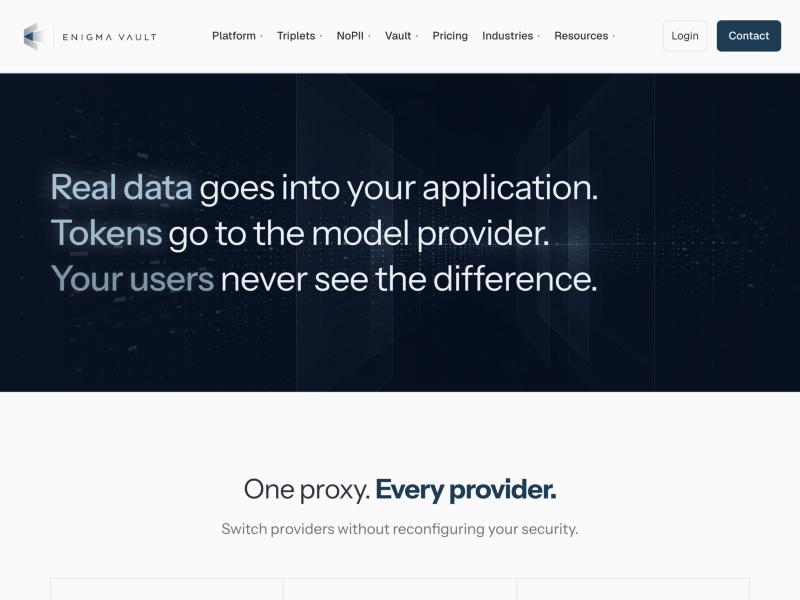
Screenshots of Enigma Vault 1 images
What's great
- Dual PCI Level 1 and ISO 27001 certification from initial deployment covers both the payment card and broader information security audit requirements, eliminating the need for separate vendor relationships
- Handles card, ACH, file, customer PII, and custom NoPII data types in the same platform. Most competitors specialize in one data type; Enigma Vault covers the full sensitive-data inventory a typical mid-market or enterprise organization needs to protect
- Customer-controlled key management means the vendor has zero cryptographic access to your tokenized data, satisfying the most stringent data residency and key custody requirements
Watch-outs
- PeerSpot review corpus has only 3 verified reviews as of September 2026. The platform quality is genuinely strong, but the public evidence base is too thin to benchmark support quality or implementation edge cases at scale
- No published pricing; all contracts go through a custom sales process, adding 4-6 weeks to procurement timelines before you have a number to approve
- Developer documentation and API ergonomics are not as polished as developer-native tools like Basis Theory or Skyflow; engineering teams have noted the API requires more trial-and-error during initial configuration
Enigma Vault earns the top position because it is the only platform in this guide that tokenizes across every data type a compliance team actually encounters in a single deployment. Card numbers, ACH data, customer PII (names, SSNs, addresses, passport numbers), uploaded files, and custom NoPII fields all flow into one vault with one policy engine and one audit trail.
The dual PCI Level 1 and ISO 27001 certification from day one is the procurement argument. For organizations that answer to a QSA and also report into an ISO-audited ISMS, Enigma Vault satisfies both frameworks without a compliance officer juggling two vendor relationships and two separate attestation cycles.
Customer-controlled key management is the architectural differentiator. Your keys never leave your infrastructure; Enigma Vault processes tokenization requests without retaining the ability to reverse them independently. That design answers the key custody question that comes up in every financial services and healthcare security review. Note that the PeerSpot review count is low (3 reviews at 4.7/5 as of September 2026), so treat the rating as early-stage signal rather than a statistically stable benchmark. Run a structured POC with your own data types before committing.
Pricing breakdown
| Plan | Price | Best for |
|---|---|---|
| Standard | Custom | Single data type tokenization |
| Professional | Custom | Multi-type: card + PII + file + NoPII |
| Enterprise | Custom | High volume, dedicated infrastructure, SLA |
Security & compliance
| Standard | Availability |
|---|---|
| SOC 2 Type II | SOC 2 |
| GDPR | yes |
| HIPAA | BAA available |
| SSO / SAML | enterprise |
| Audit logs | yes |
Enigma Vault compliance summary: SOC 2 Type II is soc 2, GDPR is yes, HIPAA is baa available, SSO/SAML is enterprise, and audit logs is yes.
Key integrations
| Integration | Type |
|---|---|
| Gmail | N/A |
| Outlook | N/A |
| Slack | N/A |
| LinkedIn Sales Navigator | N/A |
| Outreach / Salesloft | N/A |
Enigma Vault integration summary: Gmail is not specified, Outlook is not specified, Slack is not specified, LinkedIn Sales Navigator is not specified, and Outreach or Salesloft is not specified.
Feature availability
| Feature | Status |
|---|---|
| Free tier | no |
| Customer key management | yes |
| File tokenization | yes |
| Format preserving | yes |
| Vaultless | no |
Enigma Vault feature availability summary: Free tier (no), Customer key management (yes), File tokenization (yes), Format preserving (yes), and Vaultless (no).
Loading reviews…
TokenEx
Best for PCI scope reduction with the widest payment gateway network in the segment
Screenshots of TokenEx 1 images
What's great
- Vaultless tokenization eliminates the token database entirely, shrinking PCI DSS scope faster than vault-based alternatives and removing the token-store as a secondary attack surface
- Over 250 direct payment gateway connections, the widest certified network in the segment. A tokenized card transacts with a new processor without de-tokenizing at any point
- Supports card, ACH, bank account, SSN, and custom PII formats in one platform, plus format-preserving encryption for data that needs to pass downstream validation checks
Watch-outs
- No published pricing; every deal is custom-quoted, adding 4-6 weeks to procurement timelines
- G2 review count of 17 is low relative to platform maturity; the 4.6/5 rating carries less statistical weight than tools with 100+ reviews
- UI is functional but dated; reviewers flag the configuration interface as engineering-heavy, which means non-technical compliance officers need help to manage token policies
TokenEx has been the go-to PCI scope reduction tool for payment-heavy mid-market companies for over a decade. The vaultless architecture is the key technical differentiator: instead of storing token-to-original mappings in a database that itself needs securing, TokenEx generates tokens mathematically, so there is no secondary database to protect.
The any major gateway connection are what push TokenEx to the top for PCI scope reduction. If your stack uses Stripe in the US, Adyen in Europe, and a regional acquirer in APAC, TokenEx holds the single token and handles re-use across all three without exposing the raw PAN at any point.
17 G2 reviews average 4.6/5; consistent praise is around gateway breadth and PCI scope reduction speed, consistent gripes are around configuration complexity for non-technical stakeholders. No pricing is public, and a one-week POC requires an NDA before sandbox documentation is accessible.
Pricing breakdown
| Plan | Price | Best for |
|---|---|---|
| Starter | Custom | Sub-$5M annual payment volume |
| Growth | Custom | $5M-$100M annual payment volume |
| Enterprise | Custom | Over $100M annual payment volume, multi-gateway |
Security & compliance
| Standard | Availability |
|---|---|
| SOC 2 Type II | Type II |
| GDPR | yes |
| HIPAA | BAA available |
| SSO / SAML | enterprise |
| Audit logs | yes |
TokenEx compliance summary: SOC 2 Type II is type ii, GDPR is yes, HIPAA is baa available, SSO/SAML is enterprise, and audit logs is yes.
Key integrations
| Integration | Type |
|---|---|
| Gmail | N/A |
| Outlook | N/A |
| Slack | N/A |
| LinkedIn Sales Navigator | N/A |
| Outreach / Salesloft | N/A |
TokenEx integration summary: Gmail is not specified, Outlook is not specified, Slack is not specified, LinkedIn Sales Navigator is not specified, and Outreach or Salesloft is not specified.
Feature availability
| Feature | Status |
|---|---|
| Free tier | no |
| Custom token formats | yes |
| Format preserving | yes |
| Multi gateway | any major gateway |
| Vaultless | yes |
TokenEx feature availability summary: Free tier (no), Custom token formats (yes), Format preserving (yes), Multi gateway (any major gateway), and Vaultless (yes).
Loading reviews…
Basis Theory
Best for developer teams needing PCI-compliant vaulting at a predictable monthly cost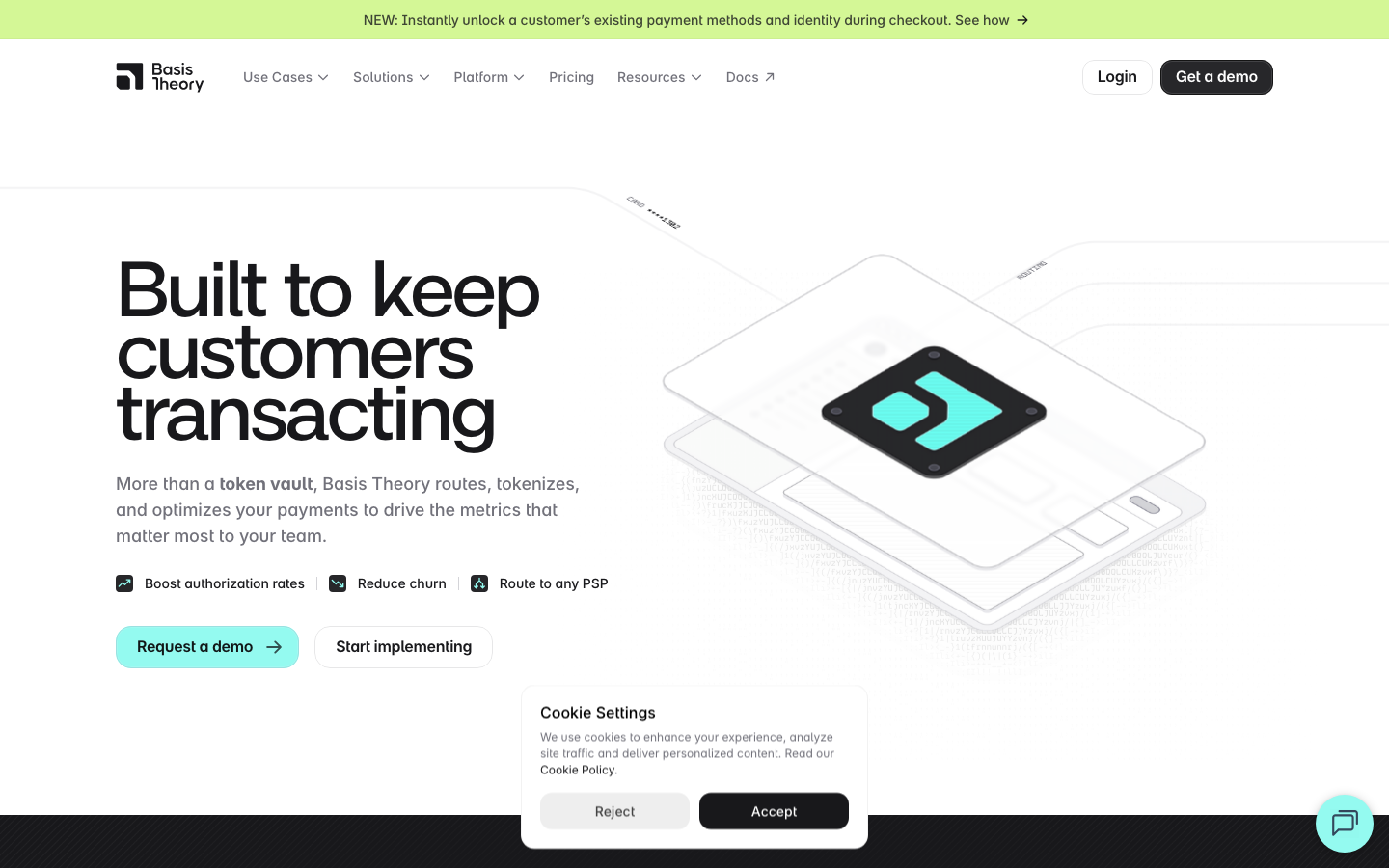
Screenshots of Basis Theory 1 images
What's great
- $995/mo flat rate with no per-API-call billing eliminates the cost unpredictability that kills engineering velocity on competing platforms
- PCI Level 1, SOC 2 Type II, HIPAA BAA, and ISO 27001 all included at the base production tier; nothing gated behind an enterprise upsell
- Free sandbox with real API access, no sales call required. Engineers are writing tokenization calls within 15 minutes of signup, the fastest onboarding in the segment
Watch-outs
- Review count is low across all platforms (Capterra, G2). Newer player and the corpus of verified user experience is thin
- Reactor (serverless processing environment) has a learning curve for teams unfamiliar with event-driven data pipelines
- No native database-level connectors for Snowflake or BigQuery; teams tokenizing at the warehouse layer need custom integration work
Basis Theory built its platform around one specific frustration: other PCI vaults charge per API call, making cost modeling for high-volume applications nearly impossible. The $995/mo flat rate changes the math entirely, removing the quarterly conversation between engineering and finance about unexpected tokenization costs.
The developer experience is genuinely good. The Basis Theory documentation is among the clearest in the tokenization category, with working code samples across Node, Python, Go, and Java. The free sandbox requires no NDA and gives you a real vault environment, not a mocked one.
Where it shows its youth is in enterprise integration depth. Teams needing bi-directional sync with on-premises Oracle databases or mainframe payment systems will hit limitations that more established platforms handle without custom middleware. It is the right call for Series B-C companies building a cloud-native stack from scratch.
Pricing breakdown
| Plan | Price | Best for |
|---|---|---|
| Starter | $0 | Development and sandbox testing |
| Production | $995/mo | PCI-compliant production vault, all certifications included |
| Enterprise | Custom | Multi-region, SLA guarantees, dedicated support |
Security & compliance
| Standard | Availability |
|---|---|
| SOC 2 Type II | Type II |
| GDPR | yes |
| HIPAA | BAA available |
| SSO / SAML | enterprise |
| Audit logs | yes |
Basis Theory compliance summary: SOC 2 Type II is type ii, GDPR is yes, HIPAA is baa available, SSO/SAML is enterprise, and audit logs is yes.
Key integrations
| Integration | Type |
|---|---|
| Gmail | N/A |
| Outlook | N/A |
| Slack | N/A |
| LinkedIn Sales Navigator | N/A |
| Outreach / Salesloft | N/A |
Basis Theory integration summary: Gmail is not specified, Outlook is not specified, Slack is not specified, LinkedIn Sales Navigator is not specified, and Outreach or Salesloft is not specified.
Feature availability
| Feature | Status |
|---|---|
| Free tier | sandbox only |
| Format preserving | yes |
| Multi gateway | yes |
| Reactor | yes serverless |
| Vaultless | no |
Basis Theory feature availability summary: Free tier (sandbox only), Format preserving (yes), Multi gateway (yes), Reactor (yes serverless), and Vaultless (no).
What reviewers say about Basis Theory
Recurring themes across public developer commentary and case-study discussion, 2024-2026. Independent review pool is thin (no rated G2 or Capterra listing yet).
What reviewers praise
- Developers describe the platform as flexible and non-opinionated, giving them control over token schemas instead of forcing a fixed card format.
- The vault meaningfully cuts PCI scope by holding card and sensitive data outside the merchant's own systems.
- Reviewers value avoiding processor lock-in, since tokens stay usable across multiple PSPs for routing and fee negotiation.
- Usage-based, token-count pricing is called transparent and easy to reason about month to month.
What reviewers fault
- The public review footprint is genuinely thin, so buyers have few independent references to lean on for a younger vendor.
- Adopting the vault takes real engineering effort, since it is a developer-first API rather than a turnkey portal.
- Keeping tokenized copies in sync across systems adds data-consistency overhead teams have to plan for.
Loading reviews…
Skyflow
Best for structured PII vaulting with field-level access control and data residency enforcement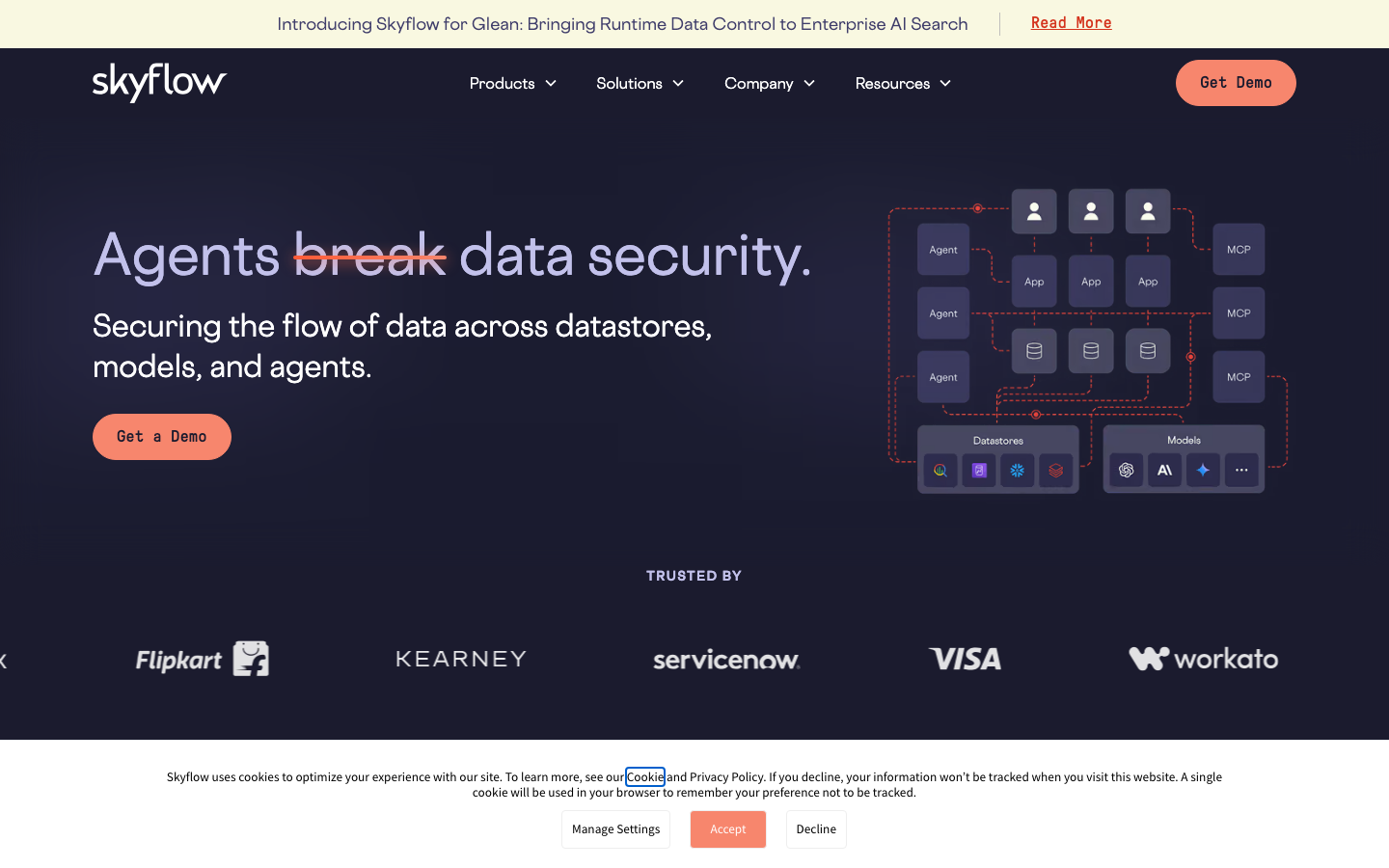
Screenshots of Skyflow 1 images
What's great
- Privacy vault architecture stores each sensitive field in an isolated schema with separate encryption keys and access policies. SSNs, email addresses, passport numbers, and health identifiers live in separate vaults
- Governance Studio defines who can see which fields in which context down to the role-field-operation level. Non-technical compliance officers can audit data access without reading logs
- Residency controls enforce that specific PII stays in specific cloud regions, directly addressing the EU-US data transfer friction that is a live compliance problem in 2026
Watch-outs
- G2 review count is in single digits as of September 2026. The platform quality is strong but the public review corpus is too thin to draw statistical conclusions
- Custom pricing with no public tiers means budget planning requires a sales conversation upfront
- Payment tokenization is secondary to PII vaulting. If your primary need is PCI scope reduction for card data, TokenEx or VGS get there faster
Skyflow’s positioning as a ‘data privacy vault’ rather than a tokenization tool tells you where it fits. The model is not just tokenize-the-field; it is isolate-the-schema. This design is overkill for a team that needs to tokenize card numbers at checkout, and exactly right for a team building a multi-regulation consumer product where different rules govern each field type in each jurisdiction.
The Skyflow Governance Studio is designed for compliance officers as much as developers. Non-technical stakeholders can audit who accessed which field, when, and from which service, without opening a log viewer. That self-service audit trail saves real time during a data access review.
For healthcare companies handling PHI alongside standard PII, or fintech companies with cross-border data residency requirements, Skyflow is the most architecturally coherent solution in this guide. The G2 review count (8 reviews at 4.7/5 as of September 2026) is low; treat the rating as early signal and run a structured POC before committing.
Pricing breakdown
| Plan | Price | Best for |
|---|---|---|
| Starter | Custom | Pre-production and POC |
| Production | Custom | Single-region PII vault deployment |
| Enterprise | Custom | Multi-region, residency controls, dedicated infrastructure |
Security & compliance
| Standard | Availability |
|---|---|
| SOC 2 Type II | Type II |
| GDPR | yes |
| HIPAA | BAA available |
| SSO / SAML | enterprise |
| Audit logs | yes |
Skyflow compliance summary: SOC 2 Type II is type ii, GDPR is yes, HIPAA is baa available, SSO/SAML is enterprise, and audit logs is yes.
Key integrations
| Integration | Type |
|---|---|
| Gmail | N/A |
| Outlook | N/A |
| Slack | N/A |
| LinkedIn Sales Navigator | N/A |
| Outreach / Salesloft | N/A |
Skyflow integration summary: Gmail is not specified, Outlook is not specified, Slack is not specified, LinkedIn Sales Navigator is not specified, and Outreach or Salesloft is not specified.
Feature availability
| Feature | Status |
|---|---|
| Free tier | no |
| Field level access | yes |
| Format preserving | yes |
| Residency controls | yes |
| Vaultless | no |
Skyflow feature availability summary: Free tier (no), Field level access (yes), Format preserving (yes), Residency controls (yes), and Vaultless (no).
What reviewers say about Skyflow
Recurring themes across public G2 and product-review commentary, 2024-2026. Independent review pool is thin (only a handful of rated G2 reviews).
What reviewers praise
- The data privacy vault gets credit for cutting PCI and PII compliance scope fast by isolating sensitive fields from the app database.
- Running the vault inside your own VPC across AWS, GCP, or Azure appeals to teams with data-residency and control requirements.
- Reviewers value being able to run search and SQL analytics over encrypted data rather than choosing between privacy and usability.
- Tokenization paired with fine-grained governance and access control shows up as a differentiator versus a plain token store.
What reviewers fault
- The public review pool is very thin, so buyers have limited independent references to weigh.
- Pricing skews enterprise, which smaller teams notice early in evaluation.
- Standing up the vault takes engineering effort and schema planning rather than a quick portal setup.
Loading reviews…
Very Good Security (VGS)
Best for removing raw card data from your infrastructure using a network-layer proxy
Screenshots of Very Good Security (VGS) 1 images
What's great
- Proxy model means raw card data never enters your infrastructure. VGS intercepts inbound payment data before it reaches your application layer, eliminating PCI audit scope for proxied endpoints entirely
- Outbound routes allow tokenized data to be de-tokenized inline when sending to payment processors, so the rest of your stack never handles PANs at any point in the transaction flow
- Starter package at $1,000/mo includes storage for up to 100 million records, covering most mid-market payment volumes without a custom contract
Watch-outs
- Pricing jumps significantly from Starter to Growth (custom pricing). Companies growing past Starter thresholds have reported unexpected cost increases during contract renewal
- Proxy latency adds 10-30ms per transaction. For standard payments this is negligible; for high-frequency use cases it needs benchmarking
- Route configuration requires understanding HTTP headers and request/response shapes. Compliance teams need an engineer involved for setup and ongoing maintenance
VGS invented the payment proxy model for tokenization and it remains the clearest implementation in the segment. The mental model is simple: VGS sits in front of your payment forms and APIs as a reverse proxy. Raw card data enters the VGS vault, a token comes out, and your application only ever sees the token. This approach does not just reduce PCI scope, it eliminates it for the proxied endpoints entirely.
The comparison with Basis Theory is worth stating directly. Basis Theory requires SDK integration in your application to collect sensitive data. VGS requires no code changes in most implementations because the proxy intercepts at the network layer. For teams with existing payment forms they cannot quickly modify, VGS gets you to compliance faster.
The Starter tier at $1,000/mo covers 100 million stored records. Growth pricing is custom and the jump can be significant based on community reports , so model your volume growth trajectory before signing a long-term contract.
Pricing breakdown
| Plan | Price | Best for |
|---|---|---|
| Free | $0 | Development testing only |
| Starter | $1,000/mo | Up to 100M stored records |
| Growth | Custom | High volume, SLA, advanced features |
Security & compliance
| Standard | Availability |
|---|---|
| SOC 2 Type II | Type II |
| GDPR | yes |
| HIPAA | BAA available |
| SSO / SAML | enterprise |
| Audit logs | yes |
Very Good Security (VGS) compliance summary: SOC 2 Type II is type ii, GDPR is yes, HIPAA is baa available, SSO/SAML is enterprise, and audit logs is yes.
Key integrations
| Integration | Type |
|---|---|
| Gmail | N/A |
| Outlook | N/A |
| Slack | N/A |
| LinkedIn Sales Navigator | N/A |
| Outreach / Salesloft | N/A |
Very Good Security (VGS) integration summary: Gmail is not specified, Outlook is not specified, Slack is not specified, LinkedIn Sales Navigator is not specified, and Outreach or Salesloft is not specified.
Feature availability
| Feature | Status |
|---|---|
| Free tier | dev only |
| Format preserving | yes |
| Network tokens | Growth+ |
| Outbound routes | yes |
| Vaultless | yes proxy |
Very Good Security (VGS) feature availability summary: Free tier (dev only), Format preserving (yes), Network tokens (Growth+), Outbound routes (yes), and Vaultless (yes proxy).
What reviewers say about Very Good Security (VGS)
Recurring themes across ~47 G2 reviews (4.7/5) and public TrustRadius feedback, 2024-2026.
What reviewers praise
- The tokenization proxy is the headline win in reviews, letting teams keep raw card and PII data out of their own systems so PCI scope drops sharply.
- Data encryption capability scores near the top of its category, and reviewers trust it for sensitive payment flows.
- Ease of setup rates well, with users saying the proxy dropped into existing infrastructure without a rebuild.
- Quality of support gets called out, with reviewers describing responsive help during integration.
What reviewers fault
- The proxy and vault configuration carries a learning curve, and a few reviewers wanted deeper documentation for advanced routing setups.
- Because VGS sits in the critical path of the payment flow, some reviewers flag the dependency risk of routing live traffic through a third party.
- Pricing transparency comes up as a gap, with cost climbing as request volume grows.
Loading reviews…
Protegrity
Best for enterprise-wide PII tokenization across cloud, on-premises, and analytics systems simultaneously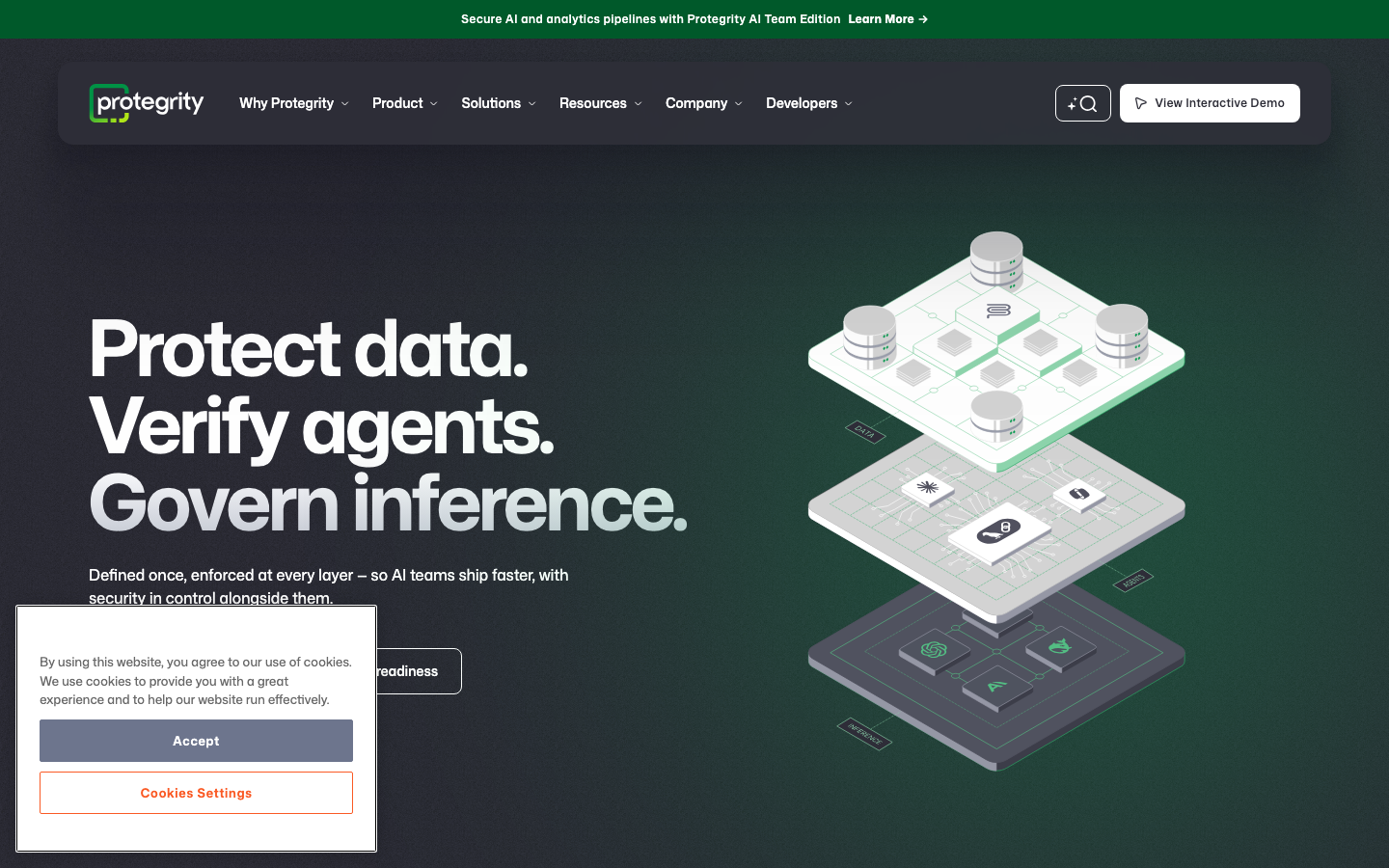
Screenshots of Protegrity 1 images
What's great
- Policy engine handles tokenization rules across Hadoop, Teradata, Oracle, Snowflake, AWS, Azure, and GCP from a single control plane. No other tool in this guide matches that breadth natively
- Both vault-based and format-preserving encryption (FPE) tokenization in the same platform, with the policy engine determining which method applies to which data element in which context
- Integrates at the application layer, database layer, and analytics layer simultaneously, removing the need for separate tokenization tools per environment
Watch-outs
- Implementation timelines are long. Teams on G2 report 3-6 month rollouts for full enterprise deployments
- G2 review count of 14 is low given Protegrity has been in market since 2006
- Pricing is bespoke and large; expect minimum annual contracts in the low six figures for a meaningful enterprise deployment
Protegrity is the tool a head of data security reaches for when the requirement is ’tokenize everything, across every system, under one policy.’ That breadth is real. A single Protegrity deployment can enforce tokenization policy on Oracle production databases, Snowflake analytics clusters, Hadoop data lakes, and Kafka streams using a unified policy definition.
The tradeoff is implementation weight. A Protegrity rollout is a project, not a configuration exercise. Teams on TrustRadius describe 3-6 month timelines as standard for a mid-sized enterprise, requiring dedicated internal resources or a professional services engagement.
This is not the right call for a 150-person fintech that needs PCI compliance in six weeks. It is the right call for a 3,000-person financial services company that needs to retrofit tokenization across a hybrid data estate built over 20 years.
Pricing breakdown
| Plan | Price | Best for |
|---|---|---|
| Mid-Market | Custom | 500-2,000 employee organizations |
| Enterprise | Custom | 2,000+ employee organizations, hybrid data estates |
| Global Enterprise | Custom | Multi-region, multi-cloud, regulatory complexity |
Security & compliance
| Standard | Availability |
|---|---|
| SOC 2 Type II | Type II |
| GDPR | yes |
| HIPAA | BAA available |
| SSO / SAML | enterprise |
| Audit logs | yes |
Protegrity compliance summary: SOC 2 Type II is type ii, GDPR is yes, HIPAA is baa available, SSO/SAML is enterprise, and audit logs is yes.
Key integrations
| Integration | Type |
|---|---|
| Gmail | N/A |
| Outlook | N/A |
| Slack | N/A |
| LinkedIn Sales Navigator | N/A |
| Outreach / Salesloft | N/A |
Protegrity integration summary: Gmail is not specified, Outlook is not specified, Slack is not specified, LinkedIn Sales Navigator is not specified, and Outreach or Salesloft is not specified.
Feature availability
| Feature | Status |
|---|---|
| Free tier | no |
| Analytics tokenization | yes |
| Enterprise policy engine | yes |
| Format preserving | yes |
| Vaultless | yes |
Protegrity feature availability summary: Free tier (no), Analytics tokenization (yes), Enterprise policy engine (yes), Format preserving (yes), and Vaultless (yes).
Loading reviews…
Baffle
Best for tokenizing data inside existing databases without application code changes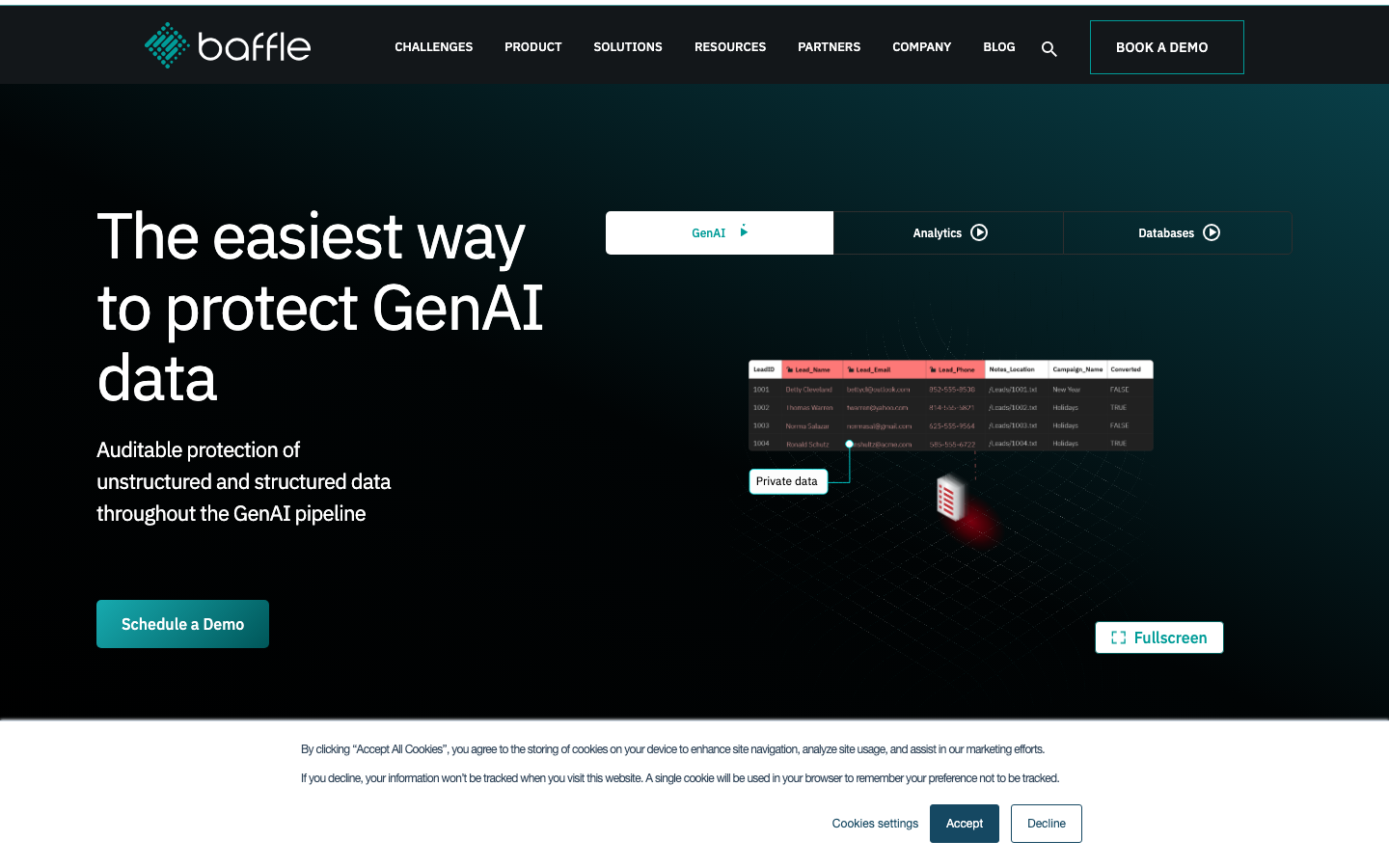
Screenshots of Baffle 1 images
What's great
- Tokenization applied at the database proxy layer without application code changes. The key differentiator for teams with legacy applications that cannot be quickly refactored
- Format-preserving tokenization combined with reference token mapping lets protected fields pass through analytics pipelines without downstream query changes
- Supports AWS, Azure, and GCP natively with deployment via Terraform or CloudFormation templates that fit into standard infrastructure-as-code workflows
Watch-outs
- Review corpus is thin (fewer than 10 verified Capterra reviews). Public evidence on implementation edge cases and support quality at scale is limited
- Database proxy adds latency overhead. Teams with sub-5ms OLTP query requirements should benchmark carefully before committing to production
- No native payment gateway integrations; teams needing PCI scope reduction on payment card flows need a complementary solution
Baffle solves the problem most tokenization projects hit at implementation: the code change requirement. Most platforms require application modification to call their API before sensitive data is written to the database. Baffle inverts this by sitting as a proxy between your application and your database, applying tokenization at the storage layer without touching application code.
A Baffle deployment can protect sensitive fields in a legacy Oracle application that has not been refactored in eight years, without opening a ticket with the engineering team. The practical difference between a three-week project and a three-month one is often exactly this.
The limitation is on the payment side. Baffle is purpose-built for database-layer protection, not payment proxy tokenization. If you need both, you are looking at two tools, and that is worth knowing before you start the evaluation.
Pricing breakdown
| Plan | Price | Best for |
|---|---|---|
| Growth | Custom | Single cloud environment, up to 10 databases |
| Enterprise | Custom | Multi-cloud, unlimited databases, advanced analytics |
Security & compliance
| Standard | Availability |
|---|---|
| SOC 2 Type II | Type II |
| GDPR | yes |
| HIPAA | yes |
| SSO / SAML | enterprise |
| Audit logs | yes |
Baffle compliance summary: SOC 2 Type II is type ii, GDPR is yes, HIPAA is yes, SSO/SAML is enterprise, and audit logs is yes.
Key integrations
| Integration | Type |
|---|---|
| Gmail | N/A |
| Outlook | N/A |
| Slack | N/A |
| LinkedIn Sales Navigator | N/A |
| Outreach / Salesloft | N/A |
Baffle integration summary: Gmail is not specified, Outlook is not specified, Slack is not specified, LinkedIn Sales Navigator is not specified, and Outreach or Salesloft is not specified.
Feature availability
| Feature | Status |
|---|---|
| Free tier | no |
| Analytics passthrough | yes |
| Format preserving | yes |
| No code deploy | yes |
| Vaultless | proxy-based |
Baffle feature availability summary: Free tier (no), Analytics passthrough (yes), Format preserving (yes), No code deploy (yes), and Vaultless (proxy-based).
Loading reviews…
Voltage Security (OpenText)
Best for petabyte-scale stateless tokenization without a token database at any volume
Screenshots of Voltage Security (OpenText) 1 images
What's great
- Patented Secure Stateless Tokenization (SST) generates tokens cryptographically without any token database, eliminating the token-store as a secondary high-value attack target entirely
- Designed for petabyte-scale data estates. Payments, analytics data lakes, and cloud storage can all be tokenized under the same SST policy engine
- OpenText enterprise procurement relationships and support SLAs that purely independent vendors cannot match
Watch-outs
- Now part of OpenText, which means the product roadmap and support quality are subject to large-acquirer integration decisions. Roadmap visibility post-acquisition is reduced
- Implementation requires professional services or a certified partner; self-serve deployment is not realistic for most teams
- Modern developer experience lags behind purpose-built SaaS tools; the API and SDK quality reflect a product originally built for on-premises enterprise
Voltage SecureData, now part of OpenText, pioneered stateless tokenization through its patented SST architecture. The core insight: the conventional token database is itself a security liability. Tokenize a billion records and you have created a billion-row mapping table as valuable to an attacker as the original data. SST eliminates that table by deriving tokens mathematically from the original value using cryptographic keys under your control.
This architecture is why large financial institutions and healthcare systems with petabyte-scale data estates end up evaluating Voltage. The performance characteristics of stateless tokenization at volume are genuinely different from vault-based approaches, and the math holds at any scale.
The concern in 2026 is the OpenText integration trajectory. Teams investing in a multi-year tokenization architecture want roadmap confidence, and large acquirer consolidation does not always produce it. Get explicit commitments on support continuity and roadmap milestones during contract negotiations.
Pricing breakdown
| Plan | Price | Best for |
|---|---|---|
| Mid-Market | Custom | 500M-10B annual transactions |
| Enterprise | Custom | 10B+ annual transactions, multi-environment |
Security & compliance
| Standard | Availability |
|---|---|
| SOC 2 Type II | yes |
| GDPR | yes |
| HIPAA | BAA available |
| SSO / SAML | enterprise |
| Audit logs | yes |
Voltage Security (OpenText) compliance summary: SOC 2 Type II is yes, GDPR is yes, HIPAA is baa available, SSO/SAML is enterprise, and audit logs is yes.
Key integrations
| Integration | Type |
|---|---|
| Gmail | N/A |
| Outlook | N/A |
| Slack | N/A |
| LinkedIn Sales Navigator | N/A |
| Outreach / Salesloft | N/A |
Voltage Security (OpenText) integration summary: Gmail is not specified, Outlook is not specified, Slack is not specified, LinkedIn Sales Navigator is not specified, and Outreach or Salesloft is not specified.
Feature availability
| Feature | Status |
|---|---|
| Free tier | no |
| Format preserving | yes |
| On premises | yes |
| Stateless | yes patented |
| Vaultless | yes SST |
Voltage Security (OpenText) feature availability summary: Free tier (no), Format preserving (yes), On premises (yes), Stateless (yes patented), and Vaultless (yes SST).
Loading reviews…
Spreedly
Best for payments orchestration teams vaulting payment methods across 100-plus gateways
Screenshots of Spreedly 1 images
What's great
- A single Spreedly vault token can transact against 100+ payment gateways without re-entering card data. For businesses routing payments across regions or backup processors this is the clearest fit in the guide
- [31 G2 reviews](https://www.g2.com/products/spreedly/reviews) average 4.6/5, with recurring praise for gateway breadth and support quality during integration
- Payments orchestration features (smart routing, retry logic, gateway failover) bundled alongside the tokenization vault, reducing the number of separate tools in the payment stack
Watch-outs
- Starting price around $2,000/mo positions this above developer-native alternatives for pure tokenization use cases
- Dashboard UI is slow and analytics features lag behind the transaction routing capabilities per G2 reviewers
- A mid-market company described an unexpected price increase from $6,000 to over $16,000 monthly without advance notice in a G2 review. Read the usage-based scaling clauses before signing
Spreedly is not competing with pure data tokenization tools like TokenEx or Baffle. It is a payments orchestration platform with a tokenization vault at its core. That distinction matters: if you are trying to tokenize PHI in a healthcare database, Spreedly is the wrong tool. If you are retaining payment methods across gateway switches, it is the best option in this guide.
The 100+ gateway connections are the product. A business processing payments in Latin America needs local acquirers for approval rate optimization, and Spreedly lets that business vault a card once and route it to Stripe, a local Brazilian acquirer, and a backup US processor from a single token.
Read the overage clauses before you sign, and model the cost at 2x and 5x your current transaction volume before committing to an annual contract.
Pricing breakdown
| Plan | Price | Best for |
|---|---|---|
| Starter | $2,000/mo | Early-stage, up to 5 gateways |
| Growth | Custom | Mid-market, up to 25 gateways |
| Enterprise | Custom | 100+ gateways, dedicated infrastructure |
Security & compliance
| Standard | Availability |
|---|---|
| SOC 2 Type II | Type II |
| GDPR | yes |
| HIPAA | no |
| SSO / SAML | enterprise |
| Audit logs | yes |
Spreedly compliance summary: SOC 2 Type II is type ii, GDPR is yes, HIPAA is no, SSO/SAML is enterprise, and audit logs is yes.
Key integrations
| Integration | Type |
|---|---|
| Gmail | N/A |
| Outlook | N/A |
| Slack | N/A |
| LinkedIn Sales Navigator | N/A |
| Outreach / Salesloft | N/A |
Spreedly integration summary: Gmail is not specified, Outlook is not specified, Slack is not specified, LinkedIn Sales Navigator is not specified, and Outreach or Salesloft is not specified.
Feature availability
| Feature | Status |
|---|---|
| Free tier | no |
| Format preserving | yes |
| Gateway routing | yes 100+ |
| Retry logic | yes |
| Vaultless | no |
Spreedly feature availability summary: Free tier (no), Format preserving (yes), Gateway routing (yes 100+), Retry logic (yes), and Vaultless (no).
Loading reviews…
Privacera
Best for data governance teams needing tokenization governed by the same policy as data access control
Screenshots of Privacera 1 images
What's great
- Unified platform for data access governance, dynamic data masking, and tokenization across Databricks, Snowflake, AWS, Azure, and GCP. Tokenization is governed by the same policy engine as access control
- Ranger-based policy engine is familiar to data engineering teams already using Apache Ranger or Databricks Unity Catalog, reducing the learning curve
- Native Databricks integration is tighter than any other tool in this guide. Tokenization and access policy enforcement at the Databricks workspace layer without external proxy setup
Watch-outs
- Tokenization is a secondary feature; teams with pure tokenization requirements pay for capabilities they will not use
- Implementation is complex; Privacera is a platform, not a point solution, and initial setup requires dedicated data engineering time
- Customer support response times on G2 vary significantly between enterprise SLA tiers and standard tiers
Privacera, founded by the creators of Apache Ranger, treats tokenization as one enforcement action within a unified data governance policy. The same policy that says ‘only the fraud team can see full SSNs’ can also say ‘analysts get tokenized SSNs, and the raw SSN never appears in the analytics environment.’
This model works best for companies that have already invested in a cloud data platform (Snowflake, Databricks, or AWS Lake Formation) and need to retrofit both access control and data protection consistently. The G2 profile shows 42 reviews at 4.5/5, with positive patterns around Databricks integration depth and negative patterns around implementation complexity.
If your organization’s problem is ‘we need to govern who sees sensitive data and also tokenize it for the analytics tier,’ Privacera solves both without two vendor contracts. If the problem is ‘we need to reduce PCI scope for payment cards,’ it is not the right tool.
Pricing breakdown
| Plan | Price | Best for |
|---|---|---|
| Team | Custom | Single cloud platform, up to 3 environments |
| Business | Custom | Multi-cloud, enterprise RBAC |
| Enterprise | Custom | Global, multi-region, advanced compliance |
Security & compliance
| Standard | Availability |
|---|---|
| SOC 2 Type II | Type II |
| GDPR | yes |
| HIPAA | yes |
| SSO / SAML | enterprise |
| Audit logs | yes |
Privacera compliance summary: SOC 2 Type II is type ii, GDPR is yes, HIPAA is yes, SSO/SAML is enterprise, and audit logs is yes.
Key integrations
| Integration | Type |
|---|---|
| Gmail | N/A |
| Outlook | N/A |
| Slack | N/A |
| LinkedIn Sales Navigator | N/A |
| Outreach / Salesloft | N/A |
Privacera integration summary: Gmail is not specified, Outlook is not specified, Slack is not specified, LinkedIn Sales Navigator is not specified, and Outreach or Salesloft is not specified.
Feature availability
| Feature | Status |
|---|---|
| Free tier | no |
| Access governance | yes |
| Format preserving | yes |
| Ranger based | yes |
| Vaultless | no |
Privacera feature availability summary: Free tier (no), Access governance (yes), Format preserving (yes), Ranger based (yes), and Vaultless (no).
Loading reviews…
More top-rated Data Tokenization Software worth checking out
Highly rated Data Tokenization Software that didn't crack our top 10 but are still strong contenders, especially for specific use cases and team sizes.
Thales CipherTrust
For enterprises needing unified key management and tokenization in one HSM-backed platform
Standout: CipherTrust combines key management (KMIP standard), tokenization, and data discovery in one console. Right architecture for enterprises running an HSM estate
Imperva
For database security teams wanting tokenization alongside real-time activity monitoring
Standout: Database Activity Monitoring and tokenization in one platform. Single audit trail covering both data access events and tokenization policy enforcement
DataMasque
For teams needing realistic test data generation alongside production data masking
Standout: Realistic test data generation alongside masking means QA environments get statistically valid masked data, not obviously fake records that break test coverage
Delphix
For data platform teams provisioning masked development environments from production snapshots at scale
Standout: Data virtualization combined with masking allows development environments to be provisioned in minutes from production snapshots with PII masked automatically at provisioning time
IRI FieldShield
For compliance teams needing field-level masking and tokenization on structured files and legacy databases
Standout: One of the lower starting prices in this guide at around $500/mo, accessible for mid-market compliance teams that cannot justify six-figure enterprise contracts
AWS Macie
For AWS-native teams automating PII discovery to accurately scope a tokenization project
Standout: PII discovery and classification across all S3 buckets is the prerequisite step before any tokenization project. Teams that skip this step typically under-scope their tokenization work significantly
Informatica
For enterprise data governance teams needing tokenization within a broader MDM and data catalog stack
Standout: Largest G2 review count in this guide (312 reviews), providing the most statistically confident rating of any tool listed here
IBM Guardium
For regulated enterprises needing database security and tokenization within an existing IBM contract
Standout: IBM Guardium Data Encryption includes tokenization alongside database activity monitoring, file-level encryption, and compliance reporting in one platform
Varonis
For security teams remediating over-exposed sensitive data before or alongside a tokenization deployment
Standout: Automated remediation of sensitive data exposure. Varonis can automatically tighten permissions on over-exposed PII without requiring a manual ticket per file
Comforte AG
For hybrid enterprises tokenizing data across cloud and HPE NonStop mainframe systems simultaneously
Standout: Native HPE NonStop mainframe tokenization coverage is genuinely rare. Most modern tokenization platforms have no mainframe story; enterprises running retail payment processing on NonStop need this
Tools we considered but excluded
We evaluated more tools than the 20 you see above. These did not make the cut. Saying what we rejected, and why, is the editorial muscle most listicles skip.
- TokenBridge: UK-based financial asset tokenization platform for fund and model portfolio management, not a data security or PII tokenization tool and wrong category for this guide.
- HashiCorp Vault (IBM Vault): Secrets management platform; tokenization requires custom engineering work and is not a native feature, making it unsuitable as a dedicated tokenization solution.
- Salesforce Shield: PII tokenization within Salesforce CRM data only; no cross-system or cross-database tokenization capability outside the Salesforce environment.
- Google Cloud DLP: Data loss prevention and de-identification platform; tokenization is one technique among many, not the primary use case, and lacks payment gateway integration.
- Azure Purview (Microsoft Purview): Data governance and classification platform; does not provide production tokenization for PCI scope reduction.
Honorable mentions
Solid tools that did not crack the main list but are worth tracking, especially for niche use cases.
- Titaniam: Encryption-in-use and tokenization startup with strong VC backing; worth tracking as the product matures toward enterprise-readiness in 2027.
- Anonomatic: Purpose-built PII tokenization platform with a free tier; early stage but the developer experience is genuinely good for teams needing simple PII vault functionality.
- Securiti.ai: Data security posture management platform with tokenization within a broader data privacy workflow; strong momentum in the DSPM category in 2026.
The data tokenization landscape in 20 tools
Data tokenization software splits into five segments. Your evaluation should start by identifying which segment you are actually in. Buying the wrong type is the most common mistake in this category.
Payment card tokenization is the oldest and most mature segment. Tools like Enigma Vault, TokenEx, VGS, and Spreedly exist primarily to reduce PCI DSS scope by replacing raw card numbers with tokens before they reach your application or database. A properly implemented payment tokenization solution can reduce your PCI scope from SAQ D to SAQ A, cutting annual compliance overhead substantially.
Developer-native PII vaulting is the fastest-growing segment. Basis Theory and Skyflow are the clearest examples. These platforms provide SDKs and APIs that let engineering teams collect and store sensitive data (emails, SSNs, passport numbers, health identifiers) in an isolated vault, with the application only ever seeing a token. The design pattern is particularly appealing to modern SaaS companies building multi-regulation products from scratch.
Enterprise-wide policy tokenization covers tools like Protegrity and Voltage Security, which apply tokenization policy across entire data estates: production databases, data warehouses, analytics clusters, and file systems, all governed from a single policy console. The target buyer is a large financial services or healthcare company with a complex hybrid data environment built over decades.
Database-layer masking with tokenization includes Baffle, DataMasque, and Delphix. These tools protect sensitive data at or near the database layer, sometimes without any application code changes. The primary use cases are protecting non-production environments and securing analytics pipelines where raw PII should not appear.
Data security platforms with tokenization are the broadest segment. Thales CipherTrust, IBM Guardium, Imperva, and Informatica all include tokenization as one feature within a full-stack data security platform. The tokenization depth is generally lower than purpose-built tools, but the platform-level value proposition appeals to enterprises that want fewer vendor relationships.
What I check in every data tokenization demo
One, tokenization type coverage. Ask the vendor to demonstrate tokenization on your actual data types in a sandbox, not a prepared demo dataset. Card numbers are easy. Show me SSNs with format preservation. Show me custom PII fields that the out-of-box classifier does not recognize. The gap between “we support custom data types” and “we support them without significant configuration work” is real and only shows up when you bring your own data.
Two, the de-tokenization access model. Find out exactly who and what can retrieve the original value. In some platforms, any service with the right API key can de-tokenize. In others (Skyflow, Privacera), you define role-field-operation policies. Ask the vendor to walk you through the access control model for a production breach scenario where an attacker has compromised an internal service account.
Three, PCI scope reduction evidence. If PCI scope reduction is the goal, ask for a completed SAQ or QSA letter from a reference customer with a similar architecture. Vendors can claim scope reduction; QSA evidence proves it. Enigma Vault and TokenEx both publish PCI responsibility documentation. Tools that cannot show you this during the evaluation have not done it yet in a real deployment.
Four, gateway connection verification. For payment tokenization, verify your specific gateway is natively supported, not just “supported via custom integration.” Native means the vendor maintains the connector. Custom integration means you do. Check the gateway list against your current processor and your backup processor before any other evaluation step.
Five, latency under your production volume. Run a load test in the sandbox with token volumes equal to your peak production traffic, not average traffic. Peak volume during a promotional event can be 10-20x the average day; your tokenization layer needs to hold at that load without adding noticeable latency to payment flows.
Six, key management custody. Understand where the encryption keys live and who controls them. Customer-managed keys (Enigma Vault, Voltage SST, Thales CipherTrust) mean the vendor has zero ability to access your original data. Vendor-managed keys are more convenient but create a trust dependency. Regulated industries frequently require customer key custody; confirm the option exists before you get to contract.
Seven, audit log export format. Your SIEM needs to ingest tokenization events. Ask for a sample log export and verify it parses cleanly into your SIEM before signing the contract.
How to choose the right data tokenization tool for your team
1. Primary compliance driver
PCI scope reduction for card data narrows the field quickly to Enigma Vault, TokenEx, VGS, Basis Theory, and Spreedly. HIPAA PHI protection points toward Skyflow, Protegrity, or Enigma Vault. GDPR and EU data residency requirements are best handled by Skyflow’s residency controls or Protegrity’s regional deployment options. Trying to satisfy all three simultaneously across a large data estate makes Enigma Vault or Protegrity the only options with acceptable coverage depth.
2. Development team capacity for integration
Basis Theory, VGS, and Skyflow are built for developer-first integration and can go from signup to production tokenization in days with a small team. Protegrity, Thales CipherTrust, and IBM Guardium are implementations that require dedicated security engineering resources, a project plan, and in most cases a professional services engagement. Match the implementation model to the team you actually have, not the team you plan to hire.
3. Existing data estate topology
Cloud-native stacks fit better with Basis Theory, Skyflow, Baffle, or Privacera. Hybrid estates with on-premises Oracle, SQL Server, or mainframe systems need Protegrity, Voltage Security, or Comforte. Companies running HPE NonStop for payments processing have essentially one reasonable choice: Comforte, because nobody else in this guide supports that environment natively.
4. Data type diversity in scope
If you need to tokenize only card numbers for PCI, most tools in the top 10 cover that. If you need card numbers, SSNs, uploaded files, custom NoPII fields, and ACH data under one policy console and one audit trail, Enigma Vault is the only tool built for that breadth from the ground up. Fewer vendor contracts, fewer integration points, and a single place to answer “where is this person’s sensitive data?” in a regulatory inquiry.
5. Transaction volume and cost model
At low-to-mid volume, Basis Theory’s $995/mo flat model is almost certainly the cheapest option. At high volume where per-API-call pricing would be significant, the flat-rate model’s value compounds quickly. Enigma Vault, TokenEx, and VGS at custom pricing scale with your volume, which requires modeling your growth trajectory before comparing total cost of ownership across a three-year contract.
Quick decision guide
Series A-B fintech building payments from scratch: Basis Theory at $995/mo flat. PCI Level 1 vault, developer-native, fastest time to compliance in the segment.
Mid-market company with diverse data types needing one certified platform: Enigma Vault. PCI Level 1 plus ISO 27001, card plus file plus PII plus NoPII in one vault, customer-controlled keys.
Mid-market payments company with multiple gateways: TokenEx. 250+ native gateway connections, vaultless tokenization, the broadest PCI scope reduction in this guide.
Consumer app handling PII across multiple jurisdictions: Skyflow. Data residency controls and field-level access governance built for this exact problem.
Payment-heavy business needing proxy tokenization without application code changes: VGS. Proxy model removes raw card data from your infrastructure before it reaches your application.
3,000+ person enterprise with hybrid data estate: Protegrity. The only tool here that governs tokenization policy across Teradata, Snowflake, Oracle, and AWS simultaneously.
Company running HPE NonStop mainframe payments: Comforte AG. No other tool in this guide supports that environment natively.
DevOps team building PCI-compliant test environments: DataMasque or Delphix. Both handle production data masking for non-production environments with referential integrity preservation.
AWS-native team starting a tokenization program: AWS Macie first to scope the problem, then Basis Theory or Baffle depending on whether the primary need is API tokenization or database-layer protection.
Enterprise already standardized on IBM infrastructure: IBM Guardium. The procurement path is easier than introducing a new vendor, and the tokenization depth is adequate for most regulatory requirements.
What’s changing in data tokenization in 2026
AI workloads are creating new tokenization scope. Large language models ingesting customer data for inference or fine-tuning create a new category of sensitive data exposure that existing PCI and HIPAA frameworks did not anticipate. Compliance teams are starting to ask whether PII fed to LLMs needs to be tokenized before the inference call.
Skyflow and Basis Theory are both shipping integrations that allow tokenized data to be sent to LLM APIs with de-tokenization happening only at the application response layer. This is early-stage but it is the next compliance frontier.
Vaultless tokenization is gaining regulatory acceptance under PCI DSS 4.0. For years, some QSAs treated vault-based tokenization as the only accepted model for PCI scope reduction. The PCI SSC has clarified its guidance, and vaultless format-preserving encryption and stateless tokenization are now explicitly accepted under PCI DSS 4.0.
This makes TokenEx and Voltage SST more defensible in audits than they were two years ago, and it makes the data-type-diverse approach of Enigma Vault more straightforward to explain to a QSA.
Data security posture management is absorbing tokenization. DSPM platforms like Varonis, Securiti.ai, and Wiz are expanding from discovery into remediation, including tokenization of over-exposed sensitive data. This trend will continue in 2026-2027. Privacera has already done this effectively for cloud data platforms. Pure-play tokenization vendors will need to either build discovery and classification features or position as the enforcement layer behind a DSPM platform.
Payment network tokens are reshaping the gateway integration story. Visa Token Service (VTS) and Mastercard Digital Enablement Service (MDES) issue network tokens accepted by the card networks themselves. Spreedly, TokenEx, and VGS are all adding network token orchestration features. That means your tokenization vendor is now also managing the relationship between your stored payment method and the card networks, a meaningful shift in what tokenization platforms are being asked to do.
Quantum-resistant tokenization is in early discussion. NIST finalized its post-quantum cryptography standards in 2024, and the first compliance frameworks requiring quantum-resistant algorithms for sensitive data protection are beginning to appear.
Most tokenization vendors are watching rather than shipping; Thales and IBM are furthest along given their hardware cryptography backgrounds. This is a 2027-2028 procurement consideration, not a 2026 decision driver, but it belongs in any long-term architecture conversation.
Corrections and pricing updates go to editorial@topickz.com . This page is reviewed quarterly; pricing and ratings were last verified September 30, 2026.
Frequently asked questions
What is data tokenization software?
Tokenization replaces sensitive data (card numbers, SSNs, PHI) with a non-sensitive token. The original value stays in the vault, reducing your PCI, HIPAA, and GDPR compliance scope.
What is the difference between tokenization and encryption?
Encrypted data is mathematically reversible with the right key. A token has no mathematical relationship to the original; only the vault can reverse it using a stored mapping.
Which tokenization tool is best for PCI DSS compliance?
Enigma Vault or TokenEx for broadest coverage. Basis Theory at $995/mo for developer teams. VGS for proxy-based card removal from your infrastructure entirely.
Does data tokenization software work for HIPAA compliance?
Yes. Enigma Vault, Skyflow, Protegrity, and Basis Theory all offer HIPAA BAA agreements. Spreedly does not support PHI use cases.
What is the difference between vault-based and vaultless tokenization?
Vault-based stores a token-to-original mapping in a database. Vaultless generates tokens mathematically, eliminating the mapping database and its attack surface entirely.
How much does data tokenization software cost?
Basis Theory starts at $995/mo flat. VGS starts at $1,000/mo. Most enterprise tools (Enigma Vault, TokenEx, Protegrity, Skyflow) require custom pricing calls.
Can tokenization handle both PCI and GDPR requirements simultaneously?
Yes. Skyflow handles EU data residency best for GDPR. Enigma Vault and TokenEx cover PCI most with the most coverage. Protegrity covers both at enterprise scale.
What is format-preserving tokenization?
FPE replaces a 16-digit card number with a different 16-digit token that passes downstream validation checks, used when systems cannot accept non-numeric or shorter tokens.
How long does a data tokenization implementation typically take?
Developer-native tools like Basis Theory or VGS: 2-4 weeks. Enterprise platforms like Protegrity or Voltage: 3-6 months with professional services required.
Is there a free data tokenization tool?
Basis Theory offers a free sandbox. AWS Macie offers a 30-day trial for PII discovery. No production-grade tokenization platform has a permanent free tier.
Related helpful reads
Write a review
Posts to the page right away. Keep it real — no links or email addresses.