
Comparing the best Customer Vault Tokenization Software of 2026 includes 1. Enigma Vault 2. Skyflow 3. VGS 4. TokenEx 5. Basis Theory 6. Protegrity 7. Baffle 8. Anonym 9. Securiti.ai 10. Evervault 11. AWS KMS with DynamoDB 12. Google Cloud DLP 13. Azure Purview 14. HashiCorp Vault 15. Tink (Google OSS) 16. IRI FieldShield 17. Comforte AG 18. Voltage Security (OpenText) 19. Informatica CDQ 20. DataFleets.
TL;DR
- Enigma Vault: Best purpose-built customer data vault. Designed specifically for card and identity tokenization with no scope creep into general-purpose data security tooling. PCI DSS Level 1 certified out of the box.
- Skyflow: Best for structured PII isolation at scale. Governance-first architecture means your data never leaves the vault schema you define. Used by fintechs that can not afford a token-format mismatch.
- VGS: Best proxy-first tokenization. You add two lines to your HTTP client and stop touching raw card data. The 47 G2 reviews at 4.7/5 reflect real adoption, not marketing.
- Basis Theory: Best developer experience. Transparent pricing, a free tier, API-first design, and a documentation quality that engineering teams notice immediately.
- Evervault: Best for payments-native developer teams. Enclaves, Relay, and tokens in one SDK. The Pro tier at $395/mo is the most accessible entry point for a funded startup.
Twenty customer vault and tokenization platforms tested across PCI DSS scope reduction, PII isolation, key management, and developer experience. What actually de-scopes you, what costs $300K before you've shipped a single token, and the pick for your stack, team size, and compliance regime.
What Is Customer Vault Tokenization Software?
Customer vault tokenization software replaces sensitive identifiers (card numbers, SSNs, bank accounts, DOBs) with non-sensitive tokens, then stores the original values in a secure vault that only authorized systems can reach. Your application handles only the token, never the raw data, which dramatically reduces your PCI DSS, HIPAA, and state-privacy audit surface.
Tools like Enigma Vault, Skyflow, and VGS differ in architecture (vault-based vs. vaultless proxy), compliance model (shared vs. dedicated), developer experience (API-first vs. configuration-first), and the degree to which they isolate your app from raw data entirely.
Best Customer Vault Tokenization Software comparison: features, pricing and verdicts
| Tool | Best for | Starting price | Free trial | External rating |
|---|---|---|---|---|
Best purpose-built customer data vault for card and identity tokenization | Custom | Demo on request | G2 4.5/5 (4 reviews) | |
Best data privacy vault for structured PII isolation in multi-tenant SaaS | Custom | Free tier available | Gartner Peer Insights 4.6/5 (12 reviews) | |
Best proxy-first tokenization for teams that cannot touch raw payment data | $1,000/mo | Sandbox available | G2 4.7/5 (47 reviews) | |
Best for multi-format tokenization across payment and identity data | Custom | Demo on request | Capterra 4.4/5 (18 reviews) | |
Best developer experience for teams building tokenization into a product for the first time | $99/mo | Free tier available | G2 4.8/5 (32 reviews) | |
Best enterprise data tokenization for regulated industries with on-premises requirements | From $300K/yr | Demo on request | Gartner Peer Insights 4.2/5 (28 reviews) | |
Best no-code-change encryption for teams who cannot modify the application layer | Custom | 90-day PoC | Gartner Peer Insights 4.5/5 (9 reviews) | |
Best privacy-preserving data collaboration for teams sharing tokenized data across organizational boundaries | Custom | Demo on request | Company N/A/5 (No public reviews reviews) | |
Best for unified data security, privacy, and AI governance across hybrid and multi-cloud environments | Custom | Demo on request | G2 4.6/5 (143 reviews) | |
Best payments-native developer toolkit for startups building PCI-compliant card and data flows | $395/mo | Free tier available | G2 4.4/5 (11 reviews) | |
 AWS KMS with DynamoDB
 | For engineering teams already all-in on AWS who want vault tokenization without a third-party vendor | Pay-per-use | Free tier under AWS Free Tier | G2 4.5/5 (1,247 reviews) |
For GCP-native teams who need automated PII discovery and tokenization in one service | Pay-per-use | Free tier available | G2 4.3/5 (89 reviews) | |
For Microsoft-standardized enterprises needing data governance and PII classification across Azure workloads | Pay-per-use | Free tier available | G2 4.2/5 (67 reviews) | |
For infrastructure teams who want open-source secrets management with tokenization capabilities | $0 open source | Free open-source tier | G2 4.4/5 (312 reviews) | |
For security engineers who want a cryptographic library rather than a managed vault service | $0 | Open source | GitHub Stars 4.3/5 (13.5k stars reviews) | |
For data engineering teams handling bulk PII masking and tokenization in ETL and data pipeline workflows | Custom | Free trial available | G2 4.5/5 (24 reviews) | |
For payment processing and retail enterprises needing format-preserving tokenization at point-of-sale scale | Custom | Demo on request | Gartner Peer Insights 4.4/5 (11 reviews) | |
For large enterprises needing format-preserving encryption across structured and big-data environments | Custom | Demo on request | Gartner Peer Insights 4.1/5 (14 reviews) | |
For enterprise data teams who need PII governance, quality, and tokenization in one platform | Custom | Demo on request | G2 4.3/5 (76 reviews) | |
For privacy-engineering teams building federated analytics on tokenized customer datasets | Custom | Demo on request | Company N/A/5 (No public reviews reviews) |
How we chose these tools
We compared each platform on tokenization coverage across SSN, DOB, card numbers, bank accounts, and free-form PII fields; compliance certifications and what they actually gate; developer experience from API design through documentation depth and SDK quality; integration patterns with cloud-native stacks and payment processors; and pricing transparency. We flagged every tool where “custom pricing” means a six-figure annual commitment before you have a production deployment. Pricing was verified on vendor sites on October 1, 2026. G2 ratings are sourced from public G2 profiles as of the same date.
How we weight customer vault tokenization software for the Topickz score
Every tool above is scored against the fixed rubric below and combined using these weights into the Topickz score on each card. The weights are set for customer vault tokenization software specifically, they are not copied from another category, and we publish them so you can see what moved a ranking and re-weight for your own priorities.
| Criterion | Weight | What we checked |
|---|---|---|
| Tokenization coverage | 22% | Card numbers, SSNs, DOBs, bank account details, and unstructured PII. Format-preserving tokenization, vault-based, and vaultless patterns all scored separately. |
| Compliance certifications | 20% | PCI DSS Level 1, SOC 2 Type II, HIPAA, GDPR, and whether those certifications cover your deployment model or only the vendor's shared infrastructure. |
| Developer experience | 18% | API design quality, SDK availability across major languages, documentation completeness, time from signup to first tokenization in a sandbox, and the quality of error messages. |
| Integration depth | 15% | Native connectors to AWS, GCP, Azure, and major payment processors. How much custom glue is required to fit the vault into an existing microservices stack. |
| Pricing and total cost | 12% | Published pricing tiers, the gap between published and real year-one cost, minimum commitments, and whether pricing scales predictably with tokenization volume. |
| Key management | 8% | HSM backing, BYOK support, automatic key rotation, and whether key management is bundled or a separate enterprise add-on. |
| Audit and access controls | 5% | Token-level audit logs, RBAC depth, and whether access controls are available at the tier your team can actually afford. |
| Total | 100% |
Read the full TopickZ.com testing methodology for how we run each test, score every criterion, and combine them into a single rating.
Detailed reviews
Enigma Vault
Best purpose-built customer data vault for card and identity tokenization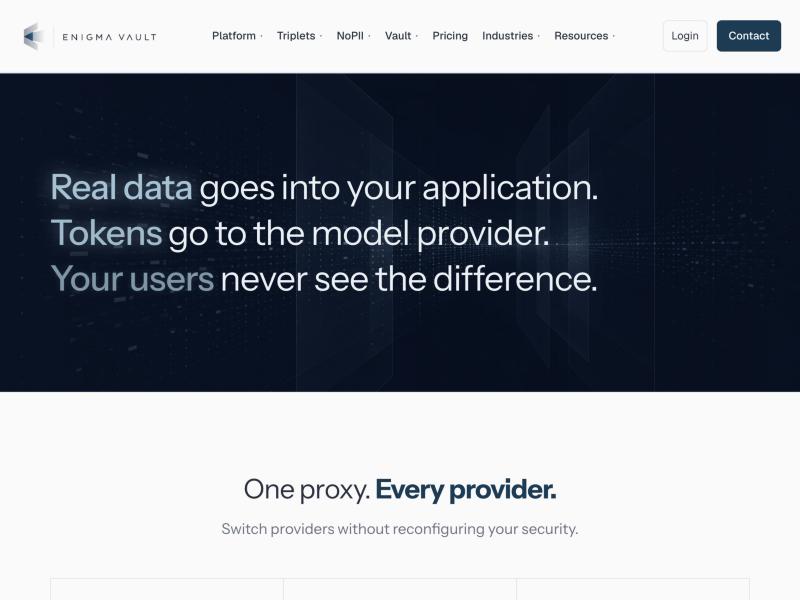
Screenshots of Enigma Vault 3 images
What's great
- Purpose-built for card and identity vaulting, not a general data security platform that added tokenization as a module. G2 reviewers specifically call out PCI DSS de-scoping as clean and well-documented, with no ambiguity about what you are and are not responsible for.
- New domestic card types and language support added within 24 hours per G2 reviewer accounts, which matters when you are expanding to a new market mid-quarter and do not have six weeks to wait on a vendor roadmap.
- API is described consistently as simplistic and easy to understand across G2 and SoftwareFinder reviews, which translates to shorter implementation cycles for a fintech team that does not have a dedicated security engineer.
Watch-outs
- Review volume is low (6 on G2) compared to VGS or Basis Theory, which makes it harder to validate edge-case behavior from community knowledge before you commit.
- Pricing is fully custom with no published tiers, so your first conversation is a sales call. One G2 reviewer flagged the cost as high relative to the scope of their use case.
- No native support for some less common token formats out of the box; teams covering niche local card networks outside North America and EU have occasionally needed custom integration work.
Pricing breakdown
| Plan | Price | Best for |
|---|---|---|
| Starter | Custom | Early-stage fintechs |
| Growth | Custom | Production workloads |
| Enterprise | Custom | Multi-region |
Security & compliance
| Standard | Availability |
|---|---|
| SOC 2 Type II | Yes |
| GDPR | Yes |
| HIPAA | Yes |
| SSO / SAML | Yes |
| Audit logs | Yes |
Enigma Vault compliance summary: SOC 2 Type II is yes, GDPR is yes, HIPAA is yes, SSO/SAML is yes, and audit logs is yes.
Key integrations
| Integration | Type |
|---|---|
| Gmail | N/A |
| Outlook | N/A |
| Slack | N/A |
| LinkedIn Sales Navigator | N/A |
| Outreach / Salesloft | N/A |
Enigma Vault integration summary: Gmail is not specified, Outlook is not specified, Slack is not specified, LinkedIn Sales Navigator is not specified, and Outreach or Salesloft is not specified.
Feature availability
| Feature | Status |
|---|---|
| Free tier | No |
| Byok | Enterprise |
| Format preserving | ✓ |
| Multi region | Enterprise |
| Vaultless | ✗ |
Enigma Vault feature availability summary: Free tier (No), Byok (Enterprise), Format preserving (✓), Multi region (Enterprise), and Vaultless (✗).
Loading reviews…
Skyflow
Best data privacy vault for structured PII isolation in multi-tenant SaaS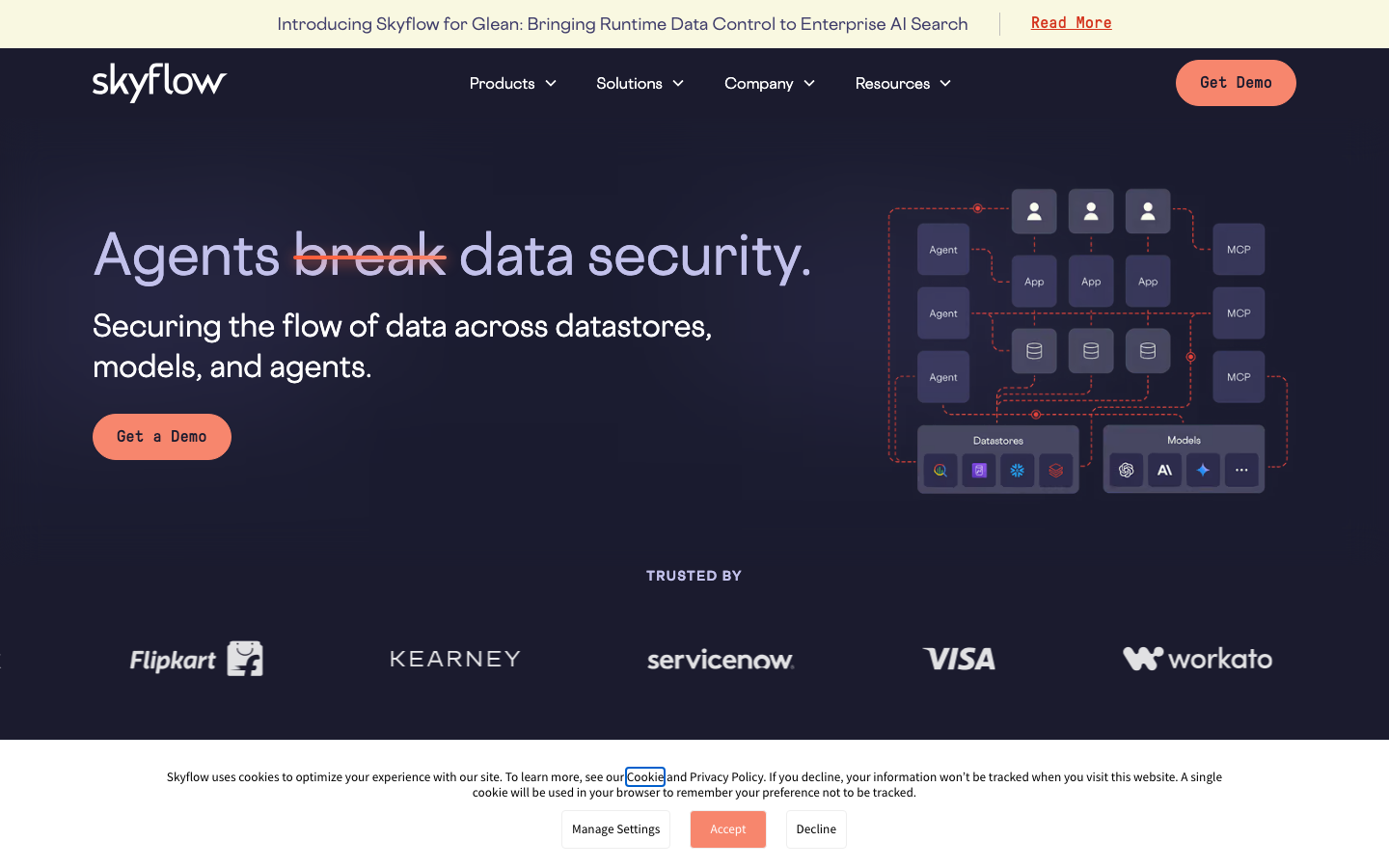
Screenshots of Skyflow 3 images
What's great
- Structured vault schema means you define exactly which fields hold sensitive data, and the schema enforces that topology at query time. That is a different guarantee than "we encrypt your table."
- Pre-built integrations for LLM workflows via Skyflow for GenAI let you pass tokenized PII into AI pipelines without exposing raw identifiers to model providers, which is increasingly a real compliance requirement.
- The free tier is a real development environment, not a checkbox. Engineers can build against the actual vault API before the procurement conversation starts.
Watch-outs
- Enterprise pricing is opaque. You will not know your year-one cost without a sales call, and the complexity of multi-region dedicated vaults means the number can be surprising.
- Setup requires more schema design up front than proxy-based tools like VGS. Teams without a data architect or security engineer on staff often need a longer ramp time.
- Some Gartner reviewers note that the policy engine, while powerful, has a learning curve that adds weeks to initial deployments if you are new to vault-native governance models.
Pricing breakdown
| Plan | Price | Best for |
|---|---|---|
| Free | $0 | Development and prototyping |
| Standard | Custom | Production workloads |
| Enterprise | Custom | Dedicated vault |
Security & compliance
| Standard | Availability |
|---|---|
| SOC 2 Type II | Yes |
| GDPR | Yes |
| HIPAA | Yes |
| SSO / SAML | Yes |
| Audit logs | Yes |
Skyflow compliance summary: SOC 2 Type II is yes, GDPR is yes, HIPAA is yes, SSO/SAML is yes, and audit logs is yes.
Key integrations
| Integration | Type |
|---|---|
| Gmail | N/A |
| Outlook | N/A |
| Slack | N/A |
| LinkedIn Sales Navigator | N/A |
| Outreach / Salesloft | N/A |
Skyflow integration summary: Gmail is not specified, Outlook is not specified, Slack is not specified, LinkedIn Sales Navigator is not specified, and Outreach or Salesloft is not specified.
Feature availability
| Feature | Status |
|---|---|
| Free tier | Dev sandbox |
| Byok | ✓ |
| Format preserving | ✓ |
| Multi region | Enterprise |
| Vaultless | ✗ |
Skyflow feature availability summary: Free tier (Dev sandbox), Byok (✓), Format preserving (✓), Multi region (Enterprise), and Vaultless (✗).
What reviewers say about Skyflow
Recurring themes across public G2 and product-review commentary, 2024-2026. Independent review pool is thin (only a handful of rated G2 reviews).
What reviewers praise
- The data privacy vault gets credit for cutting PCI and PII compliance scope fast by isolating sensitive fields from the app database.
- Running the vault inside your own VPC across AWS, GCP, or Azure appeals to teams with data-residency and control requirements.
- Reviewers value being able to run search and SQL analytics over encrypted data rather than choosing between privacy and usability.
- Tokenization paired with fine-grained governance and access control shows up as a differentiator versus a plain token store.
What reviewers fault
- The public review pool is very thin, so buyers have limited independent references to weigh.
- Pricing skews enterprise, which smaller teams notice early in evaluation.
- Standing up the vault takes engineering effort and schema planning rather than a quick portal setup.
Loading reviews…
VGS
Best proxy-first tokenization for teams that cannot touch raw payment data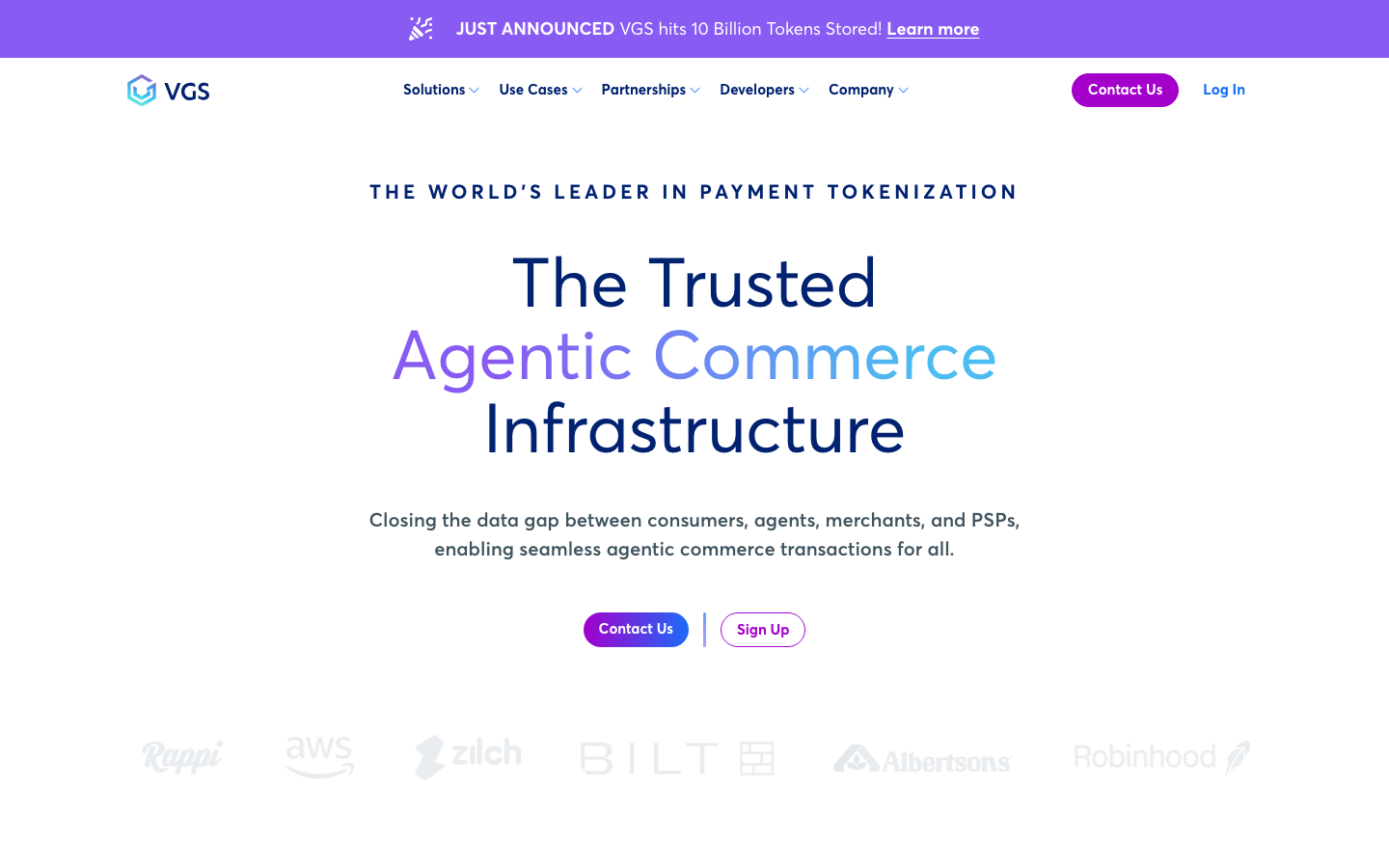
Screenshots of VGS 3 images
What's great
- The proxy model means you add VGS to your HTTP stack and stop handling raw card data without modifying your application code. Two routing rules replace weeks of application-layer refactoring.
- [47 G2 reviews](https://www.g2.com/products/very-good-security-vgs-platform/reviews) at 4.7/5 is the highest verified rating-and-volume combination in this comparison for commercially deployed tools. The consistent theme is that PCI DSS scope reduction actually works as advertised.
- Snowflake integration lets analytics teams run queries against tokenized columns in the warehouse without pulling raw values out of the vault, which covers a common gap in the vault-to-analytics workflow.
Watch-outs
- The $1,000/mo floor is a real barrier for pre-revenue startups. The sandbox is free but production is a commercial commitment from day one.
- Vaultless by design means VGS does not hold your raw data, which is a compliance advantage but also means you are dependent on VGS proxy uptime for any inbound or outbound flow that passes through it.
- Some G2 reviewers flag that the routing rule configuration, while powerful, requires careful testing before production. Misconfigured routes have passed raw values where tokens were expected in edge cases.
Pricing breakdown
| Plan | Price | Best for |
|---|---|---|
| Sandbox | $0 | Development and testing |
| Starter | $1,000/mo | Early production |
| Growth | Custom | Higher volume |
| Enterprise | Custom | Multi-region |
Security & compliance
| Standard | Availability |
|---|---|
| SOC 2 Type II | Yes |
| GDPR | Yes |
| HIPAA | Yes |
| SSO / SAML | Yes |
| Audit logs | Yes |
VGS compliance summary: SOC 2 Type II is yes, GDPR is yes, HIPAA is yes, SSO/SAML is yes, and audit logs is yes.
Key integrations
| Integration | Type |
|---|---|
| Gmail | N/A |
| Outlook | N/A |
| Slack | N/A |
| LinkedIn Sales Navigator | N/A |
| Outreach / Salesloft | N/A |
VGS integration summary: Gmail is not specified, Outlook is not specified, Slack is not specified, LinkedIn Sales Navigator is not specified, and Outreach or Salesloft is not specified.
Feature availability
| Feature | Status |
|---|---|
| Free tier | Sandbox only |
| Byok | Enterprise |
| Format preserving | ✓ |
| Multi region | ✓ |
| Vaultless | ✓ |
VGS feature availability summary: Free tier (Sandbox only), Byok (Enterprise), Format preserving (✓), Multi region (✓), and Vaultless (✓).
What reviewers say about VGS
Recurring themes across ~47 G2 reviews (4.7/5) and public TrustRadius feedback, 2024-2026.
What reviewers praise
- The tokenization proxy is the headline win in reviews, letting teams keep raw card and PII data out of their own systems so PCI scope drops sharply.
- Data encryption capability scores near the top of its category, and reviewers trust it for sensitive payment flows.
- Ease of setup rates well, with users saying the proxy dropped into existing infrastructure without a rebuild.
- Quality of support gets called out, with reviewers describing responsive help during integration.
What reviewers fault
- The proxy and vault configuration carries a learning curve, and a few reviewers wanted deeper documentation for advanced routing setups.
- Because VGS sits in the critical path of the payment flow, some reviewers flag the dependency risk of routing live traffic through a third party.
- Pricing transparency comes up as a gap, with cost climbing as request volume grows.
Loading reviews…
TokenEx
Best for multi-format tokenization across payment and identity data
Screenshots of TokenEx 3 images
What's great
- Flexible token format library covers card data, ACH account numbers, SSNs, and custom PII field types, making TokenEx one of the few platforms that handles the full scope of identity and payment data in a single vault.
- Transparent gateway model works for both card-present (retail POS) and card-not-present (ecommerce) scenarios, which matters for omnichannel businesses where the vault has to serve multiple processing paths.
- Strong processor and acquirer integrations mean tokens can be routed to the downstream payment processor without the merchant ever detokenizing, which keeps the QSA scope narrow even at high transaction volume.
Watch-outs
- Pricing is entirely custom with no public tiers, and the sales process is oriented toward mid-market and enterprise buyers. A sub-10-person engineering team will struggle to get a quick quote.
- The UI is functional but dated compared to developer-first platforms like Basis Theory or Evervault, which matters if your engineers will spend time in the console daily.
- Documentation depth is inconsistent; some integration paths are well-documented, others require a support ticket to work through.
Pricing breakdown
| Plan | Price | Best for |
|---|---|---|
| Standard | Custom | Mid-market payment tokenization |
| Enterprise | Custom | Multi-channel |
Security & compliance
| Standard | Availability |
|---|---|
| SOC 2 Type II | Yes |
| GDPR | Yes |
| HIPAA | Yes |
| SSO / SAML | Yes |
| Audit logs | Yes |
TokenEx compliance summary: SOC 2 Type II is yes, GDPR is yes, HIPAA is yes, SSO/SAML is yes, and audit logs is yes.
Key integrations
| Integration | Type |
|---|---|
| Gmail | N/A |
| Outlook | N/A |
| Slack | N/A |
| LinkedIn Sales Navigator | N/A |
| Outreach / Salesloft | N/A |
TokenEx integration summary: Gmail is not specified, Outlook is not specified, Slack is not specified, LinkedIn Sales Navigator is not specified, and Outreach or Salesloft is not specified.
Feature availability
| Feature | Status |
|---|---|
| Free tier | No |
| Byok | Enterprise |
| Format preserving | ✓ |
| Multi region | ✓ |
| Vaultless | Hybrid |
TokenEx feature availability summary: Free tier (No), Byok (Enterprise), Format preserving (✓), Multi region (✓), and Vaultless (Hybrid).
Loading reviews…
Basis Theory
Best developer experience for teams building tokenization into a product for the first time
Screenshots of Basis Theory 3 images
What's great
- Published pricing at $99/mo for the Starter tier with a free development sandbox is the most transparent pricing in this comparison. No sales call required to start a production workload.
- Reactor feature runs serverless functions against tokenized data without detokenizing, meaning you can process, format, and route sensitive data without ever decrypting it in your application layer.
- Documentation is cited repeatedly in G2 reviews as the best in the category. The API reference, guides, and code examples are structured for engineers who are building alone on a Friday afternoon.
Watch-outs
- The $99/mo Starter tier has volume caps that a growing fintech will outgrow; the jump to custom enterprise pricing is not clearly signposted, and teams have been surprised at renewal.
- Basis Theory is payments-native but some of the PII tokenization patterns (healthcare identity, insurance claims data) require more custom setup than the card-focused documentation covers.
- As a younger company than VGS or TokenEx, the enterprise sales motion is still maturing, and some buyers report a slower response on complex compliance questions.
Pricing breakdown
| Plan | Price | Best for |
|---|---|---|
| Free | $0 | Development |
| Starter | $99/mo | Early production |
| Scale | Custom | Growing volume |
| Enterprise | Custom | Multi-region |
Security & compliance
| Standard | Availability |
|---|---|
| SOC 2 Type II | Yes |
| GDPR | Yes |
| HIPAA | Yes |
| SSO / SAML | Yes |
| Audit logs | Scale+ |
Basis Theory compliance summary: SOC 2 Type II is yes, GDPR is yes, HIPAA is yes, SSO/SAML is yes, and audit logs is scale+.
Key integrations
| Integration | Type |
|---|---|
| Gmail | N/A |
| Outlook | N/A |
| Slack | N/A |
| LinkedIn Sales Navigator | N/A |
| Outreach / Salesloft | N/A |
Basis Theory integration summary: Gmail is not specified, Outlook is not specified, Slack is not specified, LinkedIn Sales Navigator is not specified, and Outreach or Salesloft is not specified.
Feature availability
| Feature | Status |
|---|---|
| Free tier | Dev sandbox |
| Byok | Enterprise |
| Format preserving | ✓ |
| Multi region | Enterprise |
| Vaultless | Hybrid |
Basis Theory feature availability summary: Free tier (Dev sandbox), Byok (Enterprise), Format preserving (✓), Multi region (Enterprise), and Vaultless (Hybrid).
What reviewers say about Basis Theory
Recurring themes across public developer commentary and case-study discussion, 2024-2026. Independent review pool is thin (no rated G2 or Capterra listing yet).
What reviewers praise
- Developers describe the platform as flexible and non-opinionated, giving them control over token schemas instead of forcing a fixed card format.
- The vault meaningfully cuts PCI scope by holding card and sensitive data outside the merchant's own systems.
- Reviewers value avoiding processor lock-in, since tokens stay usable across multiple PSPs for routing and fee negotiation.
- Usage-based, token-count pricing is called transparent and easy to reason about month to month.
What reviewers fault
- The public review footprint is genuinely thin, so buyers have few independent references to lean on for a younger vendor.
- Adopting the vault takes real engineering effort, since it is a developer-first API rather than a turnkey portal.
- Keeping tokenized copies in sync across systems adds data-consistency overhead teams have to plan for.
Loading reviews…
Protegrity
Best enterprise data tokenization for regulated industries with on-premises requirements
Screenshots of Protegrity 3 images
What's great
- Works across cloud, hybrid, and fully on-premises environments without degrading its compliance posture. That is a real differentiator for regulated industries (healthcare, insurance, banking) where data residency requirements rule out cloud-native vaults.
- High-speed vaultless tokenization at the data warehouse layer means you can tokenize at Snowflake, Redshift, or Databricks query time without moving data out of the warehouse first.
- 28 Gartner Peer Insights reviews mostly from financial services and healthcare buyers confirm that the platform holds up under enterprise audit scrutiny, which is worth more than developer reviews when the audience is a CISO.
Watch-outs
- The price floor is real. Gartner reviewer data and comparison analyses suggest typical annual contracts in the $300K-$350K range. This is not a platform for companies under $10M ARR.
- Implementation requires a dedicated project and usually a partner-led deployment. Teams without an internal data security architect will spend additional time and budget on professional services before seeing production results.
- The developer experience is enterprise-first, not developer-first. Engineers used to API-native platforms like Basis Theory or Evervault will find the setup model heavier.
Pricing breakdown
| Plan | Price | Best for |
|---|---|---|
| Standard | Custom (~$300K+/yr) | Mid-enterprise |
| AI Enterprise | Custom | Enterprise AI/ML pipelines with PII governance |
Security & compliance
| Standard | Availability |
|---|---|
| SOC 2 Type II | Yes |
| GDPR | Yes |
| HIPAA | Yes |
| SSO / SAML | Yes |
| Audit logs | Yes |
Protegrity compliance summary: SOC 2 Type II is yes, GDPR is yes, HIPAA is yes, SSO/SAML is yes, and audit logs is yes.
Key integrations
| Integration | Type |
|---|---|
| Gmail | N/A |
| Outlook | N/A |
| Slack | N/A |
| LinkedIn Sales Navigator | N/A |
| Outreach / Salesloft | N/A |
Protegrity integration summary: Gmail is not specified, Outlook is not specified, Slack is not specified, LinkedIn Sales Navigator is not specified, and Outreach or Salesloft is not specified.
Feature availability
| Feature | Status |
|---|---|
| Free tier | No |
| Byok | ✓ |
| Format preserving | ✓ |
| Multi region | ✓ |
| Vaultless | ✓ |
Protegrity feature availability summary: Free tier (No), Byok (✓), Format preserving (✓), Multi region (✓), and Vaultless (✓).
Loading reviews…
Baffle
Best no-code-change encryption for teams who cannot modify the application layer
Screenshots of Baffle 3 images
What's great
- No application code changes required. Baffle sits between your application and your database and applies field-level encryption at the data layer. The application reads and writes as if no encryption exists.
- Format-preserving tokenization with reference token mapping keeps stable identifiers that downstream joins and analytics queries can use without touching raw values.
- The 90-day PoC program lets engineering teams prove out the integration against their actual database before a commercial commitment, which is rare in this market.
Watch-outs
- The no-code-change model requires trusting a proxy in the data path, which some security teams are uncomfortable with. The proxy is also a potential latency vector that needs load testing in high-throughput environments.
- Review volume is thin (fewer than 10 public Gartner reviews) compared to VGS or Basis Theory, which makes peer validation harder before you commit to a PoC.
- Complex multi-database deployments with mixed schemas sometimes require Baffle professional services to configure the field mapping correctly, adding to first-year cost.
Pricing breakdown
| Plan | Price | Best for |
|---|---|---|
| PoC | 90-day trial | Proof-of-concept and integration testing |
| Production | Custom | Full deployment with SLA and support |
Security & compliance
| Standard | Availability |
|---|---|
| SOC 2 Type II | Yes |
| GDPR | Yes |
| HIPAA | Yes |
| SSO / SAML | Yes |
| Audit logs | Yes |
Baffle compliance summary: SOC 2 Type II is yes, GDPR is yes, HIPAA is yes, SSO/SAML is yes, and audit logs is yes.
Key integrations
| Integration | Type |
|---|---|
| Gmail | N/A |
| Outlook | N/A |
| Slack | N/A |
| LinkedIn Sales Navigator | N/A |
| Outreach / Salesloft | N/A |
Baffle integration summary: Gmail is not specified, Outlook is not specified, Slack is not specified, LinkedIn Sales Navigator is not specified, and Outreach or Salesloft is not specified.
Feature availability
| Feature | Status |
|---|---|
| Free tier | PoC only |
| Byok | ✓ |
| Format preserving | ✓ |
| Multi region | Enterprise |
| Vaultless | ✗ |
Baffle feature availability summary: Free tier (PoC only), Byok (✓), Format preserving (✓), Multi region (Enterprise), and Vaultless (✗).
Loading reviews…
Anonym
Best privacy-preserving data collaboration for teams sharing tokenized data across organizational boundaries
Screenshots of Anonym 3 images
What's great
- Designed specifically for data collaboration scenarios where two organizations need to compute on shared identity data without either party exposing raw values. That use case is not well-served by traditional tokenization platforms.
- Privacy-preserving analytics layer lets data science teams compute aggregate metrics over tokenized datasets without ever needing to detokenize individual records.
- Early-stage company with active engineering investment in the privacy-preserving ML space, which makes it worth watching for adtech, healthcare research, and financial services data-sharing use cases.
Watch-outs
- No publicly available G2, Capterra, or Gartner reviews at time of writing, which makes independent validation of production performance difficult.
- Pricing is entirely custom with no public tiers or ballpark figures, and the sales process is oriented toward enterprise data partnerships rather than single-org vault deployments.
- The federated collaboration model is a different architecture from a traditional customer vault. Teams that need basic card tokenization will find Anonym is the wrong tool for the job.
Pricing breakdown
| Plan | Price | Best for |
|---|---|---|
| Enterprise | Custom | Cross-org federated data collaboration |
Security & compliance
| Standard | Availability |
|---|---|
| SOC 2 Type II | Yes |
| GDPR | Yes |
| HIPAA | Evaluating |
| SSO / SAML | Yes |
| Audit logs | Yes |
Anonym compliance summary: SOC 2 Type II is yes, GDPR is yes, HIPAA is evaluating, SSO/SAML is yes, and audit logs is yes.
Key integrations
| Integration | Type |
|---|---|
| Gmail | N/A |
| Outlook | N/A |
| Slack | N/A |
| LinkedIn Sales Navigator | N/A |
| Outreach / Salesloft | N/A |
Anonym integration summary: Gmail is not specified, Outlook is not specified, Slack is not specified, LinkedIn Sales Navigator is not specified, and Outreach or Salesloft is not specified.
Feature availability
| Feature | Status |
|---|---|
| Free tier | No |
| Byok | Enterprise |
| Format preserving | ✗ |
| Multi region | Enterprise |
| Vaultless | ✓ |
Anonym feature availability summary: Free tier (No), Byok (Enterprise), Format preserving (✗), Multi region (Enterprise), and Vaultless (✓).
Loading reviews…
Securiti.ai
Best for unified data security, privacy, and AI governance across hybrid and multi-cloud environments
Screenshots of Securiti.ai 3 images
What's great
- [143 G2 reviews at 4.6/5](https://www.g2.com/products/securiti/reviews) is the largest verified review base in this comparison. The consistent theme is breadth: DSPM, consent, privacy automation, and tokenization in one platform rather than four separate vendors.
- map[AI Data Command Center covers the governance layer that purely technical tokenization platforms miss:data discovery, classification, lineage, and consent management alongside masking and tokenization.]
- Strong in hybrid and multi-cloud environments where data sprawl across AWS, Azure, GCP, and on-premises systems makes a single governance layer valuable.
Watch-outs
- Tokenization is one module in a larger platform, not the core product. Teams that need only a tokenization vault will pay for a lot of functionality they do not need.
- Implementation is complex. A head of engineering at a healthcare SaaS mentioned that the initial configuration of data discovery across a complex multi-cloud environment took longer than expected and required ongoing tuning.
- Pricing is custom and enterprise-oriented. Like Protegrity, expect a multi-week sales process before a number appears.
Pricing breakdown
| Plan | Price | Best for |
|---|---|---|
| Standard | Custom | Enterprise data governance and privacy automation |
| Enterprise | Custom | Multi-cloud |
Security & compliance
| Standard | Availability |
|---|---|
| SOC 2 Type II | Yes |
| GDPR | Yes |
| HIPAA | Yes |
| SSO / SAML | Yes |
| Audit logs | Yes |
Securiti.ai compliance summary: SOC 2 Type II is yes, GDPR is yes, HIPAA is yes, SSO/SAML is yes, and audit logs is yes.
Key integrations
| Integration | Type |
|---|---|
| Gmail | N/A |
| Outlook | N/A |
| Slack | N/A |
| LinkedIn Sales Navigator | N/A |
| Outreach / Salesloft | N/A |
Securiti.ai integration summary: Gmail is not specified, Outlook is not specified, Slack is not specified, LinkedIn Sales Navigator is not specified, and Outreach or Salesloft is not specified.
Feature availability
| Feature | Status |
|---|---|
| Free tier | No |
| Byok | ✓ |
| Format preserving | ✓ |
| Multi region | ✓ |
| Vaultless | Hybrid |
Securiti.ai feature availability summary: Free tier (No), Byok (✓), Format preserving (✓), Multi region (✓), and Vaultless (Hybrid).
What reviewers say about Securiti.ai
Recurring themes across ~46 Securiti reviews on G2 (4.8/5), plus Gartner Peer Insights and PeerSpot, 2024-2026.
What reviewers praise
- AI-driven data discovery and classification give a live map of where sensitive data sits across environments.
- Running privacy, security, and consent from one platform is the recurring reason teams consolidate onto it.
- Cross-border transfer maps and process mapping get specific praise from compliance operators.
- Dashboards and the zero-trust integration are called out as strong day-to-day tooling.
What reviewers fault
- Implementation is time-consuming and expects real expertise, with a steep learning curve before teams use it fully.
- The workflow is click-heavy, with no easy way to add items in bulk or by checklist.
- Report and page customization is thinner than users want.
- Connecting to legacy or existing systems can be a struggle.
Loading reviews…
Evervault
Best payments-native developer toolkit for startups building PCI-compliant card and data flows
Screenshots of Evervault 3 images
What's great
- map[Three complementary products (Enclaves, Relay, Tokens) handle the full payments data lifecycle:collect it securely, process it in an encrypted compute environment, route it to processors without touching raw values.]
- Published Pro pricing at $395/mo is the clearest entry point to a fully production-ready, PCI-compliant data security setup in this comparison. No sales call needed to start.
- G2 reviewers consistently cite the encryption quality and the ease of use. Several specifically mention the SDK as well-designed for teams building their first PCI-compliant card flow.
Watch-outs
- Review volume is still low at 11 on G2. More peer validation would help engineering teams build confidence before committing.
- Evervault is payments-first. Teams handling identity data (SSN, healthcare records) will find the documentation and default templates less directly applicable than for card data flows.
- The $395/mo Pro tier is designed for small teams. Significant volume growth will require a custom contract conversation that does not have a published price anchor.
Pricing breakdown
| Plan | Price | Best for |
|---|---|---|
| Free | $0 | Development and sandbox testing |
| Pro | $395/mo | Production card data flows |
| Enterprise | Custom | High-volume |
Security & compliance
| Standard | Availability |
|---|---|
| SOC 2 Type II | Yes |
| GDPR | Yes |
| HIPAA | Enterprise |
| SSO / SAML | Yes |
| Audit logs | Pro+ |
Evervault compliance summary: SOC 2 Type II is yes, GDPR is yes, HIPAA is enterprise, SSO/SAML is yes, and audit logs is pro+.
Key integrations
| Integration | Type |
|---|---|
| Gmail | N/A |
| Outlook | N/A |
| Slack | N/A |
| LinkedIn Sales Navigator | N/A |
| Outreach / Salesloft | N/A |
Evervault integration summary: Gmail is not specified, Outlook is not specified, Slack is not specified, LinkedIn Sales Navigator is not specified, and Outreach or Salesloft is not specified.
Feature availability
| Feature | Status |
|---|---|
| Free tier | Dev sandbox |
| Byok | Enterprise |
| Format preserving | ✓ |
| Multi region | Enterprise |
| Vaultless | Relay |
Evervault feature availability summary: Free tier (Dev sandbox), Byok (Enterprise), Format preserving (✓), Multi region (Enterprise), and Vaultless (Relay).
Loading reviews…
More top-rated Customer Vault Tokenization Software worth checking out
Highly rated Customer Vault Tokenization Software that didn't crack our top 10 but are still strong contenders, especially for specific use cases and team sizes.
AWS KMS with DynamoDB
For engineering teams already all-in on AWS who want vault tokenization without a third-party vendor
Standout: AWS-native means zero third-party dependency in your trust boundary. KMS keys, DynamoDB table for token mapping, IAM policies for access control; the full vault pattern without leaving AWS.
Google Cloud DLP
For GCP-native teams who need automated PII discovery and tokenization in one service
Standout: Combines PII discovery, classification, and de-identification (including tokenization via pseudonymization) in one API call. No separate discovery tool required.
What reviewers say ★ 4.4 · 1,643
Praised
- The LookML semantic layer is the defining strength reviewers cite: business logic and metric definitions live in version-controlled code, so everyone queries the same governed definitions and the multiple-versions-of-the-truth problem largely disappears.
- Deep integration with cloud warehouses, especially BigQuery, is praised for handling large data volumes well and keeping analysis close to the source.
- Once the model is built, business users get intuitive point-and-click exploration and self-serve reports without touching SQL, which reviewers value for reducing analyst bottlenecks.
- Dashboards are interactive and easy to share, and centralized governance and access controls make it a favorite of data teams that care about consistency and security.
- The governed, code-based modeling approach is repeatedly called a genuine differentiator from drag-and-drop BI tools for organizations that need metric consistency at scale.
Faulted
- The LookML learning curve is the most repeated complaint: teams without SQL and modeling skills struggle, and reviewers note data requests still bottleneck with engineering because non-developers cannot self-serve model changes.
- Pricing is opaque and steep, all tiers are quote-only, and reported contracts routinely reach six figures a year, putting it out of reach for smaller teams.
- Visualization and charting feel dated and limited next to Tableau or Power BI, with reviewers wanting more chart types and formatting control.
- Query performance on complex analyses depends heavily on how the underlying warehouse is tuned, and users describe stakeholders left staring at loading spinners.
- Out-of-the-box AI and advanced-calculation features are thin, and reviewers note gaps in built-in calculations that force workarounds.
Azure Purview
For Microsoft-standardized enterprises needing data governance and PII classification across Azure workloads
Standout: Native integration with the full Azure and Microsoft 365 ecosystem means data governance extends across cloud databases, on-premises SQL servers, and Office 365 document stores in one catalog.
HashiCorp Vault
For infrastructure teams who want open-source secrets management with tokenization capabilities
Standout: Open source with a large community means HashiCorp Vault is already running in most enterprise Kubernetes stacks. Adding a tokenization policy on top requires no new vendor relationship.
Tink (Google OSS)
For security engineers who want a cryptographic library rather than a managed vault service
Standout: Google-maintained cryptographic primitives with a safe-by-default API that prevents the most common developer crypto mistakes (weak key sizes, insecure mode selection, padding oracle risks).
IRI FieldShield
For data engineering teams handling bulk PII masking and tokenization in ETL and data pipeline workflows
Standout: Handles bulk masking, tokenization, encryption, and pseudonymization in a single tool across structured, semi-structured, and unstructured data in the same pipeline job.
Comforte AG
For payment processing and retail enterprises needing format-preserving tokenization at point-of-sale scale
Standout: Format-preserving encryption and tokenization optimized for payment card data at enterprise POS scale, with specific expertise in large retail and acquiring environments.
Voltage Security (OpenText)
For large enterprises needing format-preserving encryption across structured and big-data environments
Standout: Format-preserving encryption (FPE) via FFX-AES is one of the most mature implementations in the enterprise market, with a track record in financial services dating back over 15 years.
Informatica CDQ
For enterprise data teams who need PII governance, quality, and tokenization in one platform
Standout: Data quality, classification, and masking/tokenization in one platform reduces the number of vendors in your enterprise data governance stack.
DataFleets
For privacy-engineering teams building federated analytics on tokenized customer datasets
Standout: Privacy-preserving federated learning lets model training run on tokenized datasets distributed across multiple organizations without centralizing raw data.
Tools we considered but excluded
We evaluated more tools than the 20 you see above. These did not make the cut. Saying what we rejected, and why, is the editorial muscle most listicles skip.
- Protecto: Focused on AI/LLM PII masking rather than traditional vault tokenization; different use case from card and identity vault infrastructure.
- Privitar: Acquired and integrated into broader data governance stack; standalone vault evaluation is not currently feasible.
- Virtusa SecureData: Professional services-first offering; not a self-serve or API-accessible tokenization platform for evaluation.
- Domo: BI platform with data governance features; tokenization is incidental, not a core product capability.
- Palantir Foundry: Data operations platform for large intelligence and defense organizations; pricing and access model incompatible with SaaS buyer evaluation.
Honorable mentions
Solid tools that did not crack the main list but are worth tracking, especially for niche use cases.
- Persona: Identity verification platform with secure PII storage; worth tracking as it adds vault-like tokenization to verified identity records.
- Piiano Vault: Developer-focused PII vault with clear API design; small team but strong documentation; one to watch as an alternative to Basis Theory.
- Stytch: Authentication platform adding secure PII storage capabilities; relevant for teams building identity-first products where vault and auth converge.
The customer vault tokenization shortlist, and who each is for
This guide covers purpose-built customer vault and tokenization platforms, the tools engineering teams use to replace sensitive customer identifiers with non-sensitive tokens and store the originals in a secured, auditable vault.
Pure-play card and identity vaults are the core category. Enigma Vault, Skyflow, VGS, TokenEx, Basis Theory, and Evervault all exist specifically to solve this problem. They differ in architecture (proxy vs. vault-native), compliance model (shared vs. dedicated), and pricing (published vs. custom).
Enterprise data security platforms (Protegrity, Securiti.ai) include tokenization as one capability within a broader data protection, DSPM, and AI governance suite. The right buy when your security requirement is larger than a card vault. The wrong buy when you just need a token API.
No-code-change proxies (Baffle) sit between your application and database and apply field-level encryption without application code changes. The right call for teams inheriting a codebase they cannot refactor.
Cloud-native DIY patterns (AWS KMS plus DynamoDB, Google Cloud DLP, HashiCorp Vault) are infrastructure primitives that engineering teams assemble into a vault architecture. No vendor relationship required; all the compliance documentation ownership falls on your team.
Federated privacy platforms (Anonym) are for the specific case where two organizations need to compute on shared customer identity data without either party seeing raw values. Different architecture from a traditional vault, worth understanding before dismissing.
Legacy enterprise tokenization (Comforte AG, Voltage Security, IRI FieldShield) covers the mainframe, POS, and batch data pipeline use cases where cloud-native vault platforms cannot deploy. Relevant for large retailers and financial institutions running core processing on IBM z/OS or Tandem.
Picking the right tokenization platform
1. Real-time versus batch tokenization
The most important architectural split in this category. VGS, Basis Theory, Skyflow, and Evervault are real-time platforms: your application calls the API, gets a token back in under 50ms, and continues. Baffle, IRI FieldShield, and the cloud DLP services are batch-oriented: you run a job that processes a dataset and returns tokenized output. A checkout flow needs real-time. A nightly ETL export to a data warehouse can be batch.
2. Who owns the compliance argument
If you need a vendor who co-signs the PCI DSS, HIPAA, or SOC 2 compliance posture, pick a platform with a shared-responsibility attestation. VGS, TokenEx, Basis Theory, and Evervault all publish PCI DSS Level 1 certification. If you build on HashiCorp Vault or AWS KMS, you own the entire compliance argument yourself. A QSA will ask which model you are using in the first 10 minutes.
3. Developer entry point
Teams where an engineer needs to start vaulting data this week without a procurement process: Basis Theory at $99/mo, Evervault at $395/mo, or the AWS KMS DIY pattern at pay-per-use. Teams where security architecture is designed before engineering starts: Skyflow, VGS, TokenEx, Protegrity. The developer-entry platforms are not less secure; they are differently structured for different buying motions.
4. On-premises versus cloud-native
Cloud-native platforms (Skyflow, VGS, Basis Theory, Evervault) are correct for teams building on AWS, GCP, or Azure with no hard data-residency requirement for the vault itself. On-premises or hybrid requirements push you toward Protegrity, Voltage Security, Comforte AG, or a self-hosted HashiCorp Vault deployment. Mixing a cloud-native vault with on-premises data raises the integration complexity significantly.
5. PII scope beyond card data
Card tokenization is the most documented use case in this market. SSN, DOB, healthcare identifiers, and bank account numbers are handled by all the major platforms but with varying documentation depth. Basis Theory, Skyflow, and TokenEx have the clearest multi-PII-type coverage in their developer documentation. Evervault is payments-first and less polished for non-card PII patterns.
What I check in every tokenization platform demo
One. Token format and length. Ask the vendor to show you the token format for a card number, an SSN, and a bank account number. Format-preserving tokens are not always available for all field types, and you want to know before you redesign your database schema to accommodate a 36-character UUID where a 16-digit number lived.
Two. Detokenization latency under load. Every platform demos at low concurrency. Ask for the p95 and p99 latency numbers for detokenization at your expected production throughput. A 200ms p99 detokenization latency will show up as customer-facing checkout latency.
Three. Key rotation behavior. Ask specifically: if I rotate my encryption keys, what happens to existing tokens? Do they continue to resolve? Do I need a re-encryption pass? Key rotation without token invalidation is a hard requirement for any production vault.
Four. Audit log format and export. Ask to see a real audit log entry for a detokenization event. Who requested it, what token, what timestamp, what IP, what application identity. Export the log to your SIEM in the demo. This is what a QSA will ask for first.
Five. Failure mode when the vault is unavailable. Ask directly: if your platform has a 30-minute outage at 2am, what happens to my checkout flow? Proxy-based platforms (VGS) introduce a dependency that in-process vault clients do not have.
Six. Multi-tenant isolation model. If your SaaS serves multiple customers and each has separate data isolation requirements, ask whether token namespaces are isolated at the tenant level. Skyflow has native tenant isolation; some platforms require application-layer separation that you build yourself.
Seven. SDK maintenance and language coverage. Check the GitHub commit history on the SDK for your primary language. A Python SDK with the last commit 18 months ago is a flag. Basis Theory and Evervault maintain active SDK repositories across major languages.
2026 market shifts
AI pipeline exposure is the new PCI scope problem. In 2025, the tokenization conversation was almost entirely about card data and PCI. In 2026, the leading question from security teams is: does my LLM-based feature (fraud scoring, customer service AI, recommendation engine) expose raw PII to the model provider?
Skyflow’s GenAI vault and Protegrity’s AI Enterprise Edition are the first purpose-built answers to this. Expect every major vault platform to announce an AI-pipeline integration by mid-2027.
Developer-led procurement is winning. Two years ago, customer vault tokenization was a CISO-initiated, procurement-led purchase. Basis Theory’s published $99/mo pricing and Evervault’s free SDK changed the buying motion. Engineering teams now start with a developer-tier subscription and move to enterprise procurement after production validation. VGS is visibly moving in this direction with its sandbox-first model.
Cloud provider vaults are maturing but remain DIY. AWS has not shipped a managed tokenization vault product despite the obvious demand. Google Cloud DLP and Azure Purview cover classification and de-identification but not the full vault pattern. The gap keeps the specialist vendors in business. A managed AWS Card Vault product (if it ever ships) would compress the Enigma Vault, TokenEx, and Evervault market segments immediately.
PCI DSS 4.0 enforcement is live and changing scope conversations. PCI DSS version 4.0 became mandatory in March 2025. Several requirements around client-side script integrity, customized implementations, and targeted risk analysis are generating new scope conversations that pull tokenization decisions forward in the product roadmap. Teams that deferred the vault decision because PCI v3 scope was manageable are re-evaluating under v4.
Federated identity resolution is emerging as a distinct market. The advertising and healthcare research markets are driving demand for tokenization that links records across organizational boundaries without sharing raw identifiers. Anonym, Habu (acquired by LiveRamp), and privacy-preserving ML platforms address this. It is a different technical problem from single-org card vaulting but shares enough vocabulary to cause evaluation confusion.
The pick by stage
Seed-stage startup, first PCI requirement, small team: Basis Theory at $99/mo. Developer-friendly, published pricing, a real free sandbox, and compliance coverage that holds up to a QSA review. No sales call to get started.
Funded startup, card-first product, payments team: Evervault Pro at $395/mo. The Enclaves, Relay, and Tokens combination handles the full payments data lifecycle. Faster to production than most alternatives.
Series B fintech, active QSA relationship, complex processing: VGS. The proxy model, the PCI DSS Level 1 certification, and the 4.7/5 from 47 G2 reviews from real fintech buyers make it the defensible enterprise-entry choice.
Multi-tenant SaaS with mixed PII types (SSN, DOB, card): Skyflow. The structured vault schema handles multi-type PII governance in a way that proxy platforms do not. The GenAI pipeline integration is relevant if AI features are on the roadmap.
Healthcare platform, HIPAA-first, card data secondary: Basis Theory for the API layer, with a Skyflow evaluation if cross-service PII governance is a requirement. Both have HIPAA compliance coverage; Skyflow has the deeper governance model.
Enterprise regulated industry, on-premises requirement, multi-system scope: Protegrity or Voltage Security. Both have the on-premises deployment model, enterprise compliance track record, and partner ecosystem to support complex regulated-industry deployments.
Infrastructure team, prefer self-hosted, strong platform engineering capacity: HashiCorp Vault with the Transform secrets engine. Operational ownership is significant; the compliance documentation burden is real.
Large retailer or acquiring bank, POS scale, mainframe infrastructure: Comforte AG or Voltage Security. Neither is accessible without a dedicated enterprise procurement process, but both have the right architectural fit.
We update this guide quarterly as vendor pricing changes and new platforms enter the market. Corrections or updated pricing can be submitted to corrections@topickz.com .
Frequently asked questions
What is customer vault tokenization software?
It replaces sensitive data (card numbers, SSNs) with non-sensitive tokens and stores originals in a secure vault. Your app handles only the token.
How does tokenization differ from encryption?
Encryption transforms data mathematically and can be reversed with a key. Tokenization replaces data with a random reference; reversal requires vault access.
Which tools have PCI DSS Level 1 certification?
Enigma Vault, VGS, TokenEx, Basis Theory, Evervault, and Protegrity. Verify current certification scope with each vendor before a QSA engagement.
What is format-preserving tokenization?
The token looks like the original value (same length, same character set). A 16-digit card token passes downstream format validation without changes.
How much does a customer vault tokenization platform cost?
Ranges from $99/mo (Basis Theory Starter) to $300K+/yr (Protegrity enterprise). Most enterprise platforms require custom pricing conversations.
What is vaultless tokenization?
Tokens are generated algorithmically from the original value using a key. No mapping table is stored. VGS uses this model; fast but key loss = permanent data loss.
Can I build a tokenization vault on AWS without a third-party vendor?
Yes. KMS for key management plus DynamoDB for token mapping is a standard DIY pattern. You own the compliance documentation and operations.
Does HIPAA require tokenization for PHI?
HIPAA requires de-identification of PHI for certain use cases. Tokenization satisfies the Expert Determination method when implemented correctly with certified platforms.
What is the difference between Skyflow and VGS?
Skyflow uses a schema-defined vault model for PII governance. VGS uses a proxy model that intercepts HTTP traffic. Different architectures for different problems.
Which tokenization platform has the best developer experience?
Basis Theory leads on developer experience per G2 reviews. Evervault is second. Both have published pricing, free sandboxes, and well-structured API documentation.
Related helpful reads
Write a review
Posts to the page right away. Keep it real — no links or email addresses.