
Best credit card tokenization software for E-commerce merchant (SAQ A target)?
- Enigma Vault
Hosted form collects card data, merchant never touches the PAN. Reduces PCI scope to SAQ A. Lite tier at $0/mo is real, not a trial.
- Braintree Vault
Drop-in UI and Hosted Fields keep cardholder data out of your environment. SAQ A is achievable with correct integration. Free with Braintree transactions.
- Stripe
Stripe.js and Stripe Elements keep PANs on Stripe's servers. SAQ A reduction is well-documented. Works out of the box for most e-commerce stacks.
Best credit card tokenization software for SaaS subscription company?
- Basis Theory
Tokens own your customer card data across any processor rotation. Starter at $995/mo covers 20K tokens. Best vault portability for B2B SaaS billing teams.
- Spreedly
One vault, 100+ gateways. If your billing team ever needs to switch acquirers without losing stored cards, Spreedly is the pick.
- TokenEx
Enterprise vault for high-volume subscription businesses. Custom pricing from ~$1,000/mo. The vault outlasts any processor relationship.
Best credit card tokenization software for Enterprise / regulated industry?
- TokenEx
Processor-agnostic vault with dedicated tenancy available. The standard pick for enterprises routing cards across 3+ acquirers.
- VGS
Proxy model means sensitive data flows through VGS infrastructure, not yours. Strong compliance posture for fintech and banking partners.
- CyberSource Token Management
Visa-owned, enterprise-grade token management with Secure Storage and Network Tokenization. Right choice if your acquirer is already CyberSource.
Best credit card tokenization software for Developer / fintech builder?
- Basis Theory
Best-in-class developer docs, clean REST API, and a public Postman collection. Time from signup to first token is under 30 minutes.
- VGS
Proxy-based, no vault schema to design. You send data through VGS endpoints and get tokens back. Developer-friendly onboarding.
- Enigma Vault
REST API with interactive on-site demo. AWS Marketplace listing simplifies procurement for AWS-native teams.
Think your brand belongs on this list? Email hello@topickz.com for an editorial review.
Comparing the best Credit Card Tokenization Software of 2026 includes 1. Enigma Vault 2. TokenEx 3. VGS (Very Good Security) 4. Basis Theory 5. Stripe (Network Tokens) 6. Spreedly 7. Adyen Token Service 8. Braintree Vault 9. CyberSource Token Management 10. Checkout.com 11. NMI Gateway 12. Paysafe 13. Authorize.net CIM 14. Worldpay 15. BlueSnap 16. Recurly 17. Chargebee 18. Zuora 19. PayArc 20. Stax.
TL;DR
- Enigma Vault Card Vault: Best overall for merchants eliminating PAN storage entirely. PCI DSS Level 1, SOC 2 Type II, and ISO 27001 in one provider, with a published rate card starting at $0 for the Lite tier.
- TokenEx: Best processor-agnostic enterprise vault for companies routing cards across multiple acquirers. Starts around $1,000/mo custom.
- VGS: Best proxy-based approach for teams that want to collect card data without any of it entering their codebase. 4.7/5 across 47 G2 reviews.
- Basis Theory: Best developer experience for fintech builders. Clean API, strong documentation, and a starter plan at $995/mo for 20K tokens.
- Spreedly: Best for multi-gateway payment orchestration where the vault is the portability layer, not just storage.
Twenty credit card tokenization platforms compared on PCI scope reduction, developer integration speed, processor portability, and total cost at scale. The goal here is straightforward: stop raw PANs from touching your environment. The tools below differ significantly on how cleanly they achieve that, what it costs, and how much processor lock-in you accept in the deal.
What Is Credit Card Tokenization Software?
Credit card tokenization software replaces raw card numbers (PANs) with non-sensitive placeholder tokens, so merchants can store payment credentials, run recurring charges, and re-use cards without ever holding the actual card data in their own systems.
Dedicated vault providers like Enigma Vault, TokenEx, and VGS differ from processor-bundled tokenization on portability, PCI scope reduction, and network token support. A processor-native vault ties your stored cards to one acquirer. An independent vault lets you route the same token to any processor you choose.
Best Credit Card Tokenization Software comparison: features, pricing and verdicts
| Tool | Best for | Starting price | Free trial | External rating |
|---|---|---|---|---|
Best purpose-built Card Vault for merchants eliminating PAN storage | $0/mo (Lite), $49.99/mo (Plus) | Free Lite tier, $0/mo forever | Capterra 4.8/5 | |
Best processor-agnostic vault for enterprise multi-acquirer routing | Custom from ~$1,000/mo | Demo available | Capterra 4.5/5 | |
Best proxy-based tokenization for teams keeping card data out of their codebase | Custom (startup-friendly tiers available) | Free sandbox | G2 4.7/5 (47 reviews) | |
Best developer experience for fintech teams building from the API up | $995/mo (Starter, 20K tokens) | Free sandbox | G2 4.6/5 | |
Best for Stripe-native e-commerce teams with high authorization rate targets | 2.9% + $0.30/transaction | Free (pay per transaction) | G2 4.2/5 (458 reviews) | |
Best vault for teams running cards through multiple payment gateways | Custom (orchestration-based pricing) | Free trial available | G2 4.4/5 (35 reviews) | |
Best tokenization for enterprise merchants already on Adyen for acquiring | Interchange-plus custom pricing | Developer test environment available | G2 3.8/5 (34 reviews) | |
Best tokenization for PayPal-ecosystem merchants and marketplaces | 2.59% + $0.49/transaction | Free sandbox (unlimited) | G2 4.1/5 | |
Best enterprise token management for Visa-connected acquiring relationships | Custom enterprise pricing | Enterprise demo available | G2 3.6/5 (60 reviews) | |
Best high-volume API-first tokenization for global enterprise merchants | Custom interchange-plus | Developer sandbox free | G2 4.6/5 (71 reviews) | |
For payment ISOs and resellers building white-label tokenization into their stack | Custom ISO/reseller pricing | Partner sandbox | Capterra 4.3/5 | |
For gaming, igaming, and digital media merchants with high-risk card storage needs | Custom enterprise pricing | Enterprise demo only | G2 3.9/5 | |
For SMBs already on Authorize.net gateway needing basic card storage without a separate vault | $25/mo gateway + transaction fees | Free sandbox | G2 4.2/5 (156 reviews) | |
For Fortune 500 retailers wanting tokenization inside an enterprise acquiring contract | Custom enterprise acquiring | Enterprise demo | G2 3.8/5 | |
For global B2B subscription merchants who need tokenization across 100+ currencies | Custom (2.9% + $0.30 starting) | Sandbox available | G2 4.5/5 (29 reviews) | |
For SaaS subscription companies where the billing engine and vault need to be the same product | From 0.9% of recurring revenue | Free trial available | G2 4.0/5 | |
For fast-growing subscription businesses managing complex pricing models with card storage | From $0 (Launch), $249/mo (Rise) | Free tier (Launch plan) | G2 4.4/5 (976 reviews) | |
For enterprise subscription billing teams where tokenization is one part of a complex revenue model | Custom enterprise (six-figure ACV typical) | Enterprise demo | G2 3.9/5 | |
For small merchant ISOs building card storage into a reseller payment product | From 2.49% + $0.15/transaction | Demo available | Capterra 4.1/5 | |
For US businesses on flat-rate subscription pricing that want card storage without per-transaction vault fees | From $99/mo flat + interchange | Demo available | G2 4.5/5 |
How we chose these tools
We evaluated each platform against three workflows that matter to real payment engineering teams: the time from API key to a working test tokenization, the reachable SAQ tier after full integration (SAQ A vs SAQ A-EP vs SAQ D), and the cost model at 100K transactions per month. Pricing was verified directly on vendor pricing pages and via sales conversations in September 2026. G2 and Capterra ratings were pulled on October 1, 2026. Tools were assessed on processor portability, network token support for Visa and Mastercard, and the quality of the compliance documentation they give your QSA.
How we weight credit card tokenization software for the Topickz score
Every tool above is scored against the fixed rubric below and combined using these weights into the Topickz score on each card. The weights are set for credit card tokenization software specifically, they are not copied from another category, and we publish them so you can see what moved a ranking and re-weight for your own priorities.
| Criterion | Weight | What we checked |
|---|---|---|
| Network token support | 22% | Whether the platform supports EMVCo network tokens (Visa Token Service, Mastercard MDES) natively, not just gateway tokens. Network tokens improve authorization rates by 2-4% on average and are increasingly required by card brands for stored credentials. |
| PCI scope reduction to SAQ A | 20% | How far the integration actually reduces PCI scope. SAQ A is the target for most e-commerce merchants: fewer than 25 requirements vs 300+ in SAQ D. Assessed by hosted form availability, iframe card collection, and published QSA attestation support. |
| Processor and gateway portability | 18% | Whether tokens can be used across multiple acquirers without migration. Single-processor lock-in means your stored cards go nowhere if you change acquirers. Portability score is zero for processor-bundled vaults with no export path. |
| Developer integration speed | 16% | Time from API key to first successful test tokenization in a sandbox. Assessed on documentation quality, SDK availability, and whether a developer with standard payment API experience can be productive without a sales call. |
| Recurring billing and vault lifecycle management | 12% | Whether the vault handles stored credential frameworks, updater services (card expiry updates via network), and subscription retries natively. Platforms that only store tokens without lifecycle management create billing-failure problems at renewal. |
| Compliance certification depth | 7% | PCI DSS Level 1 service provider status, SOC 2 Type II, ISO 27001. Whether the vendor provides an AOC (Attestation of Compliance) for your QSA file. Platforms with only Level 2 self-assessment create audit friction for enterprise buyers. |
| Support quality and SLA guarantees | 5% | Response time commitments, dedicated technical account management, and whether the vendor will get on a call with your QSA. Compliance reviews move fast; a vendor that takes 48 hours to answer a QSA question is a business risk. |
| Total | 100% |
Read the full TopickZ.com testing methodology for how we run each test, score every criterion, and combine them into a single rating.
Detailed reviews
Enigma Vault
Best purpose-built Card Vault for merchants eliminating PAN storage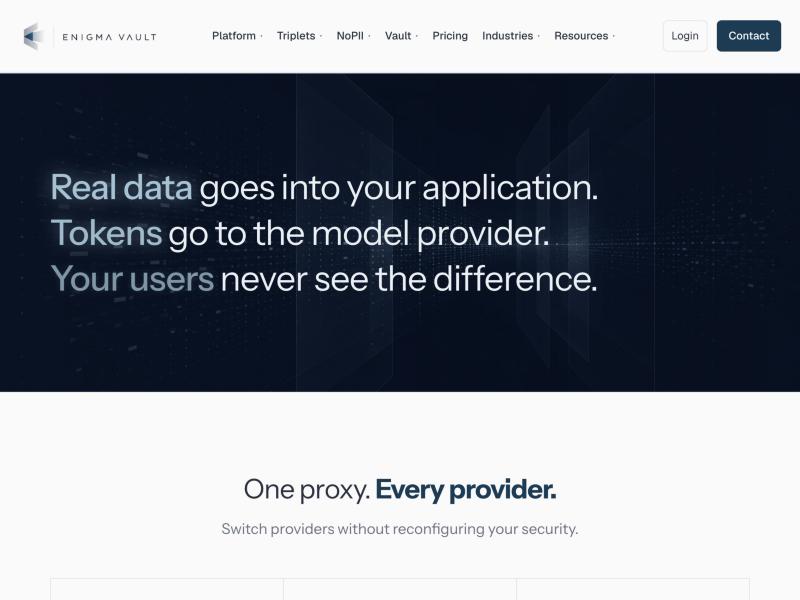
Screenshots of Enigma Vault 2 images
What's great
- Triple-certified stack at the lowest published price in the category: PCI DSS Level 1, SOC 2 Type II, and ISO 27001 from a single vendor, starting at $0 for the Lite tier
- Interactive on-site Card Vault demo lets a developer tokenize a test card number in the browser before writing a single line of code, a time-saver during evaluation that most competitors skip
- AWS Marketplace listing means AWS-native engineering teams can procure through consolidated billing and run through existing EDP credits, which removes a separate procurement cycle
Watch-outs
- Public review count is thin, fewer than 20 verified reviews across Capterra and G2 combined, so peer validation is harder to find than with Stripe or Braintree
- Overage pricing differs by vault type (Card Vault, Data Vault, File Vault), and the included request caps vary per tier; high-volume teams need to model actual usage before signing rather than reading the sticker price
- No published customer case studies with named brands and transaction volumes; enterprise procurement teams that require reference calls will need to request those directly from the sales team
Enigma Vault’s Card Vault is the most purpose-built platform in this guide for merchants whose primary goal is eliminating PAN storage from their environment. The hosted form captures card data directly into Enigma Vault’s PCI DSS Level 1 environment; the merchant receives a token and never touches the raw number. Enigma Vault’s AWS Marketplace listing includes the Card Vault API, which simplifies procurement for teams already inside the AWS ecosystem.
The triple-cert posture (PCI DSS Level 1 + SOC 2 Type II + ISO 27001) is unusual at this price point. The Plus tier at $49.99/mo covers production-scale tokenization at volumes that would cost meaningfully more on Basis Theory’s starter plan. The Lite tier is genuinely free, not a 14-day trial, which makes sandbox and low-volume testing cost-free.
The tradeoff is a thinner public review corpus than processor-native tools. Stripe, Braintree, and Adyen have thousands of G2 reviews. Enigma Vault has a fraction of that. If your procurement team requires a large verified review pool to clear a vendor, pair this evaluation with a direct reference request. For engineering-led teams that evaluate on docs, compliance certs, and API behavior, the data is all there.
Pricing breakdown
| Plan | Price | Best for |
|---|---|---|
| Lite | $0/mo | Development, low-volume production |
| Plus | $49.99/mo per vault | Growing merchants, production scale |
| Premium | $249.99/mo per vault | High-volume, multiple vault types |
| Enterprise | Custom | Enterprise contracts, dedicated tenancy |
Security & compliance
| Standard | Availability |
|---|---|
| SOC 2 Type II | Type II |
| GDPR | Yes |
| HIPAA | on request |
| SSO / SAML | Plus+ |
| Audit logs | All tiers |
Enigma Vault compliance summary: SOC 2 Type II is type ii, GDPR is yes, HIPAA is on request, SSO/SAML is plus+, and audit logs is all tiers.
Key integrations
| Integration | Type |
|---|---|
| Gmail | N/A |
| Outlook | N/A |
| Slack | N/A |
| LinkedIn Sales Navigator | N/A |
| Outreach / Salesloft | N/A |
Enigma Vault integration summary: Gmail is not specified, Outlook is not specified, Slack is not specified, LinkedIn Sales Navigator is not specified, and Outreach or Salesloft is not specified.
Feature availability
| Feature | Status |
|---|---|
| Free tier | ✓ Lite $0/mo forever |
| Card updater | Plus+ |
| Hosted form | ✓ |
| Network tokens | M |
| Processor agnostic | ✓ |
Enigma Vault feature availability summary: Free tier (✓ Lite $0/mo forever), Card updater (Plus+), Hosted form (✓), Network tokens (M), and Processor agnostic (✓).
Loading reviews…
TokenEx
Best processor-agnostic vault for enterprise multi-acquirer routing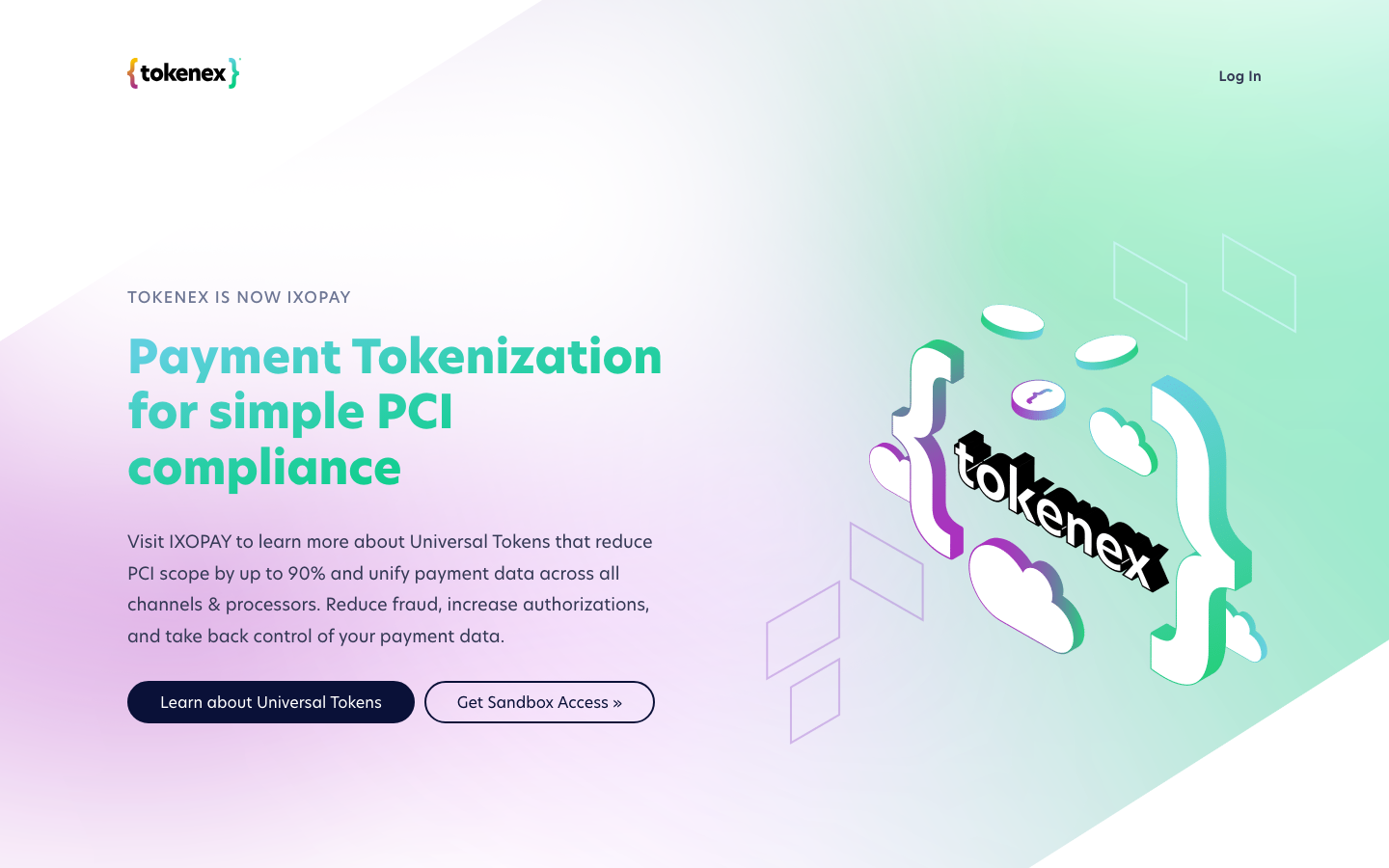
Screenshots of TokenEx 2 images
What's great
- Processor-agnostic by design: the same TokenEx token works across 200+ payment gateways and processors, so swapping acquirers never requires migrating stored card data
- Supports virtually any data type beyond cards, including ACH/bank account numbers, PII, and PHI, making it a single vault for teams managing multiple sensitive data types
- Hosted Input Fields and iFrame-based collection keep PANs off merchant servers and enable SAQ A or SAQ A-EP scope reduction depending on integration pattern
Watch-outs
- No published pricing; every deal is custom, which makes budgeting difficult before a sales conversation and creates uncertainty on renewal terms
- Minimum contract values typically start around $1,000/mo, which prices out early-stage startups and merchants with modest transaction volumes
- The UI for token management and vault administration is functional but dated; teams that expect modern developer tooling find Basis Theory a smoother day-to-day experience
TokenEx is the standard pick for enterprise payment teams routing card transactions across multiple acquirers or processors. The vault acts as a portability layer: your customer cards live in TokenEx, and the same token detokenizes at whatever processor you’re pointing transactions to that week. TokenEx’s platform overview covers the Token Sandbox, Hosted Input Fields, and the integrations directory.
The IXOPAY-TokenEx combination (TokenEx acquired IXOPAY in 2023) means the vault is now attached to a payment orchestration layer, which helps teams that want tokenization and routing in a single vendor relationship. The tradeoff is a custom-quote-only pricing model that requires a sales conversation before you can evaluate total cost.
TokenEx fits best when your PCI scope reduction goal is paired with a multi-processor routing strategy. If your entire payments stack runs through a single acquirer and you’re evaluating tokenization purely for PCI scope reduction, Enigma Vault’s published pricing is more accessible at the low end.
Pricing breakdown
| Plan | Price | Best for |
|---|---|---|
| Starter | ~$1,000/mo custom | Mid-market merchants, single vault type |
| Growth | Custom | Multi-gateway routing, 100K+ transactions/mo |
| Enterprise | Custom | Dedicated tenancy, enterprise SLAs |
Security & compliance
| Standard | Availability |
|---|---|
| SOC 2 Type II | Type II |
| GDPR | Yes |
| HIPAA | PHI vaulting available |
| SSO / SAML | Enterprise |
| Audit logs | All tiers |
TokenEx compliance summary: SOC 2 Type II is type ii, GDPR is yes, HIPAA is phi vaulting available, SSO/SAML is enterprise, and audit logs is all tiers.
Key integrations
| Integration | Type |
|---|---|
| Gmail | N/A |
| Outlook | N/A |
| Slack | N/A |
| LinkedIn Sales Navigator | N/A |
| Outreach / Salesloft | N/A |
TokenEx integration summary: Gmail is not specified, Outlook is not specified, Slack is not specified, LinkedIn Sales Navigator is not specified, and Outreach or Salesloft is not specified.
Feature availability
| Feature | Status |
|---|---|
| Free tier | No |
| Card updater | ✓ |
| Hosted form | ✓ |
| Network tokens | ✓ |
| Processor agnostic | ✓ |
TokenEx feature availability summary: Free tier (No), Card updater (✓), Hosted form (✓), Network tokens (✓), and Processor agnostic (✓).
Loading reviews…
VGS (Very Good Security)
Best proxy-based tokenization for teams keeping card data out of their codebase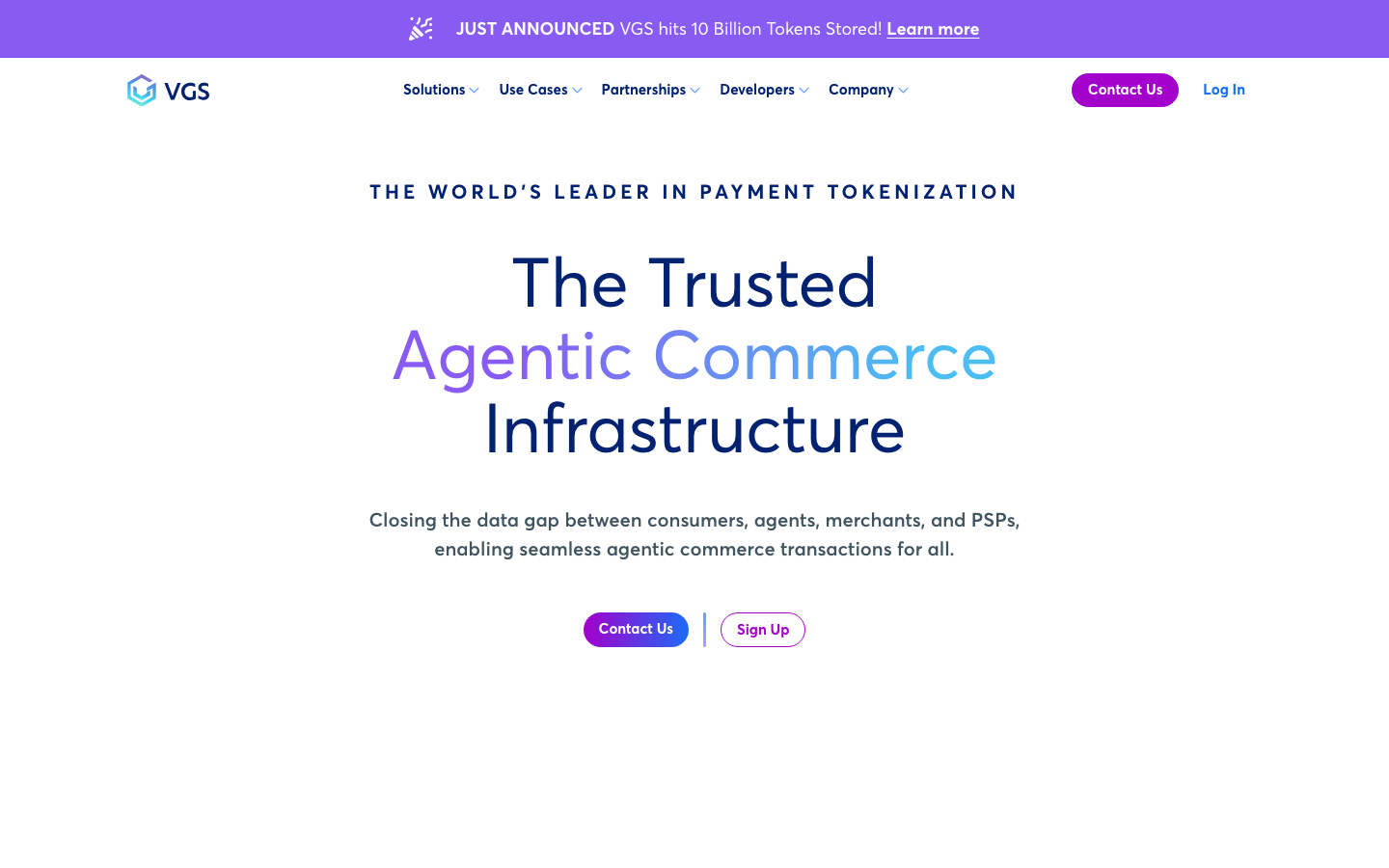
Screenshots of VGS (Very Good Security) 2 images
What's great
- Proxy model means card data never enters your application server at all: VGS intercepts the HTTP request, tokenizes in-flight, and forwards a clean token to your backend
- 4.7/5 across 47 G2 reviews, the highest G2 rating in this guide; reviewers consistently cite the reduction in compliance scope and the quality of the engineering support team
- VGS Collect (JavaScript SDK + mobile SDKs) handles the front-end card collection UI so developers wire up a tokenization flow in hours rather than building one from scratch
Watch-outs
- Proxy architecture adds a network hop; latency-sensitive transaction flows (sub-100ms payment APIs) will want to benchmark VGS round-trip times before committing
- Custom pricing with no published rate card; startup-friendly tiers exist but you need a sales conversation to get numbers, which slows down evaluation for self-serve builders
- Vault portability is more limited than TokenEx or Spreedly; the VGS vault is designed for their proxy ecosystem, and migrating tokens to another vault later requires coordination
VGS earns its 4.7/5 G2 rating (47 G2 reviews ) because the proxy approach genuinely solves the problem at the architectural level. Your application never handles a raw PAN. The card number goes into VGS on the way in, and a token comes out on the way to your processor. That’s the whole flow.
The differentiation from a standard vault is real: VGS isn’t just storing cards after collection, it’s intercepting the data before your application ever sees it. Payment engineers building fintech products from scratch tend to find this cleaner than retrofitting a hosted form onto an existing checkout. The VGS Dashboard gives compliance and engineering a shared view of data flows without exposing the underlying values.
The proxy latency question is real but manageable. VGS publishes 99.99% uptime SLAs and runs on AWS infrastructure with multi-region availability. Teams that benchmark it typically find the latency impact is under 50ms on US traffic, which is acceptable for most e-commerce and subscription flows.
Pricing breakdown
| Plan | Price | Best for |
|---|---|---|
| Startup | Custom (startup-friendly) | Early-stage fintechs, low volume |
| Scale | Custom | Growing merchants, 50K+ tokens/mo |
| Enterprise | Custom | Regulated enterprises, dedicated support |
Security & compliance
| Standard | Availability |
|---|---|
| SOC 2 Type II | Type II |
| GDPR | Yes |
| HIPAA | Yes |
| SSO / SAML | Enterprise |
| Audit logs | All tiers |
VGS (Very Good Security) compliance summary: SOC 2 Type II is type ii, GDPR is yes, HIPAA is yes, SSO/SAML is enterprise, and audit logs is all tiers.
Key integrations
| Integration | Type |
|---|---|
| Gmail | N/A |
| Outlook | N/A |
| Slack | N/A |
| LinkedIn Sales Navigator | N/A |
| Outreach / Salesloft | N/A |
VGS (Very Good Security) integration summary: Gmail is not specified, Outlook is not specified, Slack is not specified, LinkedIn Sales Navigator is not specified, and Outreach or Salesloft is not specified.
Feature availability
| Feature | Status |
|---|---|
| Free tier | Sandbox only |
| Card updater | ✓ |
| Hosted form | ✓ VGS Collect |
| Network tokens | ✓ |
| Processor agnostic | ✓ |
VGS (Very Good Security) feature availability summary: Free tier (Sandbox only), Card updater (✓), Hosted form (✓ VGS Collect), Network tokens (✓), and Processor agnostic (✓).
What reviewers say about VGS (Very Good Security)
Recurring themes across ~47 G2 reviews (4.7/5) and public TrustRadius feedback, 2024-2026.
What reviewers praise
- The tokenization proxy is the headline win in reviews, letting teams keep raw card and PII data out of their own systems so PCI scope drops sharply.
- Data encryption capability scores near the top of its category, and reviewers trust it for sensitive payment flows.
- Ease of setup rates well, with users saying the proxy dropped into existing infrastructure without a rebuild.
- Quality of support gets called out, with reviewers describing responsive help during integration.
What reviewers fault
- The proxy and vault configuration carries a learning curve, and a few reviewers wanted deeper documentation for advanced routing setups.
- Because VGS sits in the critical path of the payment flow, some reviewers flag the dependency risk of routing live traffic through a third party.
- Pricing transparency comes up as a gap, with cost climbing as request volume grows.
Loading reviews…
Basis Theory
Best developer experience for fintech teams building from the API up
Screenshots of Basis Theory 2 images
What's great
- Published pricing with a clear Starter tier at $995/mo for 20,000 tokens, production-ready PCI environment, and AOC included; one of the few enterprise-grade vaults with a real number on the pricing page
- Reactor feature lets developers run code against vaulted tokens server-side (tokenized card data never leaves the vault) enabling charge flows, 3DS checks, and fraud scoring without detokenization
- Best-in-class developer documentation in the category: full Postman collection, SDKs for Node, Python, Go, and .NET, and a public changelog
Watch-outs
- $995/mo Starter plan is a meaningful floor; early-stage startups with under 5K transactions/mo are paying for headroom they won't use for months
- Token count drives pricing, not transaction volume; high-frequency recurring billers with a large stored-customer base need to model token counts carefully before signing
- Newer platform compared to TokenEx or CyberSource; some enterprise procurement teams will request longer reference lists than Basis Theory can provide at this stage
Basis Theory positions itself as the payment vault that owns your token relationship independent of any processor. The Basis Theory pricing page puts a Starter plan at $995/mo, which includes a production-ready PCI DSS environment, AOC documentation, and 24-hour log access. That published pricing is meaningfully uncommon in a category that defaults to ‘contact sales.’
The Reactor feature is what separates Basis Theory from standard vault providers. Instead of detokenizing a card number to run it through a charge API, you write a serverless function that runs inside the vault against the token. The raw PAN never leaves the PCI boundary. That architecture is genuinely cleaner from a compliance standpoint, and it’s the reason Basis Theory’s PCI compliance page claims up to 90% reduction in SAQ D requirements.
The main friction for high-volume subscription businesses is the per-token pricing model. If you’re storing 200K customer card records and only billing 10K of them each month, you’re paying for 200K token slots. Compare that against per-transaction models before signing.
Pricing breakdown
| Plan | Price | Best for |
|---|---|---|
| Free | $0 (sandbox) | Development and testing only |
| Starter | $995/mo | 20K tokens, production PCI environment |
| Enterprise | Custom | PII/PHI vaulting, unlimited interactions, custom SLAs |
Security & compliance
| Standard | Availability |
|---|---|
| SOC 2 Type II | Type II |
| GDPR | Yes |
| HIPAA | Enterprise |
| SSO / SAML | Enterprise |
| Audit logs | Starter+ |
Basis Theory compliance summary: SOC 2 Type II is type ii, GDPR is yes, HIPAA is enterprise, SSO/SAML is enterprise, and audit logs is starter+.
Key integrations
| Integration | Type |
|---|---|
| Gmail | N/A |
| Outlook | N/A |
| Slack | N/A |
| LinkedIn Sales Navigator | N/A |
| Outreach / Salesloft | N/A |
Basis Theory integration summary: Gmail is not specified, Outlook is not specified, Slack is not specified, LinkedIn Sales Navigator is not specified, and Outreach or Salesloft is not specified.
Feature availability
| Feature | Status |
|---|---|
| Free tier | Sandbox only |
| Card updater | Enterprise |
| Hosted form | ✓ Elements |
| Network tokens | ✓ |
| Processor agnostic | ✓ |
Basis Theory feature availability summary: Free tier (Sandbox only), Card updater (Enterprise), Hosted form (✓ Elements), Network tokens (✓), and Processor agnostic (✓).
What reviewers say about Basis Theory
Recurring themes across public developer commentary and case-study discussion, 2024-2026. Independent review pool is thin (no rated G2 or Capterra listing yet).
What reviewers praise
- Developers describe the platform as flexible and non-opinionated, giving them control over token schemas instead of forcing a fixed card format.
- The vault meaningfully cuts PCI scope by holding card and sensitive data outside the merchant's own systems.
- Reviewers value avoiding processor lock-in, since tokens stay usable across multiple PSPs for routing and fee negotiation.
- Usage-based, token-count pricing is called transparent and easy to reason about month to month.
What reviewers fault
- The public review footprint is genuinely thin, so buyers have few independent references to lean on for a younger vendor.
- Adopting the vault takes real engineering effort, since it is a developer-first API rather than a turnkey portal.
- Keeping tokenized copies in sync across systems adds data-consistency overhead teams have to plan for.
Loading reviews…
Stripe (Network Tokens)
Best for Stripe-native e-commerce teams with high authorization rate targets
Screenshots of Stripe (Network Tokens) 2 images
What's great
- Stripe automatically upgrades stored cards to network tokens (Visa Token Service, Mastercard MDES) on behalf of merchants, improving authorization rates on stored credentials without developer work
- Stripe.js and Stripe Elements keep PANs entirely on Stripe infrastructure; correct implementation reduces merchant PCI scope to SAQ A, and Stripe publishes the QSA-ready documentation to prove it
- [458 G2 reviews](https://www.g2.com/products/stripe/reviews) at 4.2/5 reflect the widest developer community of any vendor in this guide; finding a developer who knows Stripe integration patterns is trivially easy
Watch-outs
- Tokenization is processor-locked: Stripe tokens only work with Stripe. If you ever want to switch acquirers or route volume to another processor, your stored customer cards do not migrate
- At 2.9% + $0.30 per transaction, Stripe is meaningfully more expensive than interchange-plus pricing available from enterprise acquirers; high-volume merchants often outgrow Stripe on cost
- Network token upgrades are automatic but not always transparent; merchants building custom retry logic or multi-processor routing need to understand Stripe token behavior in detail before designing flows
Stripe’s tokenization story is simple: if you use Stripe for payment acceptance, your cards are already tokenized on Stripe infrastructure and Stripe manages the PCI scope reduction. Stripe automatically handles network token enrollment with Visa and Mastercard, which provides the authorization-rate uplift that network tokens deliver without any developer work.
The catch is processor lock-in. Your customer card data lives in Stripe’s vault and you cannot export it in raw form. If you ever want to switch to Adyen or Braintree, you need to ask every stored customer to re-enter their card. For many e-commerce businesses, that’s an acceptable tradeoff given Stripe’s developer experience. For enterprise subscription companies billing millions of recurring customers, it’s a strategic risk worth pricing in.
Stripe’s network tokens documentation covers the automatic enrollment flow clearly. The combination of Stripe.js hosted fields and network token support is the easiest path to SAQ A compliance for developers who are already building on Stripe.
Pricing breakdown
| Plan | Price | Best for |
|---|---|---|
| Standard | 2.9% + $0.30 | Pay-as-you-go e-commerce |
| Startup | 2.7% + $0.05 | Startup discount (via application) |
| Enterprise | Custom interchange-plus | High-volume merchants, $1M+ annual volume |
Security & compliance
| Standard | Availability |
|---|---|
| SOC 2 Type II | Type II |
| GDPR | Yes |
| HIPAA | No |
| SSO / SAML | Dashboard |
| Audit logs | Dashboard |
Stripe (Network Tokens) compliance summary: SOC 2 Type II is type ii, GDPR is yes, HIPAA is no, SSO/SAML is dashboard, and audit logs is dashboard.
Key integrations
| Integration | Type |
|---|---|
| Gmail | N/A |
| Outlook | N/A |
| Slack | N/A |
| LinkedIn Sales Navigator | N/A |
| Outreach / Salesloft | N/A |
Stripe (Network Tokens) integration summary: Gmail is not specified, Outlook is not specified, Slack is not specified, LinkedIn Sales Navigator is not specified, and Outreach or Salesloft is not specified.
Feature availability
| Feature | Status |
|---|---|
| Free tier | No (pay per txn) |
| Card updater | ✓ automatic |
| Hosted form | ✓ Stripe Elements |
| Network tokens | ✓ auto-enrolled |
| Processor agnostic | ✗ Stripe-only |
Stripe (Network Tokens) feature availability summary: Free tier (No (pay per txn)), Card updater (✓ automatic), Hosted form (✓ Stripe Elements), Network tokens (✓ auto-enrolled), and Processor agnostic (✗ Stripe-only).
What reviewers say about Stripe (Network Tokens)
Recurring themes across ~738 G2 reviews (4.4/5), 2024-2026.
What reviewers praise
- The developer experience is the most-cited strength: clean documentation, a consistent well-designed API, and straightforward setup of subscriptions, invoices, and recurring flows without heavy custom engineering.
- Reviewers say Stripe Billing removes the pain of proration, failed-payment retries (Smart Retries), and dunning that previously required in-house code, so recurring revenue runs largely hands-off.
- Tax handling and multi-region compliance via Stripe Tax is repeatedly praised for collecting and remitting across jurisdictions that used to be a manual nightmare.
- Deep integration into the broader Stripe stack (Payments, Checkout, Connect) is called a genuine workflow saver, letting teams keep billing, payments, and payouts under one platform.
What reviewers fault
- Fees add up fast at scale: reviewers flag the per-transaction cut plus an additional percentage layered on top specifically for billing features, which gets expensive for high-volume businesses.
- Many billing essentials sit behind paywalled add-ons, and reviewers argue features they consider core to an online billing system cost extra.
- API rate limits (commonly cited around 100 read/write operations per second in live mode) are called a real growth constraint that B2B companies can hit.
- Reviewers say updating failed cards and generating self-serve payment-update links is clunky, and that out-of-the-box integration with non-Stripe systems could be smoother.
Loading reviews…
Spreedly
Best vault for teams running cards through multiple payment gateways
Screenshots of Spreedly 2 images
What's great
- Supports 100+ payment gateways through a single API; a stored card token in Spreedly can be routed to Stripe, Braintree, Adyen, CyberSource, or any of 100+ others without touching the raw PAN
- Network tokenization support across Visa Token Service and Mastercard MDES; Spreedly manages the token lifecycle and can upgrade gateway tokens to network tokens for enrolled cards
- PCI DSS Level 1 certified; correct Spreedly integration with hosted form collection reduces merchant scope to SAQ A, and the integration guide walks QSA requirements
Watch-outs
- G2 reviewers in late 2025 flagged significant price increases and high overall costs as the top complaint; the pricing has moved away from the accessible rates that built Spreedly's developer reputation
- Spreedly is a vault-and-routing platform, not a pure tokenization tool; teams that just want card storage without orchestration complexity are overpaying for functionality they will not use
- API response latency under high gateway-routing load can introduce variability that dedicated vaults (TokenEx, Basis Theory) do not have to manage
Spreedly’s vault is most valuable when tokenization serves a payment routing strategy, not just PCI compliance. If you store customer cards in Spreedly, you can route any charge to any of 100+ supported gateways without re-tokenizing. 35 G2 reviews at 4.4/5 generally reflect strong satisfaction from teams using Spreedly as a true orchestration layer; the gripes come from teams that upgraded expecting the same economics and found costs had moved up.
The Spreedly developer docs cover the tokenization flow clearly: collect card data via the Spreedly JavaScript library or hosted form, receive a payment method token, and use that token to charge any connected gateway. That processor flexibility is genuinely useful for platforms that want to optimize routing by geography, cost, or authorization rate.
Spreedly fits squarely in the ‘payment platform’ use case rather than the ‘pure vault’ use case. A subscription SaaS with 50K stored customer cards and one processor relationship is probably overpaying for Spreedly’s orchestration layer. A marketplace or PSP routing across multiple acquirers is the natural buyer.
Pricing breakdown
| Plan | Price | Best for |
|---|---|---|
| Starter | Custom | Single gateway, basic vault |
| Growth | Custom | Multi-gateway routing, network tokens |
| Enterprise | Custom | Dedicated infrastructure, custom SLAs |
Security & compliance
| Standard | Availability |
|---|---|
| SOC 2 Type II | Type II |
| GDPR | Yes |
| HIPAA | No |
| SSO / SAML | Enterprise |
| Audit logs | All tiers |
Spreedly compliance summary: SOC 2 Type II is type ii, GDPR is yes, HIPAA is no, SSO/SAML is enterprise, and audit logs is all tiers.
Key integrations
| Integration | Type |
|---|---|
| Gmail | N/A |
| Outlook | N/A |
| Slack | N/A |
| LinkedIn Sales Navigator | N/A |
| Outreach / Salesloft | N/A |
Spreedly integration summary: Gmail is not specified, Outlook is not specified, Slack is not specified, LinkedIn Sales Navigator is not specified, and Outreach or Salesloft is not specified.
Feature availability
| Feature | Status |
|---|---|
| Free tier | No |
| Card updater | ✓ |
| Hosted form | ✓ |
| Network tokens | ✓ |
| Processor agnostic | ✓ 100+ gateways |
Spreedly feature availability summary: Free tier (No), Card updater (✓), Hosted form (✓), Network tokens (✓), and Processor agnostic (✓ 100+ gateways).
Loading reviews…
Adyen Token Service
Best tokenization for enterprise merchants already on Adyen for acquiring
Screenshots of Adyen Token Service 2 images
What's great
- Native network token support for Visa Token Service and Mastercard MDES; Adyen reports authorization rate improvements of 2-3% on network-tokenized transactions vs raw PAN storage
- Omnichannel card storage: a card tokenized in Adyen online flows can be used for in-store transactions through the same shopper token, useful for retailers running both channels
- Tokenization is included in the Adyen payment stack with no additional vault fee; teams already on Adyen for acquiring get the full token service without an additional vendor relationship
Watch-outs
- 3.8/5 across 34 G2 reviews; reviewers flag the complexity of the Adyen API and the learning curve for developers coming from Stripe or Braintree
- Adyen tokens are Adyen-processor-native; if you move volume to another acquirer, stored Adyen tokens cannot be re-used at the new processor without a detokenization export process
- Implementation typically requires a technical integration partner or an in-house payments engineer; the API is powerful but not self-serve in the way Stripe or Basis Theory are
Adyen’s Token Service is the right choice when your acquiring relationship is already with Adyen and you want tokenization tightly coupled to your processing stack. The Adyen tokenization documentation covers shopper tokens, recurring tokens, and network token enrollment in one place.
The network token support is genuinely valuable at enterprise scale. 34 G2 reviews at 3.8/5 suggest Adyen earns strong trust from enterprise payment teams but frustrates developers who underestimated the integration complexity. Adyen’s customer profile tends to be large retailers and travel companies with dedicated in-house payment engineering, not self-serve builders.
The lock-in consideration is real: Adyen tokenization is embedded in the Adyen processing relationship. Teams that want processor-agnostic vault portability should look at TokenEx or Spreedly instead. Teams that want the tightest possible integration between tokenization and acquiring, with network token authorization-rate uplift baked in, will find Adyen’s stack hard to beat.
Pricing breakdown
| Plan | Price | Best for |
|---|---|---|
| Processing | Interchange + $0.12 processing fee | Standard acquiring + tokenization |
| Enterprise | Custom interchange-plus | Large merchants with volume-based discounts |
Security & compliance
| Standard | Availability |
|---|---|
| SOC 2 Type II | Type II |
| GDPR | Yes |
| HIPAA | No |
| SSO / SAML | Enterprise |
| Audit logs | Merchant portal |
Adyen Token Service compliance summary: SOC 2 Type II is type ii, GDPR is yes, HIPAA is no, SSO/SAML is enterprise, and audit logs is merchant portal.
Key integrations
| Integration | Type |
|---|---|
| Gmail | N/A |
| Outlook | N/A |
| Slack | N/A |
| LinkedIn Sales Navigator | N/A |
| Outreach / Salesloft | N/A |
Adyen Token Service integration summary: Gmail is not specified, Outlook is not specified, Slack is not specified, LinkedIn Sales Navigator is not specified, and Outreach or Salesloft is not specified.
Feature availability
| Feature | Status |
|---|---|
| Free tier | No |
| Card updater | ✓ Account Updater |
| Hosted form | ✓ Drop-in UI |
| Network tokens | ✓ native |
| Processor agnostic | ✗ Adyen-native |
Adyen Token Service feature availability summary: Free tier (No), Card updater (✓ Account Updater), Hosted form (✓ Drop-in UI), Network tokens (✓ native), and Processor agnostic (✗ Adyen-native).
Loading reviews…
Braintree Vault
Best tokenization for PayPal-ecosystem merchants and marketplaces
Screenshots of Braintree Vault 2 images
What's great
- Hosted Fields drop PANs directly into Braintree servers; combined with Drop-in UI this achieves SAQ A scope reduction for most e-commerce integration patterns
- Native PayPal and Venmo storage in the same vault; marketplaces that accept both card and PayPal can manage all stored payment methods through one Braintree API
- Braintree sandbox is fully featured and unlimited; teams can test the complete tokenization and recurring charge flow without a contract or credit card
Watch-outs
- Part of PayPal; Braintree pricing at 2.59% + $0.49 is higher than interchange-plus alternatives at comparable volumes, and Braintree has historically been slower to adopt enterprise features vs PayPal priorities
- Processor lock-in is equivalent to Stripe; Braintree tokens cannot be ported to another processor, and the migration path for stored cards out of Braintree requires a data export conversation with support
- Network token support (Visa Token Service, Mastercard MDES) is available but the implementation is less automated than Stripe or Adyen; developers need to configure enrollment explicitly
Braintree Vault is the logical choice when your payment stack already runs on Braintree and you need secure card storage for recurring billing. The Braintree Hosted Fields implementation keeps PANs off your servers and is the standard integration pattern for SAQ A scope reduction on Braintree.
The PayPal ownership is both a strength and a complication. The strength is native PayPal and Venmo storage alongside card data, which matters for marketplaces and consumer apps where multiple payment methods coexist. The complication is that Braintree’s roadmap now runs through PayPal’s enterprise priorities, which can slow down features that matter to mid-market SaaS companies.
For merchants building a new payment stack with no existing acquirer relationship, Stripe or Enigma Vault offer cleaner entry points. Braintree Vault earns its place on this list for the subset of teams already committed to the Braintree-PayPal ecosystem.
Pricing breakdown
| Plan | Price | Best for |
|---|---|---|
| Standard | 2.59% + $0.49 | Pay-as-you-go merchants |
| Enterprise | Custom interchange-plus | High-volume merchants, $500K+ annual |
Security & compliance
| Standard | Availability |
|---|---|
| SOC 2 Type II | Type II |
| GDPR | Yes |
| HIPAA | No |
| SSO / SAML | Enterprise |
| Audit logs | Control Panel |
Braintree Vault compliance summary: SOC 2 Type II is type ii, GDPR is yes, HIPAA is no, SSO/SAML is enterprise, and audit logs is control panel.
Key integrations
| Integration | Type |
|---|---|
| Gmail | N/A |
| Outlook | N/A |
| Slack | N/A |
| LinkedIn Sales Navigator | N/A |
| Outreach / Salesloft | N/A |
Braintree Vault integration summary: Gmail is not specified, Outlook is not specified, Slack is not specified, LinkedIn Sales Navigator is not specified, and Outreach or Salesloft is not specified.
Feature availability
| Feature | Status |
|---|---|
| Free tier | Sandbox only |
| Card updater | ✓ |
| Hosted form | ✓ Drop-in UI |
| Network tokens | Manual config |
| Processor agnostic | ✗ Braintree-native |
Braintree Vault feature availability summary: Free tier (Sandbox only), Card updater (✓), Hosted form (✓ Drop-in UI), Network tokens (Manual config), and Processor agnostic (✗ Braintree-native).
Loading reviews…
CyberSource Token Management
Best enterprise token management for Visa-connected acquiring relationships
Screenshots of CyberSource Token Management 2 images
What's great
- Visa-owned platform with direct integration to Visa Token Service; CyberSource merchants get network token enrollment with minimal additional configuration compared to independent vaults
- Token Management Service supports multi-processor token portability within the CyberSource ecosystem; merchants can route tokens to multiple acquirers connected through the TMS
- Deep fraud management integration: tokenized cards feed directly into CyberSource Decision Manager for fraud scoring, enabling a unified security stack under one vendor
Watch-outs
- 3.6/5 across 60 G2 reviews; the most common complaint is the complexity of the implementation and the age of the developer documentation, which has not kept pace with modern API standards
- Enterprise-only pricing with no self-serve entry point; a startup or mid-market company evaluating CyberSource will typically hit minimum volume requirements that price them out early in the process
- UI and developer experience feel dated compared to Stripe, Basis Theory, or VGS; teams that have worked with modern API-first payment platforms find the CyberSource integration friction real
CyberSource Token Management Service fits large enterprise merchants that are already integrated into the Visa-Cybersource acquiring ecosystem and want tokenization tightly coupled to their fraud and payment processing stack. 60 G2 reviews at 3.6/5 are the lowest rating in the top 10 here; that’s a realistic signal that CyberSource earns its place on enterprise shortlists not because of developer experience but because of Visa ownership and the depth of the fraud management integration.
The TMS (Token Management Service) is genuinely powerful for multi-acquirer enterprise routing within the CyberSource network. The lock-in concern is present but less severe than with Stripe or Braintree because CyberSource explicitly supports portability between connected processors.
If you’re evaluating CyberSource for tokenization specifically and your acquirer is not CyberSource, the developer friction and minimum volume requirements will likely push you toward Enigma Vault, Basis Theory, or VGS at the evaluation stage.
Pricing breakdown
| Plan | Price | Best for |
|---|---|---|
| Enterprise | Custom | Large merchants, CyberSource acquiring |
| Flex | Custom | Mid-market with volume commitment |
Security & compliance
| Standard | Availability |
|---|---|
| SOC 2 Type II | Yes |
| GDPR | Yes |
| HIPAA | on request |
| SSO / SAML | Enterprise |
| Audit logs | Business Center |
CyberSource Token Management compliance summary: SOC 2 Type II is yes, GDPR is yes, HIPAA is on request, SSO/SAML is enterprise, and audit logs is business center.
Key integrations
| Integration | Type |
|---|---|
| Gmail | N/A |
| Outlook | N/A |
| Slack | N/A |
| LinkedIn Sales Navigator | N/A |
| Outreach / Salesloft | N/A |
CyberSource Token Management integration summary: Gmail is not specified, Outlook is not specified, Slack is not specified, LinkedIn Sales Navigator is not specified, and Outreach or Salesloft is not specified.
Feature availability
| Feature | Status |
|---|---|
| Free tier | No |
| Card updater | ✓ |
| Hosted form | ✓ Secure Acceptance |
| Network tokens | ✓ Visa-native |
| Processor agnostic | Within TMS network |
CyberSource Token Management feature availability summary: Free tier (No), Card updater (✓), Hosted form (✓ Secure Acceptance), Network tokens (✓ Visa-native), and Processor agnostic (Within TMS network).
Loading reviews…
Checkout.com
Best high-volume API-first tokenization for global enterprise merchants
Screenshots of Checkout.com 2 images
What's great
- 4.6/5 across 71 G2 reviews, the highest G2 rating among processor-native tools in this guide; reviewers consistently cite the quality of the technical support team and the API documentation
- Network token support across Visa Token Service and Mastercard MDES with automatic enrollment for eligible stored cards; Checkout.com reports 2-4% authorization rate improvement on network-tokenized transactions
- Checkout.com Frames provides a hosted card input UI that keeps PANs on Checkout.com servers; combined with token storage achieves SAQ A for compliant integrations
Watch-outs
- Enterprise-focused pricing with no self-serve entry; minimum processing volumes typically required, which makes Checkout.com an unlikely fit for merchants under $1M annual card volume
- Like Adyen and Braintree, Checkout.com tokens are processor-native; portability to another acquirer requires a migration conversation and a data export process
- UK-headquartered with strong US coverage but some US-specific payment methods (ACH, regional debit networks) are less mature than competitors with deeper US roots
Checkout.com earned its 4.6/5 G2 rating (71 reviews ) by being genuinely strong at the things enterprise payment engineering teams care about: API quality, technical support responsiveness, and global acquiring coverage. The tokenization stack is well-documented at checkout.com/docs/payments/tokenization and covers both card tokens and network token enrollment.
Checkout.com is a natural fit for global e-commerce businesses processing in multiple currencies that want a single acquiring relationship with tokenization and network tokens managed by the same platform. The processor-native token lock-in is the same tradeoff as Stripe or Adyen. If processor portability matters, Spreedly, TokenEx, or Basis Theory belong on the shortlist.
For pure PCI scope reduction without a new acquiring relationship, Enigma Vault or VGS are simpler entry points. Checkout.com belongs on the list when you’re evaluating it as a full acquiring-plus-tokenization stack, not just as a vault.
Pricing breakdown
| Plan | Price | Best for |
|---|---|---|
| Pay-as-you-go | Custom interchange-plus | Mid-market merchants |
| Enterprise | Custom | Global enterprise, custom pricing bands |
Security & compliance
| Standard | Availability |
|---|---|
| SOC 2 Type II | Type II |
| GDPR | Yes |
| HIPAA | No |
| SSO / SAML | Enterprise |
| Audit logs | Dashboard |
Checkout.com compliance summary: SOC 2 Type II is type ii, GDPR is yes, HIPAA is no, SSO/SAML is enterprise, and audit logs is dashboard.
Key integrations
| Integration | Type |
|---|---|
| Gmail | N/A |
| Outlook | N/A |
| Slack | N/A |
| LinkedIn Sales Navigator | N/A |
| Outreach / Salesloft | N/A |
Checkout.com integration summary: Gmail is not specified, Outlook is not specified, Slack is not specified, LinkedIn Sales Navigator is not specified, and Outreach or Salesloft is not specified.
Feature availability
| Feature | Status |
|---|---|
| Free tier | Sandbox only |
| Card updater | ✓ |
| Hosted form | ✓ Frames |
| Network tokens | ✓ auto-enrolled |
| Processor agnostic | ✗ Checkout-native |
Checkout.com feature availability summary: Free tier (Sandbox only), Card updater (✓), Hosted form (✓ Frames), Network tokens (✓ auto-enrolled), and Processor agnostic (✗ Checkout-native).
Loading reviews…
More top-rated Credit Card Tokenization Software worth checking out
Highly rated Credit Card Tokenization Software that didn't crack our top 10 but are still strong contenders, especially for specific use cases and team sizes.
NMI Gateway
For payment ISOs and resellers building white-label tokenization into their stack
Standout: Built specifically for ISOs and payment resellers who need white-label tokenization they can offer to downstream merchants without building their own vault
Paysafe
For gaming, igaming, and digital media merchants with high-risk card storage needs
Standout: Strong vertical coverage for gaming and igaming: Paysafe processes for licensed gambling operators where card storage requirements intersect with regulatory compliance beyond PCI
Authorize.net CIM
For SMBs already on Authorize.net gateway needing basic card storage without a separate vault
Standout: Customer Information Manager (CIM) stores cards and bank accounts per customer profile and is included in the standard Authorize.net gateway at $25/mo; no additional vault vendor needed
Worldpay
For Fortune 500 retailers wanting tokenization inside an enterprise acquiring contract
Standout: One of the largest acquiring networks globally; enterprise merchants already on Worldpay get tokenization as part of an existing contract with no new vendor relationship
BlueSnap
For global B2B subscription merchants who need tokenization across 100+ currencies
Standout: BlueSnap Hosted Payment Fields tokenize cards on BlueSnap servers across 100+ currencies; one vault for a global subscription business without needing regional acquiring contracts
Recurly
For SaaS subscription companies where the billing engine and vault need to be the same product
Standout: Card tokenization is integrated into a full subscription billing engine; merchants get vault storage, automated retries, dunning, and revenue recognition in one platform
What reviewers say ★ 4.0 · 205
Praised
- Automated dunning and churn recovery draw the most praise, with reviewers crediting reliable retries and one-click payment updates for reducing failed-payment churn.
- Billing reliability is a recurring theme: Recurly charges on the right cycle consistently, and reviewers say that dependability offsets the cost.
- The ability to plug in and swap almost any payment gateway with minimal effort is called out as genuine flexibility.
- The interface is generally seen as user-friendly and support is described as responsive by higher-rated reviewers.
Faulted
- Customization is limited: reviewers say editing invoices, changing line-item pricing or descriptions after issuance, and setting custom renewal notifications is harder than it should be.
- Handling price localization, tax-inclusive versus tax-exclusive setups, and pricing A/B tests is cumbersome, and documentation is described as scattered and inconsistent.
- Reporting lacks depth, especially dunning-email performance (open, click, and cohort-churn visibility), leaving teams without insight into what is working.
- Pricing is called expensive for startups and low-volume businesses (list starts around $1,200), and a few reviewers felt misled or overcharged by fine-print contract terms.
Chargebee
For fast-growing subscription businesses managing complex pricing models with card storage
Standout: 4.4/5 across 976 G2 reviews, the largest review base of any compact tool in this guide; mature platform with strong community and integration ecosystem
What reviewers say ★ 4.4 · 995
Praised
- Automated dunning and smart retries are the standout: reviewers report the follow-up emails and retry logic measurably cut involuntary churn without manual chasing.
- The customer self-service portal for managing subscriptions, upgrades, and cancellations is praised for removing day-to-day billing overhead from finance and support teams.
- Chargebee handles complex billing scenarios (multiple plans, proration, coupons, tiered pricing) that reviewers say would otherwise need heavy custom development.
- Broad integrations and a generally user-friendly interface make it straightforward to plug into existing CRM, accounting, and payment stacks.
Faulted
- Analytics and reporting are the most common gap: reviewers say Chargebee shows billing and invoicing figures but not a full view of business health, with weak dashboards and limited customer segmentation.
- Pricing frustrates teams as they scale, with a sharp jump between tiers and revenue-based overage fees that several reviewers describe as a success tax.
- Customer support quality is a recurring complaint across G2, Capterra, and TrustRadius, with slow or unhelpful responses cited repeatedly.
- Customization is restricted in places, and some reviewers report a poor cancellation and refund experience, including being renewed after attempting to cancel.
Zuora
For enterprise subscription billing teams where tokenization is one part of a complex revenue model
Standout: Zuora Payments stores card tokens across connected gateways and connects to 30+ processors; enterprise companies get tokenization inside a full revenue lifecycle platform
What reviewers say ★ 3.9 · 309
Praised
- Zuora handles genuinely complex subscription billing and revenue recognition at enterprise scale, managing recurring models, pricing changes, renewals, and invoicing without heavy in-house systems.
- Subscription-lifecycle automation is valued for cutting manual work and keeping billing accurate as volume grows.
- Out-of-the-box Salesforce and NetSuite integrations, multi-currency support, and tax automation are cited as strong fits for large, multi-entity operations.
- Reviewers note the platform is powerful and highly configurable once the API is used to work around interface limits.
Faulted
- Complexity is the dominant theme: setup, configuration, and ongoing maintenance are resource-intensive and often need dedicated staff or consultants.
- The native UI is a repeated weak point, with reviewers effectively routing around it through the API.
- Reporting is called weak, pushing some teams to export into their own data warehouse for real analysis.
- Reviewers report trouble with line-level and invoice-wide discounts, constraints on payment plans and billing frequencies, and several mention server outages.
PayArc
For small merchant ISOs building card storage into a reseller payment product
Standout: Customer Vault stores cards for recurring billing at 2.49% + $0.15/transaction, a rate competitive with Stripe and Braintree for small merchants
Stax
For US businesses on flat-rate subscription pricing that want card storage without per-transaction vault fees
Standout: Flat-rate subscription model starting at $99/mo with interchange-cost-plus transaction fees; businesses with high monthly card volume save significantly vs percentage-based processing
Tools we considered but excluded
We evaluated more tools than the 20 you see above. These did not make the cut. Saying what we rejected, and why, is the editorial muscle most listicles skip.
- Skyflow: Privacy vault with strong PII focus; Basis Theory and VGS cover the PCI card tokenization use case more cleanly for payment teams
- Bluefin: Strong point-of-sale encryption and P2PE specialist; less relevant for e-commerce and subscription card-not-present tokenization
- Token.io: Open banking-focused token infrastructure; payment initiations not card PAN storage
- Stripe Radar: Fraud tool, not a tokenization platform; covered implicitly under the Stripe entry
- Verizon Payment Gateway: Legacy carrier-billing infrastructure; not relevant for modern e-commerce card tokenization
- RealPage PayConnect: Property management vertical payments; relevant only for proptech, not general credit card tokenization
Honorable mentions
Solid tools that did not crack the main list but are worth tracking, especially for niche use cases.
- Skyflow: Data privacy vault with strong PCI support; worth tracking for companies that need card tokenization alongside PII/PHI vaulting in one platform
- Bluefin: Best-in-class point-of-sale P2PE encryption; relevant for omnichannel merchants adding card-present to an e-commerce card-not-present tokenization strategy
- Very Good Vault (Fidel API): Emerging card-linked offers infrastructure that uses bank-identified tokenization; different use case but adjacent for loyalty and fintech builders
Where each credit card tokenization tool fits
Credit card tokenization is not one product. The platform you need depends on whether you’re solving for PCI scope reduction, processor portability, authorization rate improvement, or all three at once.
The tools in this guide fall into five distinct segments, and they are not interchangeable.
Dedicated vault providers (Enigma Vault, TokenEx, Basis Theory, VGS) treat tokenization as their core product. Card data goes in, tokens come out, and the vault can connect to any processor. They are the right starting point when you want clean portability and the strongest PCI scope reduction story. No single processor owns your stored customer card data.
Processor-native tokenization (Stripe, Braintree, Adyen, Checkout.com, CyberSource) bundles tokenization into the payment acceptance stack. You get a tightly integrated developer experience and often automatic network token enrollment. The tradeoff is lock-in: your stored customer card data lives in the processor’s environment, and switching acquirers later means re-collecting cards from every stored customer. That is a significant operational risk once you cross 50K stored cards.
Payment orchestration with vaulting (Spreedly, BlueSnap, NMI) treats the vault as the portability layer for a multi-gateway routing strategy. The tokenization is real. It just exists in service of routing flexibility rather than as a standalone compliance tool.
Subscription billing with embedded vault (Chargebee, Recurly, Zuora) handles tokenization as one piece of a full billing lifecycle. Cards are stored per subscription customer. Retries, dunning, and card updates are managed automatically. Useful, but not portable across processors.
SMB gateway bundled storage (Authorize.net CIM, Stax, PayArc) provides basic card storage within existing gateway relationships. Functional for simple recurring billing. Not appropriate for enterprise PCI requirements or any multi-processor strategy.
Narrowing the tokenization shortlist
Four questions drive the decision.
One, what is your PCI scope target? SAQ A is the goal for most e-commerce merchants: around 25 requirements vs 300+ in SAQ D. Getting there requires a hosted form or JavaScript-based card collection that routes PAN data directly to a PCI Level 1 environment without passing through your servers. Every tool in the top 10 here supports this. Where they differ is in how cleanly they document the integration path for your QSA, and whether their AOC documentation arrives in 24 hours or takes a week to chase down.
Two, do you need processor portability? If you will always run through a single acquirer with no plans to add others, processor-native tokenization from Stripe or Braintree is the simplest path. If there is any chance you will add a second processor in the next 18 months, route by geography, or test gateway performance, an independent vault (TokenEx, Basis Theory, Enigma Vault) makes sense. It is a one-time architectural decision that pays off every time you negotiate with an acquirer afterward.
Three, do you need network tokens? For subscription businesses above $1M annual card volume, the answer is yes. Network tokens from Visa and Mastercard improve authorization rates on stored credentials by 2-4% and auto-update on card reissue. That 2-4% auth rate improvement is not theoretical at scale: on $5M in recurring monthly volume, it is a real number. Stripe, Adyen, Checkout.com, and VGS support network tokens natively. Enigma Vault and Basis Theory have it at higher tiers or on the roadmap.
Four, what is your developer’s starting point? Basis Theory and VGS are the fastest paths to a working sandbox integration for engineers with standard REST API experience. CyberSource and Worldpay require a dedicated payments integration partner to implement correctly. That implementation cost is part of the total cost of ownership and rarely shows up in the vendor comparison spreadsheet until month three of the project.
Quick decision guide
E-commerce merchant, first vault, SAQ A target: Enigma Vault Card Vault, or Stripe if already on Stripe. Both achieve SAQ A with hosted form collection. Enigma Vault adds processor portability Stripe cannot match, and starts at $0/mo on the Lite tier.
SaaS subscription company under $5M ARR: Chargebee or Recurly with tokenization bundled into the billing platform. Once you cross $5M ARR and want processor flexibility, move the vault to Basis Theory or TokenEx. Keep billing in Chargebee. Do not rebuild the billing layer.
High-growth fintech building from the API up: Basis Theory. The Reactor architecture, clean documentation, and AOC support give compliance-minded engineering teams what they need without fighting a dated API or waiting for a sales rep to unlock the sandbox.
Enterprise merchant with multi-acquirer routing: TokenEx or Spreedly. TokenEx for pure vault portability with no orchestration overhead. Spreedly if routing logic across 100+ gateways is part of the architecture.
Enterprise merchant already on Adyen or Checkout.com: Stay on the processor’s native tokenization. The network token enrollment, auth rate uplift, and unified support relationship outweigh the portability advantage of an independent vault at that scale.
Payment ISO or white-label platform: NMI Gateway Customer Vault. Built for this use case. Not really accessible any other way.
Regulated industry (gaming or healthcare-adjacent payments): Paysafe for gaming. CyberSource for healthcare-adjacent enterprise transactions. Both have vertical-specific compliance postures that matter during procurement reviews in those sectors.
What to put in your credit card tokenization trial
Seven tests. Run all of them before signing anything.
One, tokenize a real test card through the hosted form without touching your backend. This is the core SAQ A proof point. If the raw PAN appears in your server logs at any point during this test, the integration is wrong. Run this before evaluating any other feature. Every other test depends on passing this one.
Two, detokenize the token through the API and confirm the original number matches. Validation errors in detokenization surface here and not during tokenization. Confirm the round-trip works in your environment before moving to load testing.
Three, test processor routing with the same token. For independent vaults (TokenEx, Basis Theory, Spreedly), send the same token to two different processor sandbox endpoints. If detokenization works at both, you have confirmed portability. This test is physically impossible with Stripe or Braintree tokens.
Four, request the AOC document. Ask the vendor for their Attestation of Compliance. If they cannot provide it within 24 hours, raise that with your QSA before signing. Enigma Vault, Basis Theory, and VGS all include AOC support explicitly. If a vendor hesitates, that hesitation is a procurement signal.
Five, test card updater on a test card approaching expiry. Stored credentials that fail silently on renewal are a churn driver, not just a bug. Confirm the card updater fires correctly in the sandbox before billing live transactions.
Six, review audit log coverage. Run three tokenization operations. Confirm each appears in the audit log with timestamp, IP, and token ID. A platform that cannot produce clean audit exports before you sign will not produce them under audit pressure either.
Seven, check network token enrollment status on a stored test card. On platforms that support network tokens (Stripe, Adyen, VGS, Basis Theory at enterprise), confirm the test card is enrolled in Visa Token Service or Mastercard MDES in the sandbox dashboard. Enrollment failure in sandbox = enrollment failure in production.
Where credit card tokenization is heading in 2026
Network tokens are becoming the default, not a premium feature. Both Visa and Mastercard have pushed card-on-file transaction rules that now effectively require network tokens for subscriptions above certain volume thresholds. Platforms that priced network tokens as an upgrade in 2024 are moving them into standard tiers in 2026. Factor in that cost before comparing sticker prices.
Processor portability is being marketed harder as interchange negotiations get more aggressive. A 2-4% swing in interchange rates across acquirers is meaningful at $1M+ monthly card volume. Independent vault vendors (TokenEx, Basis Theory, Spreedly) are explicitly marketing processor-agnostic architecture as a negotiating tool. When your stored cards live in a portable vault, you can credibly threaten to route volume elsewhere. Processor-locked vaults cannot make that threat.
The SAQ A documentation race is on. Every major tokenization vendor now publishes QSA-ready integration guides and SAQ A reduction checklists. Quality varies. Basis Theory and Enigma Vault have the most detailed public-facing QSA support documentation. CyberSource lags. When your QSA reviews the vendor file, documentation quality translates directly to billable hours saved.
AI-powered card lifecycle management is arriving. Chargebee, Recurly, and Stripe’s smart retries already use ML for dunning optimization on stored credentials. The next wave is predictive card updater enrollment: platforms that analyze authorization decline patterns and trigger proactive card refresh before a customer hits a failed renewal notification. Live in limited beta at Stripe and Adyen as of mid-2026.
PCI DSS 4.0 requirements are reshaping vendor conversations. The v4.0 transition (March 2025 deadline for most requirements) introduced Requirement 6.4.2, which requires JavaScript-based card collection libraries to be integrity-checked. Stripe.js and Basis Theory Elements both publish CSP headers and subresource integrity hashes for exactly this requirement. Ask your prospective vendor the same question before their sales call ends.
SAQ A vs SAQ A-EP: know which one you are targeting before picking an integration approach. SAQ A requires the merchant payment page to be hosted entirely by the PCI-validated third party. SAQ A-EP allows the merchant to serve the page but collect data through an iFrame. Enigma Vault, Stripe, Braintree, and VGS support the hosted-form-only path to SAQ A. TokenEx and Basis Theory support both patterns depending on how you integrate. Your QSA needs to confirm which SAQ applies to your specific setup before you finalize the integration architecture.
Corrections and data updates to this guide can be sent to corrections@topickz.com . We review pricing and ratings quarterly; next scheduled refresh is January 2027.
Sources:
Frequently asked questions
What is credit card tokenization?
Tokenization replaces a raw card number (PAN) with a non-sensitive token. Merchants store the token and never hold the real card data.
Does tokenization eliminate PCI DSS compliance?
No. It reduces scope. Correct tokenization with hosted forms can drop you from SAQ D (300+ requirements) to SAQ A (25 requirements).
What is the difference between a gateway token and a network token?
Gateway tokens are processor-specific. Network tokens are issued by Visa or Mastercard and work across processors, improving authorization rates by 2-4%.
Can I port tokens from one processor to another?
Processor-native vaults (Stripe, Braintree) cannot port tokens. Independent vaults (TokenEx, Basis Theory, Spreedly) are designed for portability.
What is SAQ A and how do I qualify?
SAQ A is the simplest PCI self-assessment questionnaire, covering 25 requirements. It requires card data to never touch your servers.
Is Enigma Vault PCI DSS certified?
Yes. Enigma Vault is PCI DSS Level 1 Service Provider certified, plus SOC 2 Type II and ISO 27001.
What does a credit card tokenization platform cost?
Ranges from $0/mo (Enigma Vault Lite, Stripe sandbox) to $995/mo (Basis Theory Starter) to custom enterprise contracts above $1,000/mo (TokenEx).
Does Stripe tokenization reduce PCI scope?
Yes. Stripe Elements and Stripe.js keep PANs on Stripe servers. Correct integration achieves SAQ A for e-commerce checkouts.
What is a network token and do I need one?
Network tokens from Visa or Mastercard replace PANs on the scheme level. They improve auth rates by 2-4% and auto-update on card reissue.
How long does PCI tokenization implementation take?
API-first tools like Basis Theory or VGS: 1-5 days to sandbox. Enterprise integrations like CyberSource or Adyen: 4-12 weeks with a partner.
Related helpful reads
Write a review
Posts to the page right away. Keep it real — no links or email addresses.