Quick verdict
Magaya = native warehousing, forwarder accounting built in, easier for Americas mid-market.
CargoWise = single database, deeper customs coverage, built for global scale.
Magaya wins on native warehousing, built-in forwarder accounting, and an easier implementation for Americas mid-market forwarders, while CargoWise wins for global forwarders that need one database covering customs entries across dozens of countries.
The trade between Magaya and CargoWise is real on both sides. CargoWise buyers accept a steep learning curve, support that reviewers rate poorly, and a cost structure they describe as hard to predict. Magaya buyers accept an older interface, connectivity complaints, and customs depth that thins out fast outside the Americas.
If your customs footprint is one or two countries, pick Magaya. If it is eight, pick CargoWise and budget the implementation honestly.
CargoWise vs Magaya at a glance
| Tool | Best for | Starting price | Free tier | External rating |
|---|---|---|---|---|
Global forwarders filing customs in many countries | Custom quote (transaction + module based) | No | ★ 9.0 | |
Americas forwarders, especially with a CFS warehouse | From approx. $300/user/mo (third-party research) | No | ★ 9.1 |
Feature comparison by criteria
| Criteria | CargoWise | Magaya |
|---|---|---|
| G2 rating | 4.3/5 | 4.4/5 |
| G2 review count | 30 | 281 (67% five-star) |
| Entry price | Custom quote, no rate card | From approx. $300/user/mo (third-party) |
| Pricing model | Transaction + module based | Per user |
| Customs jurisdictions | Dozens of national regimes | Strongest in the Americas |
| Warehouse management | Included in the suite | Native, a primary strength |
| Forwarder accounting | Full accruals and invoicing | Job costing and profit per file |
| Implementation | Measured in quarters, partner usually needed | 1 to 3 months typical |
| Learning curve | Steep; certification program exists | Real but shorter, knowledge base helps |
| Support sentiment in reviews | The most criticized area | Response times flagged as slow |
| Best for | Global multi-country forwarders, 100+ users | Americas forwarders, 10 to 200 users |
| Our score (out of 10) | 9.0 | 9.1 |
Product demos and screenshots
CargoWise

Screenshots of CargoWise 4 images
Magaya
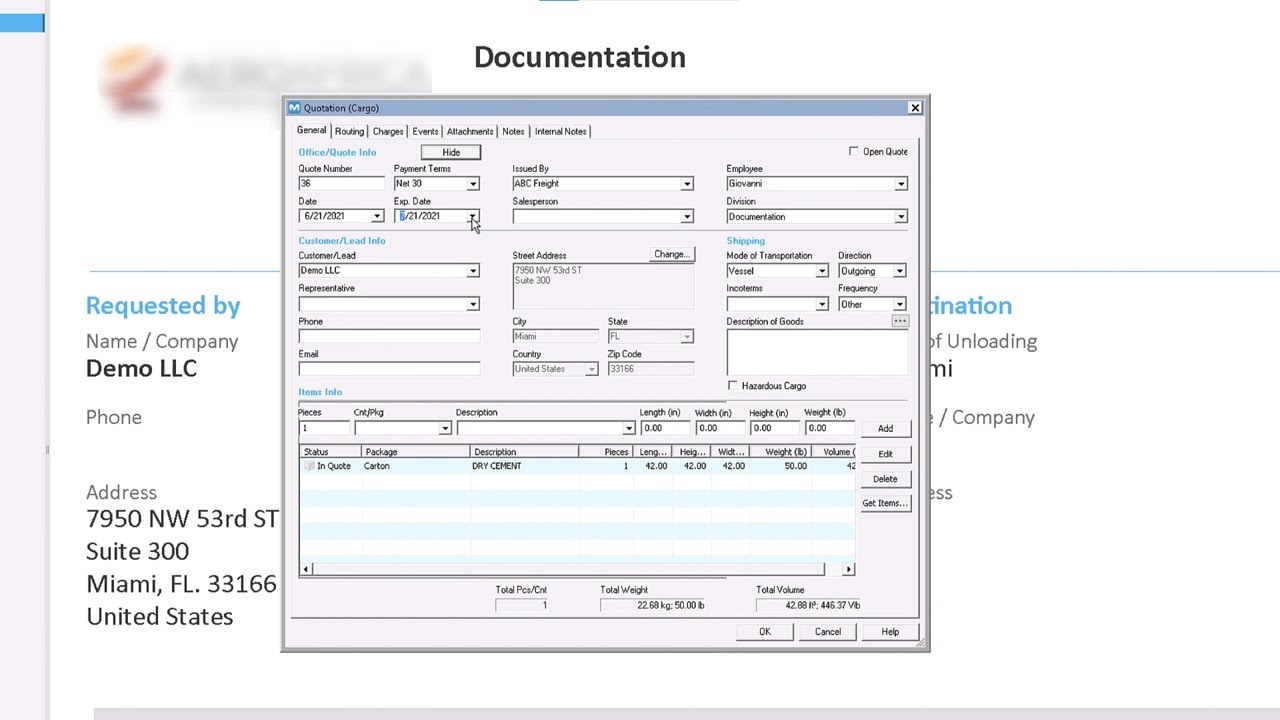
Screenshots of Magaya 4 images
Affiliate note: some links below are affiliate links and we may earn a commission at no cost to you. Rankings are never sold. This is a research-led comparison built from G2 and Capterra review samples read on July 27, 2026, vendor documentation, and published third-party pricing research. See our testing methodology .
What CargoWise and Magaya actually cost
Neither vendor publishes a rate card, which is normal in freight forwarding software and unhelpful for everyone. Here is what can be established.
Magaya prices per user. Third-party pricing research places the entry near $300 per user per month, which is a number a forwarder can multiply by headcount and take to a finance conversation.
Warehouse and enterprise configurations move up from there on quote.
CargoWise prices on transactions plus modules. There is no per-user anchor and no published floor. Reviewers describe the structure as complicated, with numerous separate charges, and several say the charges are hard to anticipate in advance.
The structural difference matters more than any single number. A per-user model scales with your headcount, which you control. A transaction model scales with your shipment volume, which is the thing you are trying to grow.
Forwarders who grow fast under a transaction model get a renewal conversation they did not plan for.
That is not an argument that CargoWise is overpriced. It is an argument to model three years of shipment growth against the quote before signing, which almost nobody does.
The cost nobody quotes: implementation
The subscription is the easy part of the budget on both sides. The implementation is where the money and the calendar actually go, and the two platforms are not in the same league here.
| CargoWise | Magaya | |
|---|---|---|
| Typical timeline | Multiple quarters | 1 to 3 months |
| Specialist partner | Usually required | Not typically |
| Internal capacity needed | Dedicated people | A project owner |
| Training model | Certification program, discounts for certified staff | Knowledge base plus onboarding |
CargoWise’s certification program is genuinely good and reviewers say so, including the discounts offered to firms that certify staff. Read that as what it is: an acknowledgement that the platform requires formal training to use well.
Magaya has a learning curve too, and reviewers mention it. The difference is that they also say the knowledge base shortens it considerably, and nobody describes needing an outside consultancy to get live.
For a forwarder deciding this quarter, the timeline gap is often the whole decision before anyone opens a feature list.
What CargoWise does better than Magaya
Customs across many countries. This is the reason CargoWise exists at the top of this market. Dozens of national customs regimes, in one platform, on one database.
A forwarder filing entries in eight countries has no realistic alternative that does not involve stitching regional systems together.
One database across every office. Forwarding, customs, warehousing, land transport, and accounting share a single data model.
A forwarder with offices in multiple countries sees one version of a shipment rather than eight regional systems reconciling monthly. That is a structural advantage, not a feature.
The rating engine. Reviewers name it specifically as unusually powerful compared with anything else they have used. For forwarders whose quoting complexity is the operational bottleneck, this is a concrete daily benefit.
Module breadth on one data model. Forwarding, customs, warehousing, quoting, accounting, HR scheduling, CRM, and wide EDI with airlines and shipping lines all interlink.
Reviewers note that when a team uses most of it, covering for a colleague on holiday becomes trivial because everything is in one place.
What Magaya does better than CargoWise
Independent buyer evidence. 281 G2 reviews at 4.4/5 with 67% five-star ratings, against CargoWise’s 30 at 4.3/5. Nearly ten times the community evidence.
For a mid-market buyer without the budget for a formal evaluation process, this difference is the difference between researching a purchase and guessing at one.
Native warehousing for the CFS model. A very large share of US forwarders also run a bonded or CFS warehouse. Magaya’s warehousing tool puts receiving, cargo release, and inventory in the same system as the ocean file, and reviewers praise it specifically.
CargoWise includes warehousing; Magaya is built for the forwarder who lives in it.
Time to value. One to three months versus multiple quarters. For a forwarder that needs to stop running on spreadsheets before peak season, this is not a preference, it is a constraint.
Document automation that reviewers actually name. Automatic format generation for air waybills and bills of lading comes up repeatedly as removing work forwarders otherwise do by hand, alongside a report scheduler that replaced manual status chasing.
Where CargoWise and Magaya are at parity
Stop comparing on these. Both platforms cover them competently and the decision should not turn on any of them.
- Ocean and air file management. Both handle house and master bills, arrival notices, and delivery orders as core workflow.
- Forwarder accounting. Both include job costing, profit per file, multi-currency, and AR and AP natively rather than as an integration.
- Container and shipment tracking. Both give operations a working view of where freight is without a separate visibility subscription.
- Customer portals. Both let clients check their own shipment status instead of calling your operations desk.
- Support criticism. Both are faulted for support in reviews. Neither gets a pass here, and both deserve an explicit SLA conversation before signing.
Integration depth and the systems around each platform
CargoWise’s integration story is internal. The bet is that you will not need many external connections because the suite already covers forwarding, customs, warehouse, land transport, accounting, CRM, and HR, with wide EDI to airlines and shipping lines.
For a large forwarder, consolidating onto one vendor is the point.
Magaya’s story is more mixed and reviewers say so. The platform covers a lot natively, but integrations with certain third-party finance and e-commerce systems still require manual steps or intermediate workarounds.
If your stack includes an unusual accounting system, test that connection specifically during evaluation rather than accepting a compatibility list.
One shared caution: template and document customization is expensive on both. Magaya reviewers report that building templates is harder than promised and costly because it requires programming work.
Budget for it on either platform if your customers demand branded or unusual documentation.
For where both sit against the rest of the field, see our best freight forwarding software comparison, where Magaya and CargoWise are profiled alongside GoFreight, Descartes, Logistaas, Logitude, and Freightos.
If both CargoWise and Magaya feel heavier than you need, CargoEZ is a lighter all-in-one option; see the three-way GoFreight vs Magaya vs CargoEZ .
Reliability, support and the complaints that recur
Both platforms are criticized for support, and a buyer should go in expecting to negotiate rather than assume.
CargoWise draws the harsher feedback. Reviewers describe slow responses, limited updates, tickets closed before resolution, and repeated referrals to generic articles or videos instead of issue-specific help, with urgent problems singled out as the worst case.
The certification program partly exists to reduce dependence on support, which is a reasonable strategy and also an admission.
Magaya’s most serious complaint is not support but stability. Reviewers report the database freezing or disconnecting, with some describing it happening roughly weekly.
For a forwarder whose staff live in the system all day, that is a real operational cost and it belongs in a reference call question.
Support response times are the secondary complaint, with reviewers saying the team should move faster to match the platform’s own efficiency.
Neither of these is disqualifying on its own. Both are reasons to write the SLA into the contract rather than trusting the standard tier.
What it takes to move between CargoWise and Magaya
Migration in either direction is a real project, and the data is the easy half.
Shipment history, customer and vendor records, rate tables, and open files all move with effort and a vendor-side migration engagement. Plan a parallel period rather than a cutover, and move one office or one trade lane first so the failure mode is contained.
The hard half is people. A forwarder standardized on CargoWise has built process around its module structure, and if it used the certification program it has staff whose expertise is specific to that platform.
Moving to Magaya means retraining, and the productivity dip is longer than vendors quote.
The most common real reason forwarders make this move is footprint change. A forwarder that consolidated from six customs jurisdictions down to two is paying for CargoWise breadth it no longer uses, and the arithmetic flips.
Moving the other way is usually growth: a Magaya forwarder that opened offices in Europe or Asia and found the customs depth was not there.
CargoWise or Magaya, by the forwarder you’re running
The decision comes down to one axis: how many customs jurisdictions you file in, and whether you can absorb a multi-quarter implementation.
Small forwarders, under 25 users, Americas only. Magaya, and it is not a close call. The per-user pricing, the one-to-three-month implementation, and 281 reviews of independent evidence all point the same way.
CargoWise at this size is a capability purchase you will not use and an implementation you cannot staff.
Mid-market forwarders, 25 to 100 users, with a warehouse. Magaya. Native warehousing for the CFS model plus forwarder accounting in the same system is the specific combination this segment needs, and Magaya is built around it.
Consider CargoWise instead only if you are actively opening offices in new customs jurisdictions in the next 18 months.
Global forwarders, 100-plus users, multiple customs regimes. CargoWise. One database across every office and customs coverage across dozens of national regimes is a structural advantage nothing else in this category matches.
Budget the implementation as a program, line up a specialist partner before signing, and negotiate the support SLA explicitly, because the standard experience draws consistent criticism.
For the wider category, see the best freight forwarding software comparison.
If your freight is domestic truckload and LTL rather than ocean and air, the best TMS for freight brokers and best freight management software comparisons cover the right set of platforms instead.
Frequently asked questions
Is Magaya cheaper than CargoWise?
Almost certainly, though neither vendor publishes a rate card so nobody can prove it from public information. Third-party pricing research places Magaya’s entry near $300 per user per month, a straightforward per-user model a forwarder can multiply out.
CargoWise prices on transactions plus modules, and its own reviewers describe the cost structure as complicated with charges that are hard to anticipate, which is the more expensive shape in practice because the bill scales with shipment volume rather than headcount.
The other cost nobody quotes is implementation: CargoWise typically needs a specialist partner and runs into quarters, where Magaya lands in one to three months.
On total year-one spend, Magaya is the cheaper platform for almost any forwarder under about 100 users.
Which has better customs capability, CargoWise or Magaya?
CargoWise, and it is not close once you leave the Americas. CargoWise covers dozens of national customs regimes inside one platform on a single database, which is the specific reason most of the largest global forwarders standardize on it.
Magaya’s customs capability is real but concentrated in the US and Latin America. The practical test is your own filing footprint, not a general capability question.
If you file entries in one or two countries, Magaya covers you and you are paying CargoWise for coverage you will never use.
If you file in six or eight, CargoWise is doing something no other platform in this category matches, and the implementation cost starts to look reasonable against maintaining regional systems.
Why does Magaya have so many more G2 reviews than CargoWise?
Buyer profile, mostly. Magaya sells to a large population of small and mid-sized Americas forwarders, and that population writes software reviews.
CargoWise sells to large global forwarding organizations whose staff do not, which is the same pattern that leaves enterprise WMS and TMS platforms with thin review bases across the board. The 281-versus-30 gap is not evidence that CargoWise is worse.
It is evidence that a mid-market buyer can research Magaya properly from public sources and cannot research CargoWise the same way.
For a CargoWise evaluation, budget time for three reference calls with forwarders your size and in your jurisdictions, because the public record will not carry the decision.
How long does each implementation take?
Magaya typically lands in one to three months.
CargoWise is measured in quarters and usually involves a specialist implementation partner, with reviewers noting that getting full value requires either learning the platform properly or hiring qualified help for setup and training.
That difference is the single largest hidden cost in this comparison and it belongs in the business case, not in a footnote.
A forwarder that needs to be operational this year and cannot dedicate internal people to a rollout should treat CargoWise’s timeline as a disqualifier rather than a scheduling detail.
What do reviewers complain about most in each platform?
For CargoWise, support is the clear leader: slow responses, tickets closed before resolution, and referrals to generic articles instead of issue-specific help. The steep learning curve and complicated pricing follow close behind.
For Magaya, the sharpest complaint is database connectivity, with some reviewers reporting freezes or disconnections roughly weekly, followed by support response times and integrations with certain finance and e-commerce systems that still need manual steps.
Both platforms are criticized for support, which is worth noting: whichever you pick, negotiate the support SLA explicitly rather than assuming the standard tier will be adequate.
Can a forwarder run warehousing in either platform?
Both include warehouse capability, but Magaya’s is the stronger fit for the common US forwarder-plus-CFS model.
Reviewers specifically praise the warehousing tool for giving visibility into warehouse volume alongside the shipment file, and receiving, cargo release, and inventory live in the same system as the ocean file rather than in a connected one.
CargoWise includes warehousing as one module among many in an interlinked suite, which works well but is not the reason anyone buys CargoWise.
If your bonded warehouse is a material part of the business rather than an accessory to it, that difference should carry real weight in the decision.
Is switching from CargoWise to Magaya realistic?
It is done, and it is not trivial. The migration itself is the smaller problem: shipment history, customer and vendor records, rate tables, and open files all move with effort.
The larger problem is that a forwarder standardized on CargoWise has usually built process around its module structure and, if it invested in the certification program, has staff whose expertise is specific to it.
Realistically, plan a parallel period rather than a cutover, migrate one office or one trade lane first, and treat the retraining cost as the real number.
Forwarders most often make this move when the customs breadth they are paying for stopped matching a footprint that consolidated into one or two countries.