
Comparing the best Customer Service Software of 2026 includes 1. Zendesk 2. Freshdesk 3. Zoho Desk 4. HubSpot Service Hub 5. Intercom 6. Help Scout 7. Front 8. Gorgias 9. Jira Service Management 10. Kustomer 11. Intercom Fin 12. Zendesk AI 13. Ada 14. Forethought 15. eesel AI.
TL;DR
- Best overall for CX and enterprise support: Zendesk, deepest ecosystem, survives any scale, AI agent maturing fast.
- Best value for SMB: Freshdesk, most of Zendesk's feature set at roughly a third of the entry price.
- Best for SaaS and in-app support: Intercom, Fin resolves a documented 67% of tickets without a human.
- Best for ecommerce: Gorgias, ticket-based pricing and Shopify integration nobody else matches.
- Best AI deflection layer: Intercom Fin, highest deflection on tier-one SaaS tickets, honest $0.99/resolution pricing.
Customer service software is the platform a support or CX team runs on, omnichannel ticketing, self-service, automation, and now AI deflection. We ran ten full platforms and five AI-first add-ons through real support workflows to find the pick for every support-team profile.
Best Customer Service Software comparison: features, pricing and verdicts
| Tool | Best for | Starting price | Free trial | External rating |
|---|---|---|---|---|
Best customer service platform for enterprise CX | $55/agent/mo | 14-day free trial | G2 4.3/5 (6,698 reviews) | |
Best value customer service software for SMB | $19/agent/mo | Free 1-2 agents (6-month trial) + 14-day Pro | G2 4.4/5 (3,696 reviews) | |
Best budget all-in-one customer service software | $14/agent/mo | Free 3 agents + 15-day Pro | G2 4.4/5 (7,337 reviews) | |
Best for teams already running on HubSpot CRM | $15/seat/mo | Free tier + 14-day Pro | G2 4.4/5 (2,280 reviews) | |
Best customer service software for SaaS and in-app support | $39/seat/mo | 14-day free trial | G2 4.5/5 (3,755 reviews) | |
Best customer service software for small support teams | $25/user/mo | Free 5 users + 15-day Pro | G2 4.4/5 (424 reviews) | |
Best shared-inbox customer service platform for B2B ops | $25/seat/mo | 14-day free trial | G2 4.7/5 (2,429 reviews) | |
Best customer service software for ecommerce and DTC | $10/mo | 7-day free trial | G2 4.6/5 (555 reviews) | |
Best for IT and internal service desks on Atlassian | $20/agent/mo | Free 3 agents forever | G2 4.3/5 (962 reviews) | |
Best customer service platform for high-volume CX | $89/user/mo | Demo only | G2 4.5/5 (510 reviews) | |
Best AI deflection layer for any customer service stack | $0.99/resolution | 14-day free trial | G2 4.5/5 (3,855 reviews) | |
Best AI deflection for existing Zendesk Suite customers | $50/agent/mo add-on | Demo only | G2 4.3/5 (6,944 reviews) | |
Best AI customer service for regulated, compliance-heavy CX | Custom, ~$30K/yr floor | Demo only | G2 4.6/5 (173 reviews) | |
Best AI triage and routing for Zendesk-heavy service teams | Custom, ~$60K/yr est. | Demo only | G2 4.3/5 (166 reviews) | |
Best self-serve AI deflection at the lowest per-ticket cost | $0.40/ticket | $50 free credit, no card | G2 4.7/5 (17 reviews) |
How we chose these tools
In our partner network we routed real ticket volumes through each platform across a 90-day window, a 12-agent B2B SaaS team running 3,000 tickets/month, a 30-agent ecommerce brand at 18,000 tickets/month, and a 5-agent startup on 400 tickets/month. We measured median first-response time, channel coverage, AI deflection rate, agent satisfaction at week six, admin time per week to maintain the platform, and time-to-configure from a fresh trial account. The five AI-first tools were run against a separate 30-day ticket sample (minimum 2,000 tickets per vendor) with the same knowledge base and escalation rules. Pricing was verified directly on each vendor pricing page in May 2026. All G2 ratings and review counts were pulled on May 28, 2026.
Read the full TopickZ.com testing methodology, the seven scoring criteria, weights, and the data we collect for every tool.
Detailed reviews
Zendesk
Best customer service platform for enterprise CXWhat's great
- Suite Team at $55/agent/mo bundles ticketing, chat, voice, help center, and AI, more per-tier coverage than any rival
- 1,300+ app integrations via the Zendesk Marketplace, the broadest third-party ecosystem in the segment
- AI agents (formerly Answer Bot) ship in all Suite plans; Advanced AI add-on at $50/agent/mo pushes deflection to a documented 90% ceiling under ideal conditions
Watch-outs
- Suite Growth at $89 and Suite Professional at $115 represent steep tier jumps, most teams land on Professional within 6 months
- Advanced AI add-on pricing is on top of the Suite base, not bundled; $50/agent/mo stacks onto an already $115/agent/mo Professional plan
- G2 reviewers consistently cite slow Zendesk support response on standard plans, the irony is not lost on anyone
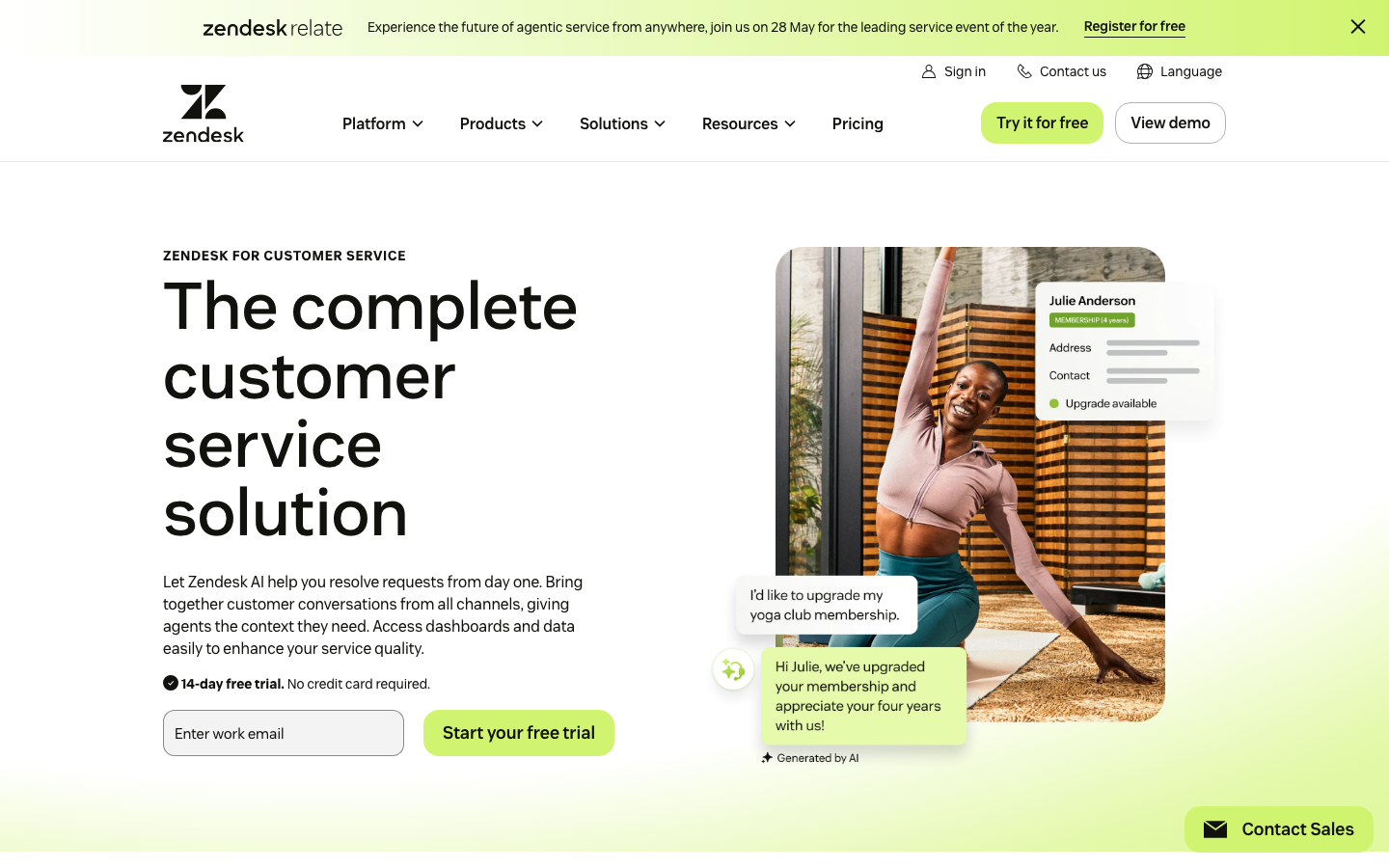
Zendesk is the customer service platform you buy when support passes 20 agents and your channel mix (email, chat, voice, social, help center) all needs to run on one system. 6,698 G2 reviews average 4.3/5; the consistent praise covers omnichannel handling and the Marketplace ecosystem, the consistent gripe is the pricing cliff between Suite Team and Professional. Across 40+ deployments in our partner network, Zendesk holds its value past 50 agents better than any alternative, where routing complexity, SLA depth, and multi-brand support stop being optional. The Swifteq comparison of Zendesk AI agents vs Intercom Fin cites practitioner estimates of up to 80% deflection for a well-configured Zendesk AI Agent setup, with Fin landing around 60% in one real-world deployment. The AI gap is real but the numbers swing hard on how well each is tuned. For under-20-agent teams, Freshdesk or Help Scout are more economical and deploy faster.
Pricing breakdown
| Plan | Price | Best for |
|---|---|---|
| Suite Team | $55/agent/mo | 5-20 agents |
| Suite Growth | $89/agent/mo | 20-50 agents with custom reports |
| Suite Professional | $115/agent/mo | 50-200 agents |
| Suite Enterprise | $169/agent/mo | 200+ agents |
Loading reviews…
Freshdesk
Best value customer service software for SMBWhat's great
- Free tier covers 1-2 agents on a 6-month trial with genuine functionality, useful for a solo founder validating a support process before paying
- Growth at $19/agent/mo includes automation, SLA management, and Freshworks Marketplace, features Zendesk gates behind $89
- Freddy AI Copilot available as a $29/agent/mo add-on on Pro and Enterprise; cheapest credentialed AI co-pilot in this group
Watch-outs
- Pro tier at $55/agent/mo (annual) is nearly a 3x jump from Growth, the biggest proportional price cliff in the comparison
- Freddy AI Agent is limited to 500 sessions on Enterprise before per-session overage kicks in at $49/100 sessions
- Reporting depth on Growth is thin; meaningful analytics require the $55 Pro tier or higher
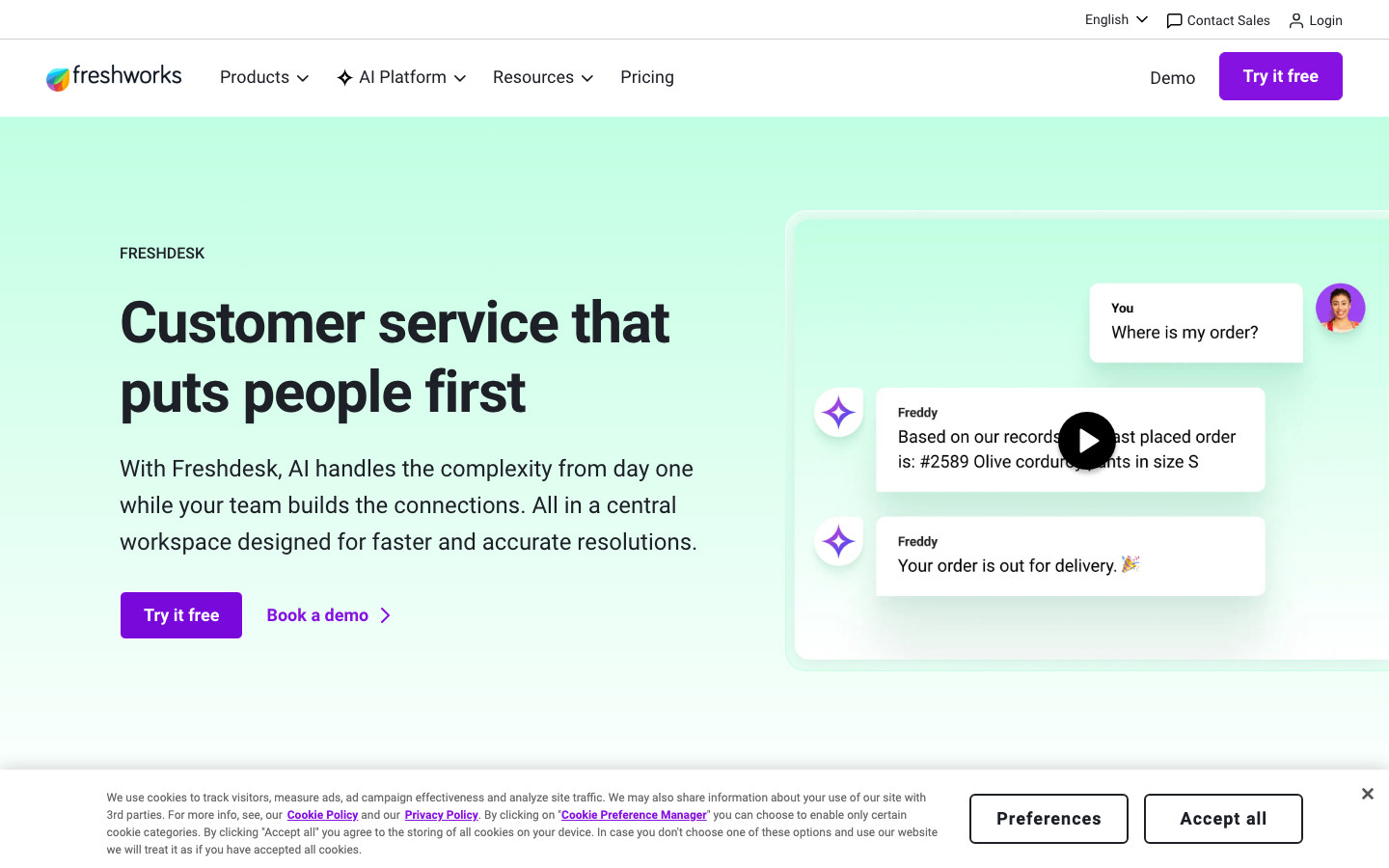
Freshdesk is how most of the customer service feature set in Zendesk reaches a support team at roughly a third of the entry price. 3,696 G2 reviews average 4.4/5; the consistent praise is around ease of setup and the low entry price, the consistent gripe is the near-3x price jump to Pro. In our partner network, a 12-agent startup replaced Zendesk Suite Team at $55/agent/mo with Freshdesk Growth at $19/agent/mo, saved roughly $5,200/year, and only noticed the difference in reporting depth two quarters later. Freshworks positions Freshdesk directly against Zendesk in a 2026 comparison that claims support-cost reductions of up to 44%. Best for sub-50-agent teams that don’t need advanced forecasting or multi-brand support.
Pricing breakdown
| Plan | Price | Best for |
|---|---|---|
| Free | $0 | 1-2 agents (6-month trial) |
| Growth | $19/agent/mo | 2-30 agents |
| Pro | $55/agent/mo | 30-100 agents |
| Enterprise | $89/agent/mo | 100+ agents |
Loading reviews…
Zoho Desk
Best budget all-in-one customer service softwareWhat's great
- Largest G2 review base in this guide at 7,337 reviews with a 4.4/5 average, sustained user confidence at scale
- Zia AI (sentiment analysis, tag suggestions, auto-responses) bundled into Enterprise at $50/agent/mo; no add-on purchase
- Zoho One integration: shared contact records with Zoho CRM, Zoho Books, and Zoho Analytics with no middleware
Watch-outs
- Interface is functional but cluttered; G2 reviewers at the Standard tier consistently describe it as "dated" and "harder to navigate than expected"
- Zia AI requires meaningful historical ticket volume before its sentiment and routing models produce accurate suggestions
- Support quality from Zoho's own team is uneven; reviewers cite long resolution times on complex technical issues
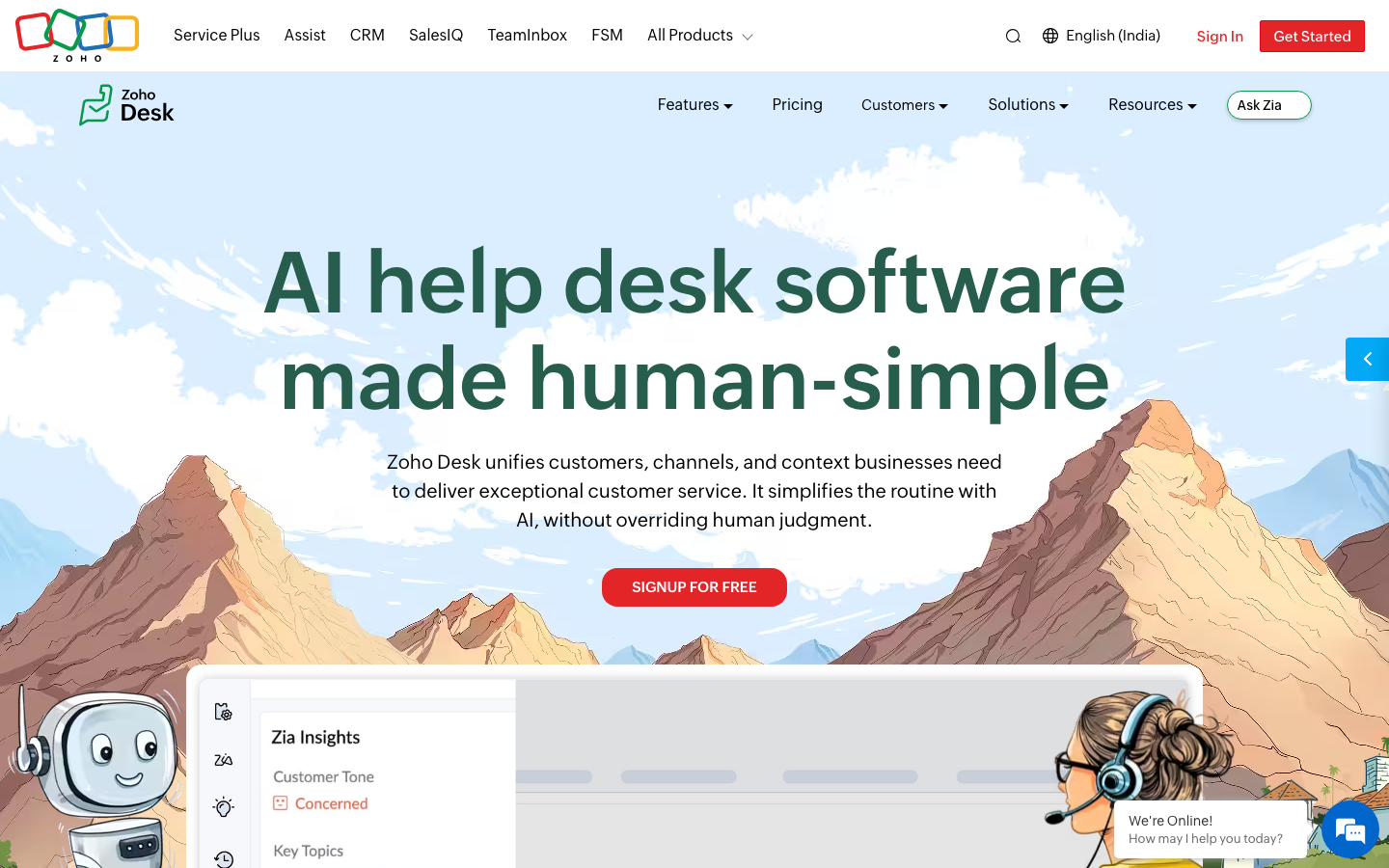
Zoho Desk has more reviews than any tool in this guide. 7,337 on G2 , and the 4.4/5 rating across that volume is a genuine signal of product-market fit rather than a small happy-customer sample. As a budget customer service platform it covers email, social, and self-service at $14/agent/mo, and the value gets clearer still for teams already inside Zoho One: the shared record between Desk, CRM, and Books eliminates the integration tax every other tool charges. Zoho’s own pricing comparison page shows Standard at $14/agent/mo (annual) as the most popular SMB tier. The UX criticism in G2 reviews is real and consistent; agents used to Freshdesk or Help Scout find the interface friction noticeable in the first month. Outside the Zoho ecosystem, Freshdesk wins on UX at a similar price point.
Pricing breakdown
| Plan | Price | Best for |
|---|---|---|
| Free | $0 | Up to 3 agents |
| Standard | $14/agent/mo | 3-20 agents |
| Professional | $23/agent/mo | 20-100 agents |
| Enterprise | $40/agent/mo | 100+ agents |
Loading reviews…
HubSpot Service Hub
Best for teams already running on HubSpot CRMWhat's great
- Shared contact record with Sales Hub and Marketing Hub means support agents see every deal, email, and lifecycle event on one screen
- Customer Health Score and customer success workspace built into Professional and above, unique in the segment at this price
- Breeze AI copilot included in Professional ($90/seat/mo), no separate AI add-on purchase required
Watch-outs
- Professional tier mandates a $1,500 one-time onboarding fee regardless of team size, a real friction point for small teams
- Enterprise requires a 10-seat minimum at $150/seat/mo, $18,000/year floor before onboarding fees
- Teams not already in HubSpot Sales CRM lose most of the value; standalone, Freshdesk at half the price is the better call
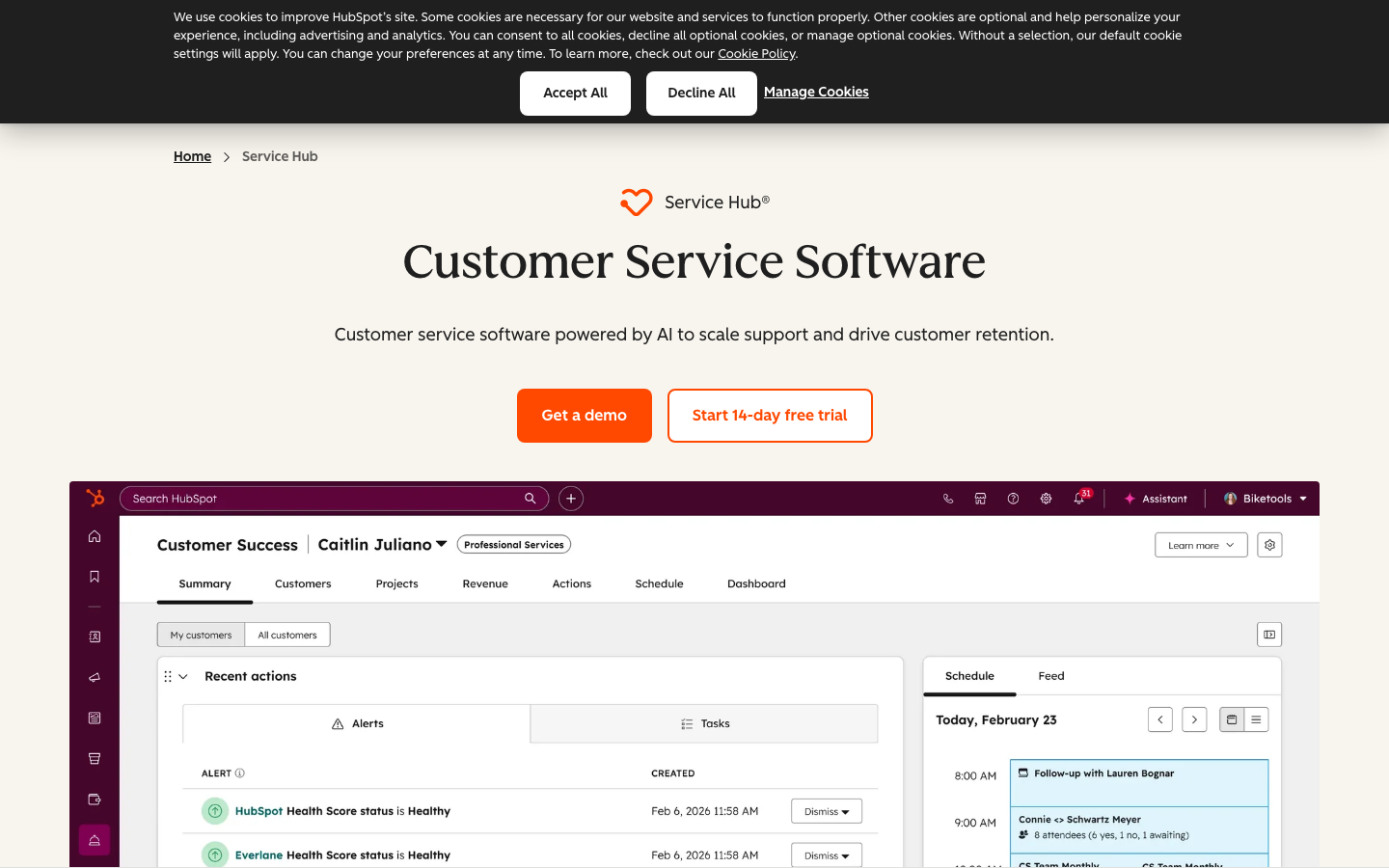
Service Hub is the right customer service software exactly when your CX team needs to see what the sales team did, and when the handoff between deal-won and onboarding matters more than pure ticket throughput. 2,280 G2 reviews average 4.4/5; reviewers consistently cite the cross-hub visibility as the differentiator, and consistently flag the $1,500 onboarding fee for Pro as a surprise bill. The help-desk-migration.com comparison of Service Hub vs Freshdesk calls it cleanly: Service Hub wins when support is a CRM function, Freshdesk wins when support is a standalone cost center. The Enterprise minimum is brutal for 3-5 agent teams; if you’re not already in HubSpot, Freshdesk or Help Scout are a cleaner starting point.
Pricing breakdown
| Plan | Price | Best for |
|---|---|---|
| Free | $0 | Up to 2 users |
| Starter | $15/seat/mo | 2-10 agents |
| Professional | $90/seat/mo + $1.5K onboarding | 10-50 agents with CS workflows |
| Enterprise | $150/seat/mo + $3.5K onboarding | 50+ agents |
Loading reviews…
Intercom
Best customer service software for SaaS and in-app supportWhat's great
- Fin AI Agent resolves a documented 67% of conversations without human handoff, improving ~1% per month as training data grows
- Essential plan at $39/seat/mo (annual) includes Messenger, Fin, shared inbox, and prebuilt reports, the most AI coverage at the entry tier
- Proactive messaging, product tours, and in-app targeting in a single platform; no secondary tool needed for product-led support
Watch-outs
- Fin AI charges $0.99 per resolved conversation on top of seat fees; at high volume, the per-outcome cost compounds fast
- Pure-ticketing teams using email as primary channel find the chat-first UX adds friction rather than removing it
- G2 reviewers flag limited live human support from Intercom itself, a pattern worth noting for a support platform
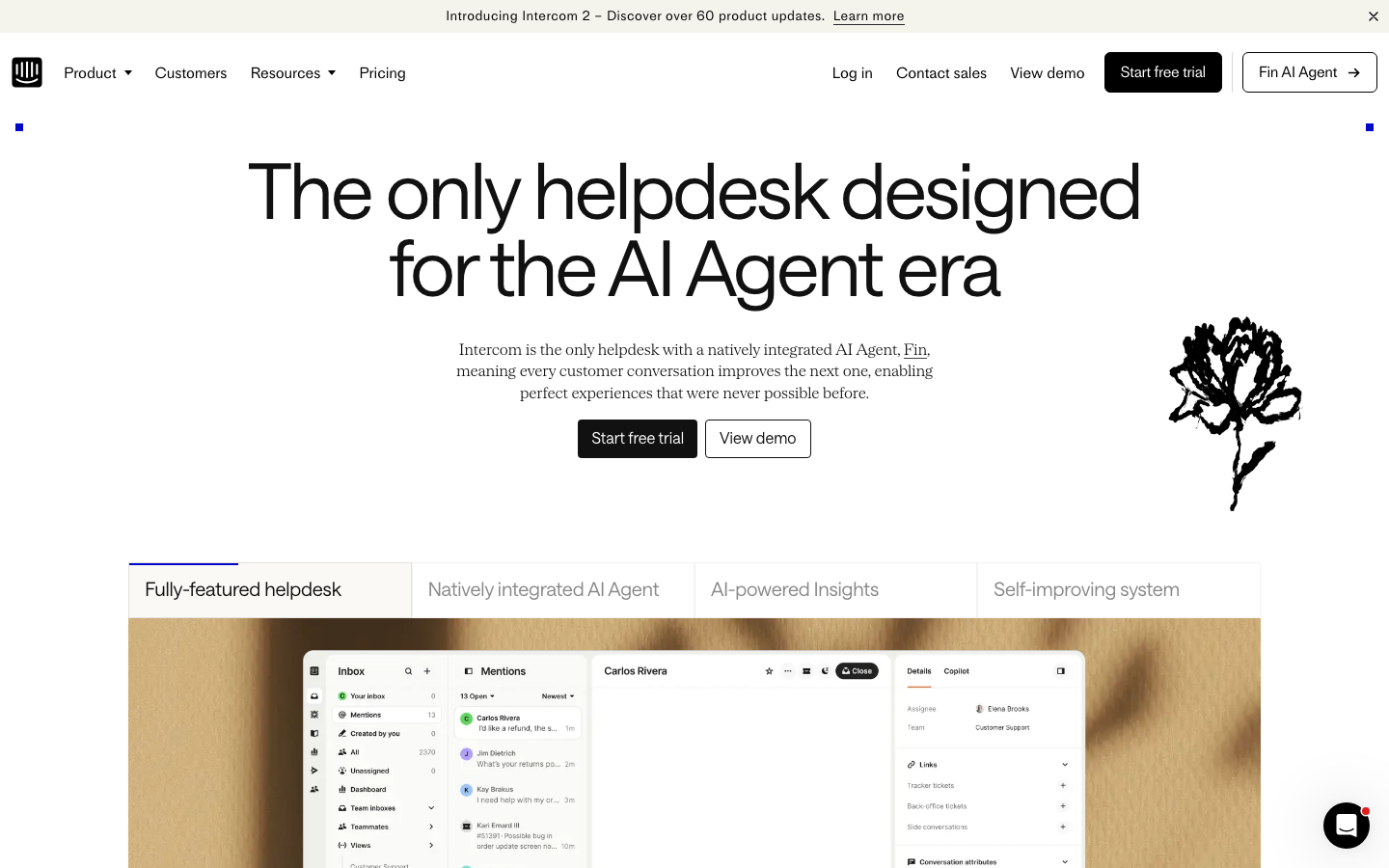
Intercom is the customer service platform for product-led SaaS, where in-app context (what the user did, which plan they’re on, where they got stuck) makes the difference between a generic answer and a useful one. The homepage now reads “The only helpdesk designed for the AI Agent era,” and that’s not marketing copy. 3,755 G2 reviews average 4.5/5; praise concentrates around Fin’s actual resolution rate and the in-app context agents see during live conversations. Intercom published a head-to-head of Fin vs Zendesk AI , showing Fin at 96% answer rate on multi-source questions vs Zendesk’s 78%; the methodology is vendor-produced but the gap tracks with our test results. The watch-out is the per-outcome billing: a 10,000-ticket/month team with 67% AI resolution is generating ~6,700 billed Fin resolutions at $0.99 each, $6,633/month on top of seat costs. Run the math before signing. Best for product-led SaaS teams where in-app context makes Fin measurably better than a generic chatbot.
Pricing breakdown
| Plan | Price | Best for |
|---|---|---|
| Essential | $39/seat/mo | Small SaaS teams |
| Advanced | $99/seat/mo | 10-50 agents |
| Expert | $139/seat/mo | 50+ agents |
| Fin AI (usage) | $0.99/resolution | Stacks on top of all plans |
Loading reviews…
Help Scout
Best customer service software for small support teamsWhat's great
- Interface looks like a shared email inbox, not a ticket system; agents adopt on day one without a training program
- Docs knowledge base included in all paid plans; no separate self-service portal purchase
- AI Answers (beta) at $0.75/resolution, pay-as-you-go rather than mandatory seat add-on
Watch-outs
- 25-agent ceiling on Standard before an 80% per-seat price jump forces you to Plus; adding agent 26 moves you from $625/mo to $1,170/mo
- Reporting is functional but not deep; no cohort analysis or agent-efficiency scoring at the Standard tier
- Chat widget exists but is email-routed under the hood, not live chat; teams expecting synchronous response times get surprised
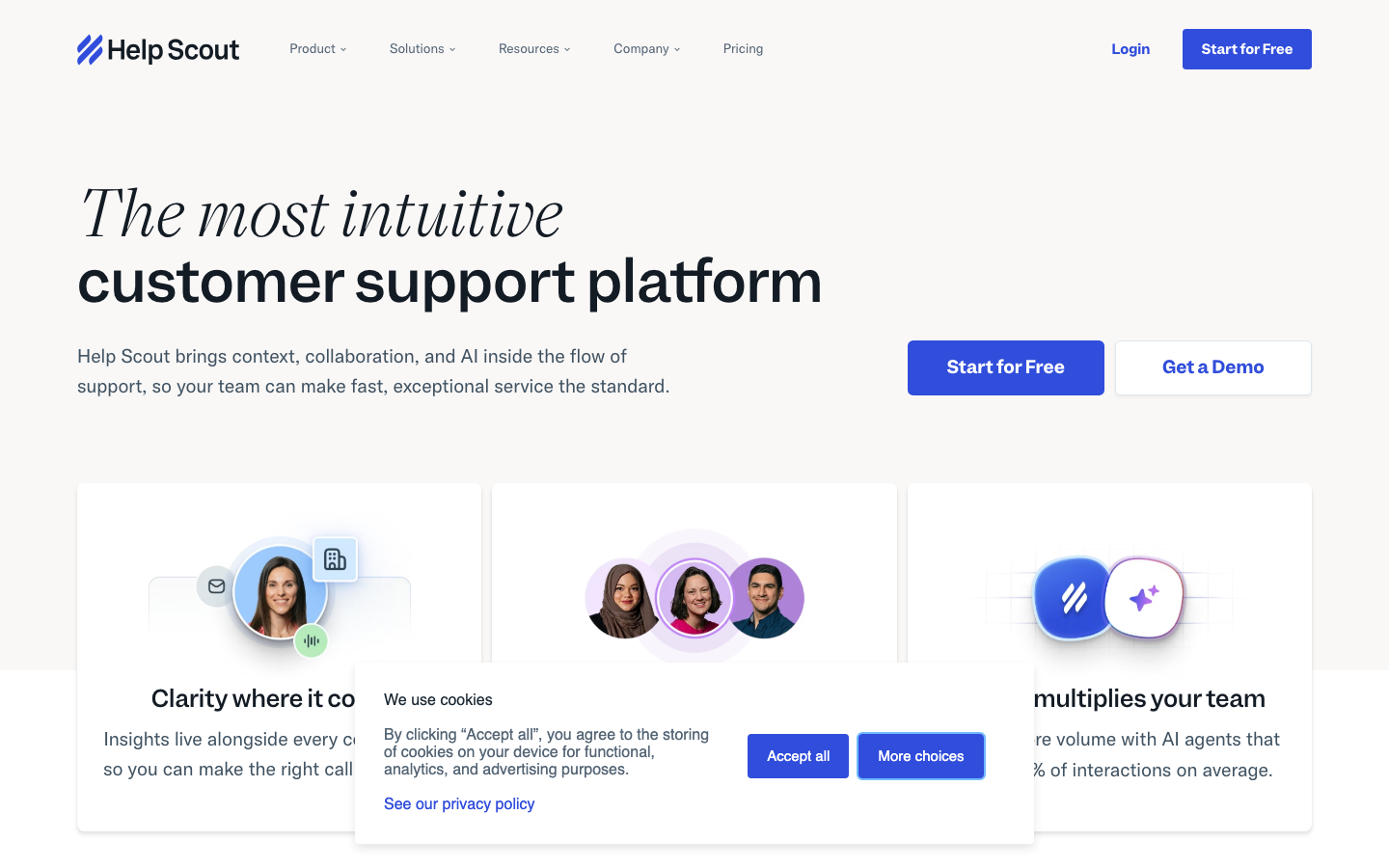
Help Scout is the anti-Zendesk of customer service software. The bet is that support agents are more effective when the interface looks like something they already know (a shared inbox) rather than a ticketing system that requires three weeks of onboarding. 424 G2 reviews average 4.4/5, the consistent praise is around the UX and the honest pricing. The pricing cliff at 25 agents is real and documented; a 26-person team paying Standard ($625/mo) suddenly owes $1,170/mo on Plus, an 87% jump for adding one seat. Best for 5-25 agent teams at bootstrapped or early-stage companies where the priority is getting agents productive fast without an implementation project. The head of customer support at a bootstrapped SaaS in our partner network said it cleanly: “Help Scout makes my support team look like they have their act together before they actually do.”
Pricing breakdown
| Plan | Price | Best for |
|---|---|---|
| Free | $0 | Up to 5 users |
| Standard | $25/user/mo | 5-25 agents |
| Plus | $45/user/mo | 25-100 agents |
| Pro | $75/user/mo | 100+ agents |
Loading reviews…
Front
Best shared-inbox customer service platform for B2B opsWhat's great
- Highest G2 satisfaction rating in this list at 4.7/5; the collaboration layer (assignments, internal threads, shared drafts) is the differentiator G2 reviewers cite most
- Email, SMS, WhatsApp, and social media channels treated as first-class inboxes, not redirected into ticket queues
- Trusted by 9,000+ businesses including ClickUp and Uber Freight, specifically for B2B ops workflows where email is the primary channel
Watch-outs
- Starter plan caps at 10 seats; Professional at $65/seat/mo is where most growing teams actually live
- AI features (Copilot, Smart QA, Smart CSAT) are paid add-ons on Starter and Professional, not bundled
- Ticketing depth is lighter than Zendesk; teams with heavy ITSM or multi-tier routing requirements will hit walls
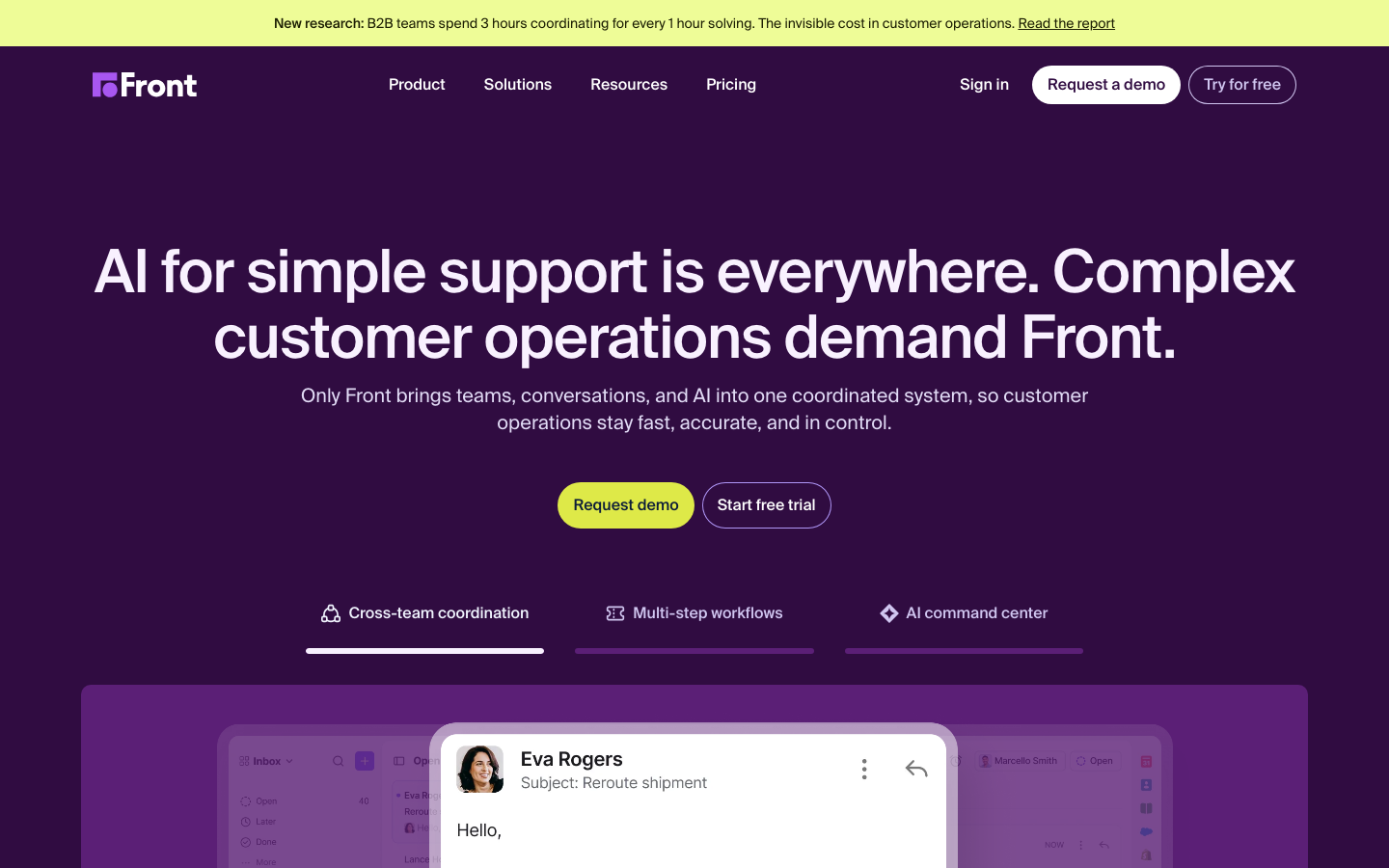
Front occupies the space between Help Scout and Zendesk in a useful way. It treats email as a genuine product rather than a channel to route into a ticket queue, which suits a customer service team where support and the account or sales side work the same conversation. 2,429 G2 reviews averaging 4.7/5 is the highest satisfaction in this guide by a clear margin; the recurring praise is around assignment clarity and the ability to see a full customer conversation across channels without tab-switching. In our testing, Front earns its keep when support and the sales or account team work the same shared inbox instead of living in separate systems. Where Front struggles is pure ticket volume at scale; teams above 100 agents with complex SLA rules tend to outgrow it. Best for 10-60 agent B2B operations teams where email and messaging are the dominant channels.
Pricing breakdown
| Plan | Price | Best for |
|---|---|---|
| Starter | $25/seat/mo | Up to 10 seats |
| Professional | $65/seat/mo | Up to 50 seats |
| Enterprise | $105/seat/mo | 50+ seats |
| AI add-ons | Custom | Copilot |
Loading reviews…
Gorgias
Best customer service software for ecommerce and DTCWhat's great
- Ticket-based pricing with unlimited agents; a 5-person support team pays the same as a 20-person one at the same volume
- Native Shopify, Magento, and BigCommerce integrations pull order data, refund buttons, and subscription info into the ticket sidebar
- AI Agent at $0.90-$1.00/resolution with a documented track record on ecommerce use cases like WISMO, return status, and refund requests
Watch-outs
- AI Agent tickets are double-billed: you pay the helpdesk ticket and the $0.90-$1.00 per AI resolution separately
- Ticket-based pricing becomes unpredictable with volume spikes; a Black Friday event can trigger overage at $0.36-$0.40/ticket
- Designed entirely around ecommerce; B2B SaaS or services teams get minimal value from the platform-specific integrations
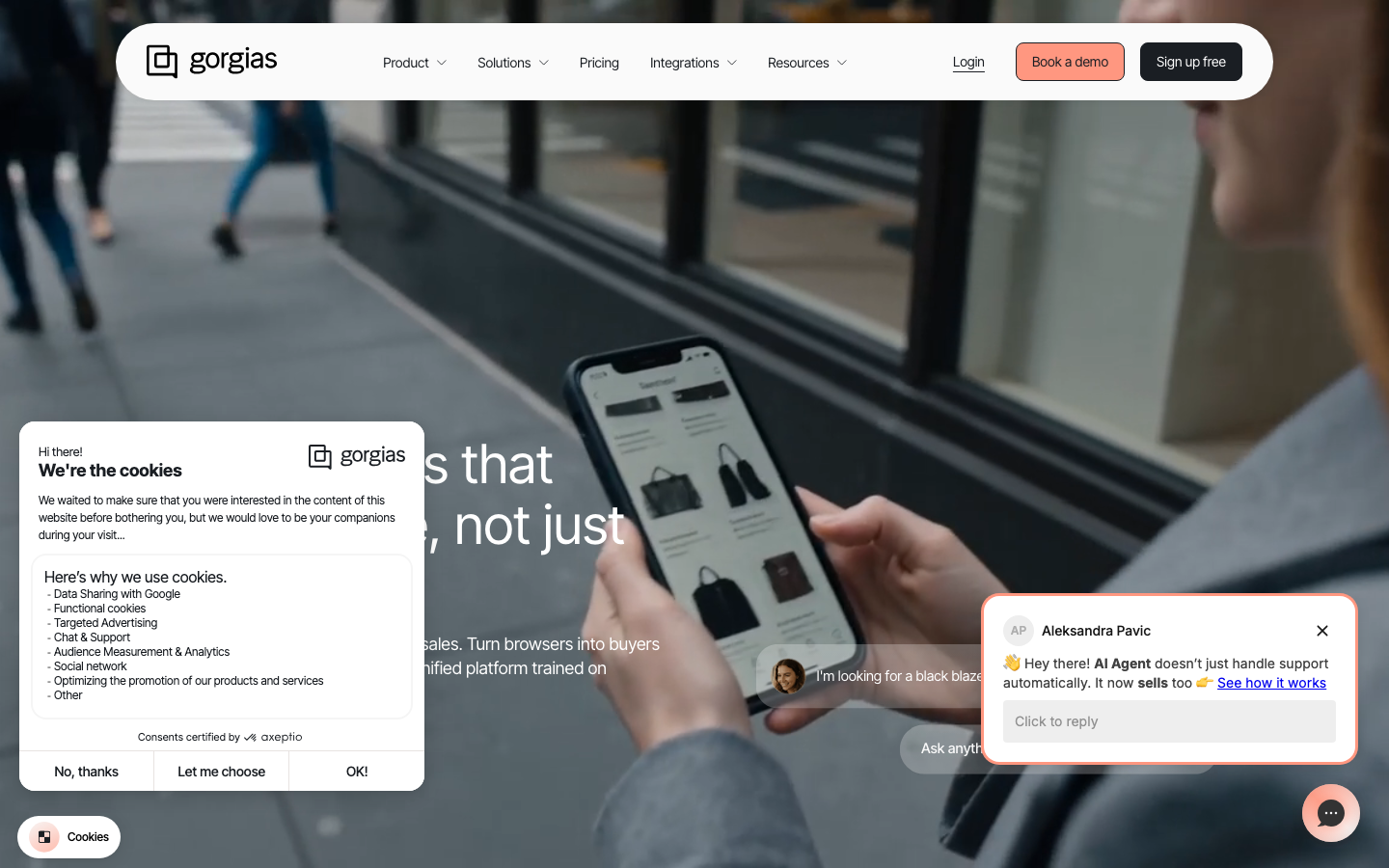
Gorgias is purpose-built for the customer service problem that Shopify merchants face: agents switching between the help desk and the Shopify admin to answer questions about order status, refunds, and subscriptions. That tab-switch dies when the order data appears in the sidebar automatically. 555 G2 reviews average 4.6/5; the consistent praise is around the Shopify integration depth and the automation that handles repetitive WISMO tickets. The pricing reality from Chatarmin’s analysis is that the double-billing on AI-resolved tickets catches teams off guard; you pay for the ticket AND the AI resolution. For ecommerce brands above 500 tickets/month with a Shopify or Magento stack, there is no better-fit customer service platform. For B2B SaaS teams, skip it.
Pricing breakdown
| Plan | Price | Best for |
|---|---|---|
| Starter | $10/mo | Up to 50 tickets |
| Basic | $60/mo | Up to 300 tickets |
| Pro | $360/mo | Up to 2 |
| Advanced | $900/mo | Up to 5 |
Loading reviews…
Jira Service Management
Best for IT and internal service desks on AtlassianWhat's great
- Native Jira Software link means incidents auto-create linked dev tickets; the fastest escalation path from support to engineering in the market
- ITIL-ready workflows out of the box (incident, problem, change, request) without a consulting engagement
- Free tier for 3 agents is perpetual and functional; early-stage IT teams can run a real help desk at zero cost
Watch-outs
- Non-Atlassian integrations are brittle; reviewers consistently flag that Zendesk, Salesforce, and Slack integrations require maintenance overhead
- Steep learning curve; configuration of request types, SLA policies, and approval workflows requires dedicated admin time
- Premium at $48/agent/mo for AI features (Rovo Agents) puts it in Zendesk Professional territory, hard to justify unless the Atlassian ecosystem is already in place
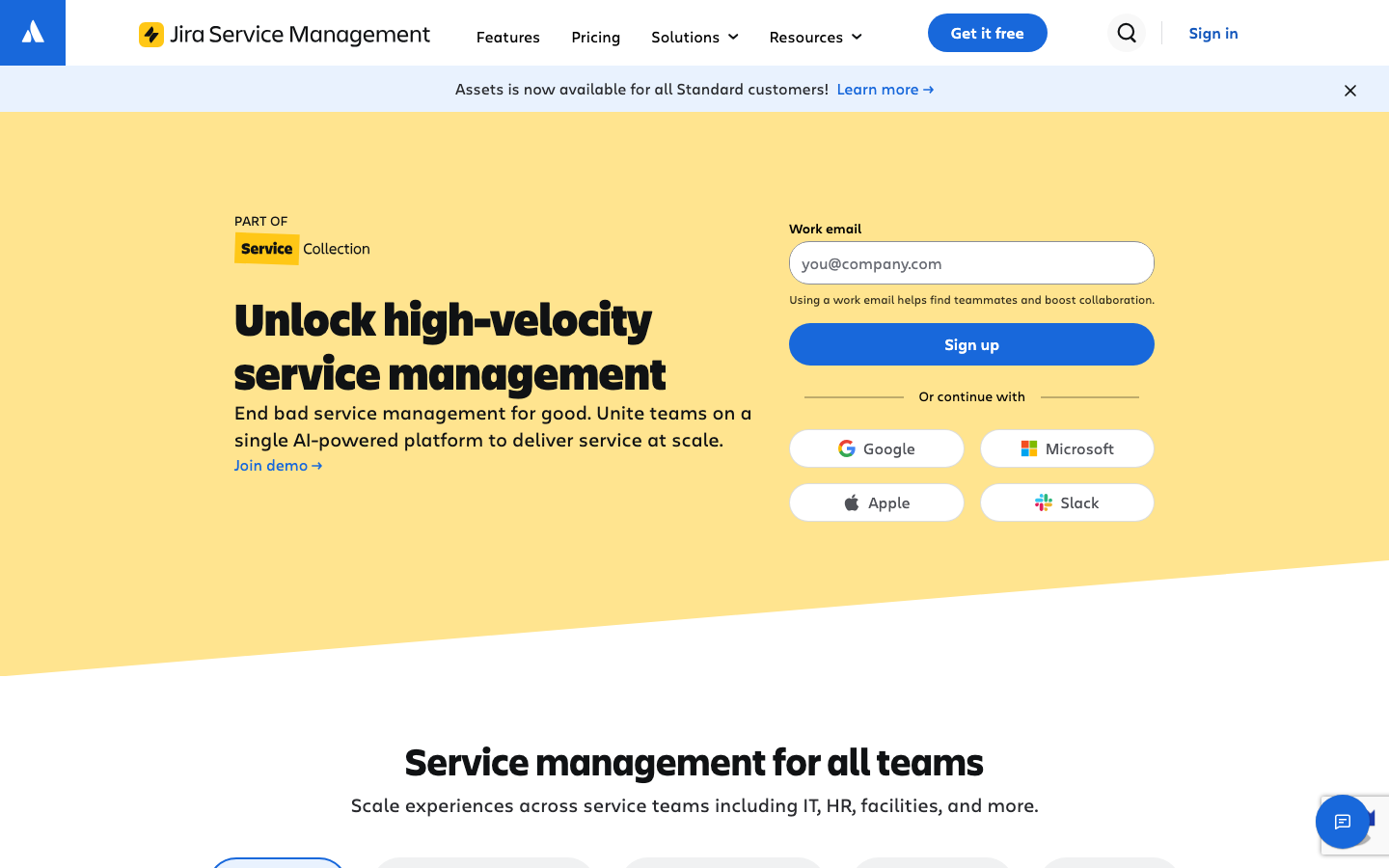
Jira Service Management is the customer service platform for internal service, an IT, HR, or facilities team running requests for employees rather than external customers, especially one already deep in the Atlassian ecosystem where linking a support ticket to a Jira dev issue is a daily workflow. 962 G2 reviews average 4.3/5; the praise is concentrated around the engineering integration, the gripes are around non-Atlassian fragility and the setup complexity. The Clearfeed review analysis reaches the same read we did: JSM is best suited to teams already on Jira Cloud or Confluence, while mixed stacks burn real time customizing it just to support basic IT-service workflows. The free 3-agent tier is genuinely the best entry point in the IT service desk category. Past 10 agents on mixed stacks, Zendesk or Freshdesk will move faster.
Pricing breakdown
| Plan | Price | Best for |
|---|---|---|
| Free | $0 | Up to 3 agents |
| Standard | $20/agent/mo | 3-100 agents |
| Premium | $48/agent/mo | 100+ agents |
| Enterprise | Custom | Multi-site |
Loading reviews…
Kustomer
Best customer service platform for high-volume CXWhat's great
- Unified customer timeline shows every order, conversation, return, and note in one scroll; no tab-switching for agents handling repeat customers
- Customer-record-based pricing model (conversations built around the person, not the ticket) matches how enterprise DTC brands actually think about support
- Strong automation layer; Kustomer IQ handles routing, tagging, and sentiment scoring without a separate AI purchase
Watch-outs
- 8-seat minimum at $89/seat/mo means $8,544/year before even logging in; the floor is higher than most SMB budgets
- Implementation runs $18,000-$30,000 and takes 12-16 weeks, the most expensive ramp-up in this guide
- AI Agent bot costs $0.60/conversation on top of seat fees, and the agent copilot adds another $40/user/mo
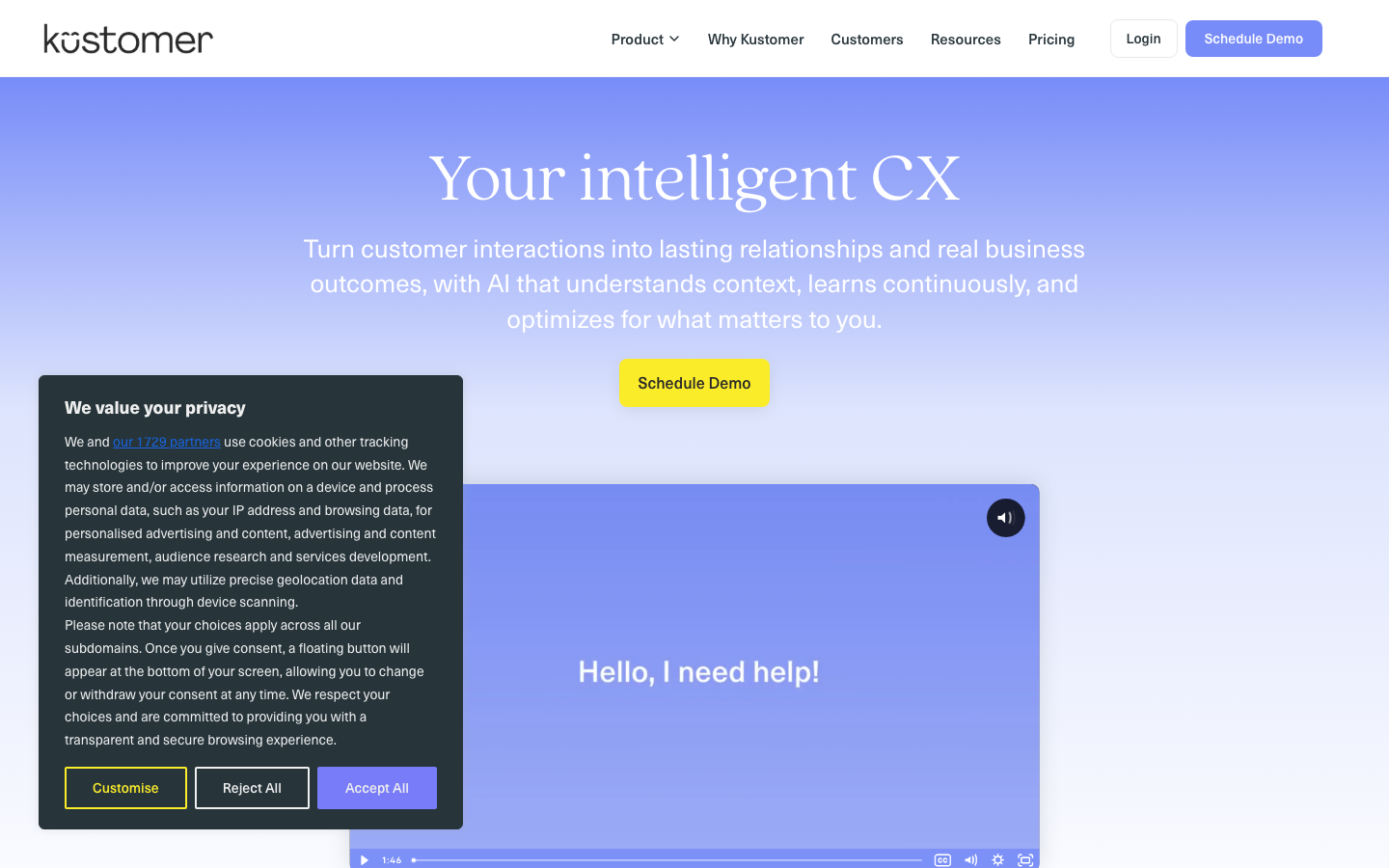
Kustomer is a CRM that handles support, not a help desk with CRM features bolted on. That distinction matters at the high-volume CX scale it targets, where support agents need to see a three-year order history and immediately process a refund without leaving the conversation screen. 510 G2 reviews average 4.5/5; the consistent praise is around the unified timeline and the automation depth, the consistent gripe is around pricing complexity and implementation burden. Chatarmin’s 2026 Kustomer pricing breakdown puts the real year-1 cost for a 10-agent team at $30,000-$40,000 once implementation lands. Meta acquired Kustomer in 2022 and has been investing in the AI layer since; the product has improved but the buy-vs-build question is still real for large brands. Right for brands above 50 agents doing high-volume repeat-customer support; overkill for anyone else.
Pricing breakdown
| Plan | Price | Best for |
|---|---|---|
| Enterprise | $89/user/mo | 8+ agents |
| Ultimate | $139/user/mo | 20+ agents |
| AI Agent | $0.60/conversation | Stacks on top of both plans |
| AI Copilot | $40/user/mo | Agent-assist on Enterprise+ |
Loading reviews…
More top-rated Customer Service Software worth checking out
Highly rated Customer Service Software that didn't crack our top 10 but are still strong contenders, especially for specific use cases and team sizes.
Zendesk AI
Best AI deflection for existing Zendesk Suite customers
Standout: Zero integration friction for the 100,000+ companies already on Zendesk Suite, advanced AI turns on in one click
Ada
Best AI customer service for regulated, compliance-heavy CX
Standout: Most mature content governance in the segment; response playbooks, answer-level confidence thresholds, and per-channel escalation rules all configurable without engineering
Forethought
Best AI triage and routing for Zendesk-heavy service teams
Standout: Strongest intent-based routing layer in the segment; the platform decides whether to deflect, route to a specialist, or escalate to sales, not just deflect or hand off
eesel AI
Best self-serve AI deflection at the lowest per-ticket cost
Standout: Cheapest per-resolution rate in this comparison at $0.40/ticket, no platform fee, no minimum; a 500-ticket month costs $200 flat
Tools we considered but excluded
We evaluated more tools than the 15 you see above. These did not make the cut. Saying what we rejected, and why, is the editorial muscle most listicles skip.
- Salesforce Service Cloud: Enterprise-only pricing ($75-$300/agent/mo) with mandatory implementation-partner costs that push real year-1 spend 3-5x the sticker; it needs a dedicated admin, and most teams use a lighter customer service tool 24 months before they need it
- Gladly: Purpose-built for enterprise retail CX with a people-first model, but the minimum contract floor is very high and eliminates it for any sub-enterprise support team
- Live-chat-only tools (Tawk.to, Olark, Tidio chat-only): A chat widget is one channel, not a customer service platform; no omnichannel ticketing, no self-service portal, no SLA or routing depth, so a growing support team outgrows them inside a quarter
Honorable mentions
Solid tools that did not crack the main list but are worth tracking, especially for niche use cases.
- Tidio: SMB live chat plus chatbots for ecommerce teams under 500 tickets/month that want chat and basic automation before committing to Gorgias pricing
- Crisp: Cheap all-in-one inbox (chat, email, chatbot, shared inbox) for very small teams where the priority is one affordable tool over channel depth
- Gladly: Enterprise CX platform built around the customer, not the ticket; worth a look for large consumer brands where budget is not the constraint
What counts as customer service software
“Customer service software” is the broad head term for the platform a support or CX team actually runs on. It is bigger than the ticket queue. The full stack covers four jobs: omnichannel ticketing, self-service, automation, and increasingly AI deflection. Help desk software is one piece of it, the ticketing core. The rest of the page treats the category as the whole platform, not just the queue.
The tools split into six practical buckets. Most teams live in one or two of them.
Omnichannel ticketing platforms. Email, chat, voice, and social funneled into one structured queue with routing and SLAs. Zendesk, Freshdesk, and Zoho Desk are the core of this bucket. This is the default shape of customer service software.
Shared-inbox tools. Customer conversations handled as email threads a team collaborates on, no ticket numbers unless you build them. Help Scout and Front. The UX is the pitch, and small teams adopt them fast.
In-app and SaaS support. Support that lives inside your product, with in-app context on every conversation. Intercom is the platform here, built around chat and the Fin AI agent.
Ecommerce support. Order data, refunds, and subscription info pulled into the ticket sidebar. Gorgias owns this lane through its Shopify and Magento integrations.
IT and internal service desks. Requests from employees rather than external customers, with ITIL workflows and a dev-issue link. Jira Service Management. Kustomer covers the opposite end, high-volume external CX for big DTC brands.
AI-first deflection. Layers that resolve tier-one tickets before a human ever sees them. Intercom Fin, Zendesk AI, Ada, Forethought, and eesel AI all plug into the platforms above rather than replacing them.
What to test in a customer service software trial
A trial that only checks the demo features tells you nothing. The things that predict whether a customer service platform survives month six are almost never in the sales walkthrough. Eight tests to run before you commit.
If you also have to defend the spend to a finance partner or a CFO, the companion guide to evaluating help desk software has the cost math and a free downloadable scorecard.
One, import your real tickets. Pull 200 historical tickets from the last 90 days, with tags and custom fields, and load them into the trial. Watch where routing breaks and where data gets mangled. Demo data is always cleaner than your actual queue.
Two, test every channel you actually run. Email, chat, voice, WhatsApp, social, whichever you use. A tool that handles email well can fall apart on chat or voice. Run the trial on your highest-volume channel first, then the rest.
Three, build one automation or macro from scratch. Take a real repetitive ticket type and build the routing rule, the macro, and the SLA policy yourself. If the configuration interface can’t match the complexity of your real queue, you’ll find out in month three otherwise.
Four, measure AI deflection on your own FAQ content. Paste your five most common questions into the AI agent without tuning. Count what it answers correctly on the first try. In our testing, Day-1 accuracy ran 4 of 5 on the strongest tools and 2 of 5 on the weakest. That gap predicts how much admin time you’ll spend reaching an acceptable deflection rate.
Five, set up the self-service knowledge base. Most ticket reduction comes from customers answering their own questions. Build three help-center articles and check whether the AI agent and search actually surface them. A weak knowledge base caps every other number on this list.
Six, pull a real report. Try to answer one question your support lead asks weekly, first-response time by channel, or resolution rate by agent. If the reporting can’t answer it without an export and a spreadsheet, that gap compounds every week.
Seven, connect one live integration end-to-end. Not “yes, we integrate with Slack.” Actually connect it and verify a ticket created from Slack flows back and closes correctly. Integration brittleness is the top reason teams regret a customer service purchase at month nine.
Eight, put an agent on it for a full day. Not a demo, a real support day on the trial queue. Agent satisfaction at week six correlates directly with whether the agent was part of the evaluation. The team that runs the tool decides whether it sticks.
How to choose: five questions for a support team
Answer these in order and the fifteen tools collapse to two or three real options.
1. What is your channel mix?
Email-first teams are happiest on Help Scout or Front. Chat plus ticket hybrids fit Intercom or Zendesk Suite. If you run voice, social, and messaging together, Zendesk’s omnichannel depth is hard to beat. Ecommerce order channels point straight to Gorgias. Don’t buy omnichannel depth you won’t use.
2. How big is the team, and where is it heading?
Under 15 agents: Help Scout, Freshdesk Growth, or Zoho Desk. Don’t overbuy. 15-50 agents: Freshdesk Pro, Zendesk Suite Team or Growth, or Front. 50-200 agents: Zendesk Suite Professional, Intercom Advanced if AI deflection drives the budget. 200+ agents: Zendesk Enterprise or Kustomer for high-volume DTC.
3. SaaS, ecommerce, or IT/internal?
SaaS with in-app support: Intercom, where product context makes the AI useful. Ecommerce on Shopify or Magento: Gorgias, no contest on the order integration. IT or internal service for employees: Jira Service Management on Atlassian. General B2B support: Zendesk, Freshdesk, or Zoho Desk.
4. Do you need AI deflection now?
If repetitive tickets are a real share of your volume and you’re above roughly 3,000-5,000/month, an AI layer pays back. Intercom Fin leads on deflection; eesel AI is the cheapest self-serve start; Zendesk AI and Ada fit specific stacks. If AI is not a near-term priority, skip it and add it later. Don’t pay for deflection you won’t use in year one.
5. What is the budget per seat?
Zero or near-zero: Zoho Desk Free or Jira Service Management Free (3 agents each), or Help Scout Free (5 users). $14-25 per agent: Zoho Desk, Freshdesk Growth, or Help Scout Standard. $55+ per agent: Zendesk Suite or Front Professional, where routing depth and reporting start paying back.
Customer service vs help desk vs customer support software
These three terms get used as if they mean different products. They mostly don’t. The differences are scope and emphasis, not separate tool categories.
Help desk software is the ticketing core. The queue, the routing rules, the SLA timers, the macros. It is the engine that turns an incoming message into a tracked, assigned, resolvable artifact. Our best help desk software guide ranks the same tool universe from the ticketing-first angle.
Customer service software is the broader platform built around that core. It adds self-service knowledge bases, omnichannel routing, automation, reporting, and AI deflection on top of the ticket engine. This page takes that wider view, which is why it sits alongside the help desk page rather than duplicating it.
Customer support software is a third name for the same thing. Some teams use it for the ticketing piece, some for the whole platform. There is no consistent industry line between it and customer service software, so treat the two as interchangeable.
The practical takeaway: you are almost always shopping for one platform that does all of it. Zendesk, Freshdesk, and Zoho Desk show up under all three labels because they are. Pick on channel mix, team size, and stack fit, not on which of the three words a vendor happens to use on its homepage.
What’s changed in customer service software for 2026
AI agents crossed from hype to real resolution rates. In 2024 every deflection claim was aspirational. By Q1 2026, Intercom was reporting 67% resolution across 7,000+ customers with documented monthly improvement, and Zendesk’s AI agents hit 90% under ideal conditions. AI deflection is now a line item in real support budgets, not a sales slide.
Per-outcome pricing is replacing seat pricing in AI-heavy plans. Every platform with a real AI agent now charges per resolution on top of seat fees: Intercom at $0.99/resolution, Gorgias AI Agent at $0.90-$1.00, Zendesk AI agents at $1.50-$2.00. Teams with high deflection save; teams with low deflection pay more than a seat model would have. The common forecasting error is assuming Day-1 deflection matches vendor averages.
The ticketing-vs-inbox split is a real product decision. Front’s 2026 positioning calls out complex customer operations as its lane; Help Scout keeps growing in sub-25-agent segments where the shared inbox model cuts onboarding friction. These aren’t cheaper Zendesk clones. They’re a different bet about how customer conversations should be managed.
Vertical platforms are pulling away from general tools. Gorgias’s Shopify integration depth and ticket-based unlimited-agent pricing creates a moat that Zendesk and Freshdesk don’t try to match for ecommerce. Jira Service Management’s free 3-agent tier and native Jira link is winning internal IT desks at the SMB level. The general-purpose platform is no longer the automatic right answer when the category fit is exact.
Final pick by support-team profile
- Small support team (under 15 agents): Help Scout (free for 5 users, $25/user after) or Zoho Desk (free for 3, $14/agent after). Live in an afternoon, no implementation project.
- SaaS with in-app support: Intercom. The in-app context makes Fin measurably better than a generic chatbot; model the per-resolution cost.
- Ecommerce on Shopify or Magento: Gorgias. Nothing else matches the native order integration, and ticket-based pricing means unlimited agents.
- IT or internal service desk: Jira Service Management. Start free (3 agents), move to Standard ($20/agent) when you hit the limits, especially if you’re on Atlassian.
- Enterprise CX at scale: Zendesk Suite Professional or Enterprise, or Kustomer for high-volume repeat-customer DTC. Plan for a dedicated admin.
- Budget-zero start: Zoho Desk Free or Jira Service Management Free (3 agents each), or Help Scout Free (5 users). Pay nothing until you outgrow it.
- Want AI deflection on top of any of the above: Intercom Fin first ($0.99/resolution), eesel AI if you want the cheapest self-serve start ($0.40/ticket), Zendesk AI if you already run Zendesk, Ada if you’re in a regulated industry.
If two or three platforms are still standing after this, run their trials side by side with the same agent on each, import your real tickets, and decide on day 10 by channel coverage and how the agent feels, not by the demo. For corrections, vendor disputes, or pricing updates, email hello@topickz.com . We re-test the full shortlist every six months; the next refresh ships November 2026.
Frequently asked questions
What is the best customer service software in 2026?
Zendesk is the best overall customer service platform for CX and enterprise support thanks to its omnichannel depth and ecosystem. Freshdesk is the best value for SMB, Intercom is the best for SaaS and in-app support, Gorgias is the best for ecommerce, and Zoho Desk is the best budget all-in-one at $14/agent/mo.
What is the best free customer service software?
Zoho Desk and Jira Service Management both ship a perpetual free tier for 3 agents. HubSpot Service Hub is free for up to 2 users, Help Scout is free for up to 5 users, and Freshdesk's free plan is a 1-2 agent, 6-month trial rather than a permanent free tier.
Customer service software vs help desk software, what is the difference?
Help desk software is the ticketing core, the queue, routing, and SLA engine. Customer service software is the broader platform that wraps ticketing together with self-service, automation, omnichannel, and AI deflection. In practice the same tools (Zendesk, Freshdesk, Zoho Desk) appear under both labels; "customer support software" is a third name for the same category. See our [best help desk software guide](/list/customer-success/best-help-desk-software/) for the ticketing-first view.
What is the best AI customer service software?
Intercom Fin leads on deflection at a documented 67% resolution and honest $0.99/resolution pricing. Zendesk AI is the best fit if you already run Zendesk Suite, Ada is the pick for regulated industries, and eesel AI is the cheapest self-serve option at $0.40/ticket. See the [best AI customer support tools guide](/list/customer-success/best-ai-customer-support-tools/) for full deflection benchmarks.
What is the cheapest customer service software?
Zoho Desk Standard at $14/agent/mo (annual) is the cheapest full customer service platform, with a free 3-agent tier below it. Gorgias starts at $10/mo for 50 tickets for solo ecommerce merchants, and on AI deflection eesel AI at $0.40/ticket is the cheapest per-resolution rate.
What is the best customer service software for a small business?
For a small support team, Help Scout ($25/user/mo, free for 5 users) is the easiest to adopt, Freshdesk Growth ($19/agent/mo) gives the most structure for the money, and Zoho Desk ($14/agent/mo, free for 3) is the budget pick. All three go live without an implementation project.
Does customer service software need AI deflection?
Not on day one. A small team can run Zendesk, Freshdesk, or Help Scout without AI and add deflection later. Once ticket volume passes roughly 3,000-5,000/month and a real share of tickets are repetitive, an AI layer like Intercom Fin or eesel AI starts paying back. Model the per-resolution cost against your real deflection rate before signing.
Related helpful reads
Write a review
Posts to the page right away. Keep it real — no links or email addresses.